 |
 |
|
|
|
Week 11 -2013 | From Mar. 11 to Mar. 15, 2013 |
|
 |
|
|
|
|
|
|
| |
|
|
|
|
|
|
|
|
|
|
| |
Economic Data for Week 11-2013 | Global View
| Week Rating
| DATE |
DAY |
REPORT/CATEGORY |
HIGHLIGHTS ON WEEK 11-2013 |
LAST |
|
Mon |
Non Reports for Our Global Vision |
There will be no Economic Reports released on Monday. |
N/A |
|
 |
No Reports |
|
|
|
Tue |
ICSC Goldman Sachs Index |
U.S. store sales data is mixed heading into tomorrow's retail sales report from the Census Bureau. The ICSC-Goldman store sales index is +1.8% year over year, unchanged from last week 10, ended Mar 08, 2013. |
1.8%
Y/Y
|
|
|
Sales and Inventories |
ICSC Chief Economist Michael Niemira said business strengthened at grocery stores, apparel-specialty stores had a moderate gain but discounter's sales were markedly softer over the last week. |
|
|
Tue |
Johnson Redbook |
Redbook said this year's Easter weekend is two weeks earlier than a year earlier, shifting holiday business into March from April. |
|
|
|
Sales and Inventories |
The Johnson Redbook Index also showed seasonally adjusted sales for the period were up 2.7% from the year before, compared with a 3.3% targeted gain.
|
|
|
Wed |
MBA purchase Applications |
The Mortgage Bankers Association's index retreated 4.7% in the period ended March 8 after climbing 14.8% in the prior week. The refinance gauge fell 5.2%, while the purchase index dropped 2.5%. |
-4.7%
W/W
|
|
|
Real Estate |
Mortgage applications in the U.S. dropped last week as higher mortgage rates prompted a decline in refinancing and home purchases. |
|
|
Wed |
Retail Sales |
Americans spent at the fastest pace in five months in February 2013, boosting retail spending 1.1% compared with January 2013. About half the jump reflected higher gas prices, but even excluding gas purchases, retail sales rose 0.6%. |
1.1%
M/M
|
|
|
Sales and Inventories |
This all suggests that the hit to spending from the payroll tax cut and higher gasoline prices, which reduce the amount of cash available to spend on other items, hasn't been too bad. |
|
|
Wed |
Import and Export Prices |
The price index for U.S. imports rose 1.1% in February 2013, (M/M). After increasing 0.6% the previous month. The February 2013 and January 2013 rises were both driven by higher fuel prices. Year-on-year rates are flat and are actually negative, at minus 0.3%, for total import prices which include petroleum. |
-0.3%
Y/Y
|
|
|
Inflation |
Excluding petroleum products, import prices are unchanged to extend a very flat trend -- plus 0.1% in January 2013 and December 2012 and unchanged in November 2012 . U.S. export rices advanced 0.8% in February 2013 following a 0.3% increase in January 2013. |
|
|
Wed |
Business Inventories |
Business inventories increased 1.0%, the largest increase since May 2011, after rising 0.3% in December 2012. At January's sales pace, it would take 1.29 months for businesses to clear shelves, the most since August 2012. That was up from 1.28 months in December 2012. |
1.0%
M/M
|
|
|
Sales and Inventories |
U.S. business inventories rose by the most in more than 1-1/2 years in January 2013 as sales fell, suggesting restocking of warehouses will boost economic growth this quarter. |
|
|
Wed |
EIA Crude Oil |
This week`s EIA Report showed us that the U.S. commercial crude oil inventories increased by 2.6 million barrels from the previous week. |
2.6M
Barrels |
|
|
Commodity |
At 384 million barrels, U.S. crude oil inventories are well above the upper limit of the average range for this time of year. |
|
|
Wed |
Treasury Budget |
The U.S. government ran a budget deficit of $203.5 billion in February 2013, down 12% from the same month last year. The narrowing of the gap between spending and revenue in February 2013 is further indication that the deficit is on track to improve this fiscal year which ends Sept. 30. |
$-203.5
Billions |
|
|
Government |
The improvement in February 2013 was driven by a 19% increase in revenue compared with same month one year ago, including the expiration of a temporary payroll-tax cut at the end of 2012. For the first five months of fiscal 2013, the U.S. ran a deficit of $494 billion, $87 billion less than the same period in fiscal 2012. |
|
|
Thu |
Jobless/Initial Claims |
Jobless/Initial Claims benefits fell by 10,000 to 332,000 in the week ended March 9, week 10, marking the second lowest level in five years and indicating that the labor market continues to improve. |
332K
Claims
|
|
|
Employment |
The average of number of people applying for new U.S. unemployment benefits over the past month, which smoothes out weekly volatility, declined by 2,750 to 346,750. That's the lowest level in five years. |
|
|
Thu |
Producer Price Index |
A spike in the cost of gasoline pushed up PPI last month January 2013, but the lack of broad price pressures gives the Federal Reserve scope to maintain its very accommodative monetary policy stance even as the job market strengthens. |
0.7%
M/M
|
|
|
Inflation |
The Labor Department said its seasonally adjusted Producer Price Index increased 0.7% in February 2013 after advancing 0.2% in January 2013. |
|
|
Thu |
Current Account |
The U.S. current account trade deficit narrowed in the final three months of 2012. But that didn't prevent the deficit for the entire year from climbing to the highest level in four years. |
$-110.4
Billions
|
|
|
Balance of Payments |
The Commerce Department says the current account deficit in the October-December quarter narrowed to $110.4 billion, down 1.8% from the previous quarter. The improvement reflected gains in Americans' earnings on their foreign investments and stronger earnings on service trade, a category that covers such things as airline travel.
|
|
|
Thu |
EIA Natural Gas Report |
Natural gas futures added to sharp gains during U.S. morning hours on Thursday, rallying to the strongest level since late-November after a report from the U.S. Energy Information Administration showed natural gas supplies fell more-than-expected last week. |
-145
bcf
|
|
|
Commodity |
The U.S. Energy Information Administration said in its weekly report that natural gas storage in the U.S. in the week ended March 8 fell by 145 billion cubic feet, compared to expectations for a drop of 134 billion cubic feet. |
|
|
Thu |
Fed Balance Sheet |
The Fed's asset holdings in the week ended Wednesday Mar 06 increased $56.6 billions from a gain of $18.58 billions the prior week, the central bank said in a weekly report released Thursday. |
$56.6
Billions
|
|
|
Government |
The U.S. Federal Reserve's balance sheet exceeded $3 trillion for the fifth week in a row as the central bank continued with its efforts to spur the economy through bond purchases. |
|
|
Thu |
M2 Money Supply |
M2 Weekly Change $6.6 Billions. |
$6.6
Billions
|
|
|
Money Supply |
M2 included M1 and, in addition, short-term time deposits in banks and certain money market funds. In general, an increase in the supply of money typically lowers interest rates. |
|
|
Fri |
Fixed Mortgage Rates |
Mortgage buyer Freddie Mac said Thursday that the average rate on the 30-year fixed mortgage increased to 3.63% from 3.52% last week. Both were elevated from the record lows of 3.31% and 2.63% respectively. |
3.63% |
|
|
Interest Rates |
The average rate on the 15-year fixed mortgage slipped to 2.79% from 2.76% last week. The record low is 2.63%. |
|
|
Fri |
Consumer Price Index |
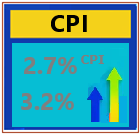
U.S. consumer prices jumped up 0.7% in February 2013 for the largest gain since June 2009, led by an expected surge in gasoline prices, according to data reported Friday by the U.S. Department of Labor. |
0.7%
M/M
|
|
|
Inflation |
Core CPI, which excludes more volatile categories, rose 0.2% in February on par with expectations. U.S. industrial production rose 0.7% in February, slightly more than expected, on a rebound in auto production. |
|
|
Fri |
Empire Estate Mfg Index |
The Empire State manufacturing index remained in positive territory at 9.24 for the second month after six straight negative readings, the New York Federal Reserve Bank said Friday. The Empire State index is closely watched because it is the first regional manufacturing survey for the month |
9.24
Level
|
|
|
Manufacturing |
The level of activity data in the Empire State index does seem to be getting better, but it still hasn't got a point where we would call it strong, firm or even normal. |
|
|
Wed |
Treasury Intal Capital |
Taking into account transactions in both foreign and U.S. securities, the net foreign purchases of long-term securities were $25.7 billion in January 2013 from $64.2 in December 2012. |
$25.7
Billions
|
|
|
Balance of Payments |
After including adjustments, such as estimates of unrecorded principal payments to foreigners on U.S. asset-backed securities, the overall net foreign acquisition of long-term securities is estimated to have been $4.3 billion in January 2013. |
|
|
Fri |
Industrial Production |
U.S. industrial production rises 0.7% in February 2013, slightly more than expected. This is another positive sign for first quarter gross domestic product, some economists are estimating a 3.0% pace for first quarter real GDP growth. |
0.7%
M/M
|
|
|
Manufacturing |
For the first quarter to date, manufacturing output is up at a 7.5% annual rate, up sharply from a 2.4% pace in fourth quarter. |
|
|
Fri |
Consumer Sentiment |
The University of Michigan-Thomson Reuters consumer-sentiment gauge dropped to a preliminary March 2013 reading of 71.8 which is the lowest level since December 2011, from a final February 2013 reading of 77.6, reports said Friday. |
71.8
Level
|
|
|
Consumer |
The consumer sentiment number was somewhat disappointing. We are getting somewhat of a flight to safety at this level. |
|
|
|
|
|
|
|
|
|
|
|
|
|
|
|
|
|
|
|
|
|
|
|
|
|
| |
|
|
|
|
|
| |
|
|
|
|
|
|
|
|
|
|
| |
|
| WEEK 11-2013 ENDING MAR. 15 |
Reports Commentary
The economy added 236,000 jobs in February, driving the unemployment rate down to 7.7 percent, its lowest level in more than four years. The gains signaled that companies are confident enough in the economy to intensify hiring even in the face of tax increases and government spending cuts.
Since November, employers have added an average of 205,000 jobs a month, up from 154,000 a month in the previous four months. The hiring spree has been fueled by steady improvement in housing, auto sales, manufacturing and corporate profits, along with record-low borrowing rates.
An improving in job market has also helped lift consumer confidence. And if it continues, it could provide a spark to growth after a dismal fourth quarter of 2012.
Curren Account
The deficit narrowed in the broadest gauge of U.S. trade, the current account, to $110.4 billion in the final three months of 2012, down 1.8 percent from the previous quarter. The indicator includes trade in goods and services as well as investment flows.
The improvement reflected gains in Americans' earnings on their foreign investments and stronger earnings on service trade, a category that covers such things as airline travel.
For the year, the current account deficit widened to $475 billion, a 1.9 percent increase from 2011. It was the largest annual imbalance since 2008. Many economists expect the current account deficit will widen slightly in 2013. The current account is the broadest gauge of trade. It tracks not only the sale of goods and services but also investment flows.
Consumer
Preliminary consumer sentiment data for March dropped to its lowest reading since December 2011, according to a gauge by the University of Michigan and Thomson Reuters. In a surprise miss, consumer sentiment dropped to 71.8 from February's final reading of 77.6.
10-Year Yield
Treasurys gained Friday, pushing yields on the 10-year note to their lowest level in more than a week, as worse-than-expected consumer sentiment data helped prompt a flight to safety.
The Treasury market has been watching economic data closely to see whether the recent positive trend would be enough to prompt discussion about a change in monetary policy. The Federal Reserve, which currently buys $85 billion in Treasury and mortgage debt every month, has linked the duration of its bond-buying program to a substantial improvement in the labor market.
The Fed's asset purchases are keeping interest-rates low and a tapering of the bond-buying program would likely lead to higher Treasury yields and lower prices. Investors who hold Treasurys would stand to lose in a rising yield environment.
Inflation
A 9.1% increase in gasoline prices, also the largest jump since June 2009, accounted for almost three-fourths of February's gain in the consumer price index. The core CPI, which excludes food and energy, rose 0.2%.
Industrial Production
Industrial output is up 2.5% compared with a year ago. Capacity utilization, a key gauge of inflationary pressures, rose to 79.6%, the highest level since March 2008. It remains below the average of 80.2% over the 40 years from 1972-2012.
Mortgage Rates
Since the beginning of this year, U.S. fixed mortgage rates have maintained a modest upward trend as the housing market bottoms out. But rates remained at an affordable level for house buying and refinancing.
What do the Economic Reports reveal about the state of the economy?
- The University of Michigan-Thomson Reuters index fell to an initial March reading of 71.8 from a final 77.6 in February.
- In a separate report, the Labor Department said consumer prices rose 0.7% in February, the strongest gain since June 2009.
- The Empire State factory index slipped to 9.2 from 10.0 in February
- U.S. consumer prices jumped up 0.7% in February 2013.
- Jobless/Initial Claims benefits fell by 10,000 to 332,000 week ended March 9.
- U.S. industrial production rises 0.7% in February, slightly more than expected.
- Treasurys gain after consumer sentiment surprise.
- U.S. Retail Sales up solid 1.1 percent in February 2013.
- The U.S. government ran a budget deficit of $203.5 billion in February 2013.
- The U.S. current account trade deficit narrowed in the final three months of 2012.
|
|
| |
|
|
|
|
| |
|
To prepare for this week we have posted the following Blog: |
|
|
| |
|
Lower Productivity is bad for a country... |
|
|
| |
|
|
|
|
|
| |
|
|
|
|
| |
|
|
|
|
IMPORTANT NOTE: In an effort to comply with all applicable rules, regulations and disclosures please be so kind and read the "General Disclosure" below: |
| |
|
|
|
|
|
|
| GENERAL DISCLOSURE - TRADINGVESTING.COM |
- The material contained on our Website and Economic Calendar must be used at your own risk. Material is believed to be reliable, but we do not guarantee its accuracy or validity, nor is Tradingvesting.com responsible for any errors or omissions which may occur. The analysis and/or recommendations made by Tradingvesting.com do not provide, imply, or otherwise constitute a guarantee of performance. All contents and recommendations are based on data and sources believed to be reliable, but accuracy and completeness cannot be guaranteed. It should not be assumed that future results will be profitable or will equal past performance, real, indicated or implied.Tradingvesting.com website and material contained therein is not a solicitation to participate in the Futures/Stocks/Options Market. This Economic Calendar does not include Earning Releases, Announced Stock Splits, Upcoming Initial Public Offerings with Underwritings or Rating Changes. Tradingvesting.com has attempted to verify the information contained in this calendar. However, any aspect of such info may change without notice. Unless indicated otherwise: economic data is from the U.S and intraday data is at least 20 minutes delayed; all prices are in the local currency; Time is U.S. Eastern Time. Furthermore, there is a very high degree of risk involved in trading.Tradingvesting.com assumes no responsibilities for your trading and investment results, please red our Risk Disclosure.
- Tradingvesting.com does not provide investment advice, and does not represent that any of the information or related analysis is accurate or complete at any time. All information on this website are for educational purposes only and are not intended to provide financial advice. Any statements about profits or income, expressed or implied, do not represent a guarantee. Your actual trading may result in losses as no trading system is guaranteed. You accept full responsibilities for your actions, trades, profit or loss, and agree to hold Tradingvesting.com and any authorized distributors of this information harmless in any and all ways. We respect your right to privacy, please click here to view our privacy policy.
- U.S. Government Required Disclaimer - Commodity Futures Trading Commission.
Futures and options trading has large potential rewards, but also large potential risk. You must be aware of the risks and be willing to accept them in order to invest in the futures and options markets. Don't trade with money you can't afford to lose. This website is neither a solicitation nor an offer to Buy/Sell futures or options. No representation is being made that any account will or is likely to achieve profits or losses similar to those discussed on this website. The past performance of any trading system or methodology is not necessarily indicative of future results.
- CFTC rule 4.41: Hypothetical or simulated performance results have certain limitations. Unlike an actual performance record, simulated results do not represent actual trading. Also, since the trades have not been executed, the results may have under-or-over compensated for the impact, if any, of certain market factors, such as lack of liquidity. Simulated trading programs in general are also subject to the fact that they are designed with the benefit of hindsight. No representation is being made that any account will or is likely to achieve profit or losses similar to those shown.
- Risk Warning: Trading foreign exchange on margin carries a high level of risk, and may not be suitable for all investors. The high degree of leverage can work against you as well as for you. Before deciding to invest in foreign exchange you should carefully consider your investment objectives, level of experience, and risk appetite. The possibility exists that you could sustain a loss of some or all of your initial investment and therefore you should not invest money that you cannot afford to lose. You should be aware of all the risks associated with foreign exchange trading, and seek advice from an independent financial advisor if you have any doubts. Our linking to these sites does not constitute an endorsement of any products, services or the information found on them. Once you link to another site you are subject to the policies of the new site. By using this site, you agree to the Terms of Service, Privacy Policy and Risk Disclosure. Copyright 2013 Tradingvesting, LLC. All rights reserved. If you have any questions regarding the Online Economic Calendar application, please contact us: click here.
THIS BRIEF STATEMENT CANNOT, OF COURSE, DISCLOSE ALL THE RISKS AND OTHER ASPECTS OF THE COMMODITY MARKETS AND EQUITY MARKETS. PLEASE READ MORE AT: TERMS OF SERVICE.
|
|
|
| |
|
|
|
|
|
| |
|
|
|
|
|