 |
 |
|
|
|
Week 22 -2013 | From May. 27 to May. 31, 2013 |
|
 |
|
|
|
|
|
|
| |
|
|
|
|
|
|
|
|
|
|
| |
Economic Data for Week 22-2013 | Global View
| Week Rating
| DATE/WEEK |
DAY |
REPORT/CATEGORY |
HIGHLIGHTS ON WEEK 22-2013 |
LAST |
|
Mon |
Memorial Day |
There will be no U.S. Market Activity Today. |
N/A |
|
|
US Market Holidays |
|
|
|
Tue |
S&P Case-Shiller Index |
The S&P/Case-Shiller composite index of 20 metropolitan areas gained 1.1% in March 2013 on a seasonally adjusted basis, topping economists' forecasts for 1%. |
1.1%
M/M
|
|
 |
Real Estate |
U.S. single-family home prices rose in March 2013, racking up their best annual gain in nearly seven years as the housing recovery continues to provide a source of strength for the economy. |
|
|
Tue |
Consumer Confidence |
The Conference Board, an industry group, said its index of consumer attitudes jumped to 76.2 from an upwardly revised 69 in April 2013, topping economists' expectations for 71. |
76.2
Level
|
|
|
Consumer |
U.S. consumer confidence strengthened in May 2013 to the highest level in more than five years, suggesting Americans' attitudes were resilient in the face of belt-tightening in Washington. It was the best level since February 2008. |
|
|
Wed |
MBA purchase Applications |
The seasonally adjusted Purchase Index increased 3% from one week earlier. The composite index was a negative 8.8%. Mortgage Purchase Applications increase, Refinance Applications decline sharply in week 22, 2013. |
-8.8%
W/W
|
|
|
Real Estate |
The Refinance Index decreased 12%, the largest single week drop in refinance applications this year, from the previous week to the lowest level since December 2012. |
|
|
Wed |
Bank Reserve Settlement |
Bank Reserve Settlement is the date where commercial banks must meet reserve requirements stipulated by the Federal Reserve. |
N/A |
|
|
Banking System |
Bank Reserve Settlement is a two-week period that ends every other Wednesday. |
|
|
Wed |
ICSC Goldman Index |
The ICSC-Goldman store sales index was +2.8% year over year for the week ending May 24 compared to +3.1% Y/Y the week prior. |
2.8%
Y/Y |
|
|
Sales and Inventories |
Store sales in the U.S. last week were little changed from a year ago. The report says retailers in general didn't get much boost from the week's Memorial Day lead-in and that sales were considerably softer at discounters and wholesale clubs. |
|
|
Wed |
Johson Redbook |
The Redbook store sales index was +2.7% Y/Y compared to +2.4% Y/Y the week prior. Redbook describes sales for the latest week as mixed though it notes strength for seasonal goods in areas where temperatures are warm. |
2.7%
Y/Y
|
|
|
Sales and Inventories |
Sales have been slowing the past several months due in large part to the colder than usual weather that has kept shoppers indoors, but sales of seasonal goods are expected to rise and have already done so in areas where the weather has been warmer. |
|
|
Thu |
Jobless/Initial Claims |
Jobless claims climb 10,000 in week 21, 2013. Four-week average at highest level in a month, rose 6,750 to 347,25. The moving average is considered a more accurate barometer of employment trends because it smoothens out quirks in the weekly data. |
354K |
|
|
Employment |
The number of U.S. workers who filed new applications for unemployment benefits rose by 10,000 last week to 354,000, the Labor Department reported Thursday, a larger increase than expected. |
|
|
Thu |
Gross Domestic Product (GDP) |
U.S. grew revised 2.4% in first quarter, Q1-2013. Updated government data shows faster consumer spending in the preliminary report. The economy expanded at an annual rate of 2.4% in the first quarter, down from an initial estimate of 2.5%. |
2.4% |
|
|
Growth |
The U.S. grew a touch slower in the first three months of 2013 than previously believed, mainly because of a slower buildup in inventories and a somewhat steeper drop in government spending. The ggod news was the increase in consumer spending the engine of the U.S. economy was revised up to 3.4% in the first quarter from an initial read of 3.2% . That's the fastest rate in more than two years and a good sign for the economy moving forward. |
|
|
Thu |
Corporate Profits |
Corporate profits in the first quarter slipped to $1.738 trillion annualized, down from $1.774 trillion in the fourth quarter. Adjusted corporate profits declined by $43.8 billion in the first quarter after a $45.4 billion increase in the fourth quarter. |
1,738
Trillions
|
|
|
Growth |
Corporate profits on a year-on-year basis increased 4.0%, compared to up 13.3% in the fourth quarter. Companies reduced spending on structures such as office buildings and manufacturing plants by 3.5% instead of 0.3% |
|
|
Tue |
Pending Home Sales Index |
Pointing to housing-market growth, pending sales of homes ticked up 0.3%, 106.6 level, in April 2013, with gains in the Northeast and Midwest, but decreases in the South and the West, the National Association of Realtors reported Thursday. |
106.0
Level
|
|
|
Real Estate |
Despite April's slight gain, the pending-sales gauge increased 10.3% from April 2012, hitting the highest level in three years. The housing market continues to squeak out gains from already very positive conditions. |
|
|
Thu |
EIA Natural Gas Report |
The U.S. Energy Information Administration said domestic gasinventories rose last week by 88 billion cubic feet to 2.141 trillion cubic feet. |
88
Bcf
|
|
|
Commodity |
Natural gas in storage rose 88 billion cubic feet in the May 24 week to 2,141 bcf. |
|
|
Thu |
EIA Crude Oil Report |
U.S. Crude Oil Inventories Move Up To Record High Last Week 21, 2013 Refineries cut back their oil inputs and slowed their gasoline output contributing to a 3.0 million barrel build in oil inventories. The week before, crude oil inventories edged down 0.30 million barrels to 394.60 million barrels. |
3.0M
Barrels
|
|
|
Commodity |
The U.S. EIA in its weekly crude oil report said U.S. commercial crude oil inventories increased by 3.00 million barrels to 397.60 million barrels last week, which are above the upper limit of the average range for this time of year and at their highest level since EIA began collecting data in 1978. |
|
|
Thu |
Fed Balance Sheet |
The Federal Reserve's balance sheet shrank in the latest week on lower holdings of mortgage-backed securities and agency debt. Total assets for the May 29 week came in at $3.385 trillion |
$-13.6
Billiions
|
|
|
Government |
The Fed's balance sheet - a broad gauge of its lending to the financial system - decreased $13.6 billion after expanding $44.4 billion the week before. The decline was led by holdings of mortgage-backed securities which fell $13.9 billion. Treasuries rose $6.4 billion. |
|
|
Thu |
M2 Money Supply |
M2 Weekly Change $-11.9 Billions from $12.7 Billions revised to $12.8 Billions. |
$-11.9
Billions
|
|
|
Money Supply |
M2 included M1 and, in addition, short-term time deposits in banks and certain money market funds. In general, an increase in the supply of money typically lowers interest rates. |
|
|
Fri |
Fixed Mortgage Rates |
The U.S. mortgage giant said Thursday the 30-year fixed-rate mortgage (FRM) rose to 3.81% in the week ending May 30, up from 3.59% in the previous week. It has trended up nearly half a percentage point since the beginning of May 2013. |
3.81% |
|
|
Interest Rates |
The 15-year FRM, a popular choice for those looking to refinance, rose to 2.98% this week from 2.77% in the previous week. |
|
|
Fri |
Personal Income |
Personal income growth was flat, also against an expected 0.1% gain. Consumer spending, which accounts for about 70% of U.S. economic activity, was held down by weak demand for utilities and weak receipts at gasoline stations on the back of a drop in gasoline prices at the pump. |
0.0%
M/M
|
|
|
Consumer |
Personal Income latest figure came in lower than the consensus forecast for a 0.1% increase. The important wages and salaries component was unchanged, following an increase of 0.2% in March 2013. |
|
|
Fri |
Consumer Spending/Real PCE |
U.S. consumer spending fell in April 2013 for the first time in almost a year and inflation pressures were subdued, pointing to a slowdown in economic activity that should see the Federal Reserve maintaining its monetary stimulus for a while. |
-0.2%
M/M
|
|
|
Consumer |
The Commerce Department said on Friday consumer spending fell 0.2%, the weakest reading since May 2012, after edging up 0.1% in March 2013. Economists had expected a 0.1% gain. |
|
|
Fri |
Core PCE |
Over the past 12 months, inflation has risen just 0.7%, the smallest gain since October 2009 and pushing further below the Federal Reserve's 2% target. The index had increased 1.0% in the period through March 2013. Core prices are up 1.1%, the smallest rise since March 2011 and slowing from 1.2% in March 2013. |
0.0%
M/M |
|
|
Inflation |
A price index for consumer spending fell 0.3% last month after dipping 0.1% in March 2013. A core reading that strips out food and energy costs was flat after rising 0.1% the prior month. |
|
|
Fri |
Chicago PMI |
The Institute for Supply Management-Chicago business barometer rose to 58.7 from 49 in April 2013, handily beating economists' expectations for 50. |
58.7
Level
|
|
|
Manufacturing |
Business activity in the U.S. Midwest reaccelerated in May 2013 after contracting in April 2013 as measures of employment and new orders jumped, a report showed on Friday. |
|
|
Fri |
Consumer Sentiment |
U.S. Consumer Sentiment Rallies to Six-Year High in May 2013. Greater optimism over the economic outlook and personal finances in the midst of record stock market prices pushed U.S. consumer sentiment to its highest level in nearly six years in May 2013. |
84.5
Level
|
|
|
Consumer |
The Thomson Reuters/University of Michigan's final reading on the overall index on consumer sentiment rose to 84.5 from 76.4 in April 2013. |
|
|
|
|
|
|
|
|
|
|
|
|
|
|
|
|
|
|
|
|
|
|
|
|
|
| |
|
|
|
|
|
| |
|
|
|
|
|
|
|
|
|
|
| |
|
| WEEK 22-2013 ENDING MAY. 31 |
Reports Commentary
Housing
U.S. home prices jumped 10.9% in March 2013 compared with a year ago, the most since April 2006. A growing number of buyers are bidding on a tight supply of homes, driving prices higher and helping the housing market recover.
The Standard & Poor's/Case-Shiller home price index released Tuesday also showed that all 20 cities measured by the report posted year-over-year gains for the third straight month. Home Prices have been increasing steadily since last summer. Still, they are about 29% below the peak reached in July 2006.
Banks have raised their credit standards since the housing bubble burst and are demanding larger down payments. That's made it particularly hard for potential first-time buyers to get a mortgage.
GDP
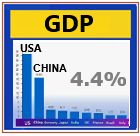
U.S. grew revised 2.4% in first quarter, Q1-2013. Updated government data shows faster consumer spending in the preliminary report. The economy expanded at an annual rate of 2.4% in the first quarter, down from an initial estimate of 2.5%.
A drop in government spending dragged more on the U.S. economy than initially thought in the first three months of the year, a sign of increasing pain from Washington's austerity drive.
Consumer
Consumer Confidence sprang to a post Great Recession best of 76.2. That is well above the 71.5 reading that was expected.
The increase in consumer spending the engine of the U.S. economy was revised up to 3.4% in the first quarter from an initial read of 3.2% . That s the fastest rate in more than two years and a good sign for the economy moving forward.
The Thomson Reuters/University of Michigan's final reading on the overall index on consumer sentiment rose to 84.5 from 76.4 in April. It was the highest level since July 2007. The report topped expectations for 83.7, which was May's preliminary figure earlier in the month.
The barometer of current economic conditions jumped to its highest level since August 2007 at 98.0 from 89.9, while the gauge of consumer expectations climbed to 75.8 from 67.8
The weak spending and the lack of inflation pressures could dampen market speculation the U.S. central bank might start scaling back monetary easing later this year.
Certainly, the inflation data suggest the Fed at the moment should not be overly concerned about inflation. That gives them plenty of scope to continue QE by the Fed.
What do the Economic Reports reveal about the state of the economy?
- U.S. fixed mortgage rates hit one-year high.
- U.S. grew revised 2.4% in first quarter.
- Unemployment benefits rose by 10,000 last week to 354,000.
- U.S. Home Prices Rise 10.9%, Most Since 2006.
- The ISM-Chicago business barometer rose to 58.7 from 49 in April 2013.
- U.S. Consumer Confidence Surges to Highest Level in Five Years in May 2013.
- Store sales in the U.S. last week were little changed from a year ago.
|
|
| |
|
|
|
|
| |
|
To prepare for this week we have posted the following Blog: |
|
|
| |
|
Japan Sell Off! |
|
|
| |
|
|
|
|
|
| |
|
|
|
|
IMPORTANT NOTE: In an effort to comply with all applicable rules, regulations and disclosures please be so kind and read the "General Disclosure" below: |
| |
|
|
|
|
|
|
| GENERAL DISCLOSURE - TRADINGVESTING.COM |
- The material contained on our Website and Economic Calendar must be used at your own risk. Material is believed to be reliable, but we do not guarantee its accuracy or validity, nor is Tradingvesting.com responsible for any errors or omissions which may occur. The analysis and/or recommendations made by Tradingvesting.com do not provide, imply, or otherwise constitute a guarantee of performance. All contents and recommendations are based on data and sources believed to be reliable, but accuracy and completeness cannot be guaranteed. It should not be assumed that future results will be profitable or will equal past performance, real, indicated or implied.Tradingvesting.com website and material contained therein is not a solicitation to participate in the Futures/Stocks/Options Market. This Economic Calendar does not include Earning Releases, Announced Stock Splits, Upcoming Initial Public Offerings with Underwritings or Rating Changes. Tradingvesting.com has attempted to verify the information contained in this calendar. However, any aspect of such info may change without notice. Unless indicated otherwise: economic data is from the U.S and intraday data is at least 20 minutes delayed; all prices are in the local currency; Time is U.S. Eastern Time. Furthermore, there is a very high degree of risk involved in trading.Tradingvesting.com assumes no responsibilities for your trading and investment results, please red our Risk Disclosure.
- Tradingvesting.com does not provide investment advice, and does not represent that any of the information or related analysis is accurate or complete at any time. All information on this website are for educational purposes only and are not intended to provide financial advice. Any statements about profits or income, expressed or implied, do not represent a guarantee. Your actual trading may result in losses as no trading system is guaranteed. You accept full responsibilities for your actions, trades, profit or loss, and agree to hold Tradingvesting.com and any authorized distributors of this information harmless in any and all ways. We respect your right to privacy, please click here to view our privacy policy.
- U.S. Government Required Disclaimer - Commodity Futures Trading Commission.
Futures and options trading has large potential rewards, but also large potential risk. You must be aware of the risks and be willing to accept them in order to invest in the futures and options markets. Don't trade with money you can't afford to lose. This website is neither a solicitation nor an offer to Buy/Sell futures or options. No representation is being made that any account will or is likely to achieve profits or losses similar to those discussed on this website. The past performance of any trading system or methodology is not necessarily indicative of future results.
- CFTC rule 4.41: Hypothetical or simulated performance results have certain limitations. Unlike an actual performance record, simulated results do not represent actual trading. Also, since the trades have not been executed, the results may have under-or-over compensated for the impact, if any, of certain market factors, such as lack of liquidity. Simulated trading programs in general are also subject to the fact that they are designed with the benefit of hindsight. No representation is being made that any account will or is likely to achieve profit or losses similar to those shown.
- Risk Warning: Trading foreign exchange on margin carries a high level of risk, and may not be suitable for all investors. The high degree of leverage can work against you as well as for you. Before deciding to invest in foreign exchange you should carefully consider your investment objectives, level of experience, and risk appetite. The possibility exists that you could sustain a loss of some or all of your initial investment and therefore you should not invest money that you cannot afford to lose. You should be aware of all the risks associated with foreign exchange trading, and seek advice from an independent financial advisor if you have any doubts. Our linking to these sites does not constitute an endorsement of any products, services or the information found on them. Once you link to another site you are subject to the policies of the new site. By using this site, you agree to the Terms of Service, Privacy Policy and Risk Disclosure. Copyright 2013 Tradingvesting, LLC. All rights reserved. If you have any questions regarding the Online Economic Calendar application, please contact us: click here.
THIS BRIEF STATEMENT CANNOT, OF COURSE, DISCLOSE ALL THE RISKS AND OTHER ASPECTS OF THE COMMODITY MARKETS AND EQUITY MARKETS. PLEASE READ MORE AT: TERMS OF SERVICE.
|
|
|
| |
|
|
|
|
|
| |
|
|
|
|
|