Personal Income and Outlays:
1. Personal Income - Consumer
2. Personal Consumption Expenditures, Real PCE - Consumer Spending
3. PCE Price Index and Core PCE Price Index - Inflation
What is Core PCE?
Comprehensive measure of how much consumers spend each month, counting expenditures on durable goods, consumer products, and services. Personal Consumption is a comprehensive measure of GDP; consequently the figure is watched as an indicator for economic trends. Spending also has direct affect on inflationary pressures.
A healthy Personal Spending figure means that consumers are buying goods and services, fueling the economy and spurring output growth. The report is particularly valued for forecasting inflationary pressures. Taken in excess these high levels of consumption and production may lead to an overall increase in prices. Indeed, the Fed uses a measure of inflation derived from the PCE as their primary gauge of inflation.
On the other hand, persistently low Personal Spending may result in decreasing levels of output and an economic downturn.
Because income is either spent or saved, Personal Spending (when reported as a percent of income rather than the headline percent change) has an inverse relationship to personal saving. Economists watch the growth of Personal Spending in relation to income and saving to determine if consumers are living beyond their means, which would influence levels of borrowing and future consumption.
The PCE figure is released in headlines as a percent change from the previous month.
Core Personal Consumption Expenditure
Volatile items like food and energy can fluctuate widely due to seasonal and non-systemic factors. In order to provide a less erratic picture of Personal Consumption, food and energy items are excluded in the PCE core report.
The headline figure of PCE is expressed in percentage change in spending for the quarter.
Note: The Personal Consumption Expenditure figure is reported with the Personal Income and Outlays figure.
A core inflation measure, which strips out food and energy costs,
Inflation (along with various risks) basically explains how interest rates are set on everything from your mortgage and auto loans to Treasury bills, notes and bonds. If someone borrows $100 dollars from you today and promises to repay it in one year with interest, how much interest should you charge.
The CPI is the best indicator of inflation
Inflation Rate
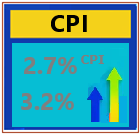
A Consumer Price Index of 158 indicates 58% inflation
since 1982, the commonly quoted inflation rate of say 3% is actually the change in the Consumer Price Index from a year earlier.
By looking at the change in the index we can see that what cost an average of 9.9 cents in 1913 would cost us about $1.82 in 2003.
=========
nflation as gauged by the core PCE price index, which excludes food and energy. Core PCE is part of Personal Income and Outlays:
1. Personal Income
2. Consumer Spending or Real PCE and
3. Core PCE - Inflation.
There are many ways to measure inflation. One popular method used for monetary policy purposes is to look at the price index for personal consumption expenditures excluding food and energy. Why exclude food and energy? Aren’t those important items that matter a great deal to households? The reason is straightforward:
These price categories are considered to be excessively volatile, and including them would make it more difficult for policymakers to pin down the inflation trend. The graph above makes this point visually by comparing the PCE inflation rates with and without food and energy. Usually when you add items to an index, you reduce the volatility of that index. This same premise is at work when you add assets to an investment portfolio—i.e., when you diversify to reduce volatility. But this does not happen when the item you add is excessively volatile. And, again, food and energy are excessively volatile.
Food is subject to large price variations due to external shocks, mostly on the supply side, such as weather. Energy is subject to shocks as well: supply shocks such as discoveries, wars, political risk, and infrastructure issues and demand shocks such as climate events. This happens with food and energy much more than it does for other items included in personal consumption expenditures. |