 |
 |
|
|
|
Week 46 -2013 | From Nov. 11 to Nov. 15, 2013 |
|
 |
|
|
|
|
|
|
| |
|
|
|
|
|
|
|
|
|
|
| |
Economic Data for Week 46-2013 | Global View
| Week Rating
| DATE/WEEK |
DAY |
REPORT/CATEGORY |
HIGHLIGHTS ON WEEK 46-2013 |
LAST |
|
Mon |
U.S. Holiday: Veteran's Day |
Markets Open, Banks Closed |
N/A |
|
|
U.S. Market Holidays |
|
|
|
Tue |
ICSC Goldman Sachs Index |
The International Council of Shopping Centers and Goldman Sachs Retail Chain Store Sales Index rose 1.2% in the week ended Saturday from the previous week on a seasonally adjusted, comparable-store basis.
|
2.3%
Y/Y |
|
 |
Sales and Inventories |
"Colder weather than last year and lower gasoline prices than last year collectively were helpful to sales," according to Michael Niemira, ICSC vice president of research and chief economist. On a year-to-year basis, the weekly reading increased 2.3%. |
|
|
Tue |
Chicago Fed Nat Activity Index |
The Federal Reserve Bank of Chicago's National Activity Index, released Tuesday, rose to 0.14 in September from 0.13 in August 2013, while the more representative three-month moving average improved to -0.03 from -0.15. |
0.14
Level |
|
|
Growth |
The economy has been below its historical growth rate for seven straight months. Production-related indicators, one of the four major component parts, rose to 0.19 in September 2013 from 0.17 in August 2013. Sales, orders and inventories bumped up to 0.05 from 0.04.
|
|
|
Tue |
Johnson Redbook |
National chain-store sales edged down 0.8% in the first week of November from October, according to Redbook Research's latest indicator, released Tuesday. |
3.3%
Y/Y |
|
|
Sales and Inventories |
The index's decrease compared with a flat target. The Johnson Redbook Sales Index also showed seasonally adjusted sales for the period increased 3.3% from a year earlier, missing the target for 4.1% growth. |
|
|
Wed |
MBA purchase Applications |
Applications for U.S. home loans slipped in the latest week, although a drop in the previous week was revised to a smaller fall than previously reported, data from an industry group showed on Wednesday |
-1.8%
W/W |
|
|
Real Estate |
The Mortgage Bankers Association said its seasonally adjusted index of mortgage application activity, which includes both refinancing and home purchase demand, fell 1.8% in the week ended Nov. 8. |
|
|
Wed |
Bank Reserve Settlement |
Bank Reserve Settlement is the date where commercial banks must meet reserve requirements stipulated by the Federal Reserve. |
N/A |
|
|
Banking System |
Bank Reserve Settlement is a two-week period that ends every other Wednesday. |
|
|
Wed |
Treasury Budget |
The U.S. budget deficit last month narrowed more than economists forecast as rising employment contributed to the strongest October 2013 revenue on record.
|
$-91.6B |
|
|
Government |
Spending exceeded receipts by $91.6 billion last month, compared with a $120 billion shortfall in October 2012, the U.S. Treasury Department said today in Washington. The median estimate in a Bloomberg survey of 16 economists was for a $102 billion deficit last month. Monthly revenue jumped about 8 percent from a year earlier while outlays dropped 4.5 percent, the report showed. |
|
|
Thu |
Jobless/Initial Claims |
Claims fell to 339,000 from last week's 341,000 reading. This was worse than the 330,000 expected by economists. Also, last week's number was revised up from 336,000. |
339K |
|
|
Employment |
Initial claims for state unemployment benefits fell 2,000 to a seasonally adjusted 339,000, the Labor Department said on Thursday. Claims for the prior week were revised to show 5,000 more applications received than previously reported. |
|
|
Thu |
Productivy and Costs |
Nonfarm business productivity for the third quarter gained 1.9%, following a 1.8% increase the prior quarter. Analysts expected a 2.3% rise. Unit labor costs dipped an annualized 0.6% after a 0.5% increase the prior quarter. Expectations were for a 0.3% decline. Compensation rose an annualized 1.3%, following a boost of 2.3% in the second quarter. |
1.9% |
|
|
Business Activity |
Year-on-year, productivity was unchanged in the third quarter versus up 0.2% in the second quarter. Year-ago unit labor costs were up 1.9%, compared to 1.6% in the second quarter. |
|
|
Thu |
U.S. Trade Balance |
The trade gap worsened more than expected in September 2013 but perhaps part of the reason is good. The September 2013 trade deficit came in at $41.8 billion versus $38.7 billion in August 2013. Exports slipped 0.2% after no change in August 2013. Imports jumped 1.2% in September 2013, following an unchanged reading the month before. |
$-41.8
Billions |
|
|
Balance of Payments |
The widening in the trade gap was led by goods excluding petroleum which expanded to $40.5 billion from $38.5 billion in August 2013. The petroleum deficit increased to $19.8 billion from $18.6 billion in August 2013. The services surplus slipped to $19.5 billion from $19.6 billion. |
|
|
Thu |
EIA Natural Gas Report |
Prior 35 bcf Actual 20 bcf. |
20 bcf |
|
|
Commodity |
Natural gas in storage rose 20 billion cubic feet in the November 8 week to 3,834 bcf. |
|
|
Thu |
EIA Crude Oil |
Record domestic output together with a rise in imports pushed up oil inventories by 2.6 million barrels in the November 8 week to 388.1 million. |
2.6M
Barrels |
|
|
Commodity |
In an offset that limited the build, demand for oil increased sharply from refineries which operated at 88.7% in the week for the highest capacity rate since September.
|
|
|
Thu |
Fed Balance Sheet |
For the November 13 week, the Fed balance sheet jumped $55.8 billion after a rise of $8.2 billion the week before. The increase was led by a $40.9 billion spike in mortgage-backed securities. |
$55.8B |
|
|
Government |
Holdings of Treasuries rose $11.5 billion. Total assets for the November 13, 2013 week were $3.907 trillion. |
|
|
Thu |
M2 Money Supply |
M2 Weekly Change $-32.4 Billions from $-7.8 Billions revised to $-8.5 Billions. |
$-32.4B |
|
|
Money Supply |
M2 included M1 and, in addition, short-term time deposits in banks and certain money market funds. In general, an increase in the supply of money typically lowers interest rates. |
|
|
Fri |
Fixed Mortgage Rates |
Average U.S. rates on fixed mortgages rose for the second straight week amid some signs of economic strength. Still rates remain near historically low levels. |
4.35% |
|
|
Interest Rates |
Mortgage buyer Freddie Mac said Thursday that the average rate on the 30-year loan increased to 4.35% from 4.16% last week. That's the highest level since Sept. 19, when it was 4.50%. The average on the 15-year fixed mortgage rose to 3.35% from 3.27%. |
|
|
Fri |
Empire Estate Mfg Index |
The general business conditions index slipped 4 points, and closed at -2.2 (23.2% of respondents reported better conditions, while 25.4% reported worse conditions so the net result is -2.2%), which was a slight drop from last month. |
-2.21 |
|
|
Manufacturing |
The headline general business conditions survey was the highlight of the report. The New Orders index slipped 13 points to -5.5, and the shipments index dropped 14 points to -0.5. |
|
|
Fri |
Import and Export Prices |
Global prices moved in reverse during October 2013 judging by the import & export price report with the import side down a sharp 0.7% in the month and the export side down almost as much, 0.5%. |
-2.0%
Y/Y |
|
|
Inflation |
A major factor on the import side was sharp contraction in petroleum products, down 3.6% in the month. Excluding petroleum, import prices were dead flat at zero. Prices of imported finished goods, which offer indications on consumer prices, were likewise flat showing very little monthly change |
|
|
Fri |
Industrial Production |
U.S. industrial production unexpectedly fell in October 2013 as output at power plants and mines declined, but a third straight month of gains in manufacturing suggested the economy remained on a moderate growth path. |
-0.1% |
|
|
Manufacturing |
Industrial output slipped 0.1% last month after advancing 0.7% in September 2013, the Federal Reserve said on Friday. The drop in October 2013 was the first since July 2013. |
|
|
Fri |
Wholesale Trade |
Wholesale inventories rose 0.4% in September 2013 with August 2013 revised sharply higher to plus 0.8%. But sales, at plus 0.6%, are in step with the build with the stock-to-sales ratio in the sector unchanged at 1.18. |
0.4% |
|
|
Sales and Inventories |
Autos in the wholesale sector have been swinging up and down the past two months. Auto inventories dropped 3.0% in September 2013, drawn down as sales surged 8.5%. |
|
|
|
|
|
|
|
|
|
|
|
|
|
|
|
|
|
|
|
|
|
|
|
|
|
| |
|
|
|
|
|
| |
|
|
|
|
|
|
|
|
|
|
| |
|
| WEEK 46-2013 ENDING NOV. 15 |
Reports Commentary
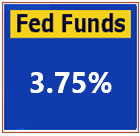
The Federal Reserve has kept the short rate near zero and has had quantitative easing in place for five years now. Current Fed Chair Ben Bernanke has stated that any decision to begin tapering or raising rates will be data-dependent. This means they want to see strong economic growth for a sustained period and the unemployment rate at 6.5%. With Janet Yellen, the probable successor of Ben Bernanke, saying earlier this week that the real unemployment number is closer to 10% if you count those who have left the job pool, you have to wonder: What else can the Fed do?
he answer cannot be to continue QE indefinitely. It may have helped in the beginning, but it has been 5 years and at this point I believe any positives from QE are psychological. It is also very possible QE is having the exact opposite effect it was intended to have. It may be preventing the economy from really heating up. When the consensus was that the Fed would start tapering in September, the stock market reacted negatively, dropping approximately 7% and the 10-year Treasury rate spiked. This was just on speculation that the Fed might slow its bond-buying program. If they actually did decide to start tapering, we would probably see a similar reaction, only the stock market would drop further than 7% and interest rates would spike even higher. If this were to happen, I would view it as a positive.
What the Fed Can Do
I think the Fed does have some ammunition left. They could start tapering sooner rather than later, possibly at their next meeting in December. Yes, it would most likely cause the market to correct 10% or even slightly more, but we are overdue for that type of correction anyway. It has been a year since we have seen that type of downward movement in the stock market. Last November, stocks dropped 9% before quickly recovering. This year we have experienced small dips ranging from 3%-7%, but they happened so quickly and the market has gone on to hit all-time highs. So, a real correction would be normal, healthy and present a buying opportunity for long-term
|
|
| |
|
|
|
|
| |
|
To prepare for this week we have posted the following Blog: |
|
|
| |
|
A Rise in Bond Yield will pose serious threat |
|
|
| |
|
|
|
|
|
| |
|
|
|
|
IMPORTANT NOTE: In an effort to comply with all applicable rules, regulations and disclosures please be so kind and read the "General Disclosure" below: |
| |
|
|
|
|
|
|
| GENERAL DISCLOSURE - TRADINGVESTING.COM |
- The material contained on our Website and Economic Calendar must be used at your own risk. Material is believed to be reliable, but we do not guarantee its accuracy or validity, nor is Tradingvesting.com responsible for any errors or omissions which may occur. The analysis and/or recommendations made by Tradingvesting.com do not provide, imply, or otherwise constitute a guarantee of performance. All contents and recommendations are based on data and sources believed to be reliable, but accuracy and completeness cannot be guaranteed. It should not be assumed that future results will be profitable or will equal past performance, real, indicated or implied.Tradingvesting.com website and material contained therein is not a solicitation to participate in the Futures/Stocks/Options Market. This Economic Calendar does not include Earning Releases, Announced Stock Splits, Upcoming Initial Public Offerings with Underwritings or Rating Changes. Tradingvesting.com has attempted to verify the information contained in this calendar. However, any aspect of such info may change without notice. Unless indicated otherwise: economic data is from the U.S and intraday data is at least 20 minutes delayed; all prices are in the local currency; Time is U.S. Eastern Time. Furthermore, there is a very high degree of risk involved in trading.Tradingvesting.com assumes no responsibilities for your trading and investment results, please red our Risk Disclosure.
- Tradingvesting.com does not provide investment advice, and does not represent that any of the information or related analysis is accurate or complete at any time. All information on this website are for educational purposes only and are not intended to provide financial advice. Any statements about profits or income, expressed or implied, do not represent a guarantee. Your actual trading may result in losses as no trading system is guaranteed. You accept full responsibilities for your actions, trades, profit or loss, and agree to hold Tradingvesting.com and any authorized distributors of this information harmless in any and all ways. We respect your right to privacy, please click here to view our privacy policy.
- U.S. Government Required Disclaimer - Commodity Futures Trading Commission.
Futures and options trading has large potential rewards, but also large potential risk. You must be aware of the risks and be willing to accept them in order to invest in the futures and options markets. Don't trade with money you can't afford to lose. This website is neither a solicitation nor an offer to Buy/Sell futures or options. No representation is being made that any account will or is likely to achieve profits or losses similar to those discussed on this website. The past performance of any trading system or methodology is not necessarily indicative of future results.
- CFTC rule 4.41: Hypothetical or simulated performance results have certain limitations. Unlike an actual performance record, simulated results do not represent actual trading. Also, since the trades have not been executed, the results may have under-or-over compensated for the impact, if any, of certain market factors, such as lack of liquidity. Simulated trading programs in general are also subject to the fact that they are designed with the benefit of hindsight. No representation is being made that any account will or is likely to achieve profit or losses similar to those shown.
- Risk Warning: Trading foreign exchange on margin carries a high level of risk, and may not be suitable for all investors. The high degree of leverage can work against you as well as for you. Before deciding to invest in foreign exchange you should carefully consider your investment objectives, level of experience, and risk appetite. The possibility exists that you could sustain a loss of some or all of your initial investment and therefore you should not invest money that you cannot afford to lose. You should be aware of all the risks associated with foreign exchange trading, and seek advice from an independent financial advisor if you have any doubts. Our linking to these sites does not constitute an endorsement of any products, services or the information found on them. Once you link to another site you are subject to the policies of the new site. By using this site, you agree to the Terms of Service, Privacy Policy and Risk Disclosure. Copyright 2013 Tradingvesting, LLC. All rights reserved. If you have any questions regarding the Online Economic Calendar application, please contact us: click here.
THIS BRIEF STATEMENT CANNOT, OF COURSE, DISCLOSE ALL THE RISKS AND OTHER ASPECTS OF THE COMMODITY MARKETS AND EQUITY MARKETS. PLEASE READ MORE AT: TERMS OF SERVICE.
|
|
|
| |
|
|
|
|
|
| |
|
|
|
|
|