 |
 |
|
 |
Housing Starts | Real Estate |
|
 |
|
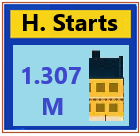
Formerly known as "New Residential Construction" it is an aproximation of the number of housing units on which some constructions was performed during the month: the number of residential units on which construction is begun each month. Read More
|
|
|
|
|
|
|
| |
|
| |
 1. Housing Starts (1 of 10) 1. Housing Starts (1 of 10) 2. Building Permits (2 of 10) 2. Building Permits (2 of 10) 3. Case Shiller Index (3 of 10) 3. Case Shiller Index (3 of 10) 4. New Home Sales (4 of 10) 4. New Home Sales (4 of 10) 5. Existing Home Sales (5 of 10) 5. Existing Home Sales (5 of 10) 6. Pending Home Sales (6 of 10) 6. Pending Home Sales (6 of 10) 7. Housing Market Index (7 of 10) 7. Housing Market Index (7 of 10) 8. FHFA House Price Index (8 of 10) 8. FHFA House Price Index (8 of 10) 9. MBA Purchase Applications (9 of 10) 9. MBA Purchase Applications (9 of 10) 10. Mortgage Rates 30-Year (10 of 10) 10. Mortgage Rates 30-Year (10 of 10)
|
 |
|
|
|
|
| |
|
→ Big Chart |
|
→ Release |
|
| |
|
|
|
|
|
|
|
|
|
|
|
|
|
|
|
|
|
|
|
 |
|
Big Chart | Large Data |
 |
|
Housing Starts | Real Estate |
|
Today's Week |
 |
|
|
|
|
|
|
|
|
|
|
|
|
|
| |
|
|
|
|
|
|
|
|
|
|
|
|
|
| |
|
|
|
|
|
|
|
|
|
|
|
|
|
|
|
|
|
|
|
|
|
Release Schedule | 2026 |
|
|
Housing Starts | Real Estate |
|
Today's Week |
|
|
|
|
|
|
|
|
|
|
|
|
|
Housing Starts (At 8:30 a.m ET)
| SCHEDULE 2025 |
No 1 |
No 2 |
No 3 |
No 4 |
No 5 |
No 6 |
No 7 |
No 8 |
No 9 |
No 10 |
No 11 |
No 12 |
| Release | Week |
|
|
|
|
|
|
|
|
|
|
|
|
| Release | Date |
|
|
|
|
|
|
|
|
|
|
|
|
| Release | Day |
|
|
|
|
|
|
|
|
|
|
|
|
 |
|
|
|
|
|
|
|
|
|
|
|
|
| Prior |
1.322 M |
1.404 M |
1.487 M |
1.356 M |
... |
... |
... |
... |
... |
... |
... |
... |
| Prior Revised |
.... |
1.387 M |
1.398 M |
... |
... |
... |
... |
... |
... |
... |
... |
... |
| CONSENSUS |
1.310 M |
1.340 M |
1.370 M |
1.400 M |
... |
... |
... |
... |
... |
... |
... |
... |
| Consensus Low |
1.290 M |
1.309 M |
1.341 M |
1.324 M |
... |
... |
... |
... |
... |
... |
... |
... |
| Consensus High |
1.350 M |
1.370 M |
1.400 M |
1.438 M |
... |
... |
... |
... |
... |
... |
... |
... |
| STARTS UNITS |
1.404 M |
1.487 M |
1.356 M |
1.502 M |
... |
... |
... |
... |
... |
... |
... |
... |
| RATING |
|
|
|
|
|
|
|
|
|
|
|
|
| Month For |
Dec-25 |
Jan-26 |
Feb-26 |
Mar-26 |
Apr-26 |
May-26 |
Jun-26 |
Jul-26 |
Aug-26 |
Sep-26 |
Oct-26 |
Nov-26 |
|
|
| |
|
| |
|
|
|
|
|
|
|
|
|
|
|
Release Schedule | 2025 |
|
|
Housing Starts | Real Estate |
|
Today's Week |
|
|
|
|
|
|
|
|
|
|
|
|
|
Housing Starts (At 8:30 a.m ET)
| SCHEDULE 2025 |
No 1 |
No 2 |
No 3 |
No 4 |
No 5 |
No 6 |
No 7 |
No 8 |
No 9 |
No 10 |
No 11 |
No 12 |
| Release | Week |
|
|
|
|
|
|
|
|
|
|
|
|
| Release | Date |
|
|
|
|
|
|
|
|
|
|
|
|
| Release | Day |
|
|
|
|
|
|
|
|
|
|
|
|
|
|
|
|
|
|
|
|
|
|
|
|
|
| Prior |
1.289 M |
1.499 M |
1.366 M |
1.501 M |
1.324 M |
1.361 M |
1.256 M |
1.321 M |
1.428 M |
1.307 M |
1.306 M |
1.246 M |
| Prior Revised: |
1.294 M |
1.515 M |
1.350 M |
1.494 M |
1.339 M |
1.392 M |
1.263 M |
1.358 M |
1.429 M |
1.291 M |
1.306 M |
1.272 M |
| CONSENSUS |
1.320 M |
1.397 M |
1.383 M |
1.420 M |
1.362 M |
1.360 M |
1.300 M |
1.290 M |
1.370 M |
1.315 M |
1.330 M |
1.325 M |
| Consensus Low |
1.301 M |
1.325 M |
1.301 M |
1.378 M |
1.310 M |
1.325 M |
1.230 M |
1.260 M |
1.330 M |
1.264 M |
1.300 M |
1.310 M |
| Consensus High |
1.345 M |
1.482 M |
1.415 M |
1.470 M |
1.414 M |
1.375 M |
1.350 M |
1.351 M |
1.400 M |
1.350 M |
1.400 M |
1.350 M |
| STARTS UNITS |
1.499 M |
1.366 M |
1.501 M |
1.324 M |
1.361 M |
1.256 M |
1.321 M |
1.428 M |
1.307 M |
1.306 M |
1.246 M |
1.322 M |
| RATING |
|
|
|
|
|
|
|
|
|
|
|
|
| Month For |
Dec-24 |
Jan-25 |
Feb-25 |
Mar-25 |
Apr-25 |
May-25 |
Jun-25 |
Jul-25 |
Aug-25 |
Sep-25 |
Oct-25 |
Nov-25 |
|
|
| |
|
| |
|
|
|
|
|
|
|
|
|
|
|
Release Schedule | 2024 |
|
|
Housing Starts | Real Estate |
|
Today's Week |
|
|
|
|
|
|
|
|
|
|
|
|
|
Housing Starts (At 8:30 a.m ET)
| SCHEDULE 2024 |
No 1 |
No 2 |
No 3 |
No 4 |
No 5 |
No 6 |
No 7 |
No 8 |
No 9 |
No 10 |
No 11 |
No 12 |
| Release | Week |
|
|
|
|
|
|
|
|
|
|
|
|
| Release | Date |
|
|
|
|
|
|
|
|
|
|
|
|
| Release | Day |
|
|
|
|
|
|
|
|
|
|
|
|
|
|
|
|
|
|
|
|
|
|
|
|
|
| Prior |
1.560 M |
1.460 M |
1.331 M |
1.521 M |
1.321 M |
1.360 M |
1.277 M |
1.353 M |
1.238 M |
1.356 M |
1.354 M |
1.311 M |
| Prior Revised: |
1.525 M |
1.562 M |
1.374 M |
1.549 M |
1.287 M |
1.352 M |
1.314 M |
1.329 M |
1.237 M |
1.361 M |
1.353 M |
1.312 M |
| CONSENSUS |
1.425 M |
1.470 M |
1.449 M |
1.480 M |
1.435 M |
1.373 M |
1.305 M |
1.342 M |
1.300 M |
1.400 M |
1.300 M |
1.340 M |
| Consensus Low |
1.396 M |
1.430 M |
1.400 M |
1.447 M |
1.328 M |
1.265 M |
1.248 M |
1.270 M |
1.000 M |
1.300 M |
1.300 M |
1.250 M |
| Consensus High |
1.540 M |
1.500 M |
1.570 M |
1.535 M |
1.490 M |
1.400 M |
1.400 M |
1.410 M |
1.350 M |
1.500 M |
1.400 M |
1.450 M |
| STARTS UNITS |
1.460 M |
1.331 M |
1.521 M |
1.321 M |
1.360 M |
1.277 M |
1.353 M |
1.238 M |
1.356 M |
1.354 M |
1.311 M |
1.289 M |
| RATING |
|
|
|
|
|
|
|
|
|
|
|
|
| Month For |
Dec-23 |
Jan-24 |
Feb-24 |
Mar-24 |
Apr-24 |
May-24 |
Jun-24 |
Jul-24 |
Aug-24 |
Sep-24 |
Oct-24 |
Nov-24 |
|
|
| |
|
| |
|
|
|
|
|
|
|
|
|
|
|
Release Schedule | 2023 |
|
|
Housing Starts | Real Estate |
|
Today's Week |
|
|
|
|
|
|
|
|
|
|
|
|
|
Housing Starts (At 8:30 a.m ET)
| SCHEDULE 2023 |
No 1 |
No 2 |
No 3 |
No 4 |
No 5 |
No 6 |
No 7 |
No 8 |
No 9 |
No 10 |
No 11 |
No 12 |
| Release | Week |
|
|
|
|
|
|
|
|
|
|
|
|
| Release | Date |
|
|
|
|
|
|
|
|
|
|
|
|
| Release | Day |
|
|
|
|
|
|
|
|
|
|
|
|
|
|
|
|
|
|
|
|
|
|
|
|
|
| Prior |
1.427 M |
1.382 M |
1.309 M |
1.450 M |
1.420 M |
1.401 M |
1.631 M |
1.434 M |
1.452 M |
1.283 M |
1.358 M |
1.372 M |
| Prior Revised: |
1.401 M |
1.371 M |
1.321 M |
1.432 M |
1.371 M |
1.340 M |
1.559 M |
1.398 M |
1.447 M |
1.269 M |
1.346 M |
1.359 M |
| CONSENSUS |
1.362 M |
1.365 M |
1.315 M |
1.400 M |
1.405 M |
1.400 M |
1.480 M |
1.455 M |
1.435 M |
1.394 M |
1.350 M |
1.360 M |
| Consensus Low |
1.313 M |
1.309 M |
1.290 M |
1.375 M |
1.390 M |
1.350 M |
1.390 M |
1.420 M |
1.416 M |
1.320 M |
1.300 M |
1.330 M |
| Consensus High |
1.400 M |
1.391 M |
1.360 M |
1.534 M |
1.470 M |
1.450 M |
1.620 M |
1.510 M |
1.478 M |
1.520 M |
1.430 M |
1.400 M |
| STARTS UNITS |
1.382 M |
1.309 M |
1.450 M |
1.420 M |
1.401 M |
1.631 M |
1.434 M |
1.452 M |
1.283 M |
1.358 M |
1.372 M |
1.560 M |
| RATING |
|
|
|
|
|
|
|
|
|
|
|
|
| Month For |
Dec 22 |
Jan-23 |
Feb-23 |
Mar-23 |
Apr-23 |
May-23 |
Jun-23 |
Jul-23 |
Aug-23 |
Sep-23 |
Oct-23 |
Nov-23 |
|
|
| |
|
| |
|
|
|
|
|
|
|
|
|
|
|
Release Schedule | 2022 |
|
|
Housing Starts | Real Estate |
|
Today's Week |
|
|
|
|
|
|
|
|
|
|
|
|
|
Housing Starts (At 8:30 a.m ET)
| SCHEDULE 2022 |
No 1 |
No 2 |
No 3 |
No 4 |
No 5 |
No 6 |
No 7 |
No 8 |
No 9 |
No 10 |
No 11 |
No 12 |
| Release | Week |
|
|
|
|
|
|
|
|
|
|
|
|
| Release | Date |
|
|
|
|
|
|
|
|
|
|
|
|
| Release | Day |
|
|
|
|
|
|
|
|
|
|
|
|
|
|
|
|
|
|
|
|
|
|
|
|
|
| Prior |
1.679 M |
1.705 M |
1.638 M |
1.769 M |
1.793 M |
1.724 M |
1.549 M |
1.559 M |
1.446 M |
1.575 M |
1.439 M |
1.425 M |
| Prior Revised: |
1.678 M |
1.708 M |
1.657 M |
1.788 M |
1.728 M |
1.810 M |
1.591 M |
1.599 M |
1.404 M |
1.566 M |
1.488 M |
1.434 M |
| CONSENSUS |
1.650 M |
1.708 M |
1.700 M |
1.750 M |
1.765 M |
1.695 M |
1.588 M |
1.540 M |
1.440 M |
1.475 M |
1.410 M |
1.400 M |
| Consensus Low |
1.630 M |
1.650 M |
1.600 M |
1.700 M |
1.710 M |
1.650 M |
1.510 M |
1.470 M |
1.400 M |
1.400 M |
1.390 M |
1.310 M |
| Consensus High |
1.704 M |
1.763 M |
1.750 M |
1.780 M |
1.815 M |
1.750 M |
1.650 M |
1.600 M |
1.520 M |
1.575 M |
1.450 M |
1.450 M |
| STARTS UNITS |
1.702 M |
1.638 M |
1.769 M |
1.793 M |
1.724 M |
1.549 M |
1.559 M |
1.446 M |
1.575 M |
1.439 M |
1.425 M |
1.427 M |
| RATING |
|
|
|
|
|
|
|
|
|
|
|
|
| Month For |
Dec 21 |
Jan-22 |
Feb-22 |
Mar-22 |
Apr-22 |
May-22 |
Jun-22 |
Jul-22 |
Aug-22 |
Sep-22 |
Oct-22 |
Nov-22 |
|
|
| |
|
| |
|
|
|
|
|
|
|
|
|
|
|
Release Schedule | 2021 |
|
|
Housing Starts | Real Estate |
|
Today's Week |
|
|
|
|
|
|
|
|
|
|
|
|
|
Housing Starts (At 8:30 a.m ET)
| SCHEDULE 2021 |
No 1 |
No 2 |
No 3 |
No 4 |
No 5 |
No 6 |
No 7 |
No 8 |
No 9 |
No 10 |
No 11 |
No 12 |
| Release | Week |
|
|
|
|
|
|
|
|
|
|
|
|
| Release | Date |
|
|
|
|
|
|
|
|
|
|
|
|
| Release | Day |
|
|
|
|
|
|
|
|
|
|
|
|
|
|
|
|
|
|
|
|
|
|
|
|
|
| Prior |
1.547 M |
1.669 M |
1.580 M |
1.421 M |
1.739 M |
1.569 M |
1.572 M |
1.643 M |
1.635 M |
1.615 M |
1.555 M |
1.520 M |
| Prior Revised: |
1.578 M |
1.680 M |
1.584 M |
1.460 M |
1.733 M |
1.054 M |
1.546 M |
1.650 M |
1.630 M |
1.580 M |
1.530 M |
1.502 M |
| CONSENSUS |
1.558 M |
1.655 M |
1.570 M |
1.620 M |
1.705 M |
1.517 M |
1.590 M |
1.610 M |
1.610 M |
1.621 M |
1.587 M |
1.563 M |
| Consensus Low |
1.520 M |
1.525 M |
1.472 M |
1.500 M |
1.600 M |
1.515 M |
1.520 M |
1.570 M |
1.580 M |
1.580 M |
1.532 M |
1.510 M |
| Consensus High |
1.589 M |
1.725 M |
1.650 M |
1.650 M |
1.770 M |
1.590 M |
1.693 M |
1.660 M |
1.685 M |
1.671 M |
1.630 M |
1.685 M |
| STARTS UNITS |
1.669 M |
1.580 M |
1.421 M |
1.740 M |
1.569 M |
1.572 M |
1.643 M |
1.534 M |
1.728 M |
1.555 M |
1.520 M |
1.679 M |
| RATING |
|
|
|
|
|
|
|
|
|
|
|
|
| Month For |
Dec 20 |
Jan-21 |
Feb-21 |
Mar-21 |
Apr-21 |
May-21 |
Jun-21 |
Jul-21 |
Aug-21 |
Sep-21 |
Oct-21 |
Nov-21 |
|
|
| |
|
| |
|
Legends: |
 |
Delayed |
 |
Positive View |
 |
Negative View |
 |
Neutral View |
 |
Non Available |
|
|
|
|
|
|
|
|
|
|
|
|
|
|
|
|
|
|
|
|
| |
|
|
|
|
|
|
|
|
|
|
|
|
Housing Starts (At 8:30 a.m ET)
| DATE/WEEK |
HIGHLIGHTS |
FOR |
STARTS |
|
Housing Starts |
No 12 |
... |
|
Nov-2026 |
|
| |
|
|
|
Housing Starts |
No 11 |
... |
|
Oct-2026 |
|
| |
|
|
|
Housing Starts |
No 10 |
... |
|
Sep-2026 |
|
| |
|
|
|
Housing Starts |
No 9 |
... |
|
Aug-2026 |
|
| |
|
|
|
Housing Starts |
No 8 |
... |
|
Jul-2026 |
|
| |
|
|
|
Housing Starts |
No 7 |
... |
|
Jun-2026 |
|
| |
|
|
|
Housing Starts |
No 6 |
... |
|
May-2026 |
|
| |
|
|
|
Housing Starts |
No 5 |
... |
|
Apr-2026 |
|
| |
|
|
|
Housing Starts |
No 4 |
... |
|
Mar-2026 |
|
| |
|
|
|
Housing Starts |
No 3 |
... |
|
Feb-2026 |
|
| |
|
|
|
Housing Starts |
No 2 |
... |
|
Jan-2026 |
|
| |
|
|
|
Housing Starts |
No 2 |
... |
|
Dec-2025 |
|
| |
|
|
|
Housing Starts |
No 2 |
... |
|
Nov-2025 |
|
| |
|
|
|
Housing Starts |
No 1 |
... |
|
Oct-2025 |
|
| |
|
|
|
Housing Starts |
No 1 |
... |
|
Sep-2025 |
|
| |
|
|
|
|
|
|
|
|
| |
|
|
|
|
|
| |
|
|
|
|
|
|
Housing Starts (At 8:30 a.m ET)
| DATE/WEEK |
HIGHLIGHTS |
FOR |
STARTS |
|
Housing Starts Nov.2025: Delayed due to the government shut down,Delay |
No 12 |
... |
|
Nov-2025 |
|
| |
|
|
|
Housing Starts Oct.2025: Delayed due to the government shut down,Delay |
No 11 |
... |
|
Oct-2025 |
|
| |
|
|
|
Housing Starts Sep.2025: Delayed due to the government shut down,Delay |
No 10 |
... |
|
Sep-2025 |
|
| |
|
|
|
Housing Starts |
No 9 |
1.307 M |
|
Aug-2025 |
|
| |
|
|
|
Housing Starts |
No 8 |
1.428 M |
|
Jul-2025 |
|
| |
|
|
|
Housing Starts in the United States (US) rose by 4.6% in June to a seasonally adjusted annual rate of 1,321,000, U.S. single-family homebuilding and permits for future construction fell sharply in June as high mortgage rates and economic uncertainty hampered home purchases, suggesting residential investment contracted again in the second quarter. Single-family housing starts, which account for the bulk of homebuilding, dropped 4.6% to a seasonally adjusted annual rate of 883,000 units last month, the Commerce Department's Census Bureau said on Friday. In this period, Building Permits increased by 0.2% to 1,397,000. Permits for future single-family homebuilding decreased 3.7% to a rate of 866,000 units. |
No 7 |
1.321 M |
|
Jun-2025 |
|
| |
|
|
|
In May 2025, housing starts in the US experienced a significant drop, reaching a seasonally adjusted annual rate of 1.256 million units, according to the US Census Bureau. This represents a 9.8% decrease compared to April 2025 and a 4.6% decline from May 2024. The decrease was primarily driven by a sharp decline in multifamily housing starts, while single-family starts saw a slight increase. Building permits also fell, indicating a potential slowdown in future construction activity. |
No 6 |
1.256 M |
|
May-2025 |
|
| |
|
|
|
In April 2025, U.S. housing starts rose to a seasonally adjusted annual rate of 1.361 million, a 1.6% increase from March. However, this figure was slightly below market expectations. Single-family starts declined, while multi-family starts saw a significant increase. Regionally, the South and Northeast saw increases in starts, while the Midwest and West experienced decreases. |
No 5 |
1.361M |
|
Apr-2025 |
|
| |
|
|
|
In March 2025, privately owned housing starts in the U.S. were at a seasonally adjusted annual rate of 1,324,000. This figure represents an 11.4% decrease from February 2025, but a 1.9% increase compared to March 2024, according to the U.S. Census Bureau. Single-family housing starts saw a more significant decline, dropping by 14.2% compared to February |
No 4 |
1.324 M |
|
Mar-2025 |
|
| |
|
|
|
In February 2025, U.S. housing starts increased to a seasonally adjusted annual rate of 1.501 million units, a 11.2% increase from the revised January estimate. However, this was still 2.9% lower than the February 2024 rate. Single-family housing starts also saw an increase, rising 11.4% to 1.108 million units. |
No 3 |
1.501 M |
|
Feb-2025 |
|
| |
|
|
|
In January 2025, U.S. housing starts decreased by 9.8% to a seasonally adjusted annual rate of 1,366,000 units, according to the Census Bureau. This is a decline from the revised December estimate of 1,515,000 units. Single-family housing starts also fell by 8.4% to 993,000 units. The decline was partly attributed to weather-related disruptions, particularly in the South and Northeast, which experienced severe winter storms. |
No 2 |
1.366 M |
|
Jan-2025 |
|
| |
|
|
|
U.S. single-family homebuilding increased to a 10-month high in December 2024, indicating some improvement in housing activity at the end of the year, though rising mortgage rates and an oversupply of new properties on the market could constrain recovery. US single-family housing starts, permits hit 10-month high in December. Single-family housing starts increase 3.3% in December. Housing starts in December were at a seasonally adjusted annual rate (SAAR) of 1,499,000. This is 15.8% above the revised November estimate of 1,294,000 but 4.4% below the December 2023 rate of 1,568,000. Single-family housing starts were at a rate of 1,050,000; this is 3.3% above the revised November figure of 1,016,000. The rate for units in buildings with five units or more was 418,000. |
No 1 |
1.499 M |
|
Dec-2024 |
|
| |
|
|
|
|
|
|
|
|
| |
|
|
|
|
|
| |
|
|
|
|
|
|
Housing Starts (At 8:30 a.m ET)
| DATE/WEEK |
HIGHLIGHTS |
FOR |
STARTS |
|
US single-family housing starts rebound; tariffs an obstacle. U.S. single-family homebuilding rebounded in November as the drag from hurricanes faded, but the threat of tariffs on imported goods and potential labor shortages from mass deportations of immigrants could hamper new construction next year. The report from the Commerce Department on Wednesday showed only a slight increase last month in permits for the future construction of single-family homes. US Housing Starts Fall to Four-Month Low on Multifamily Decline. Housing starts decreased 1.8% to an annualized rate of 1.29 million, the slowest since July, according to government data released Wednesday. The median forecast was for a 1.35 million pace. |
No 12 |
1.289 M |
|
Nov-2024 |
|
| |
|
|
|
US single-family housing starts slump; high mortgage rates remain a challenge.The number of new home construction fell by 3.11% to 1.311 M in October 2024.The economy grew at a 2.8% rate in the third quarter. Single-family housing starts, which account for the bulk of homebuilding, plunged 6.9% to a seasonally adjusted annual rate of 970,000 units last month, the Commerce Department's Census Bureau said. Data for September was revised higher to show homebuilding rising to a rate of 1.042 million units from the previously reported pace of 1.027 million units.Single-family starts dropped 10.2% in the densely populated South, large parts of which were devastated by Helene in late September. Milton struck Florida in October. Ground-breaking on single-family housing projects plummeted 28.7% in the Northeast, but increased 4.6% in the Midwest and the West. |
No 11 |
1.311 M |
|
Oct-2024 |
|
| |
|
|
|
US Housing Starts Ease on Decline in Multifamily Construction. Construction slipped 0.5% in September to 1.35 million rate. Starts of one-family houses climbed to highest in five months. US housing starts eased in September as a drop in multifamily projects outweighed a pickup in construction of single-family dwellings. Housing starts decreased 0.5% last month to a 1.35 million annualized rate, according to government data released Friday, after a big rebound in August. The September figure was in line with the median projection in a Bloomberg survey of economists. Starts of single-family homes climbed 2.7% to an annualized 1.03 million, the strongest in five months. Construction of multifamily homes slumped 9.4% to a four-month low. |
No 10 |
|
|
Sep-2024 |
|
| |
|
|
|
U.S. single-family homebuilding rebounded sharply in August, but a moderate increase in building permits suggested that the momentum was unlikely to be sustained against the backdrop of rising supply of new homes on the market. The jump in single-family housing starts reported by the U.S. Commerce Department on Wednesday probably reflected the fading drag from Hurricane Beryl, which had depressed homebuilding in the South. Starts for housing projects with five units or more dropped 6.7% to a rate of 333,000 units in August. Overall housing starts jumped 9.6% to a rate of 1.356 million units. Economists polled by Reuters had forecast starts increasing to a rate of 1.310 million units. Housing starts rose 3.9% from a year ago. |
No 9 |
1.356M |
|
Aug-2024 |
|
| |
|
|
|
Housing starts fell 6.8% month-on-month (m/m) to 1.24 million (seasonally adjusted annualized rate) units in July – from a downwardly revised reading of 1.33 million (previously 1.35 million) in June. The reading came in below the consensus forecast which called for a mild decline to 1.34 million. Outside of the pandemic, housing starts have slipped to lowest level since June 2019. The decline reflected a sharp pullback in single-family starts, which fell by 14.1% on the month. On the other hand, starts in the smaller multifamily segment increased for the second consecutive month, rising by 14.5%. Housing permits – a leading indicator of future building activity – fell by 4.0% to 1.4 million. This move reflected a steep decline in multifamily permits (-11.1%). Single-family permits held mostly flat, falling only 0.1%. Homebuilding activity was mixed on a regional basis, with starts falling 13.6% in the South, 12% in the West and 1.7% in the Midwest, but rising 42.6% in the Northeast. |
No 8 |
1.238M |
|
Jul-2024 |
|
| |
|
|
|
US single-family housing starts hit eight-month low; green shoots in manufacturing. Single-family housing starts fall 2.2% in June. Single-family building permits drop 2.3%. Manufacturing production increases 0.4%. U.S. single-family homebuilding fell to an eight-month low in June amid higher mortgage rates, suggesting the housing market was likely a drag on economic growth in the second quarter. The report from the Commerce Department on Wednesday also showed permits for future construction of single-family houses dropped to a one-year low last month, indicating that any anticipated rebound in activity, if the Federal Reserve cuts interest rates in September as expected, could be muted. Nonetheless, new construction remains underpinned by a shortage of previously owned houses for sale. That is keeping home prices elevated and combining with higher borrowing costs to push homeownership, long viewed as the American dream, out of the reach of many. The housing market has been hardest hit by the U.S. central bank's aggressive monetary policy tightening to quell inflation.The country is not building enough single-family homes to alleviate the shortage of affordable housing and this is guaranteed to further inflate the housing price bubble and make the cost of buying a new home even more unaffordable. Single-family housing starts, which account for the bulk of homebuilding, fell 2.2% to a seasonally adjusted annual rate of 980,000 units last month, the lowest level since last October, the Commerce Department's Census Bureau said.
According to recent Federal Reserve data, housing starts in June stood at a seasonally adjusted annual rate of 1.353 million, which was 3% more than in May. Inventory has also grown in recent years, with single-family housing supply at 650,000 units last week, according to Altos Research data. Price growth should slow down in the second half of 2024, and homebuyers will have more choices if rates cool down. Housing Starts for June are out this morning. Across the board, these look to have bounced back off levels not seen since the heart of the Covid pandemic — June 2020. New Starts came in at 1.352 million seasonally adjusted, annualized units, up from the upwardly revised 1.314 million, which remains at multi-year lows. Today’s numbers are back to where they were in April, amounting to what looks like a mere glitch in the system. Building Permits followed suit. Its headline 1.446 million seasonally adjusted, annualized units surpassed the 1.40 million expected, and finished notably above the upwardly revision for May of 1.399 million. Going back to last year, we’d hovered around the 1.4 million level, which is still historically pretty weak. But the past decade-plus is not the place to compare these numbers; much of this was digging out of the hole of the mortgage-based crisis which led to the financial meltdown in 2008. |
No 7 |
1.353M |
|
Jun-2024 |
|
| |
|
|
|
U.S. single-family homebuilding fell in May amid continued high mortgage rates. Single-family housing starts, which account for the bulk of homebuilding, declined 5.2% to a seasonally adjusted annual rate of 982,000 units last month, the Commerce Department's Census Bureau said on Thursday. Data for April was revised higher to show single-family starts rising to a rate of 1.036 million units instead of the previously reported 1.031 million units. Permits for future construction of single-family homes fell 2.9% to a rate of 949,000 units in May. |
No 6 |
1.277M |
|
May-2024 |
|
| |
|
|
|
U.S. single-family homebuilding and permits fell in April amid a resurgence in mortgage rates, but new construction remains supported by an acute shortage of houses for sale. Single-family housing starts, which account for the bulk of homebuilding, slipped 0.4% to a seasonally adjusted annual rate of 1.031 million units last month, the Commerce Department's Census Bureau said on Thursday.Data for March was revised higher to show single-family starts falling to a rate of 1.035 million units instead of the previously reported 1.022 million units. Housing starts increased 17.7% year-on-year in April.Permits for future construction of single-family homes dropped 0.8% to a rate of 976,000 units in April. Multi-family building permits tumbled 9.1% to a rate of 408,000 units. Building permits as a whole fell 3.0% to a rate of 1.440 million units. |
No 5 |
1.360M |
|
Apr-2024 |
|
| |
|
|
|
Housing starts fell in March with interest rates somewhat higher than expected last month as the latest inflation readings failed to show improvement. Builders are also still facing higher supply-side costs and tighter lending conditions. Overall housing starts decreased 14.7% in March to a seasonally adjusted annual rate of 1.32 million units, according to a report from the U.S. Department of Housing and Urban Development and the U.S. Census Bureau. The March reading of 1.32 million starts is the number of housing units builders would begin if development kept this pace for the next 12 months. Within this overall number, single-family starts decreased 12.4% to a 1.02 million seasonally adjusted annual rate. Single-family starts are up 21.2% compared to a year ago. The three-month moving average (a useful gauge given recent volatility) is up to over 1.0 million starts, as charted below. |
No 4 |
1.321M |
|
Mar-2024 |
|
| |
|
|
|
Single-family housing starts surge 11.6% in February. Single-family building permits increase 1.0%. Completions soar 20.2%; houses under construction up 0.3%. U.S. single-family homebuilding rebounded sharply in February, hitting the highest level in nearly two years, boosted by mild temperatures and a persistent shortage of previously owned houses on the market. Despite the hurdle created for many first-time buyers by higher mortgage rates, builders are cutting prices and offering other incentives to increase sales. They are also reducing the size of the homes being built to manage higher material costs. The report from the Commerce Department on Tuesday also showed permits for the future construction of single-family housing units rose to more than a 1-1/2-year high last month. With mortgage rates gradually trending lower on expectations the Federal Reserve will start cutting interest rates by June, homebuilding could contribute to economic growth this year. Single-family starts could remain strong in the next couple of months as builders continue to see demand for new builds despite the headwinds facing buyers. Rate incentives from builders continue to help buyers afford homes on the new side of the market. Single-family housing starts, which account for the bulk of homebuilding, surged 11.6% to a seasonally adjusted annual rate of 1.129 million units last month, the Commerce Department's Census Bureau said. That was the highest level since April 2022. Single-family building permits rose 1.0% to a rate of 1.031 million units in February, the highest level since May 2022. Multi-family building permits rose 2.4% to a rate of 429,000 units. Building permits as a whole climbed 1.9% to a rate of 1.518 million units. Homebuilding activity this year is expected to be concentrated in the single-family housing. Single-family building permits rose 1.0% to a rate of 1.031 million units in February, the highest level since May 2022. Multi-family building permits rose 2.4% to a rate of 429,000 units. Building permits as a whole climbed 1.9% to a rate of 1.518 million units. Homebuilding activity this year is expected to be concentrated in the single-family housing . |
No 3 |
1.521M |
|
Feb-2024 |
|
| |
|
|
|
Housing starts decreased to a seasonally adjusted annual rate of 1.331 million in January, according to the U.S. Department of Commerce, 14.8% below the revised December estimate of 1.562 million and is 0.7% below the January 2023 rate of 1.34 million. Single-family housing starts fell 4.7% and multifamily housing starts declined 35.8%, relative to the December figure. New building permits decreased 1.5% during the month to a seasonally adjusted annual rate of 1.47 million but is 8.6% above the January 2023 rate of 1.354 million. Single-family housing increased 1.6% while multifamily housing fell 7.9%, compared to the December figure. Housing completions in January were at a seasonally adjusted annual rate of 1.416 million, 8.1% below the revised December estimate of 1.541 million but 2.8% above the January 2023 rate of 1.377 million. |
No 2 |
1.331M |
|
Jan-2024 |
|
| |
|
|
|
Housing Starts Slip, But Better Than Last Year. The latest data from the U.S. Census Bureau and the Department of Housing and Urban Development reveals encouraging trends in the housing market for December 2023. Privately-owned housing units authorized by building permits increased to a seasonally adjusted annual rate of 1.5 million. This figure represents a 1.9% increase from the revised November rate of 1.467 million and a significant 6.1% increase from December 2022, which stood at 1.41 million. Privately-owned housing starts in December reached a seasonally adjusted annual rate of 1.46 million. While this figure is 4.3% below the revised November estimate of 1.52 million, it remains 7.6% above the rate observed in December 2022, which stood at 1.35 million. Despite the monthly dip in housing starts, the annual statistics for 2023 reveal a more resilient picture. An estimated 1.41 million housing units were started in 2023, showing a decrease of 9% compared to the 2022 figure of 1.55 million. Permits for future construction of single-family homes increased 1.7% to a pace of 994,000 units last month. The housing market has been pressured by higher borrowing costs and a perennial inventory shortage, which have constrained sales of previously owned homes. But demand for new construction is boosting residential investment, which rebounded in the third quarter after nine straight quarterly decreases. Starts for housing projects with five units or more increased 7.5% to a rate of 417,000 units in December. Overall housing starts fell 4.3% to a rate of 1.460 million units in December. Economists polled by Reuters had forecast starts would fall to a rate of 1.426 million units from the previously reported 1.560 million units. Starts declined 9.0% to 1.413 million units in 2023. Multi-family building permits rose 1.4% to a rate of 449,000 units last month. Building permits as a whole increased 1.9% to a rate of 1.495 million units last month. They dropped 11.7% to 1.470 million units in 2023. |
No 1 |
1.460M |
|
Dec-2023 |
|
| |
|
|
|
|
|
|
|
|
| |
|
|
|
|
|
| |
|
|
|
|
|
|
Housing Starts (At 8:30 a.m ET)
| DATE/WEEK |
HIGHLIGHTS |
FOR |
ACTUAL |
|
Housing starts, which had risen modestly in September and October, soared last month, topping 1.5 million units . Housing starts, which had risen modestly in September and October, soared last month, topping 1.5 million units for the first time in 2023. The U.S. Census Bureau and the Department of Housing and Urban Development said construction began during the month at a seasonally adjusted annual rate of 1.560 million residential units. This was an increase of 14.8 percent from October’s rate of 1.359 million units. The November starts also topped those in November 2022 by 9.3 percent and were significantly higher than the consensus forecasts of both Econoday and Trading Economics at 1.360 million units. Construction started on single-family houses at an annual rate of 1.143 million units, an increase of 18.0 percent month-over-month and a whopping increase of 42.2 percent from the prior November. Multifamily starts rose 8.9 percent to 404,000 units, 33.7 percent fewer than a year earlier. Starts totaled 120,500 on an unadjusted basis, up from 113,700 in October. There were 86,100 single-family home starts compared to 80,800 the prior month. Construction permits retreated from their October level. Units were authorized at an annual rate of 1.460 million units, a 2.5 percent decline from September but 4.1 percent higher on an annual basis. Single-family permits rose 0.7 percent to 976,000 annual units, 22.8 percent higher than in November 2022, while multifamily permits were down 9.6 percent and 21.3 percent from the two earlier periods. |
No 12 |
1.560M |
|
Nov-2023 |
|
| |
|
|
|
US housing starts rise moderately; tight supply supporting new construction. Single-family housing starts increase 0.2% in October. Single-family building permits rise 0.5%. Multi-family starts jump 4.9%; permits increase 2.2%. U.S. single-family homebuilding increased marginally in October and activity could remain moderate in the near term amid higher mortgage rates, which sent homebuilder confidence tumbling to an 11-month low in November. Nevertheless, new construction remains supported by an acute shortage of houses on the market, with the report from the Commerce Department on Friday showing permits for future single-family homebuilding rising to the highest level in nearly 1-1/2 years last month. Residential investment rebounded in the third quarter, ending nine straight quarters of decline. Single-family housing starts, which account for the bulk of homebuilding, rose 0.2% to a seasonally adjusted annual rate of 970,000 units last month, the Commerce Department's Census Bureau said. Data for September was revised up to show starts rising to a rate of 968,000 units instead of 963,000 units as previously reported. Single-family homebuilding peaked in May. Starts surged 12.0% in the Northeast and increased 12.3% in the West, but dropped 4.9% in the densely populated South and fell 0.9% in the Midwest, which is generally considered the most affordable housing region. |
No 11 |
1.372M |
|
Oct-2023 |
|
| |
|
|
|
US single-family starts rise; soaring mortgage rates a challenge. Housing starts increase 7.0% in September. Single-family starts rise 3.2%; multi-family soar 17.1%. Building permits fall 4.4%; single-family increase 1.8%. U.S. single-family homebuilding rebounded in September, boosted by demand for new construction amid an acute housing shortage, but the highest mortgage rates in nearly 23 years could slow momentum and delay the overall housing market recovery. That was flagged by other data on Wednesday showing applications for loans to purchase a home plunged last week to levels last seen in 1995. In addition, the jump in housing starts partially recouped the decline in August. The rebound in homebuilding probably reflected permits approved several months ago before mortgage rates broke above 7%. A survey this week showed confidence among single-family homebuilders slumped to a nine-month low in October, with builders reporting lower levels of traffic. Single-family housing starts, which account for the bulk of homebuilding, increased 3.2% to a seasonally adjusted annual rate of 963,000 units last month, the Commerce Department said. Data for August was revised to show starts dropping to a rate of 933,000 units instead of 941,000 units as previously reported. Single-family starts rose in the Midwest, West and the densely populated South, but plunged 19.0% in the Northeast. |
No 10 |
|
|
Sep-2023 |
|
| |
|
|
|
US housing starts hit three-year low; surge in permits point to underlying strength. Single-family housing starts drop 4.3% in August. Single-family building permits increase 2.0. Overall housing starts plunge 11.3%; permits up 6.9%. U.S. homebuilding plunged to a more than three-year low in August as a resurgence in mortgage rates weighed on demand for housing, but a jump in permits suggested new construction remained supported by a dearth of homes on the market. The decline in housing starts reported by the Commerce Department on Tuesday was the largest in a year and occurred across the board. The report followed on the heels of news on Monday that homebuilders' confidence slumped to a five-month low in September, with more builders reporting they were cutting prices and offering other incentives to lure buyers. Home building, together with new home sales, have been the bright spots for the housing market, the sector hardest hit by the Federal Reserve's aggressive monetary policy tightening. The U.S. central bank is expected to leave interest rates unchanged on Wednesday, having raised its policy rate by 525 basis points since March 2022 to the current 5.25%-5.50% range. Housing starts tumbled 11.3% to a seasonally adjusted annual rate of 1.283 million units last month, the lowest level since June 2020. Data for July was revised lower to show starts accelerating to a rate of 1.447 million units instead of the previously reported 1.452 million units. Economists polled by Reuters had forecast starts would slip to a rate of 1.440 million units. Single-family housing starts, which account for the bulk of homebuilding, dropped 4.3% to a rate of 941,000 units last month. Single-family homebuilding dropped in the Northeast and Midwest and slumped 26.9% in the West, which was blamed on Hurricane Hilary. It rose in the densely populated South. Demand for new construction has been boosted by an acute shortage of previously owned homes on the market, with homebuilding rising for much of this year and breathing life into the housing market. But a recent surge in mortgage rates, in tandem with higher U.S. Treasury yields, is pushing buyers to the sidelines. The average rate on the popular 30-year fixed mortgage is hovering around 7.18%, the highest since March 2002, according to data from mortgage finance agency Freddie Mac. |
No 9 |
1.283M |
|
Aug-2023 |
|
| |
|
|
|
Housing Starts Rose in July as Building Permits Show Decline May Be Looming. Homebuyers' behavior reflects an unsustainable adaptation to high mortgage rates. U.S. housing starts rose in July as a surge in single-family building more than offset a decline in multifamily starts. The trend may be short-lived, however, as mortgage rates and building permit data show a looming decline is likely. U.S. housing starts rose in July, but multifamily starts are expected to decline later this year. The seasonally adjusted annual rate of housing starts rose 3.9% while the number of building permits changed little. Goldman Sachs predicts prices will keep rising, citing tight supply and high demand. The seasonally adjusted annual rate of housing starts rose 3.9% in July to 1.45 million units. However, building permits, a more forward-looking indicator, were little changed as a small increase in single-family permits offset a decline in multi-family permits. Although single-family starts have been more resilient, recent mortgage rate increases may dampen them, economists said. |
No 8 |
1.452M |
|
Jul-2023 |
|
| |
|
|
|
New U.S. home construction tumbled in June after rising the previous month, the latest sign that challenges within the housing market persist. Housing starts slid 8% last month to an annual rate of 1.43 million units, according to new Commerce Department data released Wednesday. That is slightly above Refinitiv economists' forecast for a pace of 1.48 million units. In a sign the deep freeze that has paralyzed the housing market for months is not over yet, applications to build – which measures future construction – fell 3.7% over the course of the month to an annualized rate of 1.44 million units. Compared with the same time last year, building permits are down about 15.3%. |
No 7 |
1.434M |
|
Jun-2023 |
|
| |
|
|
|
May U.S. housing starts beat expectations, with 1.63 million starts last month, according to the Census Bureau on Tuesday. That was higher than the 1.39 million housing starts expected by economists polled by Dow Jones. U.S. housing starts surge as builders rev up single-family home construction. Consensus 1.400 M and Actual 1.631 M. Permits for future construction, for instance, rose 5.2% to the highest since October at 1.491 million units, led by a 27.1% surge in the Northeast. Permits for single-family projects rose 4.8% while multi-family were up 7.8%. Groundbreaking on U.S. single-family homebuilding projects surged in May by the most in more than three decades and permits for future construction also climbed, suggesting the housing market may be turning a corner after getting clobbered by Federal Reserve interest rate hikes.The U.S. also saw 1.49 million new building permits in May, higher than the forecasted 1.42 million.Building Permits. Consensus 1.433 Mand Actual 1.491 M. |
No 6 |
1.631M |
|
May-2023 |
|
| |
|
|
|
US single-family building permits at 7-month high; housing slump persists. Single-family housing starts rise 1.6% in April. Single-family building permits increase 3.1%. Overall housing starts climb 2.2%; permits fall 1.5%. Permits for future U.S. single-family homebuilding jumped to a seven-month high in April, giving the struggling housing market a boost, but tightening credit conditions could make it difficult for builders to get finance for new projects. The third straight monthly increase in single-family building permits, which was reported by the Commerce Department on Wednesday, reinforced the recent improvement in homebuilding sentiment. Still, major obstacles remain for the housing market, with the report also showing the pace of single-family home completions falling to a 15-month low, likely because of shortages of transformers and other building materials recently cited by builders. Single-family building permits rose 3.1% to a seasonally adjusted annual rate of 855,000 units last month, the highest level since last September. Permits in this largest segment of the housing market rose in all four regions. Permits for housing projects with five units or more dropped 9.7% to a rate of 502,000 units, the lowest level since December 2020. The multi-family segment has been boosted by demand for rental housing. But the rental vacancy rate rose to a two-year high in the first quarter and stock of multi-family housing under construction is at a record high, limiting the scope for more new construction. The plunge in multi-family approvals led overall building permits to fall 1.5% to a rate of 1.416 million units. Economists polled by Reuters had forecast permits would fall to a rate of 1.437 million units. The government revised the permits data going back to January 2017. |
No 5 |
1.401M |
|
Apr-2023 |
|
| |
|
|
|
Single-family housing starts increase 2.7% in March. Single-family building permits jump 4.1. Overall housing starts fall 0.8%; permits drop 8.8%. U.S. single-family homebuilding increased for a second straight month in March, while permits for future construction surged, offering some glimmers of hope for the depressed housing market ahead of the busy spring selling season. The improvement in the single-family housing market segment, which was reported by the Commerce Department on Tuesday, likely reflected buyers taking advantage of a retreat in mortgage rates. A survey on Monday showed falling mortgage rates and tight supply of previously owned houses were supporting the new home market. Single-family housing starts, which account for the bulk of homebuilding, rose 2.7% to a seasonally adjusted annual rate of 861,000 units last month. Data for February was revised higher to show single-family homebuilding rising to a rate of 838,000 units instead of the previously reported pace of 830,000 units. Single-family homebuilding increased 4.4% in the Northeast and soared 23.6% in the Midwest. It advanced 4.8% in the densely populated South, but plunged 16.0% in the West. Single-family housing starts dropped 27.7% on a year-on-year basis in March. With the decline in multi-family homebuilding offsetting the rise in single-family projects, overall housing starts fell 0.8% to a rate of 1.420 million units last month.Economists polled by Reuters had forecast starts would fall to a rate of 1.40 million in March. Single-family building permits jumped 4.1% to a rate of 818,000 units in March, a five-month high. They rose in the Northeast, South and West, but were unchanged in the Midwest. Permits for housing projects with five units or more plummeted 24.3% to a rate of 543,000 units. Overall, building permits dropped 8.8% to a rate of 1.413 million units. |
No 4 |
1.420M |
|
Mar-2023 |
|
| |
|
|
|
U.S. single-family housing starts, building permits rebound in February. U.S. single-family homebuilding and permits for future construction rebounded in February, offering hope that the housing market was probably stabilizing after being hammered by higher mortgage rates. Single-family housing starts, which account for the bulk of homebuilding, increased 1.1% to a seasonally adjusted annual rate of 830,000 units last month, the Commerce Department said on Thursday. Data for January was revised down to show single-family homebuilding falling to a rate of 821,000 units instead of the previously reported 841,000 unit-pace. Single-family homebuilding increased in the Northeast and West, but tumbled in the densely populated South as well as the Midwest. Single-family housing starts dropped 31.6% on a year-on-year basis in February. The housing market has been choked by the Federal Reserve's most aggressive interest rate hiking cycle since the 1980s to tame inflation. But the worst of the housing market downturn could be over. A survey on Wednesday showed the National Association of Home Builders/Wells Fargo Housing Market Index increased for a third straight month in March, though homebuilder sentiment remains depressed. Mortgage rates, which had resumed their upward trend, could start falling as U.S. Treasury yields have declined sharply after the recent collapse of two regional banks sparked fears of contagion in the banking sector. Some economists believe financial market instability could make it harder for the Fed to continue raising rates next week. Starts for housing projects with five units or more shot up 24.1% to a rate of 608,000 units, the highest level since last April. Multi-family housing construction remains underpinned by demand for rental accommodation. With both single- and multi-family homebuilding rising, overall housing starts surged 9.8% to a rate of 1.450 million units last month, the highest level since September. Economists polled by Reuters had forecast starts rising to a rate of 1.310 million units in February. Starts dropped 18.4% on a year-on-year basis in February. Permits for housing projects with five units or more jumped 24.3% to a rate of 700,000 units. Overall, building permits vaulted 13.8% to a rate of 1.524 million units. |
No 3 |
1.450M |
|
Feb-2023 |
|
| |
|
|
|
U.S. housing starts fall by 4.5% in January to the lowest level since June 2020. Single-family housing starts, which account for the bulk of U.S. homebuilding, dropped 4.3% to a seasonally adjusted annual rate of 841,000 units in January, the Commerce Department said in a fourth report. Starts for housing projects with five units or more fell 5.4% to a rate of 457,000 units. Overall, housing starts dropped 4.5% to a rate of 1.309 million units, the lowest level since June 2020. Single-family building permits fell 1.8% to a 718,000-unit pace. Building permits, which track the number of new housing units granted permits, rose slightly in January, up 0.1% from the revised December rate, and were down 27.3% from a year ago. In January building permits were at a seasonally adjusted annual rate of 1.339 million U.S. single-family homebuilding fell in January, but an easing in mortgage rates and improvement in homebuilder confidence suggested the recession-hit housing market was close to finding a floor. Single-family housing starts, which account for the bulk of homebuilding, dropped 4.3% to a seasonally adjusted annual rate of 841,000 units last month, the Commerce Department said on Thursday. There are, however, signs that the worst of the housing market downturn is over. The sector has been the biggest causality of the Federal Reserve's aggressive interest rate hiking campaign. |
No 2 |
1.309M |
|
Jan-2023 |
|
| |
|
|
|
U.S. homebuilding increased to a nine-month high in December amid a surge in multi-family housing projects, but soaring prices for materials after the government nearly doubled duties on imported Canadian softwood lumber could hamper activity. Housing starts rose 1.4% to a seasonally adjusted annual rate of 1.702 million units last month, the highest level since March. The volatile multi-family housing segment accounted for the rise in homebuilding last month, with starts for buildings with five units or more surging 13.7% to a rate of 524,000 units. Permits for future homebuilding jumped 9.1% to a rate of 1.873 million units in December. Permits for buildings with five units or more soared 19.9% to a rate of 675,000 units. Single-family building permits rose 2.0% to a rate of 1.128 million units. An acute shortage of homes available for sale is supporting homebuilding, but rising mortgage rates, supply constraints together with higher house prices could make home purchasing less affordable |
No 1 |
1.382M |
|
Dec-2022 |
|
| |
|
|
|
|
|
|
|
|
| |
|
|
|
|
|
| |
|
|
|
|
|
|
Housing Starts (At 8:30 a.m ET)
| DATE/WEEK |
HIGHLIGHTS |
FOR |
ACTUAL |
|
Home building pulled back in November, as buyers faced spiking mortgage rates topping 7% that make homes increasingly unaffordable. Rates fell slightly through the month, but are still double what they were a year ago, continuing to put pressure on new home purchases. November housing starts, a measure of new home construction, dropped 0.5% from October, and were down 16.4% from a year ago, according to the US Census Bureau. After a big drop earlier this spring, housing starts had been holding relatively steady up until July when rising mortgage rates persuaded more prospective buyers to sit on the sidelines. Housing starts bounced back a bit in August while mortgage rates briefly retreated. But since that time, mortgage rates have been on the rise, hitting a 20-year high in October. Building permits, which track the number of new housing units granted permits, also fell in November, down 11.2% from the revised October rate, and were down 22.4% from a year ago. “The home building market weakened further in November and it’s tough to forecast the bottom given relatively high mortgage rates,” said Robert Frick, corporate economist at Navy Federal Credit Union. One number that beat estimates was housing starts, he said, but those were weighted to apartments, not single-family homes. “Potential homebuyers should see some relief next year in the form of lower mortgage rates and possibly lower home prices,” said Frick. |
No 12 |
1.427M |
|
Nov-2022 |
|
| |
|
|
|
U.S. housing starts tumble in October amid soaring mortgage rates. U.S. homebuilding fell sharply in October, with single-family projects dropping to the lowest level in nearly 2-1/2 years, as the housing market buckles under the strain of surging mortgage rates, which are pricing out potential homeowners. Housing starts decreased 4.2% to a seasonally adjusted annual rate of 1.425 million units last month, the Commerce Department reported on Thursday. Data for September was revised higher to a rate of 1.488 million units from the previously reported 1.439 million units. Economists polled by Reuters had forecast starts sliding to a rate of 1.410 million units. Housing starts dropped 8.8% year-on-year in October. Single-family housing starts, which account for the biggest share of homebuilding, tumbled 6.1% to a rate of 855,000 units, the lowest level since May 2020. Single-family homebuilding declined in all four regions. Starts for housing projects with five units or more slipped 0.5% to a rate of 556,000 units. Multi-family housing construction has fared better as the soaring mortgage rates force many potential home buyers to remain renters. A key gauge of rents surged by the most on record on a year-on-year basis in October, according to the latest consumer price data. Mortgage rates have jumped in response to rampant inflation, which has compelled the Federal Reserve to unleash the fastest interest rate-hiking cycle since the 1980s. The 30-year fixed mortgage rate is averaging above 7%, the highest since 2002, according to data from mortgage finance agency Freddie Mac. Permits for future home construction fell 2.4% to a rate of 1.526 million units in October. Single-family building permits dropped 3.6% to a rate of 839,000 units. Permits for housing projects with five units or more slipped 1.9% to a rate of 633,000 units. |
No 11 |
1.425M |
|
Oct-2022 |
|
| |
|
|
|
U.S. single-family home starts fall to lowest level in more than two years. U.S. homebuilding fell more than expected in September and the number of new groundbreakings for single-family homes tumbled to the lowest level in more than two years, according to Census Bureau data out Wednesday that showed the ongoing impact of the Federal Reserve's interest rate hikes on the housing market. Housing starts dropped 8.1% to a seasonally adjusted annual rate of 1.439 million units last month. Data for August was revised down to a rate of 1.566 million units from the previously reported 1.575 million units. Economists polled by Reuters had forecast starts would come in at a rate of 1.475 million units. New single-family home projects fell 4.7% to an annual rate of 892,000, the lowest level since May 2020, and are unlikely to see a rebound soon with mortgage rates at a 20-year high and material bottlenecks still dogging builders. Permits issued for new single-family houses fell 3.1% from August to an annual rate of 872,000, the lowest level since June 2020. We expect starts to moderate further in (the fourth quarter) to ... 1.420 million from 1.461 million" in the third quarter, Nancy Vanden Houten, lead U.S. economist at Oxford Economics, wrote. "The risk, however, is for a slower pace of starts, given the weak handoff at the end of Q3 and pessimism among homebuilders who are seeing buyers. |
No 10 |
1.439M |
|
Sep-2022 |
|
| |
|
|
|
U.S. Housing Starts Rebound in August; Building Permits Decline. U.S. homebuilding buoyed by multi-family projects; falling permits signal weakness. Housing starts surge 12.2% in August. Single-family starts rise 3.4%; multi-family up 28.6%. Building permits drop 10.0%; single-family down 3.5%. U.S. homebuilding unexpectedly increased in August as rising rents boosted the construction of multi-family housing to the highest level in more than 36 years, but soaring mortgage rates and high prices are undercutting the overall housing market. The report from the Commerce Department on Tuesday showed permits for future homebuilding plunged to levels last seen during the first wave of the COVID-19 pandemic in the spring of 2020. Homebuilding is also being hobbled by persistent supply chain bottlenecks, which are raising prices for materials. The Federal Reserve's aggressive monetary policy tightening has significantly weakened the housing market. In contrast, other sectors of the economy, like the labor market, have shown incredible resilience despite the Fed's attempts to cool demand. Housing starts rebounded 12.2% to a seasonally adjusted annual rate of 1.575 million units last month. Data for July was revised down to a rate of 1.404 million units from the previously reported 1.446 million units. Last month's broad rise was also due to the progress homebuilders made in reducing the construction backlog as some materials became more available. Economists polled by Reuters had forecast starts would come in at a rate of 1.445 million units. Housing starts dipped 0.1% on a year-on-year basis in August. Starts for housing projects with five units or more soared 28.6% to a rate 621,000 units, the highest since April 1986. Single-family housing starts, which account for the biggest share of homebuilding, increased 3.4% to a rate of 935,000 units, after declining every month since March. Single-family homebuilding rose in the Midwest, the densely populated South and the West, but plunged in the Northeast. |
No 9 |
1.575M |
|
Aug-2022 |
|
| |
|
|
|
Homebuyers are backing out of more deals as high mortgage rates persist and recession fears linger. Homebuilder cancellation rates have more than doubled since April, according to surveys by John Burns Real Estate Consulting. Nationwide, about 63,000 deals on existing homes fell through in July, or about 16% of homes that went under contract that month, according to Redfin. Cancellations were 12.5% in July 2021.Homebuilder cancellation rates have more than doubled since April, according to surveys by John Burns Real Estate Consulting. In July, 17.6% of builder contracts fell through, compared with 8% in April and 7.5% in July 2021. |
No 8 |
1.446M |
|
Jull-2022 |
|
| |
|
|
|
U.S. housing starts drop to nine-month low in June. New U.S. home-building activity fell to a nine-month low in June and permits for new construction projects slipped as well, the latest indication of a cooling housing market as surging mortgage rates reduce affordability. While multi-family construction gained ground as rising rents burnish the appeal of apartment projects, cushioning the overall decline, activity in the single-family segment dropped to a two-year low. Housing overall is set to have been a drag on U.S. gross domestic product in the second quarter. Housing starts fell 2% to a seasonally adjusted annual rate of 1.559 million units last month, the lowest level since September 2021, the Commerce Department said on Tuesday. Data for May was revised higher to a rate of 1.591 million units from the previously reported 1.549 million units. Economists polled by Reuters had forecast starts would come in at a rate of 1.580 million units. Permits for future homebuilding fell0.6% to a rate of 1.685 million units, also the lowest since September. Single-family housing starts, which account for the biggest share of homebuilding, tumbled 8.1% to a rate of 982,000 units in June, the first time that category has dropped below the 1 million mark in two years. Single-family homebuilding rose in the Midwest, but fell in the Northeast, South and West, where a 25.4% drop was the largest since January 2021. Building permits for single-family homes - an indicator of future construction - declined 8% to a rate of 967,000 units, the lowest since June 2020. Starts for housing projects with five units or more rose 15% to a rate of 568,000 units, and were up 16.4% from a year earlier. Single-family starts were down 15.7% from June 2021. |
No 7 |
1.559M |
|
Jun-2022 |
|
| |
|
|
|
U.S. housing starts drop to 13-month low in May; building permits fall. U.S. homebuilding fell to a 13-month low in May and permits tumbled, suggesting the housing market was cooling as surging mortgage rates reduce affordability for many first-time homebuyers. Housing starts plunged 14.4% to a seasonally adjusted annual rate of 1.549 million units last month, the lowest level since April 2021, the Commerce Department said on Thursday. Data for April was revised higher to a rate of 1.810 million units from the previously reported 1.724 million units. Economists polled by Reuters had forecast starts would slide to a rate of 1.701 million units. Permits for future homebuilding declined 7.0% to a rate of 1.695 million units. The housing market is very sensitive to interest rates. Sales have been trending lower over the last few months, with homebuilding mostly moving sideways. Single-family housing starts, which account for the biggest share of homebuilding, tumbled 9.2% to a rate of 1.051 million units in May. Single-family homebuilding rose in the Northeast, but fell in the Midwest, South and West regions. Building permits for single-family homes declined 5.5% to a rate of 1.048 million units. Starts for housing projects with five units or more dived 26.8% to a rate 469,000 units. Multi-family housing permits dropped 10.0% to a rate of 592,000 units. |
No 6 |
1.549M |
|
May-2022 |
|
| |
|
|
|
Housing Starts, Building Permits Stall as Mortgage Rates Bite. US new-home home construction slipped in April amid ongoing supply-side challenges and the steepest climb in mortgage rates in decades.Residential starts decreased 0.2% last month to a 1.72 million annualized rate after a downwardly revised 1.73 million pace in the prior month, according to government data released Wednesday. The median estimate in a Bloomberg survey of economists called for a 1.76 million pace. Applications to build, a proxy for future construction, fell 3.2% to an annualized 1.82 million units. Builders are contending with high material prices amid decades-high inflation, along with continued difficulty securing lots and labor. That, combined with concerns that the steep surge in borrowing costs will squeeze would-be buyers out of the market, pushed a measure of homebuilder sentiment this month to the lowest level since June 2020. The average for a 30-year loan rose to 5.3% last week, up from 2.94% a year prior and the highest since 2009, Freddie Mac data show. Still, signs suggest pressures may be softening somewhat on both supply and demand sides of the market amid the easing pandemic and rising rates, permitting firms to work through swollen backlogs. Building permits decline 3.2% in April. Single-family permits drop 4.6%; multi-family fall 1.0. Housing starts slip 0.2%; single-family dives 7.3%. Permits for future U.S. homebuilding tumbled to a five-month low in April, suggesting the housing market was slowing as rising mortgage rates contribute to reduced affordability for entry-level and first-time buyers. But the report from the Commerce Department on Wednesday also showed a record backlog of houses still to be constructed, indicating the moderation in homebuilding would be marginal. Homebuilding was already being constrained by soaring prices as well as shortages of materials. The housing market is the sector of the economy most sensitive to interest rates, with building permits a leading indicator for the sector. |
No 5 |
1.724M |
|
Apr-2022 |
|
| |
|
|
|
New-home construction improves despite high inflation, rising mortgage rates, and the shortage of skilled labor and materials. U.S. homebuilding unexpectedly rose in March 2022, but starts for single-family housing tumbled amid rising mortgage rates. Housing starts increased 0.3% to a seasonally adjusted annual rate of 1.793 million units last month, the Commerce Department said on Tuesday. Data for February was revised higher to a rate of 1.788 million units from the previously reported 1.769 million units. Economists polled by Reuters had forecast starts slipping to a rate of 1.745 million units. Goldman Sachs estimates that housing starts will increase 5% to 1.7 million this year, arguing that “when housing markets are tight, like they are today, homebuilders are likely to keep building because they should have little fear that homes will sit vacant after completion.” Permits for future homebuilding increased 0.4% to a rate of 1.873 million units last month, March 2022. Consequently, multifamily housing projects prevented both housing starts and building permits from declining. Permits for the construction of housing projects with five or more units rose 11% since February, and were up nearly 34% from the same time a year ago. Similarly, multifamily starts climbed 7.5% on a monthly basis and 28% from a year ago.The construction backlog continued to grow, as the number of housing projects under construction rose 2.3% from the previous month and 24% from a year ago. |
No 4 |
1.793M |
|
Mar-2022 |
|
| |
|
|
|
Housing Starts in U.S. Rebound to Fastest Pace Since Mid-2006. New construction rose 6.8% in February to 1.77 million pace.. New U.S. home construction rebounded in February to the strongest pace since 2006, suggesting builders had greater success navigating material and labor constraints in the month. Residential starts increased 6.8% last month to a 1.77 million annualized rate, according to government data released Thursday. Applications to build, a proxy for future construction, eased to an annualized 1.86 million units, though remained elevated.Housing starts and building permits both were better than expected. Other data from the Commerce Department on Thursday showed housing starts jumped 6.8% to a seasonally adjusted annual rate of 1.769 million units in February, the highest level since June 2006. Economists had forecast starts rebounding to a rate of 1.690 million units. Single-family housing starts, which account for the biggest share of homebuilding, jumped 5.7% to a rate of 1.215 million units last month. Single-family homebuilding increased in the Northeast, Midwest and South, but fell in the West. In other economic news, housing starts totaled 1.77 million, more than the 1.7 million estimate. . On the housing side, builders have struggled to keep up with high demand against supplies of materials and labor due to the jobs gap. The February numbers represented a 6.8% gain from a month ago and a 22.3% jump for starts compared to the same period in 2021. Permits eased but remain elevated near multi-year highsBuilding permits totaled 1.86 million, a bit above the 1.85 million estimate. For permits, the monthly number was down 1.9% from January but up 7.7% from a year ago.While permits for future home construction fell 1.9% to a rate of 1.859 million units, they were not too far from the nearly 16-year high touched in January. That suggested an acute shortage of houses will continue to underpin residential construction even as mortgage rates rise. |
No 3 |
1.769M |
|
Feb-2022 |
|
| |
|
|
|
U.S. homebuilding fell more than expected in January as many parts of the country experienced freezing temperatures, but a surge in permits suggested a rebound in the coming months was likely amid a severe shortage of homes on the market. Housing starts dropped 4.1% to a seasonally adjusted annual rate of 1.638 million units last month, the Commerce Department said on Thursday. Data for December was revised slightly up to a rate of 1.708 million units from the previously reported 1.702 million units. Economists polled by Reuters had forecast starts would fall to a rate of 1.700 million units. Permits for future homebuilding in January rose 0.7% to a rate of 1.899 million units, the highest since 2006. |
No 2 |
1.638M |
|
Jan-2022 |
|
| |
|
|
|
U.S. homebuilding increased to a nine-month high in December amid a surge in multi-family housing projects, but soaring prices for materials after the government nearly doubled duties on imported Canadian softwood lumber could hamper activity. Housing starts rose 1.4% to a seasonally adjusted annual rate of 1.702 million units last month, the highest level since March. The volatile multi-family housing segment accounted for the rise in homebuilding last month, with starts for buildings with five units or more surging 13.7% to a rate of 524,000 units. Permits for future homebuilding jumped 9.1% to a rate of 1.873 million units in December. Permits for buildings with five units or more soared 19.9% to a rate of 675,000 units. Single-family building permits rose 2.0% to a rate of 1.128 million units. An acute shortage of homes available for sale is supporting homebuilding, but rising mortgage rates, supply constraints together with higher house prices could make home purchasing less affordable |
No 1 |
1.702M |
|
Dec-2021 |
|
| |
|
|
|
|
|
|
|
|
| |
|
|
|
|
|
| |
|
|
|
|
|
|
Housing Starts (At 8:30 a.m ET)
| DATE/WEEK |
HIGHLIGHTS |
FOR |
ACTUAL |
|
The November reading of 1.68 million starts is the number of housing units builders would begin if development kept this pace for the next 12 months. Within this overall number, single-family starts increased 11.3% to a 1.17 million seasonally adjusted annual rate, and are up 15.2% year-to-date.
Housing starts increased 11.8% to a seasonally adjusted annual rate of 1.679 million units last month, the highest level since March, the Commerce Department said on Thursday. Data for October was revised down to a rate of 1.502 million units from the previously reported 1.520 million units. Economists polled by Reuters had forecast starts rising to a rate of 1.568 million units. Starts for both single-family and multi-family housing projects rose last month. |
No 12 |
1.679M |
|
Nov-2021 |
|
| |
|
|
|
Nov. 17, 2021, at 8:59 a.m. Housing starts edged down 0.7% in October to an annual rate of 1.52 million, the Census Bureau reported on Wednesday. Housing starts edged down 0.7% in October to an annual rate of 1.52 million, the Census Bureau reported on Wednesday. |
No 11 |
1.520M |
|
Oct-2021 |
|
| |
|
|
|
Housing starts fell 1.6% in September, below expectations, the Census Bureau reported on Tuesday. Starts reached an annual rate of 1.56 million units, down from a revised 1.58 million in August. Single-family housing starts held steady in September as strong demand helped to offset ongoing supply chain disruptions. However, multifamily production declined last month, pushing overall housing starts in September down 1.6% to a seasonally adjusted annual rate of 1.56 million, according to a report from the U.S. Department of Housing and Urban Development and the U.S. Census Bureau. |
No 10 |
1.555M |
|
Sep-2021 |
|
| |
|
|
|
U.S. single-family homebuilding fell for a second straight month in August as builders continued to struggle with shortages of materials and labor, suggesting the housing market could remain a drag on economic growth in the third quarter. The report from the Commerce Department on Tuesday also showed the number of houses authorized for construction but not yet started raced to a record high last month, a sign of reluctance by builders to take on new projects. Builders’ inability to ramp up the production of single-family homes amid a massive housing shortage is driving up prices and keeping some first-time buyers from the market. |
No 9 |
1.728M |
|
Aug-2021 |
|
| |
|
|
|
Housing starts fall 7.0% in July. Single-family starts drop 4.5%; multi-family dive 13.1. Building permits rise 2.6%; single-family fall 1.7%. U.S. homebuilding fell more than expected in July, the latest sign that surging construction costs and home prices continued to constrain the housing market early in the third quarter. Though the report from the Commerce Department on Wednesday showed a rebound in building permits after three straight monthly declines, the gain was in the volatile multi-family home segment, which will do little to ease an acute housing shortage that is driving up prices. Housing starts dropped 7.0% to a seasonally adjusted annual rate of 1.534 million units last month. Data for June was revised up to a rate of 1.650 million units from the previously reported 1.643 million units. Economists polled by Reuters had forecast starts would fall to a rate of 1.600 million units. |
No 8 |
1.534M |
|
Jull-2021 |
|
| |
|
|
|
U.S. homebuilding increased more than expected in June, though expensive lumber, as well as shortages of labor and land, continued to constrain builders’ ability to fully take advantage of robust demand for housing. Housing starts rose 6.3% to a seasonally adjusted annual rate of 1.643 million units last month, the Commerce Department said on Tuesday. Data for May was revised down to a rate of 1.546 million units from the previously reported 1.572 million units. Economists polled by Reuters had forecast starts rising to a rate of 1.590 million units. Despite last month’s increase, starts remained below March’s rate of 1.725 million units, which was the highest level since June 2006. |
No 7 |
1.643M |
|
Jun-2021 |
|
| |
|
|
|
Single-family housing starts were up 4.2% from April and 49.8% from May 2020, at 1,098,000, according to the U.S. Census Bureau and Department of Housing and Urban Development. May housing starts rose 3.6% above the revised April estimate to an annual, seasonally adjusted rate of 1,572,000, the U.S. Census Bureau and Department of Housing and Urban Development reported. The rate was 50.3% above the year-ago pace of 1,046,000. Single-family housing starts were up 4.2% from April and 49.8% from May 2020, at 1,098,000, while multifamily starts were up 4.0% monthly and 52.5% yearly, at 465,000... |
No 6 |
1.572M |
|
May-2021 |
|
| |
|
|
|
U.S. housing starts fell significantly more than expected in April. The Commerce Department’s monthly data release Tuesday estimating housing starts fell 9.5% in April to a 1.569 million-unit seasonally adjusted annual rate. Reuters’ monthly economist poll had showed a consensus forecast of starts falling to a rate of 1.710 million units. Housing starts tumbled 9.5% to a seasonally adjusted annual rate of 1.569 million units last month, the Commerce Department said on Tuesday. Economists polled by Dow Jones had forecast starts falling to a rate of 1.7 million units in April. |
No 5 |
1.569M |
|
Apr-2021 |
|
| |
|
|
|
U.S. housing starts rebounded sharply in March to the highest since 2006, exceeding forecasts and indicating residential construction is getting back on track after a winter storm-related setback. Residential starts jumped 19.4% last month to a 1.74 million annualized rate, according to government data released Friday. The median estimate in a Bloomberg survey called for a 1.61 million pace. Applications to build also climbed. |
No 4 |
1.740M |
|
Mar-2021 |
|
| |
|
|
|
U.S. homebuilding fell more than expected in February 2021 as severe cold gripped many parts of the country, in a temporary setback for the housing market, which remains supported by extremely lean inventories amid strong demand for larger homes. Housing starts dropped 10.3% to a seasonally adjusted annual rate of 1.421 million units last month, the Commerce Department said on Wednesday. Economists polled by Reuters had forecast starts would drop to a rate of 1.560 million units in February 2021. |
No 3 |
1.421M |
|
Feb-2021 |
|
| |
|
|
|
Housing starts decreased 6.0% to a seasonally adjusted annual rate of 1.580 million units last month, the Commerce Department said on Thursday. Economists polled by Reuters had forecast starts would drop to a rate of 1.658 million units in January. Homebuilding fell 2.3% on a year-on-year basis.
Permits for future homebuilding shot up 10.4% to a rate of 1.881 million units in January. Permits typically lead starts by one to two months. |
No 2 |
1.580M |
|
Jan-2021 |
|
| |
|
|
|
Housing starts jumped 5.8% to a seasonally adjusted annual rate of 1.669 million units last month, the Commerce Department said on Thursday. Economists polled by Reuters had forecast starts would rise to a rate of 1.560 million units in December. Homebuilding increased 5.2% on a year-on-year basis. Starts totaled 1.380 million in 2020, up 7.0% from 2019. |
No 1 |
1.669M |
|
Dec-2020 |
|
| |
|
|
|
|
|
|
|
|
| |
|
|
|
|
|
| |
|
Legends: |
|
Delayed |
|
Positive View |
|
Negative View |
|
Neutral View |
|
Non Available |
|
|
|
|
|
|
|
|
|
|
|
|
|
|
|
|
|
|
|
|
| |
|
|
|
|
|
|
|
|
|
|
|
|
|
|
|
|
|
|
|
|
|
Definitions | Explain |
|
|
Housing Starts | Real Estate |
|
Today's Week |
|
|
|
|
|
|
|
|
|
|
|
|
| |
|
|
|
|
| |
|
| HOUSING STARTS |
Another Name for Housing Starts
- New home construction.
- Privately-owned housing units authorized by building permits
- New U.S. home construction
Housing is a key sector of the U.S. economy, and a crucial one for the banking, construction, and real estate industries. The health of the housing sector is also an important factor in employment as well as the price of commodities including lumber and copper. Housing starts measure builders' willingness to expend resources on new projects, which in turn depends on their estimates of housing demand, so the trend in starts can also offer insights into risk appetite and consumer sentiment.
Housing Starts
A start in construction is defined as the beginning of excavation of the foundation for the building and is comprised primarily of residential housing. New home sales measure the number of newly constructed homes with a committed sale during the month. The report indicates the level of new privately owned one-family houses sold and for sale. New home sales usually have a lagged reaction to changing mortgage rates. The market prefers the existing home sales report, which has a sample data pool four times as large and is released earlier in the month
The housing market is one of the pillars of the U.S. economy, and there may be no better indication of how the market is doing than a statistic called housing starts. This information is tracked by the government and issued to the public, usually through the business news media.
What are Housing Starts?
Formerly known as "New Residential Construction" it is an aproximation of the number of housing units on which some constructions was performed during the month. The pace of housing starts, an indicator of the health of the country's construction industry.
Housing Starts are a measure of the number of residential units on which construction is begun each month. It's the construction of new buildings and structures intended for residential living across the country. In other words, it's the scheduled construction of a new house or apartment building.
The start of the construction is defined as the beginning of excavation for the structure. It's important to note that various regions of the U.S. have various types of housing start numbers. That's because some local economies may be doing better than others and weather patterns may vary; both issues can affect construction.
Why are housing starts important?
First, they reflect the commitment of builders to new construction. That means more people will be employed to build houses and apartment buildings. Second, it means consumers who buy the homes or move into an apartment will likely make big purchases for items like refrigerators, ovens, washers and dryers as well as sofas and other types of furniture. These are often referred to as durable goods. If housing starts are up instead of down, that's a good sign for the economy and the stock market, as the ripple effect of purchases by consumers will increase corporate profits and increase the value of related stocks.
Who issues housing start numbers and how often?
They come from the Census Bureau, which is part of the Department of Commerce and from the Department of Housing and Urban Development. They are issued once a month, usually the third week of the month. The statistics are from the previous month. That means a report issued in the third week of February is the report of January's housing starts.
Here's an example of the major part of a housing start report from December 2012: "U.S. Housing Starts is at a current level of 954,000, up from 851,00 last month and up from 697,00 one year ago. This is a change of 12.10 percent from last month and 36.87 percent from one year ago.
What's the best way to measure the impact of housing starts?
Because housing start numbers are so volatile, the advice is to look at a five- to six-month period of housing starts to get an accurate picture of the market. As mentioned above, weather can play a part on how much construction is being done, with colder temperatures especially slowing down construction. It's also recommended to do a year-over-year comparison to see trends emerge.
That means comparing June's housing starts in 2012 to housing starts in June 2011. Also complicating this is the fact that like many government reports, housing start figures are subject to revisions up or down, and those revisions, which come out within a two-month window from the original report, can change what the housing market actually looks like. |
|
|
| |
|
|
|
|
|
|
|
|
|
|
|
| |
|
|
|
|
|
|
| DATA INFORMATION |
HOUSING STARTS |
| SOURCE |
U.S. Department of Housing & Urban Development. |
| WEB |
www.hud.gov |
| FREQUENCY |
Monthly |
| AVAILABILITY |
Usually during the third week of the month. |
| COVERAGE |
Data are for the previous month. Data for June are released in July. |
| REVISIONS |
Yes |
| IMPORTANCE |
Real Estate - Low Importance |
|
| |
|
|
|
|
|
|
|
|
|
|
|
|