 |
 |
|
|
|
Week 31 -2013 | From Jul. 29 to Aug. 02, 2013 |
|
 |
|
|
|
|
|
|
| |
|
|
|
|
|
|
|
|
|
|
| |
Economic Data for Week 31-2013 | Global View
| Week Rating
| DATE/WEEK |
DAY |
REPORT/CATEGORY |
HIGHLIGHTS ON WEEK 31-2013 |
LAST |
|
Wed |
Pending Home Sales Index |
Sales contracts on homes fell in June 2013, backing away from six-year peaks after a recent rise in mortgage rates. Pending home sales fell 0.4%, though they are up 10.9% from June 2012 levels, the National Association of Realtors said. |
-0.4%
M/M |
|
 |
Real Estate |
A sale is listed as pending when the contract has been signed but the transaction has not closed, though the sale usually is finalized within one or two months of signing. The NAR forecasts existing home sales of 5.05 million and 968,000 housing starts this year. |
|
|
Tue |
FOMC Meeting Begins |
FOMC Meeting #5 Day 1, 2013 begins. |
N/A |
|
|
Interest Rates |
The Federal Open Market Committee meets eight times a year in order to determine the near-term direction of monetary policy. |
|
|
Tue |
ICSC Goldman Sachs Index |
The International Council of Shopping Centers and Goldman Sachs Retail Chain Store Sales Index fell 1.6% in the week ended Saturday from the week before on a seasonally adjusted, comparable-store basis, as department, electronic, apparel, and office-store sales fell. |
2.2%
Y/Y
|
|
|
Sales and Inventories |
Consumers appeared to be shopping for more staples and less discretionary items over the past week. On a year-on-year basis, the reading rose 2.2%. |
|
|
Tue |
Johnson Redbook |
Redbook: U.S. Retail Sales Up 0.8% in First Three Weeks of July 2013. The index's rise fell just short of the targeted 0.9% gain. The Johnson Redbook Index also showed seasonally adjusted sales for the period were up 2.9% from last year, also short of the 3.1% targeted gain. |
2.9%
Y/Y |
|
|
Sales and Inventories |
National chain store sales edged up 0.8% in the first three weeks of July 2013 from June 2013, according to Redbook Research's latest indicator, released Tuesday. |
|
|
Tue |
S&P Case-Shiller Index |
U.S. single-family home prices rose in May 2013, though the pace of gains cooled compared to the month before, a closely watched survey showed on Tuesday. |
1.0%
M/M
|
|
|
Real Estate |
The S&P/Case Shiller composite index of 20 metropolitan areas gained 1% on a seasonally adjusted basis, shy of economists' forecast for a 1.5% increase. That marked a slower pace from April's 1.7% rise. |
|
|
Tue |
Consumer Confidence |
The Conference Board's index decreased to 80.3, the second-highest level since January 2008, from a revised 82.1 the prior month, the New York-based private research group said today. |
80.3
Level |
|
|
Consumer |
Confidence among U.S. consumers declined in July 2013 from a five-year high as higher borrowing costs and gasoline prices tempered Americans outlook for the economy, even as their assessment of current conditions improved. |
|
|
Wed |
MBA purchase Applications |
he Mortgage Bankers Association said on Wednesday its seasonally adjusted index of mortgage application activity, which includes both refinancing and home purchase demand, declined 3.7% in the week ended July 26. It was the seventh week in a row the index has been lower. |
-3.7%
W/W |
|
|
Real Estate |
The MBA's seasonally adjusted index of loan requests for home purchases, a leading indicator of home sales, fell 3.4%. Fixed 30-year mortgage rates averaged 4.58%,. |
|
|
Wed |
Bank Reserve Settlement |
Bank Reserve Settlement is the date where commercial banks must meet reserve requirements stipulated by the Federal Reserve. |
N/A |
|
|
Banking System |
Bank Reserve Settlement is a two-week period that ends every other Wednesday. |
|
|
Wed |
ADP Employment Report |
Private sector employers added 200,000 jobs in July 2013, according to payroll processing firm ADP. The figure comes in well above consensus expectations, at 179,000 setting a positive tone ahead of Friday's jobs report from the Labor Department. |
200,000
Jobs
|
|
|
Employment |
The data represent job growth across a wide spectrum of industries, including 49,000 new jobs in professional and business services and 45,000 in trade, transportation, and utilities. |
|
|
Wed |
Gross Domestic Product (GDP) |
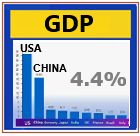
Q2-2013 GDP growth topped expectations but partly due to first quarter GDP being revised down with annual revisions. GDP gained an annualized 1.7%, following a 1.1% rise in the first quarter. The prior estimate for the first quarter was 1.8%. Analysts had projected a 1.1% advance for second quarter GDP. |
1.7% |
|
|
Growth |
U.S. Treasuries prices weakened on Wednesday after reports showing economic growth accelerated in the second quarter and that private sector employment grew more than forecast in July 2013 arguably inched the Federal Reserve a step closer to cutting back its monetarystimulus. |
|
|
Wed |
Employment Cost Index |
The second-quarter increase in ECI is on the high side, at plus 0.5% for a second straight quarter with the year-on-year rate, which is still under 2%, but just barely at 1.9% for a second straight quarter.
|
0.5%
Q/Q
|
|
|
Inflation |
The first-quarter rate is revised upward from an initial plus 0.3% with the year-on-year rate also revised higher from an initial 1.8%. |
|
|
Wed |
Chicago PMI |
The Chicago PMI composite headline index is up 7 tenths this month to 52.3 but several key components show slowing: new orders 53.9 vs 54.6, production 53.6 vs 57.0, and inventories 37.7 vs 41.4.
|
52.3 |
|
|
Manufacturing |
In positives, delivery times, which shortened sharply June to 46.9 in a sign of weakness, rose to 51.0 to indicate a little bit of congestion in the supply chain that's consistent with rising activity. Another sign of activity is employment which, though slipping 1.2 points in the month, is at 56.6 which is a very healthy level for this reading. |
|
|
Wed |
EIA Crude Oil |
U.S. crude stockpiles capped their biggest four-week drop in data going back to 1982, decreasing by 29.9 million barrels in the period ended July 19, according to the Energy Information Administration, the Energy Department's statistical unit. |
0.4M
Barrels
|
|
|
Commodity |
Refineries used 16.2 million barrels a day of crude in the week ended July 12, the most since August 2005, according to the EIA. |
|
|
Wed |
FOMC Meeting # 5 Day 1 |
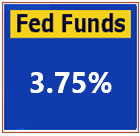
Today's FOMC statement did not issue a reduction in quantitative easing but it left the door open for coming months. Policy rates were left unchanged, including the fed funds target rate of zero to 0.25%. The vote was 11-1 with Kansas City's Esther George dissenting and St. Louis Fed's James Bullard not dissenting as he did at the least meeting for more easing. |
0.25% |
|
|
Interest Rates |
The Fed downgraded the characterization of the economy to "economic activity expanded at a modest pace" versus the last statement's "economic activity expanded at a moderate pace." The focus remains on the labor market. |
|
|
Thu |
Jobless/Initial Claims |
First-time claims for unemployment benefits fell last week to their lowest level in more than five years.
About 326,000 people filed initial claims for unemployment benefits in the week ending July 27, the Labor Department reported Thursday. |
326K |
|
|
Employment |
That marks the lowest level of weekly claims since January 2008 and seems to indicate layoffs are back to levels more consistent with pre-recession hiring. |
|
|
Thu |
ISM Manufacturing Index |
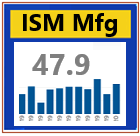
ISM's manufacturing sample reports a burst of strength in July 2013 with the composite headline index up a striking 4.5 points to 55.4. This is the strongest reading in more than 2 years. |
55.4
Level
|
|
|
Manufacturing |
The pace of growth in the manufacturing sector accelerated in July 2013 to the highest level in two years as new orders surged, supporting the view the economy will pick up in the second half of the year, an industry report showed on Thursday. |
|
|
Thu |
Construction Spending |
Outlays decreased 0.6% to a $883.9 billion annual rate after a 1.3% increase in May 2013 that was almost three times larger than previously estimated, the Commerce Department reported today in Washington. |
-0.6%
M/M |
|
|
Growth |
Construction spending in the U.S. unexpectedly dropped in June 2013 for the first time in three months, easing off an almost four-year high amid government cutbacks. |
|
|
Thu |
EIA Natural Gas Report |
Natural gas futures slid to a five-month low in New York after U.S. stockpiles increased more than forecast last week. |
59
bcf
|
|
|
Commodity |
The stockpile increase was bigger than the five-year average gain for the week of 47 billion cubic feet, department data show. A deficit to the five-year average narrowed to 1.2 percent from 1.6 percent the previous week. Supplies were 11.5 percent below year-earlier inventories, compared with 12.5 percent in last week's report. |
|
|
Thu |
Fed Balance Sheet |
For the July 31 week, the Fed balance sheet actually declined $2.8 billion after increasing $36.7 billion the prior period. The decrease was led by a $14.0 billion drop in holdings of mortgage-backed securities. Treasuries rose $12.4 billion.
|
$-2.8 B |
|
|
Government |
Total assets for the July 31 week were at $3.572 trillion. |
|
|
Thu |
M2 Money Supply |
M2 Weekly Change $16.8 Billions from 54.1 Billions. |
$16.8B |
|
|
Money Supply |
M2 included M1 and, in addition, short-term time deposits in banks and certain money market funds. In general, an increase in the supply of money typically lowers interest rates. |
|
|
Fri |
Fixed Mortgage Rates |
The U.S. mortgage giant Thursday said that the 30-year fixed-rate mortgage edged up to 4.39% in the week ending Aug 1, from 4.31% in the previous week.
|
4.39% |
|
|
Interest Rates |
The 15-year fixed-rate mortgage rose to 3.43% this week from 3.39% last week week 30, 2013. |
|
|
Fri |
Employment Situation |
The U.S. economy added 162,000 jobs, marking the slowest month for hiring since March, the Department of Labor said Friday. Economists had predicted employers added 180,000 jobs. Stocks slipped at the opening bell, following the report. |
7.4% |
|
|
Employment |
The report was discouraging in many regards. While the unemployment rate fell slightly to 7.4%, the drop was partly because 37,000 people dropped out of the labor force. |
|
|
Fri |
Personal Income |
Personal income growth in June 2013 was moderately strong along with personal spending. But inflation cut into both. Personal income advanced 0.3% in June 2013 after a 0.4% rise in May 2013. The wages & salaries component grew a robust 0.5%, following a 0.3% boost in May 2013. |
0.3% M/M |
|
|
Consumer |
Personal income increased $45.4 billion, or 0.3%, and disposable personal income (DPI) increased $33.6 billion, or 0.3%, in June 2013, according to the Bureau of Economic Analysis. |
|
|
Fri |
Consumer Spending/Real PCE |
Consumer spending surged 0.5% in June 2013, following a 0.2% rise the prior month. Nondurables led the gain, boosted by gasoline prices. Durables also were strong due to auto sales. |
0.5%
M/M |
|
|
Consumer |
Real PCE -- PCE adjusted to remove price changes -- increased 0.1% in June 2013, the same increase as in May 2013. |
|
|
Fri |
Core PCE |
Headline inflation was stronger with a 0.4% increase after rising 0.1% in May. The core inflation rate rose 0.2% in June 2103, following a 0.1% gain in May 2013. |
0.2% M/M |
|
|
Inflation |
The price index for PCE increased 0.1% in May 2013, in contrast to a decrease of 0.3% in April 2013. The PCE price index, excluding food and energy, increased 0.1%, compared with an increase of less than 0.1%. |
|
|
Fri |
Factory Orders |
The Commerce Department on Friday said new orders for manufactured goods increased 1.5%. May's orders were revised to show a 3.0% rise instead of the previously reported 2.1% advance. |
1.5%
M/M
|
|
|
Manufacturing |
U.S. factory orders rise 1.5%, but fall short of estimates. New orders for U.S. factory goods rose for the third straight month in June, the latest indication that a recent slowdown in manufacturing activity had probably run its course. |
|
|
|
|
|
|
|
|
|
|
|
|
|
|
|
|
|
|
|
|
|
|
|
|
|
| |
|
|
|
|
|
| |
|
|
|
|
|
|
|
|
|
|
| |
|
| WEEK 31-2013 ENDING JUN. 02 |
Reports Commentary
S&P 500
Instead of being driven by earnings, the market is rising because P/E multiples are expanding.
At the beginning of the year, the S&P 500 had a P/E multiple, based on expected 2013 earnings, of 13.8. As of the end of July, the forward P/E multiple of the S&P 500 is 15.7 times projected earnings estimates. Effectively, P/E valuation multiples have expanded by 13.7% so far this year.
As of July 26th, the S&P 500 is up 19.9%, or 18.8% if you exclude dividends. This means that the majority of the market's gain can be attributed to stocks becoming more expensive, not underlying earnings growth.
P/E multiples have expanded for two reasons. First, you have to remember that at the end of last year the market was still pricing in a material chance of a Eurozone collapse and numerous other macro-economic risks. Fast forward seven months, and while there have not been many positive developments for stocks, the market was not pricing in something good happening, it was pricing in some truly horrendous scenarios. When these events did not materialize, the market went up.
Secondly, the unprecedented quantitative easing, which effectively amounts to printing money by the Federal Reserve, is pushing the value of all risky assets up, including stocks and real estate. Bernanke has been gambling that if asset prices rise, everyone will become wealthier, consumers will buy more goods and corporations will then potentially hire more people. GM's recent earnings report is evidence that the plan is working.
GDP
The consensus estimate for year-over-year GDP growth has fallen to around 0.9%. We expect the actual number will be even lower, and would not be surprised to see GDP growth materialize around 0.5%. Furthermore, the recent reading on shipments of nondefense capital goods for June came in this past week much lighter than expected; and, despite home prices trending up, we expect the volume of home sales will slow due to the recent uptick in mortgage rates.
Manufacturing
Hurt by government spending cuts and weaker global demand, manufacturing growth has been lackluster of late and the sector contracted in May.
But the pick up in July added to economists' views that the economy is on stronger footing for the last half of the year. Data on Wednesday showed the economy grew at a quicker than expected pace in the second quarter and should continue to gain momentum.
A sustained pickup in the housing market combined with gains in non-residential building will be needed to overcome government budget cuts that have restrained growth. Nonetheless, tight land inventories and rising mortgage rates threaten to slow the progress in construction.
|
|
| |
|
|
|
|
| |
|
To prepare for this week we have posted the following Blog: |
|
|
| |
|
Durable Goods Report Showed Strength |
|
|
| |
|
|
|
|
|
| |
|
|
|
|
IMPORTANT NOTE: In an effort to comply with all applicable rules, regulations and disclosures please be so kind and read the "General Disclosure" below: |
| |
|
|
|
|
|
|
| GENERAL DISCLOSURE - TRADINGVESTING.COM |
- The material contained on our Website and Economic Calendar must be used at your own risk. Material is believed to be reliable, but we do not guarantee its accuracy or validity, nor is Tradingvesting.com responsible for any errors or omissions which may occur. The analysis and/or recommendations made by Tradingvesting.com do not provide, imply, or otherwise constitute a guarantee of performance. All contents and recommendations are based on data and sources believed to be reliable, but accuracy and completeness cannot be guaranteed. It should not be assumed that future results will be profitable or will equal past performance, real, indicated or implied.Tradingvesting.com website and material contained therein is not a solicitation to participate in the Futures/Stocks/Options Market. This Economic Calendar does not include Earning Releases, Announced Stock Splits, Upcoming Initial Public Offerings with Underwritings or Rating Changes. Tradingvesting.com has attempted to verify the information contained in this calendar. However, any aspect of such info may change without notice. Unless indicated otherwise: economic data is from the U.S and intraday data is at least 20 minutes delayed; all prices are in the local currency; Time is U.S. Eastern Time. Furthermore, there is a very high degree of risk involved in trading.Tradingvesting.com assumes no responsibilities for your trading and investment results, please red our Risk Disclosure.
- Tradingvesting.com does not provide investment advice, and does not represent that any of the information or related analysis is accurate or complete at any time. All information on this website are for educational purposes only and are not intended to provide financial advice. Any statements about profits or income, expressed or implied, do not represent a guarantee. Your actual trading may result in losses as no trading system is guaranteed. You accept full responsibilities for your actions, trades, profit or loss, and agree to hold Tradingvesting.com and any authorized distributors of this information harmless in any and all ways. We respect your right to privacy, please click here to view our privacy policy.
- U.S. Government Required Disclaimer - Commodity Futures Trading Commission.
Futures and options trading has large potential rewards, but also large potential risk. You must be aware of the risks and be willing to accept them in order to invest in the futures and options markets. Don't trade with money you can't afford to lose. This website is neither a solicitation nor an offer to Buy/Sell futures or options. No representation is being made that any account will or is likely to achieve profits or losses similar to those discussed on this website. The past performance of any trading system or methodology is not necessarily indicative of future results.
- CFTC rule 4.41: Hypothetical or simulated performance results have certain limitations. Unlike an actual performance record, simulated results do not represent actual trading. Also, since the trades have not been executed, the results may have under-or-over compensated for the impact, if any, of certain market factors, such as lack of liquidity. Simulated trading programs in general are also subject to the fact that they are designed with the benefit of hindsight. No representation is being made that any account will or is likely to achieve profit or losses similar to those shown.
- Risk Warning: Trading foreign exchange on margin carries a high level of risk, and may not be suitable for all investors. The high degree of leverage can work against you as well as for you. Before deciding to invest in foreign exchange you should carefully consider your investment objectives, level of experience, and risk appetite. The possibility exists that you could sustain a loss of some or all of your initial investment and therefore you should not invest money that you cannot afford to lose. You should be aware of all the risks associated with foreign exchange trading, and seek advice from an independent financial advisor if you have any doubts. Our linking to these sites does not constitute an endorsement of any products, services or the information found on them. Once you link to another site you are subject to the policies of the new site. By using this site, you agree to the Terms of Service, Privacy Policy and Risk Disclosure. Copyright 2013 Tradingvesting, LLC. All rights reserved. If you have any questions regarding the Online Economic Calendar application, please contact us: click here.
THIS BRIEF STATEMENT CANNOT, OF COURSE, DISCLOSE ALL THE RISKS AND OTHER ASPECTS OF THE COMMODITY MARKETS AND EQUITY MARKETS. PLEASE READ MORE AT: TERMS OF SERVICE.
|
|
|
| |
|
|
|
|
|
| |
|
|
|
|
|