|
 |
|
|
|
Week 16 -2013 | From Apr. 15 to Apr. 19, 2013 |
|
 |
|
|
|
|
|
|
| |
|
|
|
|
|
|
|
|
|
|
| |
Economic Data for Week 16-2013 | Global View
| Week Rating
| DATE |
DAY |
REPORT/CATEGORY |
HIGHLIGHTS ON WEEK 16-2013 |
LAST |
|
Mon |
Empire Estate Mfg Index |
The April 2013 Empire State Manufacturing Survey indicates that conditions for New York manufacturers improved slightly. The general business conditions index fell six points, but at 3.1, remained positive for a third consecutive month. |
3.05
M/M
|
|
 |
Manufacturing |
Similarly, the new orders index was lower than last month but still positive, dipping six points to 2.2, and the shipments index fell to 0.8. The indexes for both prices paid and prices received inched higher--a sign that the pace of input and selling price increases had picked up over the month. |
|
|
Mon |
Treasury Intal Capital |
The U.S. Department of the Treasury today released Treasury International Capital (TIC) data for February 2009. The next release, which will report on data for March 2009, is scheduled for May 15, 2009. Net foreign purchases of long-term securities were $22.0 billion. |
$-17.8B |
|
|
Balance of Payments |
Net foreign purchases of long-term U.S. securities were $20.8 billion. Of this, net purchases by private foreign investors were $25.9 billion, and net purchases by foreign official institutions were negative $5.1 billion. U.S. residents sold a net $1.2 billion of long-term foreign securities. |
|
|
Mon |
Housing Market Index |
A gauge of confidence among home builders fell in April 2013 for a third month of declines, hitting the lowest level in six months, hurt by weaker views on present sales of single-family homes and prospective-buyer traffic. |
42
Level
|
|
|
Real Estate |
The overall builder-confidence index decreased to 42 in April 2013 from 44 in March 2013. This is the lowest reading since October 2012, according to the National Association of Home Builders/Wells Fargo housing-market index released Monday. |
|
|
Tue |
ICSC Goldman Sachs Index |
ICSC-Goldman's year-on-year rate is steady and slightly above trend at plus 2.0%. Retail sales have been very soft and the report sees full month sales picking up in the next two weeks, forecasting a 2.0 to 3.0% year-on-year gain for the month vs March's very soft 1.4% gain |
2.0%
Y/Y
|
|
|
Sales and Inventories |
Same-store sales fell back 1.1% in the April 13, 2013 week, the result of wet weather and soft business at discounters. |
|
|
Tue |
Consumer Price Index |
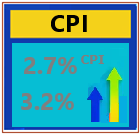
Lower energy costs brought down headline CPI inflation in March 2013. The core rate also eased. The consumer price index for March declined 0.2% after jumping 0.7 in February 2013. |
-0.2
M/M
|
|
|
Inflation |
The March 2013 pace came in below market expectations for no change. The core CPI-excluding food and energy-slowed to a 0.1% pace, following a 0.2% rise the month before. |
|
|
Tue |
Housing Starts |
Construction on new U.S. homes in March 2013 hit the highest rate in almost five years, as starts for apartments jumped. Housing starts rose 7% in March 2013 to a seasonally adjusted annual rate of 1.04 million, the highest rate since June 2008. |
1,036K |
|
|
Real Estate |
The government on Tuesday also revised up February's starts rate to 968,000. In March 2013, housing starts jumped 7.0% after a 7.3% gain the month before. |
|
|
Tue |
Builiding Permits |
This week Housing starts and Building Permits Reports for March 2013 gave mixed signals with starts up and permits down. |
902K |
|
|
Real Estate |
Permits fell back, declining 3.9% to an annual pace of 0.902 million units. Market expectations were for 0.942 million units for February 2013 permits. |
|
|
Tue |
Johnson Redbook |
Redbook's year-on-year same-store sales rate is plus 2.0% in the April 13 week which is down five tenths from the prior week and down 1 full percentage point from the week before that. |
2.0%
Y/Y
|
|
|
Sales and Inventories |
In an offset, the Redbook report notes that the latest rate reflects a tough comparison with the year-ago week which was boosted by Easter demand. |
|
|
Tue |
Industrial Production |
Industrial production and capacity utilization both increased in March 2013, albeit not notably so, extending the increases tallied the month before. All told, this was an affirmation that the nation's economy, though slowing down somewhat in March 2013, still ended the quarter in decent fashion. |
0.4%
M/M
|
|
|
Manufacturing |
In all, we continue to expect that the nation's gross domestic product rose by close to 3% in the recently ended three months. However, we continue to expect that growth will backtrack some in the current period. |
|
|
Wed |
MBA purchase Applications |
The spring housing season may now be showing some life with the purchase index up 4.0% in the April 12 week. The MBA Purchase index is now at its highest level since May 2010 when stimulus programs were boosting sales. |
4.8%
W/W
|
|
|
Real Estate |
Refinancing activity is also picking up with the index up 5.0%. Rates moved lower in the week with the average 30-year mortgage down 1 basis point to 3.67%. |
|
|
Wed |
Bank Reserve Settlement |
Bank Reserve Settlement is the date where commercial banks must meet reserve requirements stipulated by the Federal Reserve. |
N/A |
|
|
Banking System |
Bank Reserve Settlement is a two-week period that ends every other Wednesday. |
|
|
Wed |
EIA Crude Oil |
U.S. crude oil inventories dropped 1.2 million barrels for the week ending April 12, according to an Energy Information Administration (EIA) report (link opens in PDF) released today. At 387.6 million barrels total, the week's supply represents a 0.3% decrease compared to the previous week, when inventories increased by 0.3 million barrels. |
N/A |
|
|
Commodity |
For the week ending April 12, crude oil refinery inputs remained relatively steady, down just 40,000 barrels per day (bpd), while crude oil imports fell by 289,000 bpd. Overall inventories remain "well above the upper limit of the average range for this time of year," according to the EIA. |
|
|
Wed |
Beige Book |
Fed's Beige Book reports 'moderate' growth in U.S. economy. The so-called Beige Book released by the Fed, covering the period from late February to early April, is just slightly stronger in tone than the last Beige Book, which said the economy was growing "at a modest to moderate" pace. |
N/A |
|
|
Interest Rates |
The U.S. economy is growing at a "moderate" pace, as housing's rebound and the continued recovery in the auto sector offset weaknesses stemming from federal government budget cuts, the expiration of the payroll tax cut and winter weather, the Federal Reserve said Wednesday. Of the Fed's 12 districts, five reported "moderate" growth, five reported "modest" growth, and New York and Dallas reported slight accelerations. |
|
|
Thu |
Jobless/Initial Claims |
The latest weekly initial unemployment claims report is out, and it's a bit worse than expected. Claims climbed to 352,000 from 348,000 a week ago. |
352K |
|
|
Employment |
Economists were looking for a reading of 350,000. While disappointing, there was nothing too worrisome about the report. Some may actually be encouraged by the fact that claims are increasingly being impacted by the sequester. In other words, people are glad things aren't any worse. |
|
|
Thu |
Philadelphia Fed Survey |
Business among manufacturers in the Philadelphia region softened slightly in April 2013. The bank's business-conditions index edged down to 1.3 from 2.0 in March 2013, though any reading above zero indicates that manufacturers are still expanding. |
1.3
Level
|
|
|
Business Activity |
The consensus figure for The Philly Fed report was for a 3.3 reading, but it was a just 1.3. The Fed reported that the index for new orders fell to negative 1.0 in April 2013 from 0.5 in March 2013. |
|
|
Thu |
Leading Indicators |
Leading Economic Indicators (LEI) data were worse than expected in March 2013. Referring to its negative readings, a dip in building permits, a dip in the factory workweek, and a rise for initial unemployment claims in a reading that doesn't look to improve in the April 2013. |
-0.1%
M/M
|
|
|
Business Activity |
Inside the report we find that inventories and new orders went negative. Unfilled orders and delivery times were already negative and got worse, as well as the employment portion of the report getting worse. |
|
|
Thu |
EIA Natural Gas Report |
The nation's natural gas supplies rose last week. The Energy Department's Energy Information Administration reported that natural gas in storage grew by 31 billion cubic feet to 1.704 trillion cubic feet for the week ended April 12. Analysts expected a rise of 33 billion to 37 billion cubic feet. |
31
Bcf
|
|
|
Commodity |
The inventory level was 4.2% below the five-year average of 1.778 trillion cubic feet, and 31.8% below last year's level of 2.498 trillion cubic feet, according to the government data.Natural gas futures rose 10 cents, or 2.4%, to $4.31 per 1,000 cubic feet in New York. |
|
|
Thu |
Fed Balance Sheet |
The U.S. Federal Reserve's balance sheet expanded in the latest week on higher holdings of Treasuries and U.S. mortgage-backed securities, Fed data released on Thursday showed. |
$67.4
Billions |
|
|
Government |
The Fed's balance sheet - a broad gauge of its lending to the financial system -jumped $67.4 billion after growing $12.3 billion the week before |
|
|
Thu |
M2 Money Supply |
M2 Weekly Change $-26.3 Billions. |
$-26.3
Billions
|
|
|
Money Supply |
M2 included M1 and, in addition, short-term time deposits in banks and certain money market funds. In general, an increase in the supply of money typically lowers interest rates. |
|
|
Fri |
Fixed Mortgage Rates |
The mortgage giant said that the 30-year fixed-rate mortgage ( FRM) fell to 3.41% in the week ending April 18, down from 3.43% in the previous week and not far from the record low of 3.31%. |
3.41% |
|
|
Interest Rates |
The 15-year FRM, a popular choice for those looking to refinance, dipped slightly to 2.64% this week, also near the record low of 2.63% registered in November 2012. |
|
|
|
|
|
|
|
|
|
|
|
|
|
|
|
|
|
|
|
|
|
|
|
|
|
| |
|
|
|
|
|
| |
|
|
|
|
|
|
|
|
|
|
| |
|
| WEEK 16-2013 ENDING APR. 19 |
Reports Commentary
During the Boston Marathon on April 15, 2013, two pressure cooker bombs exploded at 2:49 pm EDT (18:49 UTC), killing 3 people and injuring 264. The bombs exploded about 13 seconds and 210 yards (190 m) apart, near the finish line on Boylston Street.
The Federal Bureau of Investigation (FBI) took over the investigation, and on April 18, released photographs and surveillance video of two suspects. The suspects were identified later that day as the Chechen brothers Dzhokhar and Tamerlan Tsarnaev.
Gold
Gold futures to log their biggest decline since the 1980s as the sharp selloff in the metal continued into a second straight session.
U.S. March Jobs Report
In March, we had weaker than expected job growth. The PMI inflation number, which came in on Friday, was also weaker than expected.
Japan
The Bank of Japan recently announced that they were going to buy 7 trillion yen worth of bonds, at a rate of $75 billion a month. With a fully employed economy like Japan's, all effects of their quantitative easing program will be seen in prices.
U.S. corporations need stronger earnings for the market to significantly appreciate. We must see what happens with new monthly jobs numbers; what happens with Japan; and what happens with Europe.
Europe
The European Central bank (the ECB) announced this week that it is holding off on cutting Europe's short-term interest rates. European central bankers are waiting for some type of second half recovery. This is not a positive development. Europe is now experiencing stagnation.
CPI
The consumer price index decreased 0.2% in March, led by lower energy and apparel costs. The decrease was larger than the 0.1% decline expected by analysts. Core prices which exclude volatile food and energy costs increased 0.1%, softer than the 0.2% gain expected.
What do the Economic Reports reveal about the state of the economy?
- Boston Marathon Bombing on April 15, 2013
- European stocks drop to worst levels in six months.
- German stock market goes NEGATIVE for 2013.
- Terrorist not found in Boston bombing yet, and Ricin-laced poisonous letters found mailed to Senator Wicker & President Obama.
- European officials claim they may cut interest rates sending the Euro lower.
- German sovereign debt is DOWNGRADED.
- Apple shares dip below $400 level for first time since 2011.
|
|
| |
|
|
|
|
| |
|
To prepare for this week we have posted the following Blog: |
|
|
| |
|
S&P Climbed to highest |
|
|
| |
|
|
|
|
|
| |
|
|
|
|
IMPORTANT NOTE: In an effort to comply with all applicable rules, regulations and disclosures please be so kind and read the "General Disclosure" below: |
| |
|
|
|
|
|
|
| GENERAL DISCLOSURE - TRADINGVESTING.COM |
- The material contained on our Website and Economic Calendar must be used at your own risk. Material is believed to be reliable, but we do not guarantee its accuracy or validity, nor is Tradingvesting.com responsible for any errors or omissions which may occur. The analysis and/or recommendations made by Tradingvesting.com do not provide, imply, or otherwise constitute a guarantee of performance. All contents and recommendations are based on data and sources believed to be reliable, but accuracy and completeness cannot be guaranteed. It should not be assumed that future results will be profitable or will equal past performance, real, indicated or implied.Tradingvesting.com website and material contained therein is not a solicitation to participate in the Futures/Stocks/Options Market. This Economic Calendar does not include Earning Releases, Announced Stock Splits, Upcoming Initial Public Offerings with Underwritings or Rating Changes. Tradingvesting.com has attempted to verify the information contained in this calendar. However, any aspect of such info may change without notice. Unless indicated otherwise: economic data is from the U.S and intraday data is at least 20 minutes delayed; all prices are in the local currency; Time is U.S. Eastern Time. Furthermore, there is a very high degree of risk involved in trading.Tradingvesting.com assumes no responsibilities for your trading and investment results, please red our Risk Disclosure.
- Tradingvesting.com does not provide investment advice, and does not represent that any of the information or related analysis is accurate or complete at any time. All information on this website are for educational purposes only and are not intended to provide financial advice. Any statements about profits or income, expressed or implied, do not represent a guarantee. Your actual trading may result in losses as no trading system is guaranteed. You accept full responsibilities for your actions, trades, profit or loss, and agree to hold Tradingvesting.com and any authorized distributors of this information harmless in any and all ways. We respect your right to privacy, please click here to view our privacy policy.
- U.S. Government Required Disclaimer - Commodity Futures Trading Commission.
Futures and options trading has large potential rewards, but also large potential risk. You must be aware of the risks and be willing to accept them in order to invest in the futures and options markets. Don't trade with money you can't afford to lose. This website is neither a solicitation nor an offer to Buy/Sell futures or options. No representation is being made that any account will or is likely to achieve profits or losses similar to those discussed on this website. The past performance of any trading system or methodology is not necessarily indicative of future results.
- CFTC rule 4.41: Hypothetical or simulated performance results have certain limitations. Unlike an actual performance record, simulated results do not represent actual trading. Also, since the trades have not been executed, the results may have under-or-over compensated for the impact, if any, of certain market factors, such as lack of liquidity. Simulated trading programs in general are also subject to the fact that they are designed with the benefit of hindsight. No representation is being made that any account will or is likely to achieve profit or losses similar to those shown.
- Risk Warning: Trading foreign exchange on margin carries a high level of risk, and may not be suitable for all investors. The high degree of leverage can work against you as well as for you. Before deciding to invest in foreign exchange you should carefully consider your investment objectives, level of experience, and risk appetite. The possibility exists that you could sustain a loss of some or all of your initial investment and therefore you should not invest money that you cannot afford to lose. You should be aware of all the risks associated with foreign exchange trading, and seek advice from an independent financial advisor if you have any doubts. Our linking to these sites does not constitute an endorsement of any products, services or the information found on them. Once you link to another site you are subject to the policies of the new site. By using this site, you agree to the Terms of Service, Privacy Policy and Risk Disclosure. Copyright 2013 Tradingvesting, LLC. All rights reserved. If you have any questions regarding the Online Economic Calendar application, please contact us: click here.
THIS BRIEF STATEMENT CANNOT, OF COURSE, DISCLOSE ALL THE RISKS AND OTHER ASPECTS OF THE COMMODITY MARKETS AND EQUITY MARKETS. PLEASE READ MORE AT: TERMS OF SERVICE.
|
|
|
| |
|
|
|
|
|
| |
|
|
|
|
|