 |
 |
|
 |
Treasury Budget | Government |
|
 |
|
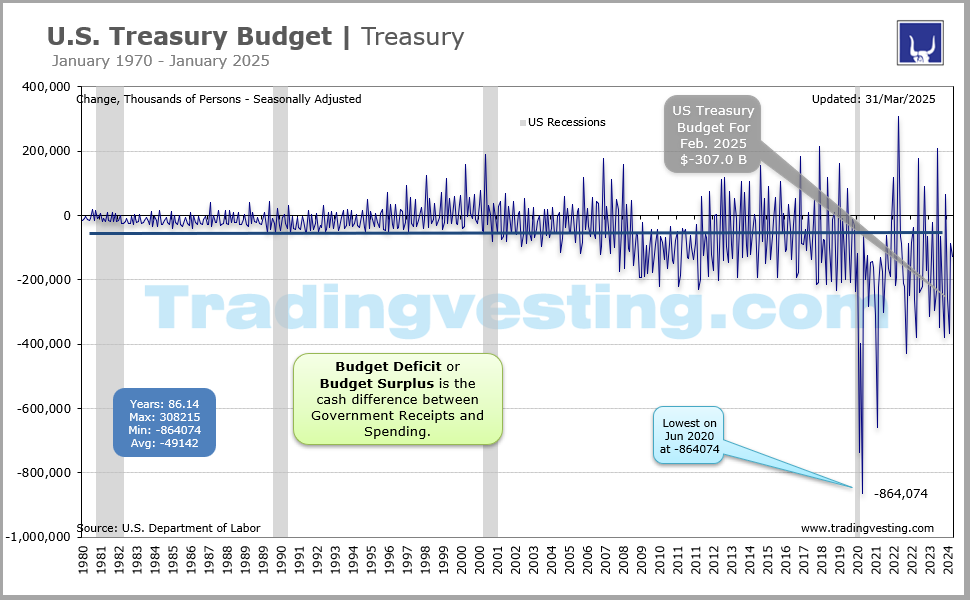
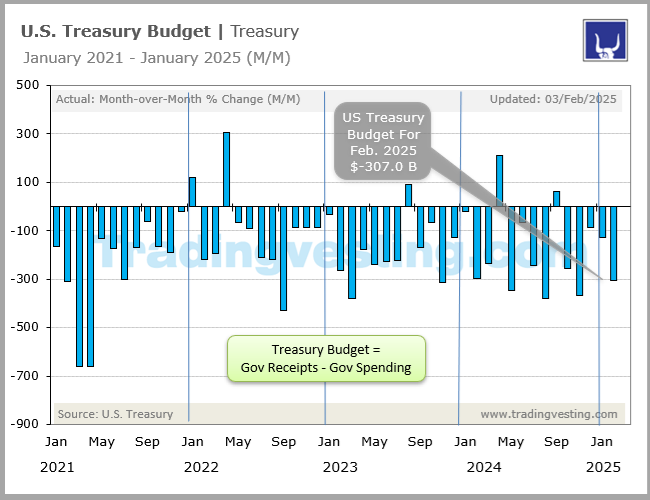
The Federal Government Treasury Budget, Budget Deficit or Budget Surplus is the cash difference between Government Receipts and Spending. Therefore:
Treasury Budget = Government Receipts - Government Spending. Read More...
|
|
|
|
|
|
|
| |
|
| |
 2. Treasury Budget (2 of 2) 2. Treasury Budget (2 of 2)
 1. Treasury Intal Capital TIC (1 of 2)
|
 |
|
|
|
|
| |
|
→ Big Chart |
|
→ Release |
|
| |
|
|
|
|
|
|
|
|
|
|
|
|
|
|
|
|
|
|
|
 |
|
Big Chart | Large Data |
 |
|
Treasury Budget | Government |
|
Today's Week |
 |
|
|
|
|
|
|
|
|
|
|
|
|
|
| |
|
|
|
|
|
|
|
|
|
|
|
|
|
| |
|
|
|
|
|
|
|
|
|
|
|
|
|
|
|
|
|
|
|
|
|
Release Schedule | 2026 |
|
|
Treasury Budget | Government |
|
Today's Week |
|
|
|
|
|
|
|
|
|
|
|
|
|
U.S. Treasury Budget (At 14:00 ET)
| SCHEDULE 2026 |
No 1 |
No 2 |
No 3 |
No 4 |
No 5 |
No 6 |
No 7 |
No 8 |
No 9 |
No 10 |
No 11 |
No 12 |
| Released | Week |
|
|
|
|
|
|
|
|
|
|
|
|
| Released | Date |
|
|
|
|
|
|
|
|
|
|
|
|
| Released | Day |
|
|
|
|
|
|
|
|
|
|
|
|
 |
|
|
|
|
|
|
|
|
|
|
|
|
| Prior |
-173.3B |
-144.8B |
-94.6B |
-307.5B |
-164.1B |
215.0B |
... |
... |
... |
... |
... |
... |
| Prior Revised |
... |
... |
... |
... |
... |
... |
... |
... |
... |
... |
... |
... |
| CONSENSUS |
-152.5B |
-92.3B |
-308.0B |
-163.0B |
... |
-269.5B |
... |
... |
... |
... |
... |
... |
| Consensus Low |
-160.0B |
-94.0B |
... |
... |
... |
-312.0B |
... |
... |
... |
... |
... |
... |
| Consensus High |
-143.0B |
-89.0B |
... |
... |
... |
-240.0B |
... |
... |
... |
... |
... |
... |
| BUDGET M/M |
-144.8B |
-94.6B |
-307.5B |
-164.1B |
215.2B |
-292.6B |
... |
... |
... |
... |
... |
... |
| RATING |
|
|
|
|
|
|
|
|
|
|
|
|
| Month For |
Dec 25 |
Jan-26 |
Feb-26 |
Mar-26 |
Apr-26 |
May-26 |
Jun-26 |
Jul-26 |
Aug-26 |
Sep-26 |
Oct-26 |
Nov-26 |
| Deficit/Surplus |
Deficit |
Deficit |
Deficit |
Deficit |
Surpluss |
Deficit |
Surpluss |
Deficit |
Deficit |
Surpluss |
Deficit |
Deficit |
|
|
|
|
|
|
|
|
|
|
|
|
|
|
|
| |
|
| |
|
|
|
|
|
|
|
|
|
|
|
Release Schedule | 2025 |
|
|
Treasury Budget | Government |
|
Today's Week |
|
|
|
|
|
|
|
|
|
|
|
|
|
U.S. Treasury Budget (At 14:00 ET)
| SCHEDULE 2025 |
No 1 |
No 2 |
No 3 |
No 4 |
No 5 |
No 6 |
No 7 |
No 8 |
No 9 |
No 10 |
No 11 |
No 12 |
| Release | Week |
|
|
|
|
|
|
|
|
|
|
|
|
| Release | Date |
|
|
|
|
|
|
|
|
|
|
|
|
| Release | Day |
|
|
|
|
|
|
|
|
|
|
|
|
|
|
|
|
|
|
|
|
|
|
|
|
|
| Prior |
-366.8B |
-86.7B |
-128.6B |
-307.0B |
-160.5B |
-258.4B |
-316.0B |
27.0B |
-291.1B |
-344.4B |
197.95B |
284.35B |
| Prior Revised |
... |
... |
... |
... |
... |
... |
-315.7B |
... |
... |
... |
197.93B |
... |
| CONSENSUS |
-85.0B |
-88.8B |
-250.0B |
-163.0B |
-245.5B |
-313.0B |
-50.0B |
... |
-310.0B |
... |
-275.0B |
-212.7B |
| Consensus Low |
-220.0B |
-127.0B |
-318.0B |
-315.6B |
-195.0B |
-331.0B |
-350.0B |
... |
-360.0B |
... |
-330.0B |
-223.4B |
| Consensus High |
-30.0B |
-45.5B |
-90.0B |
-90.0B |
-260.0B |
-258.4B |
-11.0B |
... |
-281.9B |
... |
50.0B |
-155.0B |
| BUDGET M/M |
-86.7B |
-128.6B |
-307.0B |
-160.5B |
-258.4B |
-316.0B |
27.0B |
-291.1B |
-344.4B |
197.9B |
-284.3B |
-173.3B |
| RATING |
|
|
|
|
|
|
|
|
|
|
|
|
| Month For |
Dec 24 |
Jan-25 |
Feb-25 |
Mar-25 |
Apr-25 |
May-25 |
Jun-25 |
Jul-25 |
Aug-25 |
Sep-25 |
Oct-25 |
Nov-25 |
| Deficit/Surplus |
Deficit |
Deficit |
Deficit |
Deficit |
Deficit |
Deficit |
Surpluss |
Deficit |
Deficit |
Surpluss |
Deficit |
Deficit |
|
|
|
|
|
|
|
|
|
|
|
|
|
|
|
| |
|
| |
|
|
|
|
|
|
|
|
|
|
|
Release Schedule | 2024 |
|
|
Treasury Budget | Government |
|
Today's Week |
|
|
|
|
|
|
|
|
|
|
|
|
|
U.S. Treasury Budget (At 14:00)
| SCHEDULE 2024 |
No 1 |
No 2 |
No 3 |
No 4 |
No 5 |
No 6 |
No 7 |
No 8 |
No 9 |
No 10 |
No 11 |
No 12 |
| Released Week: |
|
|
|
|
|
|
|
|
|
|
|
|
| Released Date: |
|
|
|
|
|
|
|
|
|
|
|
|
| Released Day: |
|
|
|
|
|
|
|
|
|
|
|
|
| Prior: |
-314.0B |
-129.4B |
-21.9B |
-296.3B |
-236.5B |
209.5B |
-347.1B |
-66.0B |
-243.7B |
-380.1B |
64.26B |
-257.5B |
| Prior Revised: |
... |
... |
... |
... |
... |
... |
... |
-71.0 |
... |
... |
64.7B |
... |
| CONSENSUS: |
-128.0B |
-21.0B |
-298.0B |
-340.0B |
236.0B |
-236.0B |
-83.0B |
-242.3B |
-252.0B |
... |
... |
-356.0B |
| Consensus Low: |
-132.0B |
-72.0B |
-300.0B |
-340.0B |
120.0B |
-348.0B |
-310.0B |
... |
-381.0B |
... |
... |
-365.0B |
| Consensus High: |
-90.0B |
-20.0B |
-240.0B |
-220.0B |
270.0B |
-203.0B |
-25.0B |
... |
-148.0B |
... |
... |
-351.0B |
| BILLIONS: |
-129.4B |
-21.9B |
-296.3B |
-236.5B |
209.5B |
-347.1B |
-66.0B |
-243.7B |
-380.1B |
64.26B |
-257.5B |
-366.8B |
| RATING |
|
|
|
|
|
|
|
|
|
|
|
|
| Month For: |
Dec 23 |
Jan-24 |
Feb-24 |
Mar-24 |
Apr-24 |
May-24 |
Jun-24 |
Jul-24 |
Aug-24 |
Sep-24 |
Oct-24 |
Nov-24 |
| Deficit/Surplus |
Deficit |
Deficit |
Deficit |
Deficit |
Surpluss |
Deficit |
Deficit |
Deficit |
Deficit |
Surpluss |
Deficit |
Deficit |
|
|
|
|
|
|
|
|
|
|
|
|
|
|
|
| |
|
| |
|
|
|
|
|
|
|
|
|
|
|
Release Schedule | 2023 |
|
|
Treasury Budget | Government |
|
Today's Week |
|
|
|
|
|
|
|
|
|
|
|
|
|
U.S. Treasury Budget
| SCHEDULE 2023 |
No 1 |
No 2 |
No 3 |
No 4 |
No 5 |
No 6 |
No 7 |
No 8 |
No 9 |
No 10 |
No 11 |
No 12 |
| Released Week: |
|
|
|
|
|
|
|
|
|
|
|
|
| Released Date: |
|
|
|
|
|
|
|
|
|
|
|
|
| Released Day: |
|
|
|
|
|
|
|
|
|
|
|
|
| Prior: |
-248.5B |
-85.0B |
-38.8B |
-262.4B |
-378.1B |
-176.2B |
-240.3B |
-227.8B |
-220.8B |
-89.3B |
-170.9B |
-66.6B |
| Prior Revised: |
... |
... |
... |
... |
... |
... |
... |
... |
... |
... |
-170.7B |
... |
| CONSENSUS: |
-70.0B |
-55.0B |
-266.0B |
-253.0B |
-410.0B |
-205.0B |
-169.0B |
-190.0B |
-223.0B |
-85.5B |
-49.8B |
-233.5B |
| Consensus Low: |
-253.0B |
-97.0B |
-275.0B |
-257.0B |
-153.1B |
-236.0B |
-225.0B |
-227.8B |
-245.0B |
-166.0B |
-210.0B |
-317.0B |
| Consensus High: |
-10.0B |
-110.0B |
-225.8B |
-222.0B |
-420.0B |
-125.0B |
-80.0B |
-95.0B |
90.0B |
-16.2B |
35.0B |
-90.0B |
| BILLIONS: |
-85.0B |
-30.8B |
-262.4B |
-378.1B |
-176.2B |
-240.3B |
-227.8B |
-220.8B |
-89.3B |
-170.9B |
-66.6B |
-314.6B |
| RATING |
|
|
|
|
|
|
|
|
|
|
|
|
| Month For: |
Dec 22 |
Jan-23 |
Feb-23 |
Mar-23 |
Apr-23 |
May-23 |
Jun-23 |
Jul-23 |
Aug-23 |
Sep-23 |
Oct-23 |
Nov-23 |
| Deficit/Surplus |
Deficit |
Deficit |
Deficit |
Deficit |
Deficit |
Deficit |
Deficit |
Deficit |
Deficit |
Deficit |
Deficit |
Deficit |
|
|
|
|
|
|
|
|
|
|
|
|
|
|
|
| |
|
| |
|
|
|
|
|
|
|
|
|
|
|
Release Schedule | 2022 |
|
|
Treasury Budget | Government |
|
Today's Week |
|
|
|
|
|
|
|
|
|
|
|
|
|
U.S. Treasury Budget
| SCHEDULE 2022 |
No 1 |
No 2 |
No 3 |
No 4 |
No 5 |
No 6 |
No 7 |
No 8 |
No 9 |
No 10 |
No 11 |
No 12 |
| Released Week: |
|
|
|
|
|
|
|
|
|
|
|
|
| Released Date: |
|
|
|
|
|
|
|
|
|
|
|
|
| Released Day: |
|
|
|
|
|
|
|
|
|
|
|
|
| Prior: |
-191.3B |
-21.3B |
118.7B |
-216.6B |
-192.7B |
308.2B |
-66.2B |
-88.8B |
-211.1B |
-219.6B |
-429.7B |
-87.8B |
| Prior Revised: |
... |
... |
... |
... |
... |
... |
... |
... |
... |
... |
... |
... |
| CONSENSUS: |
-25.0B |
0.5B |
-124.0B |
-44.8B |
200.0B |
-275.0B |
-34.0B |
-162.0B |
-218.5B |
... |
-95.0B |
-200.0B |
| Consensus Low: |
-95.0B |
-25.0B |
-235.0B |
-120.0B |
190.0B |
-275.0B |
-70.0B |
-163.5B |
... |
... |
-100.0B |
-248.0B |
| Consensus High: |
30.0B |
25.0B |
-18.0B |
-120.0B |
220.0B |
-143.0B |
-30.0B |
-101.0B |
... |
... |
-83.0B |
-95.0B |
| BILLIONS: |
-21.3B |
118.7B |
-216.6B |
-192.7B |
308.2B |
-66.2B |
-88.8B |
-211.1B |
-219.6B |
-429.7B |
-87.8B |
-87.8B |
| RATING |
|
|
|
|
|
|
|
|
|
|
|
|
| Month For: |
Dec 21 |
Jan-22 |
Feb-22 |
Mar-22 |
Apr-22 |
May-22 |
Jun-22 |
Jul-22 |
Aug-22 |
Sep-22 |
Oct-22 |
Nov-22 |
| Deficit/Surplus |
Deficit |
Surpluss |
Deficit |
Deficit |
Surpluss |
Deficit |
Deficit |
Deficit |
Deficit |
Deficit |
Deficit |
Deficit |
|
|
|
|
|
|
|
|
|
|
|
|
|
|
|
| |
|
| |
|
|
|
|
|
|
|
|
|
|
|
Release Schedule | 2021 |
|
|
Treasury Budget | Government |
|
Today's Week |
|
|
|
|
|
|
|
|
|
|
|
|
|
U.S. Treasury Budget
| SCHEDULE 2021 |
No 1 |
No 2 |
No 3 |
No 4 |
No 5 |
No 6 |
No 7 |
No 8 |
No 9 |
No 10 |
No 11 |
No 12 |
| Released Week: |
|
|
|
|
|
|
|
|
|
|
|
|
| Released Date: |
|
|
|
|
|
|
|
|
|
|
|
|
| Released Day: |
|
|
|
|
|
|
|
|
|
|
|
|
| Prior: |
-143.6B |
-143.6B |
-162.8B |
-310.9B |
-659.6B |
-225.6B |
-132.0B |
-174.0B |
-302.1B |
-170.6B |
-61.5B |
-165.5B |
| Prior Revised: |
... |
... |
... |
... |
... |
... |
... |
... |
... |
... |
... |
... |
| CONSENSUS: |
-233.5B |
-233.5B |
-257.5B |
-685.5B |
-349.0B |
-230.0B |
-206.0B |
... |
-303.5B |
... |
... |
... |
| Consensus Low: |
-625B |
-625B |
-632B |
-798B |
-800B |
-368B |
-261B |
... |
-336B |
... |
... |
... |
| Consensus High: |
-147B |
-147B |
-150B |
-265B |
-32.5B |
-160B |
-175B |
... |
-173B |
... |
... |
... |
| BILLIONS: |
-143.6B |
-162.8B |
-310.9B |
-659.6B |
-225.6B |
-132.0B |
-174.0B |
-302.1B |
-170.6B |
--61.5B |
-165.1B |
-191.3B |
| RATING |
|
|
|
|
|
|
|
|
|
|
|
|
| Month For: |
Dec 20 |
Jan-21 |
Feb-21 |
Mar-21 |
Apr-21 |
May-21 |
Jun-21 |
Jul-21 |
Aug-21 |
Sep-21 |
Oct-21 |
Nov-21 |
| Deficit/Surplus |
Deficit |
Deficit |
Deficit |
Deficit |
Deficit |
Deficit |
Deficit |
Deficit |
Deficit |
Deficit |
Deficit |
Deficit |
|
|
|
|
|
|
|
|
|
|
|
|
|
|
|
| |
|
| |
|
Legends: |
 |
Delayed |
 |
Positive View |
 |
Negative View |
 |
Neutral View |
 |
Non Available |
|
|
|
|
|
|
|
|
|
|
|
|
|
|
|
|
|
|
|
|
| |
|
|
|
|
|
|
|
|
|
|
|
|
Treasury Budget - Government
| DATE/WEEK |
HIGHLIGHTS |
FOR |
BUDGET |
|
Treasury Budget |
No 12 |
... |
|
Nov-2025 |
|
| |
|
|
|
Treasury Budget |
No 11 |
... |
|
Oct-2025 |
|
| |
|
|
|
Treasury Budget |
No 10 |
... |
|
Sep-2025 |
|
| |
|
|
|
Treasury Budget |
No 9 |
... |
|
Aug-2025 |
|
| |
|
|
|
Treasury Budget |
No 8 |
... |
|
Jul-2025 |
|
| |
|
|
|
Treasury Budget |
No 7 |
... |
|
Jun-2025 |
|
| |
|
|
|
Treasury Budget |
No 6 |
... |
|
May-2025 |
|
| |
|
|
|
Treasury Budget |
No 5 |
... |
|
Apr-2025 |
|
| |
|
|
|
Treasury Budget |
No 4 |
... |
|
Mar-2025 |
|
| |
|
|
|
Treasury Budget |
No 3 |
... |
|
Feb-2025 |
|
| |
|
|
|
Treasury Budget |
No 2 |
... |
|
Jan-2025 |
|
| |
|
|
|
Treasury Budget |
No 1 |
... |
|
Dec-2024 |
|
| |
|
|
|
|
|
|
|
|
|
| |
|
|
|
|
|
| |
|
|
|
|
|
|
Treasury Budget - Government
| DATE/WEEK |
HIGHLIGHTS |
FOR |
BUDGET |
|
Treasury Budget |
No 12 |
-173.3B |
|
Nov-2025 |
|
| |
|
|
|
Treasury Budget |
No 12 |
-284.35B |
|
Oct-2025 |
|
| |
|
|
|
Treasury Budget Release for Oct. 2025 has been Delayed. The federal government has suspended all data compilation during the shutdown. Government Shutdown. |
No 11 |
... |
|
Oct-2025 |
|
| |
|
|
|
For the 2025 fiscal year's final month of September, the Treasury reported a record surplus of $198 billion, up $118 billion, or 147%, from the same month in the prior year. September is often a month of surplus due to quarterly tax filing deadlines for companies and individuals. Receipts last month were up $17 billion, or 3%, to $544 billion, while outlays were down $101 billion, or 23%, to $346 billion. The latest monthly surplus was boosted by a $131 billion cut to the Department of Education budget that was mandated in the recent spending and tax bill. For September, the education outlays were $123 billion lower than in September 2024. |
No 10 |
197.95B |
|
Sep-2025 |
|
| |
|
|
|
US August deficit falls to $345 billion as tariff revenues rise. The U.S. budget deficit for August fell $35 billion or 9% from a year earlier to $345 billion as President Donald Trump's tariffs pushed net customs receipts up by about $22.5 billion for the month, the Treasury Department said on Thursday. With one month to go in the 2025 fiscal year, the year-to-date deficit rose $76 billion, or 4% to $1.973 trillion. A U.S. Treasury official declined to predict whether the deficit would top $2 trillion for the full fiscal year ended September 30 but told reporters that September typically has higher revenues than August because of quarterly tax payment deadlines. |
No 9 |
-344.4B |
|
Aug-2025 |
|
| |
|
|
|
US deficit grows to $291 billion in July despite tariff revenue surge. The U.S. government's budget deficit grew nearly 20% in July to $291 billion despite a nearly $21 billion jump in customs duty collections from President Donald Trump's tariffs, with outlays growing faster than receipts, the Treasury Department said on Tuesday. The deficit for July was up 19%, or $47 billion, from July 2024. Receipts for the month grew 2%, or $8 billion, to $338 billion, while outlays jumped 10%, or $56 billion, to $630 billion, a record high for the month. |
No 8 |
-291.1B |
|
Jul-2025 |
|
| |
|
|
|
U.S. customs duty collections surged again in June as President Donald Trump's tariffs gained steam, topping $100 billion for the first time during a fiscal year and helping to produce a surprise $27 billion budget surplus for the month, the Treasury Department reported on Friday. The budget data showed that tariffs are starting to build into a significant revenue contributor for the federal government, with customs duties in June hitting new records, quadrupling to $27.2 billion on a gross basis and $26.6 billion on a net basis after refunds. |
No 7 |
27.0B |
|
Jun-2025 |
|
| |
|
|
|
The U.S. Treasury reported a budget deficit of $316 billion for May 2025, which, while a significant monthly shortfall, was 9% smaller than the deficit recorded in May 2024. This figure contributed to a cumulative budget deficit of $1.365 trillion for the first seven months of fiscal 2025, representing a 13.5% increase compared to the same period in fiscal 2024. . The Congressional Budget Office reported that outlays in the first eight months of fiscal year 2025 were up by 8% compared to the same period last year. Excise taxes increased by 18% and miscellaneous fees and fines increased by 28%, while estate and gift taxes decreased by 12%. May has historically been a deficit month due to fewer tax due dates, but extensions for hurricane-affected areas and accelerated payments for military, veterans, and Medicare benefits influenced the figures this year. |
No 6 |
-316.0B |
|
May-2025 |
|
| |
|
|
|
US budget surplus surges to $258 billion in April, year-to-date deficit tops $1 trillion. The U.S. government posted a $258 billion budget surplus for April, up 23%, or about $49 billion, from a year earlier, reflecting strong tax receipts in the final month of the tax season and record collections of import duties, the Treasury Department said on Monday. Treasury reported that customs duties in April totaled $16 billion, about a $9 billion increase from the year-earlier period and far eclipsing the previous record of $9.6 billion two years earlier. The jump occurred during a month in which President Donald Trump boosted tariffs on Chinese goods to as much as 145% while slapping at least 10% levies on imports of goods from other countries. |
No 5 |
-258.4B |
|
Apr-2025 |
|
| |
|
|
|
US March deficit falls to $161 billion, customs revenue grows but still small. The U.S. government posted a $161 billion budget deficit for March, down 32%, or $76 billion, from a year earlier, a decline due largely to a calendar shift for benefit payments as receipts continued to grow, the Treasury Department said on Thursday. The Treasury reported that net customs duties in March totaled $8.2 billion, a $2.1 billion increase from a year earlier and the highest since September 2022. |
No 4 |
-160.5B |
|
Mar-2025 |
|
| |
|
|
|
US October-February budget deficit hits record $1.147 trillion. The U.S. budget deficit for the first five months of fiscal 2025 hit a record $1.147 trillion, the Treasury Department said on Wednesday, including a $307 billion February deficit for President Donald Trump's first full month in office that was up 4% from a year earlier. The October-February deficit, which included nearly four months until January 20 under former president Joe Biden, topped the previous record $1.047 trillion from October 2020 to February 2021 - a period marked by high COVID-19 relief spending and pandemic-constrained revenues. |
No 3 |
-307.0B |
|
Feb-2025 |
|
| |
|
|
|
US posts $129 billion January deficit on calendar shifts, higher outlays.The federal government posted a $129 billion budget deficit for January, up sharply from an unusually low $22 billion deficit in January 2024 due to benefit payment calendar shifts and higher outlays for Social Security, Medicare, interest and other costs, the U.S. Treasury said on Wednesday. The January budget results, the last reflecting fiscal management of former president Joe Biden's administration, showed that January receipts to grew 8% or $36 billion from a year earlier, to $513 billion. |
No 2 |
-128.6B |
|
Jan-2025 |
|
| |
|
|
|
US Treasury reports record $711 billion budget deficit for first months of 2025. The U.S. government posted an $87 billion budget deficit in December, reduced partly by a shift of benefit payments into November but capping a record $711 billion deficit for the first three months of the 2025 fiscal year, the U.S. Treasury Department said on Tuesday. The Treasury, releasing its final budget report before President-elect Donald Trump takes office next week, said that the $711 billion October-December deficit was $201 billion, or 39% higher, than the $510 billion deficit in the same period a year earlier as outlays grew sharply and revenues declined slightly. For December, the $87 billion deficit was reduced by $51 billion by the calendar benefit shift, and compared to a $129 billion deficit in December 2023. Receipts for the month were up 6% to $454 billion, while outlays as reported were down 3% to $541 billion.. |
No 1 |
-86.7B |
|
Dec-2024 |
|
| |
|
|
|
|
|
|
|
|
|
| |
|
|
|
|
|
| |
|
|
|
|
|
|
Treasury Budget - Government
| DATE/WEEK |
HIGHLIGHTS |
FOR |
Y/Y |
|
US budget deficit climbs to $367 billion in November on calendar payment shifts. The U.S. government posted a $367 billion budget deficit for November, up 17% from a year earlier, as calendar adjustments for benefit payments boosted outlays by some $80 billion compared to the same month in 2023, the Treasury Department said on Wednesday. The Treasury Department said that without the acceleration of December payments for the Medicare and Social Security programs into November, the deficit last month would have been about $29 billion, or 9% lower than last year. |
No 12 |
-366.8B |
|
Nov-2024 |
|
| |
|
|
|
U.S. October budget deficit jumps to $257 billion, handing hole to Trump. The U.S. budget deficit jumped nearly four-fold to $257 billion in October, a figure inflated by one-off factors, the Treasury Department said on Wednesday in a report that started off a new fiscal year with a big hole to be turned over to President-elect Donald Trump in January. The Treasury said the October deficit was up 287% from the $67 billion deficit in October 2023, but calendar adjustments in benefit payments had cut that month's deficit nearly in half. The budget results for October, the first month of the 2025 fiscal year, come after President Joe Biden's administration turned in a full-year fiscal 2024 deficit of $1.83 trillion, the largest outside the COVID-19 era. Trump presided over the biggest-ever U.S. budget deficit of $3.1 trillion in fiscal 2020, the result of massive COVID relief spending coupled with a massive halt to economic activity that collapsed federal revenues. |
No 11 |
-257.5B |
|
Oct-2024 |
|
| |
|
|
|
The U.S. Treasury releases a monthly account of the surplus or deficit of the federal government. Changes in the budget balance reflect Federal policy on spending and taxation. The government's fiscal year begins in October |
No 10 |
$64.263B |
|
Sep-2024 |
|
| |
|
|
|
The U.S. budget deficit reached $1.897 trillion for the first 11 months of the 2024 fiscal year, the Treasury Department said on Thursday, as annual interest costs on the public debt topped $1 trillion for the first time. For the month of August, Treasury reported a $380 billion deficit compared to a surplus of $89 billion in the same month last year that resulted from the reversal of Biden's student loan forgiveness program. The 11-month deficit roughly matches the Congressional Budget Office's estimate of a $1.9 trillion gap for all of fiscal 2024 with one month to go before the Sept. 30 end of the fiscal year. That puts it on pace to be the largest deficit outside the COVID-19 era and sharply higher than the $1.695 trillion deficit reported for fiscal 2023.Other factors boosting the deficit for fiscal 2024 included higher costs for the government-run Social Security and Medicare programs for seniors as well as defense programs, according to the Treasury data. |
No 9 |
$-380.1B |
|
Aug-2024 |
|
| |
|
|
|
The U.S. government recorded a $244 billion budget deficit for July, up 10% from a year earlier, but accounting for calendar differences, the gap would have been $45 billion narrower, the Treasury Department said on Monday. The Treasury said last month's deficit climbed $23 billion from the $221 billion deficit recorded in July 2023. Economists polled by Reuters had projected a $242 billion deficit for July. The nominal increase was largely the result of lower-than-usual benefits outlays last July - for Medicare in particular - because those payments were made in June 2023 due to the beginning of last July falling on a weekend. Taking those and other adjustments into account, the Treasury said last month's deficit would have been 16% below the July 2023 gap. |
No 8 |
$-243.7B |
|
Jul-2024 |
|
| |
|
|
|
U.S. June budget deficit shrinks to $66 billion after calendar shifts. The U.S. government recorded a $66 billion budget deficit for June that was reduced sharply by a shift of benefit payments into May that ballooned that month's deficit to $347 billion, the Treasury Department said on Thursday. The Treasury said that the $66 billion June deficit nominally fell 71% from the $228 billion deficit recorded in June 2023. Without the June calendar adjustments in both years, the Treasury said the June 2024 deficit would have been $159 billion, up 3% or $5 billion from the year-ago gap. |
No 7 |
$-66.0B |
|
Jun-2024 |
|
| |
|
|
|
US Treasury posts $347 bln deficit for May. The U.S. government recorded a $347 billion May budget deficit, up sharply from the $240 billion deficit a year earlier due to the pre-payment of some June benefits and higher outlays for interest, Social Security and defense, the Treasury Department said on Wednesday. The Treasury said outlays for May rose to $671 billion, a record for the month and a 22% increase from May 2023, but this was due in part to the payment of $93 billion in June federal benefit payments during May, as June 1 fell on a Saturday. |
No 6 |
$-347.1B |
|
May-2024 |
|
| |
|
|
|
US Treasury Posts $210 Billion Surplus in April. The U.S. federal budget surplus in April increased from a year earlier as a boost in tax receipts outpaced a rise in outlays, the Treasury Department said on Friday. The surplus last month was $210 billion, up 19% from the $176 billion surplus in April 2023. Outlays rose 23% to $567 billion. Receipts increased 22% to $776 billion due to higher tax revenue from individuals and businesses. Economists polled by Reuters had expected a surplus of $244 billion in April. For the first six months of the fiscal year, the deficit shrank by $70 billion, or 8%, to $855 billion. Receipts were up 10% to $2.964 trillion during that period while outlays rose 6% to $3.819 trillion. A big driver of the outlays continued to be interest costs on the national debt, which rose 36% on a year-to-date basis to $624 billion, second only to the Social Security program for seniors in individual line item expenses. For April alone debt-servicing costs were $102 billion, up 35% from the year-earlier period. |
No 5 |
$-209.5B |
|
Apr-2024 |
|
| |
|
|
|
US March deficit shrinks as outlays fall, tax receipts rise. The U.S. federal budget deficit shrank in March from a year earlier as outlays dropped and receipts rose with the annual tax-filing season well underway, the U.S. Treasury Department said on Wednesday. The deficit last month was $236 billion, down 38% from the $378 billion shortfall in March 2023. Outlays fell 18% to $569 billion, in part because this year there were no large bank failures requiring government aid, Treasury officials said. The decline in March outlays compared to the prior year was also driven by a drop from last year's Department of Education expenses. Receipts rose 6% to $332 billion. Economists polled by Reuters had expected a deficit of $197.5 billion in March. |
No 4 |
$-236.5B |
|
Mar-2024 |
|
| |
|
|
|
US February budget deficit climbs on interest costs, tax refunds. The U.S. federal budget deficit grew in February with outlays surging as annual tax-filing season kicked into gear and interest costs on the national debt kept rising, the U.S. Treasury Department said on Tuesday. The deficit last month was $296 billion, 13% larger than the $262 billion shortfall in February 2023. Outlays for the month grew 8% to $567 billion - a record for the month - while receipts rose 3% to $271 billion. Economists polled by Reuters had expected a deficit of $299 billion in February. |
No 3 |
$-296.3B |
|
Feb-2024 |
|
| |
|
|
|
The U.S. federal budget deficit grew in February with outlays surging as annual tax-filing season kicked into gear and interest costs on the national debt kept rising, the U.S. Treasury Department said on Tuesday. The deficit last month was $296 billion, 13% larger than the $262 billion shortfall in February 2023. Outlays for the month grew 8% to $567 billion - a record for the month - while receipts rose 3% to $271 billion. Economists polled by Reuters had expected a deficit of $299 billion in February. For the first five months of the fiscal year, the deficit rose by $106 billion, or 15%, to $828 billion as interest costs on the national debt rose. The Treasury said both receipts and outlays were records on a year-to-date basis, with receipts up 7% to $1.856 trillion, and outlays up 9% to $2.684 trillion. |
No 2 |
$-21.9B |
|
Jan-2024 |
|
| |
|
|
|
US budget deficit for December up 52% to $129 billion. The U.S. federal government posted a December deficit of $129 billion, up $44 billion or 52% from a year earlier as outlays rose while receipts fell from December 2022 levels that were swelled by pandemic-deferred tax payments, the U.S. Treasury Department said on Thursday. The Treasury said that outlays for December rose 3% to $559 billion, a December record, partly as a result of higher Social Security outlays and interest on the public debt. Receipts for the month fell 6% to $429 billion. For the first three months of the 2024 fiscal year that started Oct. 1, the federal deficit reached $510 billion, up $89 billion, or 21% from the year ago period. |
No 1 |
$-129.4B |
|
Dec-2023 |
|
| |
|
|
|
|
|
|
|
|
|
| |
|
|
|
|
|
| |
|
|
|
|
|
|
Treasury Budget - Government
| DATE/WEEK |
HIGHLIGHTS |
FOR |
Y/Y |
|
US budget deficit hits record high for November on interest costs. The U.S. federal budget deficit jumped 26% in November from a year earlier to $314 billion, a record for the month and the highest since March, the Treasury Department said on Tuesday, driven by sharply higher interest costs and other outlays. Economists polled by Reuters had estimated the deficit for the second month of the fiscal year would come in at $301.05 billion. Federal revenues in November rose $23 billion to $275 billion, a 9% increase from a year earlier. |
No 12 |
$-314.0B |
|
Nov-2023 |
|
| |
|
|
|
US budget gap narrows in October due to delayed tax payments. The U.S. Treasury on Monday said the federal budget deficit in October shrank by nearly a quarter from a year earlier, as revenues climbed to a record for the month thanks to delayed tax payments from disaster-stricken areas that helped offset fast-rising interest costs. The Treasury Department said the deficit for the first month of fiscal 2024 fell by 24% to $67 billion versus $88 billion a year earlier. It was the smallest October deficit since 2017. Economists polled by Reuters had estimated the deficit would come in at $65 billion. |
No 11 |
3.2% |
|
Oct-2023 |
|
| |
|
|
|
US budget gap soars to $1.7 trillion, largest outside COVID era. The U.S. government on Friday posted a $1.695 trillion budget deficit in fiscal 2023, a 23% jump from the prior year as revenues fell and outlays for Social Security, Medicare and record-high interest costs on the federal debt rose. The Treasury Department said the deficit was the largest since a COVID-fueled $2.78 trillion gap in 2021. It marks a major return to ballooning deficits after back-to-back declines during President Joe Biden's first two years in office. The deficit comes as Biden is asking Congress for $100 billion in new foreign aid and security spending, including $60 billion for Ukraine and $14 billion for Israel, along with funding for U.S. border security and the Indo-Pacific region. |
No 10 |
3.7% |
|
Sep-2023 |
|
| |
|
|
|
US posts August budget surplus after student loan cost reversal. The U.S. government posted a rare August surplus of $89 billion due to a $319 billion reversal of costs from President Joe Biden's student loan forgiveness plan after the Supreme Court struck down the program in June, the Treasury Department said on Wednesday. The August surplus - the first for that month since 1955 - compares to a year-earlier deficit of $220 billion. Receipts last month totaled $283 billion, down 7% or $21 billion from a year earlier, while outlays came to $194 billion after the student loan reversal, down 63% or $329 billion. |
No 9 |
3.7% |
|
Aug-2023 |
|
| |
|
|
|
Federal Budget Deficit for July 2023: $221 billion. Federal Budget Deficit for July 2022: $211 billion. The federal government ran a deficit of $221 billion in July 2023, a $10 billion increase from the deficit of $211 billion that was recorded in July 2022. However, because July 1, 2023, fell on a weekend, certain payments that would have occurred that month were shifted into June. Excluding the effect of that shift, the deficit would have been $308 billion in July 2023, and the year-over-year difference would have been a $97 billion increase. Spending in July 2023 was up by $17 billion, and revenues in July 2023 were up by $7 billion relative to the previous year. However, adjusting for the timing shift, spending was higher by $104 billion. The largest increase occurred for the Department of Education ($73 billion). |
No 8 |
3.2% |
|
Jul-2023 |
|
| |
|
|
|
U.S. Treasury posts sharply higher $228 billion June deficit. The U.S. government posted a $228 billion budget deficit for June, up 156% from a year earlier as revenues continued to weaken and July benefit payments were accelerated into June, the U.S. Treasury Department said on Thursday. The deficit compares to a June 2022 budget gap of $89 billion. June receipts fell $42 billion, or 9% from a year ago, to $418 billion, while June outlays rose $96 billion, or 18%, to $646 billion. But some $86 billion worth of July benefit payments were made in June because July 1 fell on a weekend, and without these and other calendar adjustments, the June deficit would have been $142 billion -- a 66% increase over June 2022. |
No 7 |
3.0% |
|
Jun-2023 |
|
| |
|
|
|
U.S. Treasury posts sharply higher $228 billion June deficit. The U.S. government posted a $228 billion budget deficit for June, up 156% from a year earlier as revenues continued to weaken and July benefit payments were accelerated into June, the U.S. Treasury Department said on Thursday. The deficit compares to a June 2022 budget gap of $89 billion. June receipts fell $42 billion, or 9% from a year ago, to $418 billion, while June outlays rose $96 billion, or 18%, to $646 billion. |
No 6 |
4.0% |
|
May-2023 |
|
| |
|
|
|
U.S. government posts smaller $176 bln April surplus as revenues shrink. The U.S. government reported a $176 billion surplus in April, down sharply from a year-ago record as revenues fell, the U.S. Treasury Department said on Wednesday as a June 1 deadline for a potential debt ceiling default drew closer. The April surplus, which reflects tax filing season receipts, was down $132 billion, or 43%, from an April 2022 surplus of $308 billion, a record for any month that was fueled by massive COVID-19 spending and a strong stock market performance in 2021. |
No 5 |
4.9% |
|
Apr-2023 |
|
| |
|
|
|
U.S. government posts $378 billion deficit in March. The U.S. government recorded a $378-billion budget deficit in March as outlays outpaced revenues, the Treasury Department said on Wednesday. That compared to a budget deficit of $193 billion in the same month last year, according to the Treasury's monthly budget statement. Analysts polled by Reuters had forecast a $302 billion deficit for the month. The March deficit brought the year-to-date fiscal deficit to $1.1 trillion, up 65% from a year earlier. The biggest drivers of deficits this year, according to Treasury data, have been higher individual tax refunds as the Internal Revenue Service works through a substantial backlog of unprocessed returns amassed during the COVID-19 pandemic, and lower Federal Reserve earnings. |
No 4 |
5.0% |
|
Mar-2023 |
|
| |
|
|
|
U.S. deficit grows to $262 billion in February as tax refunds surge. The U.S. government posted a $262 billion budget deficit in February, up 21% from a year earlier, as outlays grew and revenues fell, due largely to higher tax refunds issued as the Internal Revenue Service worked through a substantial backlog of unprocessed returns. The Treasury Department said on Friday the deficit last month compared to a $217 billion budget gap in February 2022. Receipts for the month fell $28 billion, or 10%, to $262 billion, while outlays grew $18 billion, or 4%, to $525 billion. |
No 3 |
6.0% |
|
Feb-2023 |
|
| |
|
|
|
U.S. posts $39 billion January deficit after pension fund bailout. The U.S. government posted a $39 billion budget deficit for January after a $119 billion monthly surplus a year earlier, as revenues dipped and one-time costs, including the bailout of a union pension fund, pushed outlays sharply higher, the Treasury Department said on Friday. The report, which comes as Treasury employs extraordinary cash management measures to avoid breaching the federal debt limit, showed receipts at $447 billion last month, down $18 billion, or 4%, from January 2022. Outside of the one-time costs, the budget data did not show major shifts from recent trends of slightly slowing revenues and rising costs for Medicare, Social Security and interest on the public debt. |
No 2 |
6.4% |
|
Jan-2023 |
|
| |
|
|
|
Federal Budget |
No 1 |
6.5% |
|
Dec-2022 |
|
| |
|
|
|
|
|
|
|
|
|
| |
|
|
|
|
|
| |
|
|
|
|
|
|
Treasury Budget
| DATE/WEEK |
HIGHLIGHTS |
FOR |
ACTUAL |
|
U.S. November deficit rises sharply as revenues fall, outlays jump. The November U.S. budget deficit jumped by $57 billion or 30% from a year earlier to $249 billion, a record for the month, as revenues fell and outlays for education, healthcare and interest on the public debt rose sharply, the U.S. Treasury said on Monday. Receipts for November fell 10% or $29 billion from a year earlier to $252 billion, while outlays rose 6% or $28 billion to $501 billion, also a November record. |
Mar |
-192.7.7B |
|
Nov-2022 |
|
| |
|
|
|
U.S. government posts $88 billion deficit in October. The U.S. government recorded an $88 billion budget deficit in October, the first month of the new fiscal year, the Treasury Department said on Thursday. That compared to a budget deficit of $165 billion in the same month last year, according to the Treasury’s monthly budget statement. Analysts polled by Reuters had forecast a $90 billion deficit for the month. However, when adjusted for calendar effects, in particular a shift of $62 billion in benefit payments into September due to the first day of October falling on a weekend, the deficit for October was $149 billion compared with an adjusted deficit of $157 billion in October 2021. |
Feb |
-216.6B |
|
Oct-2022 |
|
| |
|
|
|
U.S. 2022 budget deficit halves to $1.375 trillion despite student loan costs. The U.S. government on Friday reported that its fiscal 2022 budget deficit plunged by half from a year earlier to $1.375 trillion, due to fading COVID-19 relief spending and record revenues fueled by a hot economy, but student loan forgiveness costs limited the reduction. The U.S. Treasury said the $1.400 trillion reduction in the deficit was still the largest-ever single-year improvement in the U.S. fiscal position as receipts hit a record $4.896 trillion, up $850 billion, or 21% from fiscal 2021. |
Mar |
-192.7.7B |
|
Sep-2022 |
|
| |
|
|
|
U.S. August budget deficit widens from a year earlier. The U.S. government posted a $220 billion budget deficit for August, up 29% from the $171 billion gap reported in the same month last year, as spending on health services, education and interest on the public debt outstripped a double-digit increase in revenues, the Treasury Department said on Tuesday. The Treasury said that receipts in August grew by $35 billion, or 13%, from a year earlier to $304 billion, with a $25 billion, or 11%, increase in individual income tax withholdings accounting for most of the gain. |
Feb |
-216.6B |
|
Aug-2022 |
|
| |
|
|
|
U.S. July budget deficit down 30% as COVID spending falls, revenues edge up. The U.S. government posted a $211 billion budget deficit for July, a 30% drop from the $302 billion deficit reported in the same month last year, as receipts grew slightly and COVID-19 relief spending fell sharply, the Treasury Department said on Wednesday. The Treasury said that receipts in July grew 3% from a year earlier to $269 billion, while outlays fell 15% to $480 billion. For the first 10 months of fiscal 2022, the deficit fell 71% to $726 billion from $2.54 trillion in the prior-year period, which contained the bulk of the spending from President Joe Biden's $1.9 trillion American Rescue Plan Act. |
Mar |
-192.7.7B |
|
Jul-2022 |
|
| |
|
|
|
U.S. June budget deficit down sharply from 2021 as pandemic aid fades. The U.S. government posted an $89 billion budget deficit during June, roughly half the gap in the same month last year, as pandemic-related outlays fell and revenues edged higher, the Treasury Department said on Wednesday. The June deficit compared with a $174 billion deficit for June 2021. Outlays for the month fell 12% to $550 billion, while receipts grew 3% to $461 billion, a new June record. |
Feb |
-216.6B |
|
Jun-2022 |
|
| |
|
|
|
The U.S. government posted a $193 billion budget deficit in March 2022, less than a third of the $660 billion gap a year earlier, the Treasury Department said on Tuesday, as COVID-19 relief outlays fell sharply and tax receipts surged to record levels. The Treasury said March outlays were $508 billion, down 45% from March 2021, while receipts jumped 18% to $315 billion, a new March record, reflecting a strong U.S. economic recovery. The March 2021 deficit of $660 billion had been a record for the month, driven by direct payments of $1,400 to millions of Americans under last year's $1.9 trillion American Rescue Plan Act. For the first six months of the 2022 fiscal year that started on Oct. 1, the Treasury reported a deficit of $668 billion, a 61% drop from the year-ago period. Year-to-date outlays fell 18% from the first half of fiscal 2021 to $2.79 trillion, while receipts grew 25% to $2.122 trillion, a new first-half record. |
Mar |
-192.7.7B |
|
May-2022 |
|
| |
|
|
|
The US budget deficit narrowed to USD 217 billion in February of 2022 from the USD 311 billion gap in the same period last year, well above market expectations of a USD 49.5 billion deficit. Still, it was the highest deficit since July of 2021. Federal Budget Deficit Narrowed in February 2022. Increased tax revenue and less pandemic spending resulted in smaller shortfall. The federal government ran a budget deficit of $217 billion in February 2022, a narrowing of the shortfall from the same month last year, as spending on pandemic aid slowed and a stronger economy generated additional tax revenue. |
Feb |
-216.6B |
|
Apr-2022 |
|
| |
|
|
|
The U.S. government posted a $193 billion budget deficit in March 2022, less than a third of the $660 billion gap a year earlier, the Treasury Department said on Tuesday, as COVID-19 relief outlays fell sharply and tax receipts surged to record levels. The Treasury said March outlays were $508 billion, down 45% from March 2021, while receipts jumped 18% to $315 billion, a new March record, reflecting a strong U.S. economic recovery. The March 2021 deficit of $660 billion had been a record for the month, driven by direct payments of $1,400 to millions of Americans under last year's $1.9 trillion American Rescue Plan Act. For the first six months of the 2022 fiscal year that started on Oct. 1, the Treasury reported a deficit of $668 billion, a 61% drop from the year-ago period. Year-to-date outlays fell 18% from the first half of fiscal 2021 to $2.79 trillion, while receipts grew 25% to $2.122 trillion, a new first-half recor |
Mar |
-192.7.7B |
|
Mar-2022 |
|
| |
|
|
|
Federal Budget Deficit Narrowed in February 2022. Increased tax revenue and less pandemic spending resulted in smaller shortfall. The federal government ran a budget deficit of $217 billion in February 2022, a narrowing of the shortfall from the same month last year, as spending on pandemic aid slowed and a stronger economy generated additional tax revenue. The government spent $506 billion last month, a 9% decrease from the year earlier, as bolstered federal support for unemployment benefits and small businesses ended. The deficit for February of last year was $311 billion. The US budget deficit narrowed to USD 217 billion in February of 2022 from the USD 311 billion gap in the same period last year, well above market expectations of a USD 49.5 billion deficit. Still, it was the highest deficit since July of 2021. |
Feb |
-216.6B |
|
2022 |
|
| |
|
|
|
Forecasters see a $0.5 billion surplus in January that would compare with a year-ago January deficit of $162.8 billion. The federal budget in January ran a monthly surplus for the first time since September 2019, as the government took in more in tax and other revenue and spent less on Covid-19 pandemic aid programs. The surplus last month reached $119 billion, the Treasury Department reported Thursday. |
Jan |
+118.7B |
|
2022 |
|
| |
|
|
|
Forecasters see a $25 billion deficit in December that would compare with a year-ago December deficit of $143.6 billion.Wednesday’s data show the U.S. is running a smaller deficit so far in the current fiscal year, which began in October, than in the previous one. The cumulative deficit in the first three months of the fiscal year stood at $378 billion compared with $573 billion at the same point the prior year. |
Dec |
-21.3B |
|
2021 |
|
| |
|
|
|
|
|
|
|
|
| |
|
|
|
|
|
| |
|
|
|
|
|
|
Treasury Budget
| DATE/WEEK |
HIGHLIGHTS |
FOR |
ACTUAL |
|
The U.S. government on Friday posted a $191 billion budget deficit for November, 32% higher than the $145 billion shortfall a year earlier as pandemic-related spending drove record outlays for the month and outstripped a sharp rise in personal income tax receipts on the back of the rebounding economy. The November deficit was $4 billion below the median estimate among economists polled by Reuters of $195 billion. Receipts for the second month of the federal government's fiscal year totaled $281 billion, up 28% and a record for the month of November, the Treasury Department said. Individual tax receipts rose 27% to $244 billion. A Treasury official said the increase stems largely from the improvement in the economy and people continuing to return to work after last year's widespread shutdowns from the COVID-19 pandemic, which triggered a short but sharp recession. |
Nov |
6.8% |
|
2021 |
|
| |
|
|
|
The U.S. government on Wednesday posted a $165 billion budget deficit for October 2021, 42% lower than the $284 billion shortfall a year earlier as personal and corporate income tax receipts surged on the back of the rebounding economy. The October deficit was $14 billion below the median estimate among economists polled by Reuters of $179 billion. Receipts for the first month of the federal government's fiscal year totaled $284 billion, up 19% and a record for the month of October. Individual tax receipts rose 18% to $214 billion, and corporate taxes rose 39% to $21 billion. A Treasury official said the increases stem from the improvement in the economy after last year's widespread shutdowns from the COVID-19 pandemic, which triggered a short but sharp recession. Rebounding employment is driving the increased individual taxes, while improved corporate earnings are fueling the rise in business tax receipts. |
Oct |
6.2% |
|
2021 |
|
| |
|
|
|
The 2021 U.S. federal fiscal year ended on a slightly better note. The federal budget deficit was $61.5 billion in September 2021, which ends the fiscal year. Fiscal year to date, the budget deficit totaled $2.77 trillion, compared with the $3.13 trillion in fiscal 2020 but noticeably higher than the approximately $1 trillion in fiscal 2019. In September 2021, federal receipts were up 23.1% on a year-ago basis to $459.5 billion. Total government spending rose by 4.7% on a year-ago basis to $521.1 billion. |
Sep |
5.4% |
|
2021 |
|
| |
|
|
|
The U.S. government on Monday posted a $171 billion budget deficit for August, 15% lower than the $200 billion gap a year ago, as recovery-driven tax receipts grew faster than outlays for COVID-19 pandemic relief programs, the Treasury Department said. The August deficit was $2 billion less than the average forecast by analysts in a Reuters survey. A U.S. Treasury official said the August budget results would not alter the department's estimates for when Treasury's extraordinary financing measures to avoid breaching the $28.4 trillion debt limit would be exhausted. U.S. Treasury Secretary Janet Yellen last week urged Congress to increase or suspend the debt limit, saying that "cash and extraordinary measures will be exhausted during the month of October," leaving the government unable to fully pay its obligations. |
Aug |
5.3% |
|
2021 |
|
| |
|
|
|
The U.S. government on Wednesday posted a July 2021 budget deficit of $302 billion, a record for that month, as COVID-19 relief spending stayed elevated while receipts returned to a more normal pace after a delayed July tax deadline last year. The Treasury Department said the July deficit compared to a year-earlier $63 billion budget gap. Receipts for the month totaled $262 billion, down 54% percent from July 2020, while outlays were $564 billion, down 10% from the year-earlier period. The U.S. deficit for the first 10 months of fiscal 2021 came to $2.540 trillion, down 10% from the year-earlier record of $2.807 trillion. A U.S. Treasury official said that the smaller year-to-date outlays and deficits reflected some tapering of COVID-19 relief spending, with Labor Department outlays for supplemental unemployment benefits down 8% to $359 billion, and Small Business Administration outlays down 40% to $338 billion. |
Jul |
5.4% |
|
2021 |
|
| |
|
|
|
The U.S. government posted a June deficit of $174 billion, about a fifth of the June 2020 deficit of $864 billion, as a rebound in the labor market and an earlier tax deadline this year raised revenues, the U.S. Treasury said on Tuesday. Receipts for June jumped 87% to $449 billion, in part a reflection of this year's Internal Revenue Service income tax filing deadline being brought forward to May 17 compared to last year's pandemic-induced delay to July 15. The Treasury also said taxes withheld from wages increased by 33%, on an adjusted basis, to $240 billion during June compared to a year ago, while June corporate taxes rose to $79 billion from $11 billion last year. |
Jun |
5.4% |
|
2021 |
|
| |
|
|
|
The U.S. government posted a May deficit of $132 billion, about a third of the May 2020 deficit of $399 billion, as higher employment and an earlier tax deadline this year boosted receipts sharply, even as COVID-19 pandemic-related outlays grew, the U.S. Treasury said on Thursday. Receipts for May rose 167% to $464 billion, an increase partly attributed to last year's delay of the Internal Revenue Service income tax filing deadline until July 15. This year's deadline shifted by a month to May 17. The Treasury also said taxes withheld from wages increased by 20% to $204 billion during May compared to a year ago, while May corporate taxes rose to $18 billion from $2 billion last year. |
May |
5.0% |
|
2021 |
|
| |
|
|
|
The U.S. government posted a $226 billion budget deficit in April, a drop of $512 billion or 69% from the gap in April 2020, the first full month of COVID-19 lockdowns, as pandemic-related outlays fell and revenues rose sharply. The Treasury Department said that the deficit for the first seven months of fiscal 2021 still hit a new record of $1.932 trillion, a 30% increase from the same period of fiscal 2020. April receipts rose 82% from a year earlier to $439 billion, but the increase is partly due to last year’s deferral of income tax payments to July. |
Apr |
4.2% |
|
2021 |
|
| |
|
|
|
The U.S. government posted a March 2021 budget deficit of $660 billion, a record high for the month, as direct payments to Americans under President Joe Biden’s stimulus package were distributed, the Treasury Department said on Monday. The deficit for the first six months of the 2021 fiscal year ballooned to a record $1.706 trillion, compared to a $743 billion deficit for the comparable year-earlier period. The COVID-19 pandemic did not have a big impact on the first six months of fiscal 2020, as increased outlays tied to rising unemployment due to pandemic-related lockdowns and major new aid spending did not start until the very end of March 2020 and ramped up in the following month, a Treasury official told reporters. |
Mar |
2.6% |
|
2021 |
|
| |
|
|
|
Last report shpw that the U.S. federal budget deficit widened in January to about five times the year-earlier level, reflecting spending on pandemic relief payments approved by Congress during the prior month.The gap increased to $162.8 billion last month, from $32.6 billion in January 2020, according to a Treasury Department report Wednesday. In the first four months of the fiscal year that began in October, the deficit amounted to $735.7 billion -- a record for the period -- compared with $389.2 billion a year earlier, before the coronavirus struck. This month the report for Feb, 2021 was $-310.9 Billions from $-162.8 Billions in January 2021. |
Feb |
1.7% |
|
2021 |
|
| |
|
|
|
The U.S. budget deficit jumped to $163 billion in January. The numbers: The U.S. budget deficit increased sharply in January to $163 billion as Washington funneled more financial aid to families and unemployed workers to cushion the latest blow from the coronavirus pandemic.
The deficit increased last month from a $33 billion budget gap in the same month of 2020, the Treasury Department said (link) Wednesday.
The budget gap in the first four months of the current fiscal year was 89% higher compared to a year earlier -- $736 billion vs. $347 billion.
The deficit topped $3 trillion in the fiscal year that ended on Sept. 30. It was the largest deficit as a percentage of gross domestic product since 1945. |
No 2 |
1.4% |
|
Jan-2021 |
|
| |
|
|
|
The U.S. government posted a December budget deficit of $144 billion - a record for the month - due to far higher outlays with coronavirus relief spending and unemployment benefits, while revenues ticked slightly higher, the Treasury Department said on Wednesday. The Treasury said the December deficit compares with a $13 billion deficit in December 2019, before the COVID-19 pandemic started in the United States. Receipts for the month rose 3% from a year earlier to $346 billion, while outlays were up 40% to $490 billion. |
No 1 |
1.6% |
|
Dec-2020 |
|
| |
|
|
|
|
|
|
|
|
| |
|
|
|
|
|
| |
|
Legends: |
|
Delayed |
|
Positive View |
|
Negative View |
|
Neutral View |
|
Non Available |
|
|
|
|
|
|
|
|
|
|
|
|
|
|
|
|
|
|
|
|
| |
|
|
|
|
|
|
|
|
|
|
|
|
|
|
|
|
|
|
|
|
|
Definitions | Explain |
|
|
Treasury Budget | Government |
|
Today's Week |
|
|
|
|
|
|
|
|
|
|
|
|
| |
|
|
|
|
| |
|
| Treasury Budget: Gov. Receipts - Gov. Spending |
Treasury Budget = Government Receipts - Government Spending.
The Federal Government Treasury Budget, Budget Deficit or Budget Surplus is the cash difference between Government Receipts and Spending.
A negative reading is a Budget Deficit. Changes in the budget balance of the annual fiscal year (which begins in October) are followed as an indicator of budgetary trends and the thrust of fiscal policy.
The Federal Budget Balance is not seasonally adjusted. Consequently, it is useful to compare the current month's budget deficit or surplus to the same month for a couple of years. Some months are known to have large surpluses because quarterly estimated tax payments are received by the government.
The slower economy, weakening receipts, and a wider federal budget deficit means that there is pressure to cut spending even further. Therefore, disappointing receipt growth because of a weak economy, which is unfortunate from a business cycle standpoint it is also bad news for the Treasury.
Do not confuse with U.S. Trade Deficit
The trade deficit is when the total goods and services the U.S. imports is greater than the total it exports. We have categorized trade deficit within "Balance of Payments". For more on Trade Deficits, see U.S. Trade Balance or International Trade.
Budget Deficit as a % of GDP
The Goal is to reduce the Budget Deficit.
Congress has shown little ability recently to make difficult changes to tax levels or spending programs to reduce the deficit.
The budget deficit for fiscal 2011 was 8.7% of GDP, gross domestic product, down from 9% in 2010, according to the Treasury data. US is finacing the Banks at a rate which is less than inflation.
The gap reached 10% of GDP in 2009, the highest since 1945, according to the Congressional Budget Office.
While the budget deficit widened in dollar terms in the latest fiscal year, it narrowed to 8.7% of U.S. GDP, gross domestic product, from 9% in fiscal 2010. Economists said the GDP gauge is a more meaningful metric than the size of the budget shortfall measured in dollars.
Quantitative Easing
The Fed has been buying assets as part of a quantitative-easing program, an unconventional monetary policy designed to lower long-term interest rates and boost economic growth.
As a result, the U.S. Federal Reserve's Balance Sheet is showing the various Fed programs for injecting liquidity into the economy and how much the Fed has used each for adding or withdrawing reserves.
Interpreting the data
A high Treasury budget (high government spending) can be both good and bad for the market, depending on the economic context, how the spending is financed, and the market's perception of long-term sustainability. In the short term, it often acts as a stimulus, boosting stock performance, but in the long term, it can lead to higher inflation and interest rates, which can hurt equities. High government spending injects liquidity into the economy, which can increase consumer and business demand, lifting corporate earnings. High government borrowing can raise interest rates, making it more expensive for businesses to borrow and invest, which can slow growth. Excessive spending, if not matched by economic productivity, can cause inflation, leading to higher interest rates and lower real returns for investors. A low Treasury budget—meaning reduced government spending or a smaller deficit—is generally seen as positive for the market in the long term, but it can have mixed or negative effects in the short term, depending on the economic environment. When the Treasury spends less, it borrows less. This leaves more capital available for the private sector to borrow, which can lower interest rates and encourage corporate investment. Decreased government demand for borrowed money (lower deficit) generally lowers bond yields (interest rates). Lower rates make stocks more attractive than bonds and reduce borrowing costs for companies, which can boost profits.
Growth is the miracle Budget Deficit cure
When the economy expands, more people work and they work more hours at higher wages. That leads to more tax revenues.
At the same time, when more people work, fewer people tend to need unemployment benefits, which helps lead to lower spending. That dynamic, combined with efforts in Washington to hold down spending, is helping to shrink the annual budget deficit.
Budget
A budget is a way to compare and manage your income and expenses. A balanced budget has income equal to or exceeding expenses. When your income is higher than your expenses, you have a budget surplus; if you find that expenses exceed income, you have a budget deficit. Keeping a budget is important because it allows you to set and manage your personal financial goals. For example, if you find that you have a budget surplus every month, you can then start to set savings goals. If you find that you have a deficit, you can set a goal to make more money by finding a new, better-paying job. Maintaining a budget also allows you to monitor these goals regularly to see if you're on track to achieve them.
|
|
|
| |
|
|
|
|
|
|
|
|
|
|
|
| |
|
|
|
|
|
|
| DATA INFORMATION |
TREASURY BUDGET |
| SOURCE |
Financial Management Service, U.S. Department of the Treasury |
| WEB |
www.fms.treas.gov |
| FREQUENCY |
Monthly |
| AVAILABILITY |
Second week of the month |
| COVERAGE |
Data are for the previous month. Data for June are released in July. |
| REVISIONS |
No |
| IMPORTANCE |
Treasury - Very Important |
|
| |
|
|
|
|
|
|
|
|
|
|
|
|