Economic Data for Week 05-2013 | Global View
| Week Rating
| DATE |
DAY |
REPORT/CATEGORY |
HIGHLIGHTS ON WEEK 05-2013 |
LAST |
|
Mon |
Durable Goods Orders |
U.S. durable-goods orders rise 4.6% in December. The Commerce Department said on Monday that non-defense capital goods orders excluding aircraft, a closely watched proxy for investment plans, edged higher 0.2%. The government also revised higher its estimate for November. |
4.6%
M/M
|
|
 |
Manufacturing |
Orders for big-ticket U.S. goods jumped 4.6% in December, propelled by a large batch of orders for Boeing aircraft. |
|
|
Mon |
Pending Home Sales Index |
Signed contracts to buy existing homes fell 4.3% in December from the previous month missing analysts' expectations of a 1% gain, according to a monthly index from the National Association of Realtors, that is, the Pending Home Sales Index. |
101.7
Level
|
|
|
Real Estate |
The Pending Home Sales Index is 6.9% higher than December of 2011. Realtors say it is not lack of demand but supply at the end of 2012 that pushed the numbers down. The index of sales agreements to a reading of 101.7. |
|
|
Tue |
FOMC Meeting #1 2013 Day 2 |
Meeting Begins. |
N/A |
|
|
Interest Rates |
|
|
|
Tue |
ICSC Goldman Sachs Index |
The ICSC-Goldman store sales index is up 2.0% from a year ago, compared to +3.2% Y/Y last week. Both reports cite once again that shoppers remain in a post-holiday slump, lacking any real interest in new purchases. |
2.0%
Y/Y
|
|
|
Sales and Inventories |
ICSC-Goldman's Same-store Sales Index fell 1.0% from last week for a Year-on-Year rate (Y/Y) of plus 2.0% which is sharply down from the index's plus 3.2 Y/Y last the prior week. |
|
|
Tue |
Johnson Redbook |
The Redbook Store Sales index is up 1.6% from a year ago, compared to a positive 1.8% Year to Year last week. |
1.6%
Y/Y
|
|
|
Sales and Inventories |
For the January 25 Week, Week 04, Redbook Store Sales Y/Y change was 1.6%. Redbook shows that sales so far this month have been slow due to the presidential election that held down traffic. |
|
|
Tue |
S&P Case-Shiller Index |
The S&P/Case Shiller composite index of 20 metropolitan areas gained 0.6% in November on a seasonally adjusted basis, in line with economists' forecasts. |
0.6%
M/M
|
|
|
Real Estate |
Prices in the 20 cities rose 5.5% year over year. It was the strongest year-over-year price increase since August 2006. |
|
|
Tue |
Consumer Confidence |
The Conference Board said its consumer-confidence index dropped to 58.6 in January, missing analysts' estimates of 64.3, from an upwardly revised 66.7 in December. A prior December estimate pegged the level at 65.1. |
58.6
Level
|
|
|
Consumer |
U.S. consumer confidence dropped in January to its lowest level in more than a year as Americans were more pessimistic about the economic outlook and their financial prospects, according to a private sector report released on Tuesday. |
|
|
Wed |
MBA purchase Applications |
The Mortgage Bankers Association (MBA) said its Composite seasonally adjusted index of mortgage application activity, which includes both Refinance and Purchase, decreased -8.1% in Week 04, ended Jan 25. |
-8.1%
W/W
|
|
|
Real Estate |
Purchase Applications fell 2% last week while Refinance Applications fell 10%. A key behind the decline in refinancing demand is an ongoing rise in mortgage rates that belies the Fed's QE monetary policy. |
|
|
Wed |
ADP Employment Report |
U.S. economy adds 192,000 private-sector jobs in January: ADP. Private-sector employment got off to a good start in 2013, according to a report from payroll-processing firm Automatic Data Processing Inc. |
192,000
Jobs
|
|
|
Employment |
The U.S. added 192,000 private-sector jobs in January, ADP estimated Wednesday. Economists polled had expected the ADP report to show a gain of 173,000 private-sector jobs. |
|
|
Wed |
Gross Domestic Product (GDP) |
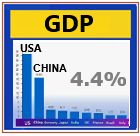
The U.S. economy shrank in the fourth quarter for the first time since the recession, hurt by the biggest cut in defense spending in 40 years, fewer exports and sluggish growth in company stockpiles. The nation appeared to still be on a mild growth path if unusual factors are stripped out. |
-0.1% |
|
|
Growth |
Gross domestic product contracted by a 0.1% annual rate, down from 3.1% growth in the third quarter, based on the first of three readings by the Commerce Department |
|
|
Wed |
EIA Crude Oil |
The Energy Information Administration (EIA) weekly information on petroleum inventories in the U.S., whether produced here or abroad for Week 04, ending January 25 was 5.9 Million Barrels. U.S. crude-oil futures prices logged their best January performance in seven years. |
5.9M
Barrels
|
|
|
Commodity |
The 5.9 million barrel build in oil inventories was due to a rise in imports. Inventories are at 369.1. Keep in mind that the level of inventories helps determine prices for petroleum products. |
|
|
Wed |
FOMC Meeting #1 2013 Day 2 |
The Federal Reserve said Wednesday it will maintain its asset buying of $85 billion a month and stick to its commitment to hold interest rates near zero until unemployment falls to at least 6.5% from the current 7.8%. |
N/A |
|
|
Interest Rates |
The central bank decision, which followed a two-day meeting, had been widely expected, especially after a surprising decline in U.S. economic growth for the fourth quarter. U.S. stocks retreat after the Federal Reserve said growth in economic activity paused in recent months, and as fourth-quarter data showed a surprise contraction in gross domestic product. |
|
|
Thu |
Jobless/Initial Claims |
Last week, initial claims for state unemployment benefits increased 38,000 to 368,000, the Labor Department said on Thursday. First-time jobless claims jump by 38,000 to 368,000 Number of people filing new applications for unemployment benefits climbs to a one-month high. |
368K |
|
|
Employment |
The number of Americans filing new claims for unemployment benefits last week stayed in a range consistent with job growth and incomes rose in December by the most in eight years, mildly positive signs for a still-fragile economy. |
|
|
Thu |
Personal Income |
The Commerce Department said American incomes rose 2.6% last month. That was the biggest increase since December 2004 and well above analysts' expectations for a 0.8% gain. |
2.6% |
|
|
Consumer |
Personal income soared in December 2012 due to one-time dividend payments. Much of the increases in personal incomes over the last two months have been due to special dividends and accelerated bonuses to beat tax increases that were due to begin this month. |
|
|
Thu |
Consumer Spending/Real PCE |
The Commerce Department said consumer spending rose 0.2% in December while income surged 2.6%. The jump in income stemmed largely from a wave of onetime dividend payouts made by corporations in December 2012 to avoid a tax increase in January 2013. |
0.2% |
|
|
Consumer |
The big rise in incomes suggests total consumer spending power entered the new year on a stronger footing, even if the gains may not have been distributed evenly throughout the workforce. |
|
|
Thu |
Core PCE |
The personal consumption expenditure index, which Federal Reserve officials say is a more accurate gauge of inflation than the better-known consumer price index, was flat on December 2012. |
0.0% |
|
|
Inflation |
The Core PCE price index was flat in December 2012 after slipping 0.2% the prior month. Market expectations were for no change. The core rate in December 2012 was unchanged in both December 2012 and November 2012. The market median forecast was for 0.1% rise. |
|
|
Thu |
Employment Cost Index |
The employment cost index measuring the price of U.S. labor rose a mild 0.5% in the fourth quarter, seasonally adjusted, the Labor Department said Thursday. The ECI index is up 0.5%, which is above the plus 0.4% rate in the third quarter, but details are favorable. |
0.5% |
|
|
Inflation |
The ECI is a closely followed index that reflects how much companies, governments and nonprofit institutions pay their employees in wages and benefits. Wages - some 70% of employment costs - rose a seasonally adjusted 0.3% in the fourth quarter and benefits were up 0.6%. |
|
|
Thu |
Chicago PMI |
The Chicago PMI rose to 55.6% in January 2013, to mark the best performance in nine months. Economists had expected the Chicago PMI to edge up to 49.8%. |
55.6
Level
|
|
|
Manufacturing |
Chicago PMI climbs to 55.6% in January 2013. Any reading above 50 indicates expansion. Details of the report were also strong. New orders posted the biggest increase in 10 months, advancing to 58.2% from 50.4% in December 2012. |
|
|
Thu |
EIA Natural Gas Report |
The Energy Information Administration (EIA) weekly information on natural gas stocks in underground storage for Week 04, ending January 25 fell 194 billion cubic feet to 2,802 bcf. |
-194
bcf
|
|
|
Commodity |
U.S. EIA Natural Gas Storage change -194B in Week 05 from last Week 04. Keep in mind that the level of natural gas inventories helps determine prices for natural gas products. |
|
|
Thu |
Fed Balance Sheet |
Total Assets - Weekly Change $ -3.0 Billions. For the January 30 week, Week 05, Total Assets fell $3.0 billion, following a jumped of $47.9 billion the prior period. |
$-3.0B
|
|
|
Government |
The latest week's decrease was led by a $17.4 billion drop in holdings of mortgage-backed securities. Treasuries rose $13.5 billion. |
|
|
Thu |
M2 Money Supply |
M2 Weekly Change $-55.0 Billions. |
$-55.0B |
|
|
Money Supply |
M2 included M1 and, in addition, short-term time deposits in banks and certain money market funds. In general, an increase in the supply of money typically lowers interest rates. |
|
|
Fri |
Fixed Mortgage Rates |
The average U.S. rate on the 30-year fixed mortgage rose this week to its highest level in four months but remains low by historical standards. The rate on the 30-year loan increased to 3.53%. That's up from 3.42% last week and the first time the rate has exceeded 3.50% since September. |
3.53% |
|
|
Interest Rates |
The average for the 15-year fixed mortgage advanced to 2.81% from 2.71%. The job numbers are good enough to keep the current momentum we have in the housing market. |
|
|
Fri |
Employment Situation |
On the surface the BLS Employment Situation Report for January 2013 (PDF) is a continuation of the same mediocre job creation experienced since September 2012. 157,000 net new jobs were created, close to expectations, and the unemployment rate ticked up from 7.8 to 7.9%. |
7.9% |
|
|
Employment |
The economy appears to be keeping up with the growth in the labor force, but not gaining ground in restoring jobs lost during the recession. |
|
|
Fri |
Consumer Sentiment |
Consumer sentiment has really picked up the last two weeks, at 73.8 for the final January reading vs 71.3 at mid-month. The reading implies that sentiment is a bit over 75 right now which is off from the low 80s in October and November but is otherwise back in trend. |
73.8
Level |
|
|
Consumer |
This reading conflicts with the consumer confidence report posted on Tuesday where income expectations were being depressed by the paycheck tax hike. |
|
|
Mon |
ISM Manufacturing Index |
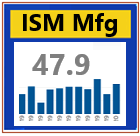
In contrast to the recent contraction seen in major regional manufacturing reports from the East Coast, the broadest measure of manufacturing activity in the U.S. rose to its highest level since May, from a downwardly revised 50.2 in December to 53.1 in January |
53.1
Level
|
|
|
Manufacturing |
The headline number climbed to 50.7 from 49.5 in Novemer. This was higher than the 50.4 economists were looking for. A reading above 50 signals expansion. |
|
|
Fri |
Construction Spending |
Construction posted a nice gain in December 2012 as construction spending jumped 0.9%, following a revised rise of 0.1% in November 2012 which was originally down 0.3%. Analysts forecast a 0.8% boost. |
0.9% |
|
|
Growth |
The increase in December 2012 was led by a 2.2% gain in residential outlays after a 0.6% increase in November. Most of the latest improvement was from multifamily construction although single-family outlays also advanced. Public construction declined in the latest month. |
|
 |
|
|
|
|