Economic Data for Week 13-2012 | Global View | Week Rating
| DATE |
DAY |
REPORT/CATEGORY |
HIGHLIGHTS ON WEEK 13-2012 |
Last |
|
Mon |
Chicago Fed Nat Activity Index |
Chicago Fed: U.S. Economic Activity �Near Average� In February. The national activity index, pulled down by production, fell to minus 0.09 from January's revised plus 0.33. |
-0.09 |
|
 |
Growth |
Two of the four broad categories of indicators that make up the index deteriorated from Jan., but of these two, only the production and income category made a negative contribution to the index in Feb. |
|
|
Mon |
Pending Home Sales Index |
The National Association of Realtors said its pending sales index fell to 96.5% last month from 97.0% in January, although it's still 9.2 percentage points above its year-ago level. |
96.5 Level |
|
|
Real Estate |
If activity is sustained near present levels, existing-home sales will see their best performance in five years. Pending home sales dipped slightly in February, according to an industry trade group. |
|
|
Tue |
ICSC Goldman Sachs Index |
The net retail sales performance for the week ending March 24 slipped by 0.5% based on the ICSC and Goldman Sachs� Weekly Chain Store Sales Index. |
-0.5% |
|
|
Sales and Inventories |
During this past week business appeared to be softer at department and apparel stores, but, discounters seemingly picked up, thus providing mixed performance for the industry. |
|
|
Tue |
Johnson Redbook |
Year-on-year rates of sales growth are extending a one-month move higher according to data from Redbook which reports a same-store sales pace of plus 3.8% in the March 24 week. |
3.8% |
|
|
Sales and Inventories |
The report notes that warm weather helped the latest week's sales. |
|
|
Tue |
S&P Case-Shiller Index |
According to the S&P/Case-Shiller Home Price Index (HPI) home prices fell for the fifth month in a row this January, dropping to their lowest level in nearly a decade. NSA -0.8% and SA 0.0%. |
0.0%
M/M
|
|
|
Real Estate |
Prices have plummeted 34.4% from the pre-recession housing peak in July 2006 and in January, seven of the cities were down by 1.0% or more over the month. |
|
|
Tue |
Consumer Confidence |
The consumer-confidence gauge fell to 70.2 in March from a February reading of 71.6: due to lower employment expectations, while views on the present situation rose to the highest level since 2008. |
70.2 |
|
|
Consumer |
The moderate decline was due solely to a less favorable short-term outlook, and data suggest consumers feel the economy is not losing momentum. |
|
|
Wed |
MBA purchase Applications |
Purchase applications for home mortgages rose 3.3% in the March 23 week, lifting the four-week average 2.1% and offering a slightly positive signal for underlying home sales. |
-2.7% |
|
|
Real Estate |
Refinancing applications fell for the sixth week in a row, down 4.6% with the four-week average down 4.9%. Rates rose during the week including for 30-year: avg. 4.23%. |
|
|
Wed |
Durable Goods Orders |
Orders for long-lasting U.S. goods climbed 2.2% in February amid strong demand for a broad variety of commercial and military-related products. It was the fourth increase in five months |
2.2% |
|
|
Manufacturing |
The only category to report a decline was electrical equipment and appliances. Excluding the volatile transportation sector, orders rose 1.6%. Orders minus defense increased 1.7%. |
|
|
Wed |
EIA Crude Oil Report |
The federal government�s EIA report revealed that crude inventories climbed by 7.10 million barrels for the week ending March 23, 2012, after shrinking by 1.16 million barrels the week before. |
7.1M |
|
|
Commodity |
The U.S. Energy Department's weekly inventory release showed that crude stockpiles rose to their highest level since August 2011, as imports soared. |
|
|
Thu |
Jobless/Initial Claims |
Initial jobless claims fell 5,000 in the week ended March 24 to 359,000, the lowest since April 2008, the Labor Department reported today in Washington. |
359,000 |
|
|
Employment |
Companies are retaining workers and hiring as sales pick up along with confidence in the expansion. The pace of employment has gained momentum in the past three months. |
|
|
Thu |
Gross Domestic Product (GDP) |
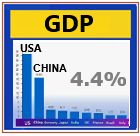
Gross domestic product increased at a 3.0% annual rate, the quickest pace since the second quarter of 2010, unrevised from last month's estimate. |
3.0% |
|
|
Growth |
The U.S. economy expanded as expected in the fourth quarter while personal income grew at a much faster pace than previously thought, which should help underpin spending this quarter. |
|
|
Thu |
Corporate Profits |
Profits are after tax but without inventory valuation and capital consumption adjustments. Corporate profits on a year-on-year basis grew 11.7%, compared to up 6.2% in the third quarter. |
11.7% |
|
|
Growth |
This slowdown in profit growth is mainly the reflection of the marked weakening in labour productivity increases witnessed during the course of last year. |
|
|
Thu |
EIA Natural Gas Report |
Natural gas in storage rose 57 billion cubic feet in the March 23 week to 2,437 bcf. An injection of 50 bcf was expected. |
57 bcf |
|
|
Commodity |
Working gas in storage was 2,437 Bcf as of Friday, March 23, 2012, according to EIA estimates. This represents a net increase of 57 Bcf from the previous week. |
|
|
Thu |
Fed Balance Sheet |
The Fed's balance sheet fell $14.5 billion in the March 28 week after edging down $0.9 billion the week before. The decline reflects a $14.5 billion decline in holdings of mortgage-backed securities. |
$-14.5B W/W |
|
|
Government |
Total assets for the March 28 week dipped to $2.880 trillion. Holdings of Federal agency debt fell $2.5 billion while holdings of US Treasuries rose $1.4 billion. |
|
|
Thu |
M2 Money Supply |
|
$-22.6B |
|
|
Money Supply |
|
|
|
Fri |
Fixed Mortgage Rates |
Following various reports of weaker housing data, the 30-year fixed-rate mortgage average fell to 3.99% in the week ending March 29 from 4.08% in the prior week. |
3.99% APR |
|
|
Interest Rates |
The 30-year fixed-rate was 4.86% a year earlier. The 15-year fixed-rate mortgage fell to 3.23% in the latest week from 3.30% in the prior week. |
|
|
Fri |
Personal Income and Outlays |
A modest 0.2% rise in income helped cover some of the rise in spending last month, but consumers also saved less. |
0.2% |
|
|
Consumer |
The saving rate, the amount of disposable income socked away, dropped to 3.7%, the lowest rate since August 2009. |
|
|
Fri |
Consumer Spending Real PCE |
Consumer spending increased by the most in seven months in February as households shook off a rise in gasoline prices, leading economists to raise forecasts for first-quarter growth. |
0.8% |
|
|
Consumer |
Even with gasoline around $4 a gallon, Americans were more optimistic about the economy's prospects this month than at any other time over the past year, drawing solace from a firming labor market. |
|
|
Fri |
Core PCE |
A core inflation measure, edged up 0.1% after rising 0.2% in January. In the 12 months through February, core prices rose 1.9%, the same as in January. |
0.1% |
|
|
Inflation |
Disposable income, that amount left after taxes and inflation, declined for a second straight month, a worrying trend that could eventually put the brakes on spending. |
|
|
Fri |
Chicago PMI |
The Institute for Supply Management-Chicago's business barometer slipped to 62.2 from 64.0 in February. A reading above 50 indicates expansion in the regional economy. |
62.2 |
|
|
Manufacturing |
Business activity remained strong this month in the Chicago area though the rate of growth is slightly less strong than February, reflected in the headline composite index which came in at 62.2 vs 64.0. |
|
|
Fri |
Consumer Sentiment |
Thomson Reuters/University of Michigan's final March reading for the overall consumer sentiment index rose to 76.2, the highest level since February 2011, from 75.3 in February. |
76.2 Level |
|
|
Consumer |
Fears that the economy was going to slow substantially this quarter were overdone. The economy is doing fairly well, given the headwinds from Europe, rising gasoline prices. |
|
 |
|
|
|
|