10-Year Treasury Yield
Treasury yields climbed on Friday, erasing some of Thursday’s losses as markets absorbed stronger than expected gross domestic product growth and looked ahead to personal income and spending data releases. The yield on the 10-year Treasury was at 4.014%, up about 7 basis points after dipping by as much as 11 basis points on Thursday. The 2-year Treasury yield was last up by 6 basis points to 4.379%. It had fallen by around 12 basis points on Thursday. Yields and prices move in opposite directions and one basis point is equivalent to 0.01%.
Title 1
mmmm
Title 2
mmmm
Title 3
mmmm
Title 4
mmmm
Title 5
mmmm
MCD
On Thursday, McDonald’s reported consolidated revenues of about $5.87 billion for the third quarter, a year-over-year decline not adjusting for currency fluctuations, which beat Wall Street’s expectations and started the stock moving to new levels. The company went public in 1965.
ECI
A separate release Friday showed that employment costs rose 1.2% for the third quarter, in line with estimates, according to the Bureau of Labor Statistics. On an annual basis, the employment cost index increased 5%, slightly lower than the 5.1% pace in the second quarter. Fed officials watch Friday’s data points closely for clues about where costs are headed, particularly with a tight labor market in which there are 1.7 jobs per every available worker, according to recent BLS data. The Fed prefers the PCE price reading to the more widely followed consumer price index from the BLS. The BEA measure adjusts for consumer behavior, in particular substitution of less expensive goods, to determine cost-of-living increases rather than simple price moves. Markets think the Fed might downshift the pace of its rate hikes ahead. Futures pricing Friday morning indicated a nearly 60% chance that the central bank will increase rates 0.5 percentage point in December.
MBA Purchase Applications
Mortgage demand fell last week to nearly half what it was a year ago, according to the Mortgage Bankers Association, as rates hit their highest level in 21 years. Overall, demand for mortgages is at the lowest level since 1997. Mortgage applications to purchase a home dropped 2% from the prior week and were 42% lower than the same week in 2021. The annual comparison continues to jump each week, as fewer buyers either want or can afford to get into this very pricey housing market. Applications to refinance a home loan fell just 0.1% for the week, but only because they were so low to begin with – down 86% from a year ago. There are currently fewer than 150,000 qualified borrowers who could benefit from a refinance at today’s rates, according to Black Knight.
Core PCE
At the same time, the Fed’s preferred inflation measure showed the cost of living rose 6.2% in September from a year ago – 5.1% even excluding food and energy costs. GDP declined in both the first and second quarters, meeting a common definition of recession, though it rebounded to 2.6% in the third quarter largely because of an unusual rise in exports. At the same time, housing demand has plunged as 30-year mortgage rates have soared past 7% in recent days. The rate increase comes as recent inflation readings show prices remain near 40-year highs. A historically tight jobs market in which there are nearly two openings for every unemployed worker is pushing up wages, a trend the Fed is seeking to head off as it tightens money supply.
Key inflation gauge for the Fed rose 0.5% in September, in line with expectations. The core personal consumption expenditures price index in September increased 0.5% from the previous month and 5.1% from a year ago. Including food and energy, PCE inflation rose 0.3% for the month and 6.2% on a yearly basis. Personal spending rose 0.6%, more than expected amid the rise in prices. Compensation costs increased 1.2% in the third quarter, in line with estimates. An economic gauge that the Federal Reserve follows closely showed that inflation stayed strong in September but mostly within expectations, the Bureau of Economic Analysis reported Friday. The core personal consumption expenditures price index increased 0.5% from the previous month and accelerated 5.1% over the past 12 months, the report showed. The monthly gain was in line with Dow Jones estimates, while the annual increase was slightly below the 5.2% forecast. Including food and energy, PCE inflation rose 0.3% for the month and 6.2% on a yearly basis, the same as in August. The report comes as the Fed is prepared to enact its sixth interest rate increase of the year at its policy meeting next week. In an effort to combat inflation running at its fastest pace in nearly 40 years, the Fed has been raising rates, with increases totaling 3 percentage points thus far. Markets widely expect the Fed to enact its fourth straight 0.75 percentage point increase at the meeting, but possibly slow down the pace of hikes after that.
Personal Income
Personal income increased 0.4% last month, matching August's increase. The saving rate fell to 3.1% from 3.4% in August. The BEA also reported that personal income increased 0.4% in September, one-tenth of a percentage point above the estimate. Spending as gauged through personal consumption expenditures increased 0.6%, more than the 0.4% estimate.However, when adjusted for inflation, spending rose just 0.3%. Disposable personal income, or what is left after taxes and other charges, rose 0.4% on the month but was flat on an inflation-adjusted basis.
Consumer Spending
U.S. consumer spending rose more than expected in September while underlying inflation pressures continued to bubble, keeping the Federal Reserve on track to hike interest rates by three-quarters of a percentage point next week. But there was some encouraging news in the fight against stubbornly high inflation, with other data from the Labor Department on Friday showing private industry wage growth slowed considerably in the third quarter.Consumer spending, which accounts for more than two-thirds of U.S. economic activity, rose 0.6% last month, the Commerce Department said. Data for August was revised higher to show spending increasing 0.6% instead of 0.4% as previously reported.Economists polled by Reuters had forecast consumer spending would gain 0.4%. Consumers stepped up purchases of motor vehicles and spent more on food, clothing, prescription medication and recreational goods. There were also increases in outlays on services, driven by housing and utilities as well as travel and dining at restaurants.
Consumer Sentimrnt UM
U.S. consumer mood improving even as inflation expectations intensify: UMich
Pendig Home Sales
U.S. pending home sales fall 10.2% in September 2022. Pending home sales fell 10% in September, much worse than expected. Pending home sales suffered a worse decline than expected from August to September, as mortgage rates surged. Economists had predicted a 4% drop. Sales were down 31% year over year. Excluding April 2020, at the start of the Covid pandemic, the pending home sales index is at its lowest level since June 2010. Pending home sales, a measure of signed contracts on existing homes, dropped a much worse-than-expected 10.2% in September from August, according to the National Association of Realtors. Economists had predicted a 4% drop. Sales were down 31% year over year. This marks the lowest level on the pending sales index since June 2010, excluding April 2020, when the Covid pandemic was in its early days..
Apple
Apple beats but comes up light on iPhone sales and servicesApple reported fiscal fourth-quarter earnings on Thursday that beat Wall Street expectations on revenue and earnings per share. Apple came up short versus revenue expectations in core product categories including the company’s iPhone business and services. Apple reported fiscal fourth-quarter earnings on Thursday that beat Wall Street expectations on revenue and earnings per share. However, Apple came up short versus revenue expectations in core product categories including the company’s iPhone business and services. Apple shares rose over 1% in extended trading.Here is how Apple did versus Refinitiv consensus estimates: EPS $1.29 vs. $1.27 est. Revenue. $90.15 billion vs. $88.90 billion estimated, up 8.1% year-over-year iPhone revenue: $42.63 billion vs. $43.21 billion estimated, up 9.67% year-over-year Mac revenue: $11.51 billion vs. $9.36 billion estimated, up 25.39% year-over-year iPad revenue: $7.17 billion vs. $7.94 billion estimated, down 13.06% year-over-year Other Products revenue: $9.65 billion vs. $9.17 billion estimated, up 9.85% year-over-year Services revenue: $19.19 billion vs. $20.10 billion estimated, up 4.98% year-over-year Gross margin: 42.3% vs. 42.1% estimated
Apple stock rose 7.5% on Friday, a day after it reported September quarter earnings that modestly beat expectations on revenue and profit and showed global demand for its premium hardware remains high. It was the best day for Apple shares since April 2020.The surge comes after a mixed week of Big Tech earnings, in which Meta and Alphabet showed signs of weakness caused by macroeconomic conditions hurting the digital ad market. Alphabet rose about 4.4% and Meta was up about 1% on Friday. Both took big hits earlier in the week.
Meta - Facebook
Meta shares continued their 2022 freefall, plunging 19% in extended trading on Wednesday after Facebook’s parent issued a weak forecast for the fourth quarter and came up well short of Wall Street’s expectations for earnings. Earnings per share (EPS): $1.64 vs $1.89 expected, according to Refiniti Revenue: $27.71 billion vs. $27.38 billion expected, according to Refiniti Daily Active Users (DAUs): 1.98 billion vs 1.98 billion expected, according to StreetAccount Monthly Active Users (MAUs): 2.96 billion vs 2.94 billion expected, according to StreetAccount Average Revenue per User (ARPU): $9.41 vs. $9.83 expected, according to StreetAccount Meta is contending with a broad slowdown in online ad spending, challenges from Apple’s iOS privacy update and increased competition from TikTok. Add it up, and Meta has posted consecutive quarters of revenue declines and is expected to post its third straight drop in the fourth quarter.
hares of Meta plunged 24% Thursday morning as investors and analysts digested the company’s third-quarter earnings miss and a weak fourth-quarter outlook. Shares were trading under $100 at market open, the lowest price since 2016. he parent company of Facebook reported quarterly revenue of $27.7 billion Wednesday, a decline of more than 4% year over year and its second straight quarterly decline. Its profit plummeted 52% to $4.4 billion.Meta warned the fourth quarter would be more of the same, issuing a weaker-than-expected outlook. It’s expecting revenue for the fourth quarter to be $30 billion to $32.5 billion. Analysts were expecting sales of $32.2 billion.
Amazon
Amazon stock sinks 13% on weak fourth-quarter guidance. Amazon reported third-quarter results on Thursday that missed analysts’ estimates. It also gave a disappointing sales forecast for the fourth quarter.The stock sunk in extended trading. Amazon shares plummeted 13% in extended trading on Thursday after the company issued a disappointing fourth-quarter forecast and missed on revenue estimates. Here are the key numbers: Earnings: 28 cents per share Revenue: $127.10 billion vs. $127.46 billion, according to Refinitiv estimates Here’s how the other key Amazon segments did during the quarter: Amazon Web Services: $20.5 billion vs. $21.1 billion expected, according to StreetAccount Advertising: $9.55 billion vs. $9.48 billion expected, according to StreetAccount
Amazon quietly donated $400,000 to a conservative nonprofit last year as the group pushed back on antitrust bills being considered in Congress, according to documents reviewed by CNBC. The Independent Women’s Forum received the six-figure contribution from the e-commerce giant in 2021, the same year the group wrote columns speaking out against bills that could strengthen antitrust enforcement.
Amazon fell 6.8% on Friday after giving weak guidance for the holiday quarter.
GDP
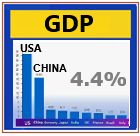
U.S. GDP increased increased at a 2.6% annualized pace for the period, against the Dow Jones estimate for 2.3% growth. The report, the first quarter of positive growth for 2022, eased investors’ concerns about a recession. U.S. GDP accelerated at 2.6% pace in Q3, better than expected as growth turns positive. Gross domestic product rose 2.6% in the third quarter versus the estimate of 2.3%. A narrowing trade deficit and increases in consumer spending and government outlays boosted the number. A sharp pullback in housing subtracted from the number, part of a broader decline in private investment. Consumer spending decelerated, increasing at just a 1.4% pace in the quarter, down from 2% in Q2. The U.S. economy posted its first period of positive growth for 2022 in the third quarter, at least temporarily easing recession fears, the Bureau of Economic Analysis reported Thursday. GDP, a sum of all the goods and services produced from July through September, increased at a 2.6% annualized pace for the period, according to the advance estimate. That was above against the Dow Jones forecast for 2.3%.
Jobless Claims
In other economic news Thursday, weekly jobless claims edged higher to 217,000 but were still below the 220,000 estimate. Also, orders for long-lasting goods increased 0.4% in September from the previous month, below the 0.7% expectation. The report comes as policymakers fight a pitched battle against inflation, which is running around its highest levels in more than 40 years. Price surges have come due a number of factors, many related to the Covid pandemic but also pushed by unprecedented fiscal and monetary stimulus that is still working its way through the financial system.m
Dow
Dow jumps 200 points as traders weigh stronger-than-forecast U.S. economic growth data. The Dow Jones Industrial Average rose Thursday after new data showed the economy grew faster than expected and hinted at waning inflation. The Dow climbed 283 points, or 0.9%. It traded up as much as 549 points earlier in the day. The S&P 500 was down 0.4%, while the Nasdaq shed 1.5%.
Fixed Mortgage Rates
Mortgage rates declined slightly to start this week, but are still well over 7% after beginning the year at around 3%. The average contract interest rate for 30-year fixed-rate mortgages with conforming loan balances ($647,200 or less) increased to 7.16% from 6.94%, with points decreasing to 0.88 from 0.95 (including the origination fee) for loans with a 20% down payment. Federal Housing Administration loans, which come with lower rates and smaller down payment requirements, did experience a slight uptick during the week. The share of homebuyers applying for adjustable-rate mortgages remained high at more than four times what it was at the start of this year. ARMs offer lower rates but are considered a riskier product. High interest rates are also weighing on home prices. While prices are still higher than they were a year ago, the gains are now slowing at a record pace. Homebuyers are also reconsidering their purchases. Pulte Group reported a 24% cancellation rate in its latest quarterly earnings report Tuesday and said it expected an even higher rate for the next quarter. |