10-Year Treasury Yield
10-year Treasury yield rises to its highest level since November 2018. U.S. Treasury yields rose Monday amid concerns of surging inflation pressures and slower economic growth. The yield on the benchmark 10-year Treasury note climbed to its highest level since November 2018, and was last up 6 basis points at 3.185%. The yield on the 30-year Treasury bond moved 7 basis points higher to 3.293%. Yields move inversely to prices, and 1 basis point is equal to 0.01%.
Wholesale Trade Preliminary
mmmmmm
MBA Purchase Applications
mmmmmm
CPI
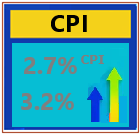
Inflation barreled ahead at 8.3% in April from a year ago, remaining near 40-year highs. The consumer price index accelerated 8.3% in April, more than the 8.1% estimate and near the highest level in more than 40 years. Core CPI, which excludes food and energy, also was higher than expected, rising 6.2%. Shelter costs, which comprise about one-third of the CPI, rose at their fastest pace since 1991. Inflation-adjusted earnings continued to decline for workers, falling 2.6% over the past year due to the surging cost of living. The consumer price index, a broad-based measure of prices for goods and services, increased 8.3% from a year ago, higher than the Dow Jones estimate for an 8.1% gain. That represented a slight ease from March’s peak but was still close to the highest level since the summer of 1982. Removing volatile food and energy prices, so-called core CPI still rose 6.2%, against expectations for a 6% gain, clouding hopes that inflation had peaked in March. The month-over-month gains also were higher than expectations — 0.3% on headline CPI versus the 0.2% estimate and a 0.6% increase for core, against the outlook for a 0.4% gain.
Treasury Budget
jmmmmm
Jobless Claims
Weekly jobless claims were little changed, but continuing claims fell to their lowest level since January 1970. A separate economic report Thursday showed that jobless claims totaled 203,000 for the week ending May 7, an increase of 1,000 from the previous period. That was above the Dow Jones estimate for 194,000. Continuing claims fell, however, dropping by 44,000 to 1.343 million, the lowest level since Jan. 3, 1970.
PPI
The Producer Price Index for final demand increased 0.5 percent in April, seasonally adjusted, the U.S. Bureau of Labor Statistics reported today. This rise followed advances of 1.6 percent in March and 1.1 percent in February. (See table A.) On an unadjusted basis, final demand prices moved up 11.0 percent for the 12 months ended in April.
Wholesale inflation rose 11% in April 2022 as producer prices keep accelerating. Producer prices at the wholesale level rose 11% over the past year and 0.5% in April 2022 alone, the Bureau of Labor Statistics reported Thursday. Prices at the wholesale level accelerated further in April, part of a broader inflation problem persisting through the U.S. economy, the Bureau of Labor Statistics reported Thursday. The producer price index, which tracks how much manufacturers get for products at their initial sale, rose 0.5% on the month and 11% from a year ago, a decrease from the record 11.5% in March 2022 that was revised upward 0.3 percentage points. Excluding food, energy and trade services, core PPI rose 0.6% in April and 6.9% from a year ago, the latter a decline from 7.1% last month. Both monthly increases were exactly in line with Dow Jones estimates. Headline PPI rose 1.6% in March while core was up 0.9%.
Fixed Mortgage Rates
mmmmm
Import and Export Prices
Import prices unchanged in April, up 12.0% year-on-year. A separate report from the Labor Department showed import prices were unexpectedly flat in April as a decline in the cost of petroleum offset gains in food and other products. Import prices had surged 2.9% in March. Economists had forecast import prices, which exclude tariffs, would climb 0.6%. In the 12 months through April, import prices rose 12.0% after accelerating 13.0% in the year through March.
U.S. import prices were unchanged in April, after increasing 2.9 percent in March, the U.S. Bureau of Labor Statistics reported today. Higher nonfuel prices in April offset lower fuel prices. Prices for U.S. exports advanced 0.6 percent in April following a 4.1-percent increase the previous month. The price index for U.S. imports was unchanged in April, after rising 6.8 percent over the first quarter of 2022. U.S. import prices have not recorded a monthly decline since the index fell 0.4 percent in December 2021. Prices for U.S. imports advanced 12.0 percent for the year ended in April, down from the 13.0-percent increase recorded last month. U.S. export prices rose 0.6 percent in April following a 10.5-percent advance from December to March. Higher prices for both agricultural and nonagricultural exports contributed to the overall increase in U.S. export prices in April. The price index for U.S. exports rose 18.0 percent over the past year
Consumer Sentiment UM
U.S. consumer sentiment slumped to its lowest level in nearly 11 years in early May as worries about inflation persisted, but household spending remains underpinned by a strong labor market and massive savings, which should keep the economy expanding. The University of Michigan's survey on Friday showed the deterioration in sentiment, which some economists said pushed it into recessionary territory, was across all demographics, as well as geographical and political affiliation. Gasoline prices and the stock market have a heavy weighting in the survey. The University of Michigan's preliminary consumer sentiment index tumbled 9.4% to 59.1 early this month, the lowest reading since August 2011. Economists polled by Reuters had forecast the index dipping to 64. The sharp decline is in stark contrast with the Conference Board's consumer confidence survey, whose index remains well above the COVID-19 pandemic lows. |