Wholesale Trade (Pre) - Inventories
The second estimate of November 2021 wholesale inventories is a build of 1.2 percent, unchanged from the first estimate. Wholesale trade measures the dollar value of sales made and inventories held by merchant wholesalers. It is a component of business sales and inventories..Indications that the worst of the global supply-chain problems are behind us have mounted in recent weeks. Wholesale inventories rose 1.4% in November, instead of 1.2% as estimated last month. Stocks at wholesalers increased 2.5% in October. Inventories are a key part of gross domestic product.
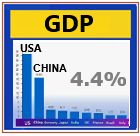
U.S. wholesale inventories increased more than initially thought in November, suggesting that the restocking of warehouses likely contributed strongly to economic growth last quarter.The almost broad increase in inventories reported by the Commerce Department on Monday also offered more hope that supply bottlenecks were easing. It followed in the wake of an Institute for Supply Management survey last week that showed improved supplier deliveries to factories in December. The fourth-quarter inventory build is shaping up to again be a strong contributor to topline GDP growth.
Fed Policy
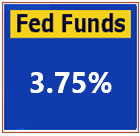
While the Fed raising rates gradually in a strong economy may not be a problem, it could be a problem when the Fed actually starts raising rates in the second quarter, especially if there is a sign that the economy is slowing down.The Fed is raising interest rates in an environment where earnings growth is decelerating.
MBA Purchase Applications
Mortgage applications increased 1.4 percent from one week earlier, according to data from the Mortgage Bankers Association's (MBA) Weekly Mortgage Applications Survey for the week ending January 7, 2022. The previous week's results included an adjustment for the holidays. The Market Composite Index, a measure of mortgage loan application volume, increased 1.4 percent on a seasonally adjusted basis from one week earlier. On an unadjusted basis, the Index increased 46 percent compared with the previous week. The Refinance Index decreased 0.1 percent from the previous week and was 50 percent lower than the same week one year ago. The seasonally adjusted Purchase Index increased 2 percent from one week earlier. The unadjusted Purchase Index increased 51 percent compared with the previous week and was 17 percent lower than the same week one year ago.
Consumer Price Index (CPI) - Inflation
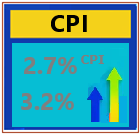
Stock futures moved slightly higher on Wednesday after a key inflation report showed a historic gain but largely matched expectations. The moves come after the December reading for the consumer price index, a gauge of prices across a broad spectrum of goods, showed a gain of 7% year over year. That is the biggest jump since 1982, but was in-line with expectations from economists surveyed by Dow Jones. The monthly increase was slightly hotter than expected. Fed officials are watching the inflation data closely and are widely expected to raise interest rates this year in an effort combat increasing prices and as the jobs picture approaches full employment.
Though the central bank uses the personal consumption expenditures price index as its primary inflation measure, policymakers take in a wide range of information in making decisions. comments
Beige Book
This book is produced roughly two weeks before the monetary policy meetings of the Federal Open Market Committee. On each occasion, a different Fed district bank compiles anecdotal evidence on economic conditions from each of the 12 Federal Reserve districts.
Fed Beige Book: Economy Grew at Modest Pace to Close 2021. Stocks pare gains after Fed’s Beige Book signals economic headwinds
The Fed's regional snapshot of the economy suggested most regions are dealing with the crunch. "Districts indicated growth continued to be constrained by ongoing supply chain disruptions and labor shortages" the report noted. The U.S. economy grew at a modest pace in the closing weeks of 2021 as ongoing supply-chain issues and a shortage of available workers held back production, the Federal Reserve said Wednesday. But demand remained strong and consumer spending grew, ahead of a rise in Covid-19 cases caused by the Omicron variant, the Fed said in its periodic collection of business anecdotes from around the country known as the Beige Book. comments
Treasury Statement
Forecasters see a $25 billion deficit in December that would compare with a year-ago December deficit of $143.6 billion.Wednesday’s data show the U.S. is running a smaller deficit so far in the current fiscal year, which began in October, than in the previous one. The cumulative deficit in the first three months of the fiscal year stood at $378 billion compared with $573 billion at the same point the prior year.
Producer Price Index PPI
U.S. wholesale prices rise scant 0.2% in December in a sign that inflation might be starting to ease. Producer prices have been accelerating, whether on a monthly or yearly basis. Yet oil prices steadied in December which is holding down forecasts for the monthly rate, at a consensus increase of 0.4 percent. Excluding energy as well as food, the consensus is an increase of 0.5 percent. These rates increased 0.8 and 0.7 percent respectively in November, both much higher than expected. Annual increases for December are expected at 9.8 and 8.0 percent.
Wholesale prices up 0.2% in December, less than expected but still a new 12-month record. Wholesale prices rose less than expected in December but still set a new standard at a time when inflation overall is running at a nearly 40-year high, the Labor Department said Thursday.The producer price index, which measures prices received by producers of goods, services and construction, was up 0.2% for the month, half of the 0.4% Dow Jones estimate. However, on a 12-month basis, the index was up 9.7% to end 2021, the highest calendar-year increase ever in data going back to 2010. The monthly gain was a sharp drop-off from the two previous months, which showed respective gains of 0.6% and 1%. Thursday’s PPI reading came the day after the consumer price index, which measures prices paid at checkout for a swath of everyday goods and services, rose 7% year over year, the biggest 12-month gain since June 1982. Excluding food, energy and trade, so-called core PPI increased 0.4% for the month, below the 0.5% estimate
Jobless claims
Initial jobless claims claims for the week ended Jan. 8 totaled 230,000, well above the 200,000 estimate and a considerable increase from the previous week’s 207,000. However, the longer-term trajectory for unemployment was lower.Continuing claims, which run a week behind the headline number, fell by 194,000 to 1.56 million, the lowest level since June 2, 1973. With the jobless level continuing to fall — the unemployment rate for December slid to 3.9% — markets have been more focused on inflation.
Fixed Rates
The U.S. 10-year Treasury yield hovered around 1.73% on Wednesday after December’s consumer price index came in at a hefty 7% annual increase. The yield on the benchmark 10-year Treasury note fell by 1 basis points to 1.734% in afternoon trading. The yield on the 30-year Treasury bond rose about a basis point to 2.085%. Yields move inversely to prices and 1 basis point is equal to 0.01%. The jump in inflation may be priced into the bond market. The yield on the 10-year Treasury ended 2021 around 1.5% and has gained more than 20 basis points in the first two weeks of the new year.
The jump in inflation may be priced into the bond market. The yield on the 10-year Treasury ended 2021 around 1.5% and has gained more than 20 basis points in the first two weeks of the new year.
Earning Season
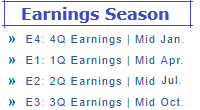
Profits for S&P 500 companies rose 22% in the fourth quarter and nearly 50% in 2021, estimates show. THU, JAN 13 2022. Earnings season begins with a focus on guidance. It’s a cliché, but it’s true: Investors are focused on the future, not the past. But it’s even more true for 2022 than most other years. Fourth quarter earnings for the S&P 500 are expected to be up 22.4%, according to Refinitiv, capping off a remarkable 2021 where overall earnings will be up approximately 49%. Don’t expect that to last. Investors will be dealing with three major issues that will affect corporate profits: consumer demand, profit margins, and Fed policy. Two of those factors — profit margins and Fed policy — are likely to be serious headwinds. Earnings reporting season kicks of this week with Delta on Thursday and a bunch of banks on Friday.
JPMorgan Chase and other banks post strong results as rates rise. JPMorgan shares pull back by 3% even after Q4 profit tops estimates Citigroup shares slide after fourth-quarter profit declines 26% Wells Fargo shares rise 2% as fourth-quarter revenue tops estimate Dow futures fall 200 points as investors digest bank earnings, economic data.
JPM
JPMorgan Chase on Friday posted profit that exceeded analysts’ expectations on a benefit from better-than-expected credit losses and as loan growth returned to parts of the firms’ business.
Earnings: $3.33 a share, vs. estimate $3.01, according to Refinitiv.
Revenue: $30.35 billion, vs. estimate $29.9 billion.
Shares of the bank dipped 3.7% in premarket trading.
Citibank
Citigroup shares fell nearly 4% on Friday after the banking giant reported a steep profit drop for the fourth quarter.
Earnings per share: $1.46, but it was not clear if that is comparable to the $1.38 estimated by Refinitiv
Revenue: $17 billion vs. $16.75 billion expected.
Earnings season picks up momentum in the week ahead with big financials, like Goldman Sachs and Bank of America, reporting along with Procter & Gamble, Netflix and many transport names. The earnings period could shape up to be a test of the theory by many investors that value and cyclicals are set to outperform tech. The Treasury market may be quieter in the four-day week because Federal Reserve officials are in a quiet period ahead of their two-day meeting beginning Jan. 25.
Retail Sales
The advance monthly sales report to close out the year showed a decline of 1.9%, considerably worse than the Dow Jones estimate for just a 0.1% drop. Excluding autos, sales fell 2.3%, a number that also fell well short of expectations for a 0.3% rise. In addition to the weak December 2021 numbers, the November gain was revised down to 0.2% from the initially reported 0.3% increase. Considering that the sales numbers are not adjusted for inflation, the data point to a slow ending to what had otherwise been a strong 2021 in which sales rose 16.9% from the pandemic-scarred 2020. The consumer price index rose 0.5% for the month, bringing the year-over-year gain to 7%, the highest since June 1982. Wholesale price also rose, climbing 9.7% in the 12-month period for the biggest calendar-year rise since data was kept going back to 2010.
Import and Export Prices
Prices for U.S. exports fell 1.8 percent in December 2021 following a 0.8-percent advance in November 2021. The price index for U.S. imports declined 0.2 percent in December, the first monthly decrease since the index fell 0.2 percent in August 2021
Industrial Production
Industrial output fell a disappointing 0.1% in December as auto production stumbled, compared to Wall Street expectations for a 0.2% gain. Capacity utilization — which reflects the limits to operating the nation’s factories, mines and utilities — inched lower to 76.5% in December from 76.6% in the prior month.
Capacity utilization inched lower to 76.5% in December from 76.6% in the prior month. The capacity utilization rate reflects the limits to operating the nation’s factories, mines and utilities. Economists had forecast a 77% rate...
Business Inventories
The Commerce Department said business inventories shot up by 1.3 percent in November, matching the upwardly revised jump in October. Economists had expected inventories to increase by 1.1 percent compared to the 1.2 percent growth originally reported for the previous month. The Commerce Department said business inventories shot up by 1.3 percent in November, matching the upwardly revised jump in October. Economists had expected inventories to increase by 1.0 percent.
Business inventories in November are expected to rise 1.1 percent following another uneven month in October when a 1.2 percent increase was split between strong builds for manufacturers and especially wholesalers versus very little change for retailers.
Consumer Sentiment
Consumer sentiment has been sitting at long-term lows and no improvement is expected for January, at a consensus 70.4 versus 70.6 in December. Meanwhile, a closely followed gauge of U.S. consumer sentiment from the University of Michigan fell to 68.8 in January from 70.6 in the prior month, marking the second lowest reading in a decade.
Treasury Yields, 10-Year Treasury Note
Treasury yields moved higher Friday morning, despite a series of disappointing U.S. economic data, as investors continued to focus on Federal Reserve policy makers setting the stage for tighter financial conditions, including a liftoff of the benchmark interest-rate target.
U.S. stock and bond markets will be closed on Monday, for the Martin Luther King, Jr. Day holiday, while Fed officials are entering a blackout period for speeches ahead of their Jan. 25-26 meeting in Washington. The 10-year Treasury note rate, 1.751% was at 1.754%, compared with a reopening rate of 1.708%, based on yields at 3 p.m. Eastern Time on Thursday.
Still, analysts are expecting that the benchmark 10-year Treasury yield will eventually breach 2%, a psychologically significant level for the debt used to price everything from mortgages to auto loans,,,,,Meanwhile, yields for the 10-year Treasury note yielded 1.771% Friday afternoon, which means that yields have climbed by about 26 basis points in the first 10 trading days to start a calendar year, which would be the briskest such rise since 1992, according to Dow Jones Market Data. Back 30 years ago, the 10-year rose 32 basis points to around 7% to start that year.
The 10-year yield, which rises when the bonds sell off, made a big move higher early in the year as the Federal Reserve reiterated its hawkish stance. The central bank revealed that it discussed shrinking its balance sheet at its December meeting. That could potentially add further policy tightening from a Fed that is already signaling the possibility of three interest rate hikes this year.
Puerto Rico
In the U.S., investors pay as much as 37% on short-term capital gains and up to 20% on long-term gains, which applies to crypto and other assets held for more than a year. One of the tax breaks under Act 60, known as the Individual Investors Act, drops that tax obligation down to zero if certain qualifications are met. This is especially huge for entrepreneurs and crypto traders.
There is also a major tax incentive for business owners to set down roots in Puerto Rico. Mainland companies are subject to a 21% federal corporate tax, plus a state tax, which varies. If a firm exports its services out of Puerto Rico, to the U.S. or really, anywhere else, they pay a 4% corporate tax rate
|