10-Year Treasury Yield
The yield on the benchmark 10-year Treasury note was up by 9 basis points at 3.58%, and the yield on the 30-year Treasury bond added around 11.4 basis points to 3.647%. The 2-year Treasury yield rose nearly 5 basis points to 4.23%. Yields move inversely to prices. The Fed on Wednesday opted to hike its key interest rate by 50 basis points to its highest level in 15 years, but Chairman Jerome Powell also indicated that the central bank’s efforts to rein in inflation are far from over, and said policymakers will “have to stay at it.” Recession fears were revived as the central bank raised its forecast for rate increases to 5.1%, sending risk assets into a tailspin. However, some risk-on sentiment seemed to be cautiously returning on Monday.
HMI Homebuilders were less confident about their business in December, but they are starting to see potential green shoots. Builder sentiment in the single-family housing market dropped two points to 31 in December on the National Association of Home Builders/Wells Fargo Housing Market Index. Anything below 50 is considered negative. This is the 12th straight month of declines and the lowest reading since mid 2012, with the exception of a very brief drop at the start of the Covid pandemic. The index stood at 84 in December of last year. “The silver lining in this HMI report is that it is the smallest drop in the index in the past six months, indicating that we are possibly nearing the bottom of the cycle for builder sentiment,” said NAHB chief economist Robert Dietz. “Mortgage rates are down from above 7% in recent weeks to about 6.3% today, and for the first time since April, builders registered an increase in future sales expectations.” Of the index’s three components, current sales conditions fell three points to 36, buyer traffic was unchanged at 20, but sales expectations in the next six months increased four points to 35. Regionally, sentiment was strongest in the Northeast and weakest in the West, where prices are highest.The NAHB continues to blame high mortgage rates, which despite the recent drop are still about twice what they were a year ago. That has caused affordability to plummet.
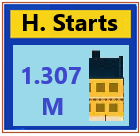
Housing Starts Home building pulled back in November, as buyers faced spiking mortgage rates topping 7% that make homes increasingly unaffordable. Rates fell slightly through the month, but are still double what they were a year ago, continuing to put pressure on new home purchases. November housing starts, a measure of new home construction, dropped 0.5% from October, and were down 16.4% from a year ago, according to the US Census Bureau. After a big drop earlier this spring, housing starts had been holding relatively steady up until July when rising mortgage rates persuaded more prospective buyers to sit on the sidelines. Housing starts bounced back a bit in August while mortgage rates briefly retreated. But since that time, mortgage rates have been on the rise, hitting a 20-year high in October.
Building Permits Building permits, which track the number of new housing units granted permits, also fell in November, down 11.2% from the revised October rate, and were down 22.4% from a year ago. “The home building market weakened further in November and it’s tough to forecast the bottom given relatively high mortgage rates,” said Robert Frick, corporate economist at Navy Federal Credit Union. One number that beat estimates was housing starts, he said, but those were weighted to apartments, not single-family homes. “Potential homebuyers should see some relief next year in the form of lower mortgage rates and possibly lower home prices,” said Frick.
MBA Purchase Applications
mmmmm
Current Account mmmm
TCosnumer Confidence
mmmm
Exisitng Home Sales mmmm.
Jobless Claims
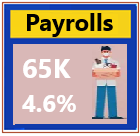
Weekly jobless claims rise less than expected Initial weekly jobless claims for the week ending Dec. 17 rose by 2,000 to 216,000, the Labor Department said Thursday. However, the number was smaller than a Dow Jones consensus estimate of 220,000.
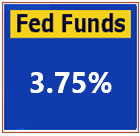
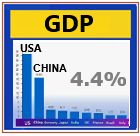
GDP Nevertheless, consumer spending is on track to provide another lift to economic growth this quarter, after teaming up with exports to boost gross domestic product in the third quarter. The economy grew at a 3.2% annualized rate last quarter after contracting in the first half of the year. Growth estimates for the fourth quarter are as high as a 2.7% pace. Consumer spending is being driven by solid wage gains, thanks to a tight labor market, as well as savings accumulated during first year of the COVID-19 pandemic. The Fed last week hiked its policy rate by 50 basis points to a 4.25%-4.50% range, the highest since late 2007. Fed officials expect the rate to rise to between 5.00% and 5.25% next year, a level that could be sustained for a while.
Chicago Fed mmmm
Leading Indicators mmmm
Corporate Profits mmmm
Fixed Mortgage Rates
mmmm
Durable Good Orders
U.S. durable-goods orders dropped 2.1% in November 2022. In another report on Friday, the Commerce Department said orders for non-defense capital goods excluding aircraft, a closely watched proxy for business spending plans, rose 0.2% in November. These so-called core capital goods orders increased 0.3% in October. They gained 8.8% on a year-on-year basis. The data is not adjusted for inflation. Slowing price increases, a strong dollar and the shift in spending from goods to services likely contributed to the moderation in core capital goods orders. That is hurting manufacturing, which accounts for 11.3% of the economy. Shipments of core capital goods dipped 0.1% after increasing 1.4% in October. Core capital goods shipments are used to calculate equipment spending in the gross domestic product measurement. Business spending on equipment contributed to the economy's rebound last quarter.
Personal Income US Personal-Consumption Inflation Cools; Spending Misses Forecasts. A key gauge of US inflation continued to moderate last month while spending stagnated, extending a welcome easing in price pressures but far short of the moderation the Federal Reserve is seeking to pause interest-rate hikes.The personal consumption expenditures price index excluding food and energy, which Fed Chair Jerome Powell has stressed is a more accurate measure of where inflation is heading, rose 0.2% in November from a month earlier, Commerce Department data showed Friday. That matched estimates, but data for the prior month were revised higher. Fed-favored PCE index shows annualized U.S. inflation rate falling to 5.5% in November.U.S. personal incomes and consumer spending rose in November.
Consumer Spending Consumer spending, which accounts for more than two-thirds of U.S. economic activity, edged up 0.1%. Data for October was revised up to show spending surging 0.9% instead of 0.8% as previously reported. Economists polled by Reuters had forecast consumer spending rising 0.2%. Some of the moderation in spending last month reflected a shift of demand from goods to services. Slowing price increases for some goods also lowered the dollar amount of consumer spending. Spending on goods fell 1.0%, led by decreases in purchases of motor vehicles. Lower gasoline prices also weighed, with additional drags on sales coming from household furnishings and other equipment as well as recreational goods and vehicles. Outlays on services increased 0.7%, lifted by housing and utilities as well as financial services and insurance. They offset decreases in air transportation services. U.S. stocks opened lower. The dollar was steady against a basket of currencies. U.S. Treasury prices fell.
U.S. consumer spending barely rose in November, while annual inflation increased at its slowest pace in 13 months, but demand is probably not cooling fast enough to discourage the Federal Reserve from driving interest rates to higher levels next year.Slowing economic activity amid rising borrowing costs was also flagged by other data from the Commerce Department on Friday showing a modest gain in orders for locally manufactured capital goods last month. Shipments of these goods, which are a proxy for business spending on equipment, fell. The U.S. central bank is trying to slow demand for everything from housing to labor as it fights to bring inflation back to its 2% target."Consumers are starting to pull back and businesses likely won't be far behind as the full weight of tighter monetary policy and weaker financial conditions bears down on the economy in 2023," said Sal Guatieri, a senior economist at BMO Capital Markets in Toronto.
Core PCE
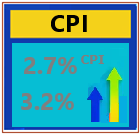
The Federal Reserve’s preferred measurement of inflation continued to cool off in November, providing yet another welcome indication that this period of painfully high prices has peaked. The Personal Consumption Expenditures price index, or PCE, rose 5.5% in November from a year earlier and 0.1% from October, the Commerce Department reported Friday. In October, prices rose 6.1% annually. Core PCE, which excludes the volatile food and energy categories, was up 4.7% annually and 0.2% on a monthly basis. The annual increases for both PCE inflation indexes hit their lowest levels since October 2021. PCE, specifically the core measurement, is the Fed’s favored inflation gauge, since it provides a more complete picture of costs for consumers. Economists polled by Refinitiv were anticipating core PCE to climb 4.7% from November 2021 and 0.2% from the month before. Friday’s report also showed that spending continued to rise in November, but at a much slower pace than in previous months. Spending was up 0.1% in November as compared to 0.8% the month before. Personal income increased by 0.4% in November, down from 0.7% in October.
Core PCE
mmmm
|