10-Year Treasury Yield
mmmm
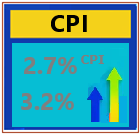
PPI Wholesale prices rose 10.8% in May, near a record annual pace. The producer price index rose 0.8% for the month and 10.8% over the past year. The monthly gain was in line with estimates and the annual gain was slightly off the record 11.5% hit earlier this year. The data is significant in that prices at the wholesale level feed through to consumer prices. Wholesale prices rose at a brisk pace in May as inflation pressures mounted on the U.S. economy, the Bureau of Labor Statistics reported Tuesday. The producer price index, a measure of the prices paid to producers of goods and services, rose 0.8% for the month and 10.8% over the past year. The monthly rise was in line with Dow Jones estimates and a doubling of the 0.4% pace in April. Excluding food, energy and trade, so-called core PPI rose 0.5% on the month, slightly below the 0.6% estimate but an increase from the 0.4% reading in the previous month. On a year-over-year basis, the core measure was up 6.8%, matching April’s gain. The two PPI measures remained near their historic highs — 11.5% for headline, and 7.1% for core, both hit in March. The data is significant in that prices at the wholesale level feed through to consumer prices, which are running at their highest levels since December 1981. The consumer price index increased 8.6% annually in May, defying hopes that inflation had peaked in the spring.
Retail Sales
Retail sales posted unexpected 0.3% decline in May as inflation hammers consumers. Retail sales turned negative in May as consumers pulled back spending while inflation surged, the Commerce Department reported Wednesday. Advance retail and food service spending fell 0.3% for the month, below the Dow Jones estimate for a 0.1% gain. Excluding autos, sales were up 0.5%, which fell short of expectations for a 0.8% increase. The numbers are not adjusted for inflation, which increased 1% for the month on the headline number and 0.6% excluding food and energy. Sales were well below the pace in April, which posted a downwardly revised 0.7% increase from the initial 0.9% estimate. Spending for the month declined even though sales at gas stations increased 4% due to fuel prices that scaled new heights, with regular unleaded hitting $4.43 a gallon in May and now running around $5. That growth was offset by a 3.5% decline at motor vehicle and parts dealers.
Phily Manufactutirng
The Philadelphia Federal Reserve nonmanufacturing survey showed activity expanded in the region this month. However, expectations for future growth declined, the Philadelphia Fed said.
FOMC
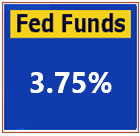
The Federal Reserve on Wednesday increased its benchmark funds rate by 75 basis points, the largest hike since 1994, with annual U.S. inflation running at a 40-year high of 8.6% in May. The Federal Reserve on Wednesday increased its benchmark funds rate by 75 basis points, the largest hike since 1994, with annual U.S. inflation running at a 40-year high of 8.6% in May.
Empire
Empire state manufacturing -1.20 in June, missed consensus. Empire State Manufacturing Index: -1.20 vs. +3 consensus and -11.6 prior.
Import and Export
U.S. import prices rose 0.6 percent in May, after advancing 0.4 percent in April, the U.S. Bureau of Labor Statistics reported today. Higher fuel prices in May offset lower nonfuel prices. The price index for U.S. exports increased 2.8 percent in May following a 0.8-percent rise the previous month.
Imports : Prices for U.S. imports advanced 0.6 percent in May following a 0.4-percent increase in April and a 3.0- percent rise in March. The last monthly decline for import prices was a 0.4-percent decrease in December 2021. U.S. import prices increased 11.7 percent for the year ended in May.
Exports : U.S. export prices increased 2.8 percent in May, after advancing 0.8 percent in April and 4.2 percent in March. Higher prices for both nonagricultural and agricultural exports contributed to the U.S. export price rise in May. The export price index increased 18.9 percent from May 2021 to May 2022, the largest over-the-year rise since 12-month percent changes were first published in September 1984.
HMI
Homebuilder sentiment drops to lowest level in two years as housing demand slows. Sentiment among the nation’s homebuilders fell for the sixth straight month to the lowest level since June 2020, when the economy was grappling with shutdowns stemming from the Covid pandemic. The National Association of Home Builders/Wells Fargo Housing Market Index fell 2 points to 67 in June. Anything above 50 is considered positive. The index hit 90 at the end of 2020, as the pandemic spurred strong demand for larger homes in the suburbs. Of the index’s three components, buyer traffic fell 5 points to 48, the first time it has fallen into negative territory since June 2020. Current sales conditions fell 1 point to 77, and sales expectations in the next six months fell 2 points to 61.
MBA Purchase Applications
mmmmm
Housing Stars
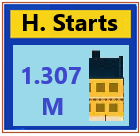
U.S. housing starts drop to 13-month low in May; building permits fall. U.S. homebuilding fell to a 13-month low in May and permits tumbled, suggesting the housing market was cooling as surging mortgage rates reduce affordability for many first-time homebuyers. Housing starts plunged 14.4% to a seasonally adjusted annual rate of 1.549 million units last month, the lowest level since April 2021, the Commerce Department said on Thursday. Data for April was revised higher to a rate of 1.810 million units from the previously reported 1.724 million units. Economists polled by Reuters had forecast starts would slide to a rate of 1.701 million units. Permits for future homebuilding declined 7.0% to a rate of 1.695 million units. The housing market is very sensitive to interest rates. Sales have been trending lower over the last few months, with homebuilding mostly moving sideways.
Permits
Single-family housing starts, which account for the biggest share of homebuilding, tumbled 9.2% to a rate of 1.051 million units in May. Single-family homebuilding rose in the Northeast, but fell in the Midwest, South and West regions. Building permits for single-family homes declined 5.5% to a rate of 1.048 million units. Starts for housing projects with five units or more dived 26.8% to a rate 469,000 units. Multi-family housing permits dropped 10.0% to a rate of 592,000 units.
Industrial Production
mmmm.
Leading Inficators
mmmm
Jobless Claims
mmmm
FOMC Meeting 4 for June 15
Federal Reserve Chair Jerome Powell said it is still possible for the central bank to achieve a “soft landing,” in which the Fed brings down inflation without causing a recession. “I think what’s in the SEP would certainly meet that test,” Powell said, referencing the Fed projections that show inflation nearing 2% with inflation just over 4% in 2024. The Fed chair did say that the central bank cannot control all the factors driving inflation, such as oil prices that have been pushed higher by Russia’s invasion of Ukraine.
Fixed Mortgage Rates
The 30-year fixed-rate mortgage jumped 25 basis points last week to an average of 5.65%, the highest level since November 2008, according to data from the Mortgage Bankers Association.The average rate on the 30-year fixed mortgage has risen sharply since the start of the year. In January it was right around 3.25%, and as of Tuesday it hit 6.28%, according to Mortgage News Daily. Mortgage demand has fallen to less than half of what it was a year ago. |