The Chicago Fed National Activity Index (CFNAI)
Chicago Fed National Activity Index at 7-Month Low
The Chicago Fed National Activity Index dropped to -0.13 in September of 2021 from 0.05 in August, the lowest since April and showing economic growth in the US lost momentum for a second consecutive month. Production-related indicators contributed -0.37, down from -0.08 in August, as industrial production declined 1.3%. The contribution of the sales, orders, and inventories category to moved up to +0.07 from +0.01 and employment-related indicators contributed +0.16, up from +0.09. The contribution of the personal consumption and housing category was unchanged at +0.02. Also, the index’s three-month moving average moved down to +0.25 in September from +0.38 in August.
BA
nvestors will be hoping for strength from BA as it approaches its next earnings release, which is expected to be October 27, 2021. In that report, analysts expect BA to post earnings of $0.27 per share. This would mark year-over-year growth of 119.42%. Meanwhile, the Zacks Consensus Estimate for revenue is projecting net sales of $18.52 billion, up 31.01% from the year-ago period.
Case-Shiller
U.S. single-family home prices rose less than expected in August 2021, posting the smallest monthly gain in more than a year, a closely watched survey said on Tuesday. The S&P CoreLogic Case Shiller composite index of 20 metropolitan areas rose 1.2% on a seasonally adjusted basis after posting a 1.5% increase in July 2021. It was the smallest monthly gain since July 2020 and was below the consensus estimate in a Reuters poll of economists for a gain of 1.5%.
Prices in the 20 city index rose 19.7% year over year, down slightly from July's record yearly increase of 20%. The annual gain was also shy of economists' expectations for a 20.0% rise. Home prices in August hinted at possible cooling in the market, S&P Case-Shiller says. There are signs that price growth could be cooling off in the otherwise red-hot housing market. Prices rose 19.8% year over year in August, which was the same as the previous month, according to the S&P CoreLogic Case-Shiller Indices. “August data also suggest that the growth in housing prices, while still very strong, may be beginning to decelerate,” said Craig Lazzara of S&P DJI.
S&P Case-Shiller 20-city home price index up 19.7% in August 2021 from a year ago. There are signs that price growth could be cooling off in the otherwise red-hot housing market. Prices rose 19.8% year over year in August, which was the same as the previous month, according to the S&P CoreLogic Case-Shiller Indices. That is the first time the annual gain hasn’t increased since early 2020. The 10-city composite annual increase was 18.6%, down from 19.2% in July. The 20-city composite rose 19.7% year-over-year, down from 20% in the previous month. Prices in all cities covered are at an all-time high...
Facebook
Shares of Facebook fell 5% on Tuesday. The social media company beat on earnings but missed on revenue and average monthly users when it reported quarterly results Monday evening.
MSFT
Microsoft beats revenue expectations, reporting 22% growth. Microsoft shares edged 2% higher in extended trading Tuesday after the software and hardware maker reported fiscal first-quarter earnings that exceeded analysts’ estimates. Here’s how the company did: Earnings: $2.27 per share, adjusted, vs. $2.07 as expected by analysts, according to Refinitiv. Revenue: $45.32 billion, vs. $43.97 billion as expected by analysts, according to Refinitiv.
FHFA
House prices rose nationwide in August, up 1.0 percent from the previous month, according to the latest Federal Housing Finance Agency House Price Index (FHFA HPI®). House prices rose 18.5 percent from August 2020 to August 2021. The previously reported 1.4 percent price change for July 2021 remained unchanged. For the nine census divisions, seasonally adjusted monthly house price changes from July 2021 to August 2021 ranged from -0.1 percent in the New England division to +1.9 percent in the South Atlantic division. The 12-month changes ranged from +14.9 percent in the West North Central division to +25.8 percent in the Mountain division.
Consumer Confidence
U.S. consumer confidence rebounds in October 2021 after three straight declines. U.S. consumer confidence rose in October after three straight declines as the public’s anxiety about the delta variant of the coronavirus appears to have abated. The Conference Board reported Tuesday that its consumer confidence index rose to a reading of 113.8 in October, up from 109.8 in September. On the data front, U.S. consumer confidence rose in October 2021, reversing a three-month downward trend, according to the Conference Board. Its consumer confidence index climbed to a reading of 113.8, topping a Dow Jones expectation of 108 and up from 109.8 in September.
Boeing
Boeing on Wednesday said flaws in its 787 Dreamliners would generate $1 billion in abnormal costs and that it cut production to about two of the planes a month as it struggles to address quality issues. Those problems led it to suspend deliveries for most of the past year. The manufacturer wrote down $183 million of that amount in the third quarter. Sales improved, however, thanks to higher aircraft sales and deliveries. Boeing said its revenue rose to $15.28 billion in the third quarter, up 8% from $14.14 billion a year ago. That was below the $16.3 billion analysts forecast. The company reported a $132 million net loss for the quarter though it was narrower than the $466 million it lost a year earlier. On an adjusted basis, Boeing lost 60 cents per share, more than the 20 cents analysts expected. Adjusted results: A loss of 60 cents a share vs. an expected loss of 20 cents a share.Revenue: $15.28 billion vs. $16.3 billion, expected.
GDP
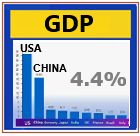
The U.S. economy grew at a 2% rate in the third quarter, its slowest gain of the pandemic-era recovery, as supply chain issues and a marked deceleration in consumer spending stunted the expansion, the Commerce Department reported Thursday. Gross domestic product, a sum of all the goods and services produced, grew at a 2.0% annualized pace in the third quarter, according to the department’s first estimate released Thursday. Economists surveyed by Dow Jones had been looking for a 2.8% reading. That marked the slowest GDP gain since the 31.2% plunge in the second quarter of 2020, which encompassed the period during which Covid-19 morphed into a global pandemic that resulted in a severe economic shutdown that sent tens of millions to the unemployment lines and put a chokehold on activity across the country.
U.S Trade in Goods
The numbers: The U.S. trade deficit in goods rose 9.2% to a record $96.3 billion in September, according to the Commerce Department's advanced estimate released Wednesday. Economists polled by econoday expected a deficit of $87.9 billion. The report also showed a 1.1% increase in wholesale inventories, while retail inventories fell by 0.2%, led by a 2.4% decline in autos. Excluding motor vehicles and parts, inventories rose 0.6%. What happened: Exports of goods fell 4.7% to $142.2 billion in September. Imports rose 0.5% to $238.4 billion. Big picture: The international trade deficit resumed its steady march higher in September, on the back of strong U.S. consumer demand for foreign imports, though last months deficit was driven largely by a sharp decline in exports due to "weak international demand," according to Katherine Judge, senior economist at CIBC Capital Markets.
Jobless
Jobless claims totaled 281,000 for the week ended Oct. 23, another pandemic-era low and better than the 289,000 estimate. The total marked a decrease from the previous week’s 291,000. Continuing claims fell by 237,000 to 2.24 million, and those receiving benefits under all programs dropped by 448,386 to 2.83 million.
Durable Goods Orders for Sep 2021
U.S. durable-goods orders decline in September, pulled lower. Oct 27, 2021 — Durable-goods orders fell 0.4% in September, the first decline after four straight gains, the Commerce Department said Wednesday. New orders for manufactured durable goods in September decreased $1.0 billion or 0.4% to $261.3 billion, the U.S. Census Bureau announced today. This decrease, down following four consecutive monthly increases, followed a 1.3% August increase. Excluding transportation, new orders increased 0.4%. Excluding defense, new orders decreased 2.0%
New Home Sales
Sales of new U.S. single-family homes surged to a six-month high in September, but higher house price are making homeownership less affordable for some first-time buyers. New home sales jumped 14.0% to a seasonally adjusted annual rate of 800,000 units last month, the highest level since March, the Commerce Department said on Tuesday. August’s sales pace was revised down to 702,000 units from the previously reported 740,000 units. Sales increased in the populous South, as well as in the West and Northeast. They, however, fell in the Midwest. Economists polled by Reuters had forecast new home sales, which account for more than 10% of U.S. home sales, increasing to a rate of 760,000 units. Sales dropped 17.6% on a year-on-year basis in September. They peaked at a rate of 993,000 units in January, which was the highest since the end of 2006.
Pending Home Sale
Pending home sales, which are a measure of signed contracts to buy existing homes, fell an unexpected 2.3% in September compared with August, according to the National Association of Realtors. Analysts were predicting a slight monthly gain. Sales were 8% lower compared with September 2020. Pending sales are a forward-looking indicator of closed sales in one to two months.
The National Association of Realtors (NAR) said on Thursday its Pending Home Sales Index, based on signed contracts, decreased 2.3% last month to 116.7. Pending home sales fell in all four regions. Economists polled by Reuters had forecast contracts, which become sales after a month or two, would be unchanged. Pending home sales dropped 8.0% in September on a year-on-year basis. Scarce inventory has led to double-digit growth in home prices..
Consumer Sentiment UM
October consumer sentiment index beats estimates at 71.7. The final reading for October came in at 71.7, above the 71.4 earlier estimate, and 0.1 points above the average of the past two months. The current economic conditions index came in at 77.7, down from 80.1 in September, while the expectations index was 67.9 compared to 68.1 a month earlier.
AMZN
Amazon shares dropped more than 4% in extended trading on Thursday after the company reported weaker-than-expected results for the third quarter and delivered disappointing guidance for the critical holiday period. Earnings: $6.12 vs $8.92 per share expected, according to analysts surveyed by Refinitiv. Revenue: $110.81 billion vs $111.6 billion expected, according to analysts surveyed by Refinitiv
AAPL
Apple sales miss expectations, Tim Cook says supply issues cost company $6 billion. Apple revenue fell short of Wall Street expectations in its fiscal fourth quarter on Thursday, which Apple CEO Tim Cook attributed to larger-than-expected supply constraints. Apple’s overall revenue was still up 29% on an annual basis and each of its product categories grew on an annual basis. Apple hasn’t provided official guidance since the start of the pandemic, but Cook said Apple expects “solid year-over-year revenue growth” in the December quarter despite the fact Apple will face worse supply constraints. Here’s how Apple did versus Refinitiv consensus estimates: EPS: $1.24 vs. $1.24 estimated. Revenue: $83.36 billion vs. $84.85 billion estimated, up 29% year-over-year.
Personal Income
Personal income decreased $216.2 billion, or 1.0 percent at a monthly rate, while consumer spending increased$93.4 billion, or 0.6 percent, in September. The decrease in personal income primarily reflected the winding down of pandemic-related assistance programs. The most recent data release from the Bureau of Economic Analysis (BEA) showed that personal income slumped 1% in September to a seasonally adjusted annual rate (SAAR) of $20,490 billion. This decrease in personal income was largely due to declines in the government social benefits, including economic impact payments and the pandemic unemployment compensation. It largely offset the increase in the compensation of employees.
Compensation surges in third-third quarter.U.S. consumer spending increased solidly in September, but was partly flattered by higher prices, with inflation remaining hot as shortages of motor vehicles and other goods persisted amid global supply constraints. Inflation pressures are broadening out, with other data on Friday showing employers boosted wages by the most on record in the third quarter as they competed for scarce workers. The industry-wide surge could undercut Federal Reserve Chair Jerome Powell's long-held view that high inflation is transitory. Consumer spending increases 0.6% in September. Personal income drops 1.0%; wages jump 0.8%. Core PCE price index gains 0.2%; up 3.6% year-on-year.
Consumer Spending or Real PCE
Real disposable income (income remaining after adjusting for taxes and inflation) declined 1.6% in September 2021, after a 0.2% dip in August. Personal consumption expenditures (PCE) was up for three consecutive months in the third quarter of 2021: up 0.1% in July, 1.0% in August and 0.6% in September. The personal savings rate slipped further to 7.5%, as people spent more in September. The personal savings rate has declined from a record high rate of 33.8% in April 2020. With the decline in personal income and increase in consumption expenditure, savings slipped to an annual pace of $1.3 billion.When adjusted for inflation, consumer spending rose 0.3% after gaining 0.6% in August.
Consumer spending, which accounts for more than two-thirds of U.S. economic activity, rose 0.6% last month after rebounding 1.0% in August, the Commerce Department said. Economists polled by Reuters had forecast consumer spending increasing 0.5%. Spending was driven by demand for services such as healthcare, dining out as well as hotel and motel accommodation amid declining cases of the coronavirus Delta variant. A wave of infections over summer worsened worker shortages at factories, mines and ports, further stressing supply chains...
Consumer spending increases 0.6% in September. Personal income drops 1.0%; wages jump 0.8%. Core PCE price index gains 0.2%; up 3.6% year-on-year.
Core PCE Price Index - Inflation
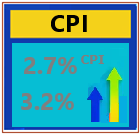
Price pressures remained strong in September 2021, reducing consumers' buying power. The personal consumption expenditures (PCE) price index, excluding the volatile food and energy components, climbed 0.2%. That was the smallest gain since February and followed a 0.3% rise in August. In the 12 months through September, the so-called core PCE price index increased 3.6% for a fourth straight month. The core PCE price index is the Fed's preferred inflation measure for its flexible 2% target.
Thursday’s data indicated that at least the pace of the inflation rise had taken a step back.Core personal consumption expenditures, which exclude food and energy and are the preferred gauge by which the Fed measures inflation, rose 4.5%, a deceleration from the second quarter’s 6.1% increase but still well above the pre-Covid pace. The headline PCE price index increased 5.3% in Q3, down from 6.5% in the previous period. |