10-Year Treasury Yield
U.S. Treasury yields were steady on Tuesday amid escalating tensions between Russia and Ukraine. The yield on the benchmark 10-year Treasury note moved 1 basis point higher to 1.939% at around 9:30 a.m. ET. The yield on the 30-year Treasury bond was flat at 2.254%. Yields move inversely to prices and 1 basis point is equal to 0.01%.
Geopolitical Risks
What's happening: Most results for the end of 2021 have been posted. On the whole, they looked solid. But that wasn't enough to calm nervy investors, who are stressing out about inflation, the Federal Reserve and a potential Russian invasion of Ukraine that could disrupt energy supplies.What's happening: Most results for the end of 2021 have been posted. On the whole, they looked solid. But that wasn't enough to calm nervy investors, who are stressing out about inflation, the Federal Reserve and a potential Russian invasion of Ukraine that could disrupt energy supplies..
S&P Case-Shiller Dec. 2021
U.S. home prices increased in December at their fastest rate in 34 years.Home prices rose 18.8% in 2021, according to the S&P CoreLogic Case-Shiller US National Home Price Index, the biggest increase in 34 years of data and substantially ahead of 2020's 10.4% gain. Month-to-month, home prices in the US National Index, which covers all nine U.S. Census divisions, increased 1.3% in December from November, after seasonal adjustment.
A persistent low inventory of homes dropped to record low levels in December, according to a recent report from the National Association of Realtors. In the face of continued strong demand, prices were pushed higher. However, rising mortgage rates could start to quell some of that demand, Lazarra said. In the short term, we should soon begin to see the impact of increasing mortgage rates on home prices.
US home price growth stalls in the final month of 2021. Home price growth in the U.S. paused in the final month of 2021, but the full year logged in record gains. Standard & Poor’s said Tuesday that its S&P CoreLogic Case-Shiller national home price index posted an 18.8% annual gain in December 2021, unchanged from November 2021. The 20-City Composite posted an 18.6% annual gain, up from 18.3% a month earlier. The 20-City results were higher than analysts’ expectations of an 18% annual gain, according to Bloomberg consensus estimates. For the year, the National Composite Index recorded a gain of 18.8%. This is the highest calendar year increase in 34 years of data, and substantially ahead of 2020’s 10.4% gain.
FHFA House Price Index Dec. 2021
U.S. House Prices Rise 17.5 Percent over the Last Year; Up 3.3 Percent from the Third Quarter. U.S. house prices rose 17.5 percent from the fourth quarter of 2020 to the fourth quarter of 2021 according to the Federal Housing Finance Agency House Price Index (FHFA HPI®). House prices were up 3.3 percent compared to the third quarter of 2021. FHFA's seasonally adjusted monthly index for December was up 1.2 percent from November.
PMI Composite Flash Feb. 2022
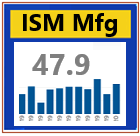
IHS Markit manufacturing and service-sector PMI readings higher in February 2022. The PMIs have been slowing from the high 50s to the mid-50s for manufacturing and to the low 50s for services. Modest improvement is expected for February with manufacturing seen at 56.0 and services at 52.2.
Consumer Confidence Feb. 2022
U.S. consumer confidence dips in February 2022. The Conference Board said its consumer confidence index dipped to a reading of 110.5 this month, the lowest since last September, from 111.1 in January. Economists polled by Reuters had forecast the index decreasing to 110.0. The index remains above its pandemic lows. Unlike the University of Michigan's consumer sentiment index, which fell to a decade low in mid-February, the Conference Board survey puts more emphasis on the labor market. U.S. consumer confidence fell to a five-month low month in February, with fewer consumers planning to purchase homes, automobiles and go on vacation over the next six months amid concerns about the short-term economic outlook.
MBA Purchase Applications
U.S. mortgage applications plunged to their lowest level in more than two years last week as rising mortgage rates dampened demand for loans to purchase homes and refinancing activity, a survey showed on Wednesday. The Mortgage Bankers Association (MBA) said its Market Composite Index, a measure of mortgage loan application volume, tumbled 13.1% on a seasonally adjusted basis to 466.4 from the prior week. That was the lowest level since December 2019. The refinance index dropped 15.6%, while the purchase index declined 10.1%. The 30-year fixed mortgage rate averaged 4.06%, up from 4.05% in the prior week, according to the MBA. Mortgage rates have been rising, with the Federal Reserve poised to start raising interest rates in March to tame high inflation. Economists expect as many as seven rate hikes from the U.S. central bank this year. Total mortgage applications decreased 13.1% last week to the lowest level since December 2019. The average contract interest rate for 30-year fixed-rate mortgages with conforming loan balances ($647,200 or less) increased to 4.06% from 4.05%. Applications to refinance dropped 15% weekly and were 56% lower than one year ago.
Jobless Claims
Weekly jobless claims came in slightly less than expected last week and economic growth to end 2021 was slightly better than originally reported, according to government data released Thursday. Initial filings for unemployment insurance totaled 232,000 for the week ended Feb. 19, the Labor Department said. That was a touch below the 235,000 Dow Jones estimate and down 17,000 from the previous week. On the jobs side, continuing claims, which run a week behind the headline number, totaled 1.48 million, a decline of 112,000 from the previous week and good for the lowest total since March 14, 1970.
Gross Domestic Product (GDP)
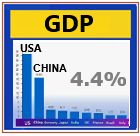
Fourth-quarter GDP revised slightly up. The rise in the nation’s gross domestic product was up slightly from the earlier estimate of 6.9% and compares to 2.3% in the third quarter. Gross domestic product, a sum of all the goods and services produced in the U.S. economy, increased at a 7% annualized rate during the fourth quarter, according to the Commerce Department. On the broader economic side, the slight upward revision of GDP from the initial reading of 6.9% was in line with market estimates. That brought full-year growth to 5.7%, the fastest pace since 1984 that was driven by a strong inventory rebuild in the second half of the year.
Chicago Fed Nat Activity Index
Chicago Fed National Activity Index Rises in January 2022. The Chicago Fed National Activity Index in the US increased to +0.69 in January of 2022 from a revised 0.07 in the previous month, suggesting a pick up in economic activity.
New Home Sales
Weather and pandemic blamed for U.S. new-home-sales slump in January U.S. New-Home Sales Decline for First Time in Three Months. Sales of new U.S. homes retreated in January after a flurry of purchases at the end of 2021, indicating a jump in mortgage rates may be starting to restrain demand. Purchases of new single-family homes decreased 4.5% to a 801,000 annualized pace following a revised 839,000 in December, government data showed Thursday. The median estimate in a Bloomberg survey of economists called for an 803,000 rate. While underlying demand for new homes remains solid, fueled in part by record low inventory in the resale market, the highest mortgage rates since mid-2019 represent a headwind. Higher materials costs are also contributing to housing inflation and sidelining many prospective buyers. A further moderation in sales may help builders chip away at construction backlogs that are still elevated due to supply and transportation delays.
Russia Ukraine
Russia launched an unprecedented invasion of its neighbor Ukraine in the early hours of Thursday morning, with reports of explosions and missile strikes on several key Ukrainian cities including its capital, Kyiv. The military assault on Ukraine is taking place both on the ground and by air, with preliminary reports of the first casualties coming in from officials in the country. Explosions have been heard in the cities of Kyiv, Odessa, Kharkiv and Mariupol, and there are reports of fighting and fatalities in other parts of the country. Russia began attacking various positions across the country early Thursday local time after Russian President Vladimir Putin announced that Russia would carry out a “special military operation” in Ukraine.
10 Year Yield
U.S. Treasury yields saw steeper falls on Thursday morning, after Russia invaded Ukraine. The yield on the benchmark 10-year Treasury note dropped more than 10 basis points to 1.863% at around 8:20 a.m. ET. The yield on the 30-year Treasury bond fell 10 basis points to 2.173%. Yields move inversely to prices and 1 basis point is equal to 0.01%. Treasury yields dropped as investors flocked to the safe haven asset of government bonds, while gold jumped to its highest level in more than a year. Global markets fell sharply following the news of Russia’s attack on Ukraine. l
Oil Surges
Escalating uncertainty about Ukraine was reflected by a spike in energy prices. US crude futures jumped 5.4% to trade at $95.65 per barrel. Brent crude, the global benchmark, surged 3.8% to $99.17 per barrel. Russia is one of the world's biggest producers of oil. It is also a major exporter of natural gas. Investors fear that conflict in Ukraine could limit or stop the flow of Russian gas into Europe, making it much more expensive for people to heat and light their homes. In 2020, Russia accounted for about 38% of the European Union's natural gas imports, according to data agency Eurostat. The region's biggest economy, Germany, is particularly exposed as it weans itself off of coal and nuclear power. So are Italy and Austria, which receive gas via pipelines that run through Ukraine. Western countries would likely respond to a Russian invasion of Ukraine with punishing sanctions that could cut Russian banks off from the global financial system and make it more difficult for the country to export its oil and gas.
Oil prices on Thursday jumped following Russia’s invasion of Ukraine, with international benchmark Brent crude surpassing $100 a barrel for the first time since 2014. The attack is expected to have far-reaching implications for energy markets given Russia’s role as the world’s second-largest producer of natural gas and one of the world’s largest oil-producing nations. Oil prices have jumped more than $20 a barrel since the start of the year amid escalating Russia-Ukraine tensions. Now, it is feared a wave of international sanctions on Russia’s energy sector could disrupt supplies. Brent crude futures rose more than 8.1% to trade at $104.69 a barrel during afternoon trade in London. U.S. West Texas Intermediate futures, meanwhile, climbed over 7.7% to trade at $99.15. WTI had traded above $100 a barrel for the first time since 2014 earlier in the session before paring gains.
Fixed Mortage Rates
nn mmmmm
Durable Goods Orders
Orders for durable goods reflected the buoyant spending, rising 1.6% or double the expectation. Durable Orders report also brought more better than expected news: Orders for long-lasting goods jumped 1.6% in January, compared to the outlook for a 0.8% gain.
Personal Income for Jan. 2022
Personal income was flat for the month, which was better than the expectation for a drop of 0.3% in January 2022. After-tax, or real disposable, income fell 0.5% as the expiration of a child tax credit offset wage gains and a large adjustment to Social Security checks.
Consumer Spending for Jan. 2022
Consumer spending accelerated faster than expected, rising 2.1% on the month against the 1.6% estimate. The spending increase reversed a 0.8% decline in December 2021.
Core PCE for Jan 2022
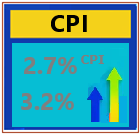
A key inflation measure showed that prices rose at their fastest level in nearly 39 years, but it didn’t deter consumers from spending aggressively, the Commerce Department reported Friday. The core personal consumption expenditures price index, the Federal Reserve’s primary inflation gauge, rose 5.2% from a year ago, slightly more than the 5.1% Dow Jones estimate. It was the highest level since April 1983. Including food and energy prices, headline PCE was up 6.1% in January 2022, the strongest gain since February 1982. On a monthly basis, core PCE rose 0.5%, in line with estimates, while the headline gain was up 0.6% in January 2022.
Consumer Sentiment UM
February Consumer Sentiment Index Remained At Lowest Level This Decade. Although consumer sentiment posted a slight increase in the last half of February, it still remained at its lowest level in the past decade, according to the University of Michigan’s Consumer Sentiment Survey released Friday. Feb. 25.
The Index of Consumer Sentiment was at 62.8 in February, down from 67.2 in January — a 6.5% month-over-month decrease and an 18.2% year-over-year drop, according to the data. The loss was still entirely due to a 12.9% decline among households with incomes of $100,000 or more, the survey notes.
Pending Home Sales
Homebuying in the U.S. was slower than anticipated in the first month of 2022. Pending home sales, a leading indicator of the health of the housing market, declined for the third straight month. The National Association of Realtors’ (NAR) Pending Home Sales Index, which tracks the number of homes that are under contract to be sold, fell 5.7% in January from December and dropped 9.5% from the same month a year ago. Contract signings were down across all regions in the U.S. The results came in much lower than analysts' expectations of a 0.2% increase in sales from a month earlier and a 1.8% drop from the same month a year ago, according to Bloomberg consensus estimates.
|