10-Year Treasury Yield
U.S. Treasury yields jumped on Tuesday, amid fears that an import ban on Russian oil could increase inflationary pressures. The yield on the benchmark 10-year Treasury note surged 9 basis points to 1.847% at 4:00 p.m. ET. The yield on the 30-year Treasury bond moved 8 basis points higher to 2.231%. Yields move inversely to prices and 1 basis point is equal to 0.01%.
Geopolitical Risks
President Joe Biden on Tuesday announced a ban on Russian oil and other energy imports, which will push up prices and further fuel inflation. According to government data, the nation imported 52 million barrels of oil from Russia in 2019, accounting for 2.2% of the total imported that year. Data for 2020 and 2022 was impacted by the COVID-19 pandemic.
Consumer Credit
The amount of credit consumers used in January 2022 grew by a scant $6.8 billion — the smallest increase in a year — signaling that households sharply reduced borrowing early in 2022. Economists had been expecting a $24 billion increase, according to the Wall Street Journal forecast. Borrowing rose at a 1.9% annual rate in January. By contrast, the rate of credit had surged by 6.1%, 10.8% and 6.9% in the final three months of 2021, Federal Reserve data showed. Americans borrowed the most money in 10 years toward the end of last year. The big slowdown in credit stems from a variety of factors: Record coronavirus cases, rising prices, high inflation, limited availability of new cars and households taking a breather after spending big during the holiday season.
Trade Balance - Goods and Services
This jump in the trade deficit points to a large drag on GDP growth in accounting terms and real GDP growth in the first quarter looks on track to be close to zero as strong demand gains are met by import growth rather than production increases,
The U.S. trade deficit widened to a record high in January 2021 amid a surge in imports, potentially setting up trade to remain a drag on economic growth in the first quarter. The Commerce Department said on Tuesday that the trade deficit jumped 9.4% to an all-time high of $89.7 billion in January. Data for December was revised to show a $82.0 billion shortfall instead of the previously reported $80.7 billion. Economists polled by Reuters had forecast an $87.1 billion deficit. Trade has subtracted from gross domestic product growth for six straight quarters. Growth estimates for the first quarter are mostly below a 2.0% annualized rate. The economy grew at a 7.0% pace in the fourth quarter.
Wholesale Invetories (Pre)
Wholesale inventories rose by an unrevised 0.8% in January 2022 after increasing 2.6% in December. Wholesale inventories advanced 18.1% in January on a year-on-year basis. Inventories are a key part of gross domestic product. Wholesale motor vehicle inventories fell 2.2% after vaulting 5.5% in December. Wholesale inventories, excluding autos, increased 1.1% in January. This component goes into the calculation of GDP.
Wholesale inventories rise unrevised 0.8% in January. Though inventory accumulation continues, the pace is cooling, with other data from the Commerce Department on Tuesday showing the increase in wholesale inventories in January was the smallest in six months amid a decline in motor vehicle stocks. The reports support views of significantly slower gross domestic product growth this quarter after a robust performance in the final three months of 2021.
MBA Purchase Applications
Applications for a mortgage to purchase a home increased 9% from the previous week but were 7% lower than the same week one year ago. Homebuyers are less sensitive to weekly rate moves, and the jump in demand was likely due more to increased supply hitting the market for the spring season. Slightly lower mortgage rates didn’t hurt of course, especially given how high home prices are now.The average loan size remained close to record highs, with higher-balance loan applications continuing to dominate growth.Mortgage rates dropped for the first time in 12 weeks, as the war in Ukraine spurred an investor flight to quality, which pushed U.S. Treasury yields lower.As a result, demand for refinances jumped 9% last week compared with the previous week, but application volume was still half of what it was the same week one year ago, when rates were lower.
JOLTS
Job openings hold above 11 million, nearly 5 million more than the total unemployment leve. Job openings totaled 11.26 million in January, more than the 10.9 million estimate. That brought the total vacancies to 4.75 million more than available workers. The quits level, reflective of the so-called Great Resignation, declined to its lowest total since October.Job openings outnumbered available workers by nearly 5 million in January, the latest sign of a historically tight employment picture, the Labor Department reported Wednesday.
Total vacancies actually dipped a bit, falling to 11.26 million following a substantial upward adjustment in December’s numbers, That still left job postings 4.75 million above the total counted as unemployed for the month. The total was more than the FactSet estimate of 10.9 million. Along with the slight decline in openings came a decrease in quits, or workers voluntarily leaving their jobs. The so-called Great Resignation ebbed for the month, with quits declining to 4.25 million, a drop of 3.4% and the lowest number since October.
As a share of the labor force, the quits rate declined to 2.8% from 3% the previous two months. Federal Reserve officials watch the JOLTS report for signs of labor slack. With the jobless rate at 3.8%, policymakers feel the economy is near full employment. Coupled with inflation running at 7.5%, the robust jobs market has set the stage for an expected series of Fed interest rate increases this year. The gap between jobs and workers as a measure of the labor force is at 2.9% after falling from 3.2% in December, according to Goldman Sachs. The level is the highest in post-World War II history and “suggests strong wage growth will persist until improvements in labor supply and normalization of job openings bring the labor market back into balance,” the bank said in a note.
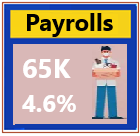
The JOLTS report runs a month behind the department’s nonfarm payrolls count. The February payrolls report showed the unemployment level fell further, to 6.27 million. Companies have struggled with a severe labor shortage, though total payroll numbers continue to get closer to their pre-pandemic levels as more jobs are filled. For February, payrolls increased by 678,000, getting total employment to within 1.1 million of its February 2020 level.
Oil - Commodity
Oil prices dropped in a sudden move on Wednesday, giving back some of the rally this month amid supply disruptions stemming from Russia’s invasion of Ukraine. WTI crude oil tumbled more than 12%, or $15, to settle at $108.7 per barrel, registering its worst day since Nov. 26. Earlier this week, WTI topped $130 per barrel briefly — a 13-year high — during escalated geopolitical tensions.
Jobless Claims
Jobless claims for the week ended March 5 totaled 227,000, higher than the 216,000 estimate and up 11,000 from the previous week, the Labor Department said.
Consumer Price Index - CPI
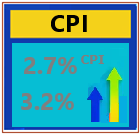
Inflation rose 7.9% in February 2022, as food and energy costs push prices to highest in more than 40 years. The consumer price index for February rose 7.9% from a year ago, the highest level since January 1982. Excluding food and energy, both of which moved sharply higher during the month, core inflation still rose 6.4%, in line with expectations but the highest since August 1982. Gas, groceries and shelter were the biggest contributors to the CPI gain. Auto prices eased. Worker paychecks fell further behind, as inflation-adjusted earnings fell 0.8% in February, contributing to a 2.6% decline over the past year.
Inflation grew worse in February amid the escalating crisis in Ukraine and price pressures that became more entrenched. On a month-over-month basis, the CPI gain was 0.8%. Economists surveyed by Dow Jones had expected headline inflation to increase 7.8% for the year and 0.7% for the month.
The consumer price index, which measures a wide-ranging basket of goods and services, increased 7.9% over the past 12 months, a fresh 40-year high for the closely followed gauge, according to the Labor Department’s Bureau of Labor Statistics. The February acceleration was the fastest pace since January1982, back when the U.S. economy confronted the twin threat of higher inflation and reduced economic growth.
Treasury Budget - Statement
The US budget deficit narrowed to USD 217 billion in February of 2022 from the USD 311 billion gap in the same period last year, well above market expectations of a USD 49.5 billion deficit. Still, it was the highest deficit since July of 2021.
Federal Budget Deficit Narrowed in February 2022. Increased tax revenue and less pandemic spending resulted in smaller shortfall. The federal government ran a budget deficit of $217 billion in February 2022, a narrowing of the shortfall from the same month last year, as spending on pandemic aid slowed and a stronger economy generated additional tax revenue. Government receipts for February rose 17% from a year earlier to $290 billion, largely driven by greater individual income and payroll-tax collections, the Treasury Department reported Thursday. The government spent $506 billion last month, a 9% decrease from the year earlier, as bolstered federal support for unemployment benefits and small businesses ended. The deficit for February of last year was $311 billion.
Fixed Mortage Rates
After rising steadily for months, mortgage rates made a U-turn last week, and borrowers jumped to take advantage. The crisis in Ukraine rattled financial markets and caused a run on the relatively safer bond market. Yields fell and mortgage rates followed. The average contract interest rate for 30-year fixed-rate mortgages with conforming loan balances ($647,200 or less) decreased to 4.09% from 4.15%, with points remaining unchanged at 0.44 (including the origination fee) for loans with a 20% down payment, according to the Mortgage Bankers Association. The rate was 83 basis points lower one year ago.
Cosumer Sentiment UM
U.S. consumer sentiment near 11-year low; near-term inflation worries mount. U.S. consumer sentiment fell more than expected in early March as gasoline prices surged to a record high in the aftermath of Russia's war against Ukraine, boosting one-year inflation expectations to the highest level since 1981. The third straight monthly decline reported by the University of Michigan on Friday pushed consumer sentiment to its lowest level in nearly 11 years. It said 24% of respondents "spontaneously mentioned the Ukraine invasion in response to questions about the economic outlook." The University of Michigan's preliminary consumer sentiment index dropped to 59.7 in the first half of this month, the lowest reading since September 2011, from a final reading of 62.8 in February 2021. Economists polled by Reuters had forecast the index falling to 61.4.
|