10-Year Treasury Yield
mmmm
CFNAI
The Federal Reserve Bank of Chicago’s National Activity Index held at minus 0.19 in June 2022, the first back-to-back negative readings since the pandemic started in early 2020. Chicago Fed National Activity Diffusion Index falls below zero. The three-month average, which smooths out monthly volatility, slipped to minus 0.04 in June from 0.09 a month earlier. Periods of economic expansion have historically been associated with an average higher than minus 0.7, according to the Chicago Fed. The regional Fed bank’s Diffusion Index, which is also a three-month moving average and shows the breadth of changes in the measured indicators, decreased to minus 0.04 in June. That marked the first negative reading since May 2020.
Title 2
mmmm
Title 3
mmmm
Title 4
mmmm
Title 5
mmmm
Title 6
mmmm
Title 7
mmmm
MBA Purchase Applications
mmmmm
Title 8
mmmm
Title 9
mmmm
S&P Case-Shiller
Home price growth slowed for the second straight month in May 2022, S&P Case-Shiller says. Home prices in May 2022 were 19.7% higher compared with the same month last year, according to the S&P CoreLogic Case-Shiller National Home Price Index. This marks the second month of slower increases, as the housing market cools due to higher mortgage rates and increasing concern over inflation. In April, the annual gain was 20.6%. Home prices in May were 19.7% higher compared with the same month last year, according to the S&P CoreLogic Case-Shiller National Home Price Index. This marks the second month of slower increases, as the housing market cools due to higher mortgage rates and increasing concern over inflation. In April, the annual gain was 20.6%. The 10-city composite rose 19% year over year, down from 19.6% in the previous month. The 20-city composite increased 20.5%, down from 21.2% in April. Despite this deceleration, growth rates are still extremely robust, with all three composites at or above the 98th percentile historically. We’ve noted previously that mortgage financing has become more expensive as the Federal Reserve ratchets up interest rates, a process that was ongoing as our May data were gathered. Accordingly, a more-challenging macroeconomic environment may not support extraordinary home price growth for much longer. In the short-term, transactions are feeling the pressure, with sales of existing homes down for five consecutive months. In addition, with less competition, houses that would have flown off the market within hours last year are lingering..
New Home Sales
mmmm
Jobless Claims
mmmm
FOMC Fed Fund Rate
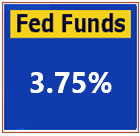
Fed officials earlier this week approved a second consecutive 0.75 percentage point increase in the central bank’s benchmark interest rate. Inflation by any measure has been running well above the Fed’s 2% longer-run target, and Chairman Jerome Powell said the central bank is “strongly committed” to bringing inflation down. An inflation gauge that the Federal Reserve uses as its primary barometer jumped to its highest 12-month gain in more than 40 years in June, the Bureau of Economic Analysis reported Friday
Inflation
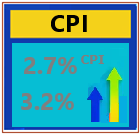
.The personal consumption expenditures price index rose 6.8%, the biggest 12-month move since the 6.9% increase in January 1982. The index rose 1% from May, tying its biggest monthly gain since February 1981.Excluding food and energy, so-called core PCE increased 4.8% from a year ago, up one-tenth of a percentage point from May but off the recent high of 5.3% hit in February. On a monthly basis, core was up 0.6%, its biggest monthly gain since April 2021.Both core readings were 0.1 percentage point above the Dow Jones estimates.Fed officials generally focus on core inflation, but have turned their attention recently to the headline numbers as well, as food and fuel prices have soared in 2022.The BEA release also showed that personal consumption expenditures, a gauge of consumer spending, increased 1.1% for the month, above the 0.9% estimate and owing largely to the surge in prices. Real spending adjusted for inflation increased just 0.1% as consumers barely kept up with inflation. Personal income rose 0.6%, topping the 0.5% estimate, but disposable income adjusted for inflation fell 0.3%.Earlier this month, data showed the consumer price index rose 9.1% from a year ago, the biggest gain since November 1981. The Fed prefers PCE over CPI as a broader measure of inflation pressures. CPI indicates the change in the out-of-pocket expenditures of urban households, while the PCE index measures the price change in goods and services consumed by all households, as well as nonprofit institutions serving households.There was other bad inflation news Thursday.The employment cost index, another figure Fed policymakers follow closely, rose 1.3% in the second quarter. That represented a slight decline from the 1.4% gain in the previous quarter, but was ahead of the 1.1% estimate. Further, the 5.1% increase on a 12-month basis marked a record for a data series that goes back to the first quarter of 2002.
Real GDP
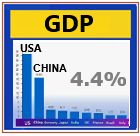
GDP fell 0.9% in the second quarter, the second straight decline and a strong recession signal.Gross domestic product fell 0.9% at an annualized pace for the period, according to the advance estimate. That follows a 1.6% decline in the first quarter and was worse than the Dow Jones estimate for a gain of 0.3%. The drop came from a broad swath of factors, including decreases in inventories, residential and nonresidential investment, and government spending
Title 15
mmmm
Title 16
mmmm
Fixed Mortgage Rates
mmmm |