10-Year Treasury Yield
mmmm
Empire State Mfg Index
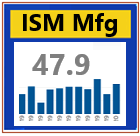
The Empire State Manufacturing Index for August showed a steep fall (42 points) in its general business conditions, to -31.3. (A negative number indicates contraction.) It was the largest decline in business conditions since May 2020, during the pandemic. August marked the fifth time this year New York manufacturing executives signaled through the survey that general business conditions were worsening. In the other survey components, new orders and shipments plunged, and unfilled orders declined. Delivery times held steady for the first time in nearly two years, and business inventories increased slightly.
Title 2
mmmm
Title 3
mmmm
Title 4
mmmm
Title 5
mmmm
Title 6
mmmm
Title 7
mmmm
MBA Purchase Applications
mmmmm
HMI
The National Association of Home Builders/Wells Fargo Housing Market Index dropped 6 points in August to 49. Anything below 50 is considered negative. This marks the eighth straight decline in the index. Builder sentiment in the market for single-family homes fell into negative territory in August, as builders and buyers struggle with higher costs. The National Association of Home Builders/Wells Fargo Housing Market Index dropped 6 points to 49 this month, its eighth straight monthly decline. Anything above 50 is considered positive. The index has not been in negative territory since a very brief plunge at the start of the Covid pandemic. Before that, it hadn’t been negative since June 2014.
Retail Prices
Retail sales little changed in July amid fall in gas prices and drop in auto sales. Retail sales for July were flat, compared with the estimate for a 0.1% gain. Excluding autos, sales increased 0.4% against expectations for no gain. Falling fuel prices held back receipts at gas stations, while consumers took those savings and spent at other retailers. Retail activity was flat in July as falling fuel prices held back gas station sales and consumers turned more heavily to online shopping, the Census Bureau reported Wednesday. While advance retail sales were unchanged, total receipts excluding autos rose 0.4%. Economists surveyed by Dow Jones had been looking for a 0.1% increase in the top-line number and a flat total ex-autos. June’s gain was revised down to 0.8% from 1%. Retail and food sales excluding gasoline and autos rose 0.7% from a month ago. The numbers are adjusted seasonally but not for inflation, and come during a month when the consumer price index also was flat. Gas prices had eclipsed $5 a gallon in many locations earlier in the summer, but fell through July and most recently were at $3.94 a gallon for regular unleaded, according to AAA. People appear to have used some of the savings from lower gas prices to spend more on other items, both in nominal and — very likely — real terms.
Housing Market
Home sales fell nearly 6% in July as housing market slides into a recession. Sales of previously owned homes fell nearly 6% in July compared with June, according to a monthly report from the National Association of Realtors. Sales dropped about 20% from the same month a year ago. In terms of economic impact we are surely in a housing recession because builders are not building. Sales of previously owned homes fell nearly 6% in July compared with June, according to a monthly report from the National Association of Realtors. The sales count declined to a seasonally adjusted annualized rate of 4.81 million units, the group added. It is the slowest sales pace since November 2015, with the exception of a brief plunge at the beginning of the Covid pandemic. Sales dropped about 20% from the same month a year ago. The July sales figures are based on closings, so the contracts were likely signed in May and June. Mortgage rates spiked higher in June, with the average rate on the 30-year fixed loan crossing 6%, according to Mortgage News Daily. It then settled back into the high 5% range. That rate started this year around 3%, so the hit to affordability in June was hard, especially coupled with soaring inflation. Homebuyers are also still contending with tight supply. There were 1.31 million homes for sale at the end of July, unchanged from July 2021. At the current sales pace, that represents a 3.3-month supply. While demand is falling off due to weaker affordability, prices remain stubbornly high. The median price of a home sold in July was $403,800, an increase of 10.8% year over year. Price gains are now moderating, though, as this is the smallest annual rise since July 2020. Sales activity continues to be stronger on the higher end of the market, although that too is fading fast. There is simply more supply available on the top tiers. Sales of homes priced between $100,000 and $250,000 were 31% lower compared with the year before, while sales of homes priced between $750,000 and $1 million were down 8%. Sales of homes priced above $1 million fell 13% from a year ago. First-time buyers represented just 29% of buyers in July. Historically they usually make up about 40% of sales, but they are clearly struggling the most with affordability. High rents are also making it harder for them to save for a down payment..
Exisiting Home Sales
Sales of previously owned homes fell nearly 6% in July compared with June, according to a monthly report from the National Association of Realtors. The sales count declined to a seasonally adjusted annualized rate of 4.81 million units, the group added. It is the slowest sales pace since November 2015, with the exception of a brief plunge at the beginning of the Covid pandemic. Sales dropped about 20% from the same month a year ago.
Total housing inventory2 registered at the end of July was 1,310,000 units, an increase of 4.8% from June and unchanged from the previous year. Unsold inventory sits at a 3.3-month supply at the current sales pace, up from 2.9 months in June and 2.6 months in July 2021. The median existing-home price3 for all housing types in July was $403,800, up 10.8% from July 2021 ($364,600), as prices increased in all regions. This marks 125 consecutive months of year-over-year increases, the longest-running streak on record. Properties typically remained on the market for 14 days in July, the same as in June and down from 17 days in July 2021. The 14 days on market are the fewest since NAR began tracking it in May 2011. Eighty-two percent of homes sold in July 2022 were on the market for less than a month. According to Freddie Mac, the average commitment rate (link is external)for a 30-year, conventional, fixed-rate mortgage was 5.41% in July, down from 5.52% in June. The average commitment rate across all of 2021 was 2.96%.
Jobless Claims
Jobless claims edge lower as Fed looks to cool labor market. Jobless claims totaled 250,000 for the week ended Aug. 13, down 2,000 from the previous week and below the 260,000 Dow Jones estimate. Continuing claims, which run a week behind the headline number, totaled 1.437 million, an increase of 7,000. In other economic news, the Philadelphia Fed reported that its monthly manufacturing survey for August rose to a reading of 6.2
Housing Starts
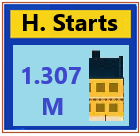
Homebuyers are backing out of more deals as high mortgage rates persist and recession fears linger. Homebuilder cancellation rates have more than doubled since April, according to surveys by John Burns Real Estate Consulting. Nationwide, about 63,000 deals on existing homes fell through in July, or about 16% of homes that went under contract that month, according to Redfin. Cancellations were 12.5% in July 2021.Homebuilder cancellation rates have more than doubled since April, according to surveys by John Burns Real Estate Consulting. In July, 17.6% of builder contracts fell through, compared with 8% in April and 7.5% in July 2021.
FOMC Minutes Federal Reserve officials saw "little evidence" late last month that U.S. inflation pressures were easing, and steeled themselves to force the economy to slow down to control an ongoing surge in prices, according to the minutes of their July 26-27 policy meeting. While not explicitly hinting at a particular pace of coming rate increases, beginning with the Sept. 20-21 meeting, the minutes released on Wednesday showed U.S. central bank policymakers committed to raising rates as high as necessary to tame inflation - even as they began to acknowledge more explicitly the risk they might go too far and curb economic activity too much.
Title 14
mmmm
Title 15
mmmm
Title 16
mmmm
Fixed Mortgage Rates
mmmm |