10-Year Treasury Yield
Historically, the yield curve has inverted prior to recessions, with investors selling out of short-dated government debt and buying into longer-dated bonds, indicating their concern about the health of the economy in the short term. 5-year and 30-year Treasury yields invert for the first time since 2006, fueling recession fears. U.S. 5-year and 30-year Treasury yields on Monday briefly inverted for the first time since 2006, raising fears of a possible recession. Overnight on Monday, the yield on the 5-year Treasury note rose to 2.6361%, while the 30-year yield was down less than 1 basis point to 2.6004%. The inversion has since reversed, with the 5-year note last down 2 basis point 2.548%. The 30-year yield is down 5 basis points at 2.552%. This is the first time the shorter-dated 5-year Treasury yield has risen above that of the longer-dated 30-year U.S. government bond since 2006 — just a couple of years before the Global Financial Crisis. However, the main yield spread that traders watch — the spread between the 2-year and the 10-year rate — remained positive for now. The 2-year yield jumped 4 basis points to 2.34% and the benchmark 10-year was down 2 basis point to 2.473%.
Geopolitical Risks
Enter ...commnents.
U.S. Trade in Goods
The U.S. trade deficit in goods narrowed in February 2022 after setting a record high in the prior month as exports rebounded, but any lift to economic growth this quarter could be offset by businesses slowing their pace of inventory accumulation. The deficit fell 0.9% to $106.6 billion, the Commerce Department said on Monday. Exports increased 1.2% to $157.2 billion. The rebound in exports was led by a 6.3% surge in shipments of consumer goods. Imports of goods gained 0.3% to $263.7 billion. They were curbed by a 9.9% decline in imports of motor vehicles as well as a 3.0% drop in food imports. But there were strong increases in imports of industrial supplies and other goods. Trade has subtracted from gross domestic product growth for six straight quarters and could still remain a drag this quarter.
Wholesale Inventories Advance
While businesses continued to replenish inventories in February 2022, the pace was less frantic than in the last months of 2021. Wholesale stocks increased 2.1% in February 2022 after climbing 1.1% in January 2022. Retail inventories increase 1.1%; wholesale up 2.1%. Inventory investment accelerated at a robust seasonally adjusted annualized rate of $171.2 billion in the fourth quarter, contributing 4.90 percentage points to the quarter's 7.0% growth pace. Despite February's rise, inventories are likely to be neutral to GDP growth this quarter as they would need to increase at a similarly fast rate as the fourth quarter to contribute to growth. First-quarter GDP growth estimates are mostly below a 1.0% pace.
Retail Inventories Advance
Retail inventories rose 1.1% in February 2022 following a 1.9% advance in January 2022. Motor vehicle inventories gained 0.9% after surging 2.5% in January. Excluding motor vehicles, retail inventories increased 1.2% after accelerating 1.7% in January. This component goes into the calculation of GDP growth.
S&P CoreLogic Case-Shiller National home Price Index
Home prices heated up to start the year, with huge surges in Arizona and Florida, says S&P Case-Shiller report. Home prices nationally rose 19.2% year over year in January, up from 18.9% in December, according to the S&P CoreLogic Case-Shiller Index. The 10-city composite annual increase was 17.5%, up from 17.1% in the previous month. The 20-city composite rose 19.1%, up from 18.6% in December. Phoenix, Tampa, Florida, and Miami saw the biggest annual gains at 32.6%, 30.8% and 28.1%, respectively. After cooling off ever so slightly toward the end of last year, home price gains reaccelerated in January. Home prices nationally rose 19.2% year over year in January, up from 18.9% in December, according to the S&P CoreLogic Case-Shiller Index. The 10-city composite annual increase was 17.5%, up from 17.1% in the previous month. The 20-city composite rose 19.1% Jan 2022, up from 18.6% in December. The macroeconomic environment is evolving rapidly. Declining COVID cases and a resumption of general economic activity has stoked inflation, and the Federal Reserve has begun to increase interest rates in response. We may soon begin to see the impact of increasing mortgage rates on home prices
FHFA House Price Index
FHFA numbers come in slightly lower than S&P CoreLogic Case-Shiller index. The rise in house prices continues apace nationwide based on two reports released this morning. January 2022 housing prices increased 1.6% in January 2022, from December 2021. Year over year, they jumped at least 18.2%.. However, the S&P CoreLogic Case-Shiller U.S. National Home Price NSA Index, covering all nine U.S. census divisions, reported a 19.2% annual gain in January, up from 18.9% in the previous month. The difference in numbers comes from how the data is collected. The FHFA HPI uses nominal, seasonally adjusted, purchase-only data from Fannie Mae and Freddie Mac. The S&P CoreLogic Case-Shiller U.S. National Home Price Index tracks the value of single-family housing within the United States. House price trends notched up slightly in January 2022.
U.S. house prices rise 1.6% from December 2021 to January 2022; house prices up 18.2% from January 2021 to January 2022. The FHFA house price index is up 1.6 percent in January 2022 after up 1.3 percent in December 2021.
JOLT
Job openings barely fell in February 2022 as the labor shortage remained historically intense. The labor shortage barely eased through February 2022 as hiring boomed and more Americans rejoined the workforce. US job openings fell slightly to 11.3 million last month, according to Job Openings and Labor Turnover Survey, or JOLTS, data published Wednesday by the Bureau of Labor Statistics. Economists surveyed by Bloomberg held a median forecast of 11 million openings. The reading brings job openings to their lowest since December 2021, though the sum still sits well above the pre-pandemic average of about 7 million. There were roughly 0.6 available workers for every job opening in February, holding at the same record low seen since December. Put another way, there aren't enough workers for every job opening across the country. That kind of imbalance reveals "a very, very tight labor market — to an unhealthy level," Federal Reserve Chair Jerome Powell said in a March 16 press conference. The worker shortage puts more pressure on businesses to raise prices as they look to service overwhelming demand. If that cycle becomes entrenched, it could leave inflation trapped at uncomfortably high levels, he added.
JOLTS Job Openings fall sightly to 11.266 million in February 2022 vs. 11.0 million expected. There were 11.266M job opening in the US at the end of February 2022, the latest JOLTs Job-Opening data release on Tuesday by the US Labour Department showed. That was slightly less than the 11.283M openings at the end of January, but well above the 11.0M expected. Robust JOLTs data which points to a backdrop of continued very strong demand for labour throughout the US economy has not been enough to lift the buck from session lows, with the DXY still trading in the low 98.00s. The safe-haven USD has been weighed on Tuesday amid positive Russo-Ukraine updates that have spurred hope for a ceasefire.
The great resignation and the worker shortage
The great resignation continues: 4.4 million Americans quit their jobs last month. The worker shortage has been a hallmark of the pandemic economy -- and it's far from getting resolved. In February, US businesses had 11.3 million job openings to fill, slightly more than economists had predicted.
Job openings in the United States stood at 11.3 million in February, still near their all-time high in December 2021. The level of available positions was little changed from the start of the year but below the December all-time high of 11.4 million. For every job-seeking American, there were just below 1.8 positions available, matching the high from December. Meanwhile, the number of Americans quitting their jobs inched up to 4.4 million in February -- slightly higher than in the prior month, but below the November peak of 4.5 million.
The labor shortage has left businesses struggling to find staff, despite offering higher wages. Salaries have been on the rise, supporting consumer spending even amid rampant inflation. In February, the pace of price increases matched a level not seen in 40 years. The strong labor market, where many workers who quit move on to jobs with better pay or benefits, stands at odds with consumers' worries about rising prices.
Consumer Confidence
U.S. consumer confidence bounced back in March 2022 and remains high, though consumers' short-term outlook is not quite as rosy. The Conference Board, a business research group, said Tuesday that its consumer confidence index — which takes into account consumers’ assessment of current conditions and their outlook for the future — rose to 107.2 in March 2022 from 105.7 in February 2022.
MBA Purchase Applications
Mortgage refinance demand plunges 60%, as rates hit their highest level since 2018. The average contract interest rate for 30-year fixed-rate mortgages with conforming loan balances ($647,200 or less) increased to 4.80% from 4.50%. Refinance applications fell 15% for the week and were down 60% from a year ago. Homebuyer mortgage demand rose 1% for the week but was down 10% from a year ago. Total mortgage application volume decreased 6.8% last week compared with the previous week. Driving the downturn in overall mortgage demand was a 15% weekly drop in refinance applications. They are now down a whopping 60% from a year ago. The refinance share of mortgage activity decreased to 40.6% of total applications from 44.8% the previous week. Mortgage applications to purchase a home increased 1% for the week but were 10% lower than the same week one year ago. Homebuyers today continue to face sky-high prices and record low supply, in addition to rising mortgage rates. Affordability is weakening dramatically, but some real estate agents say the competition is not letting up.
ADP Employment Report
Companies added jobs at a solid pace in March, indicating that hiring is strong despite signs of a tightening labor market, payroll processing firm ADP reported Wednesday. Private payrolls expanded by 455,000 for the month, the firm said, about in line with the Dow Jones estimate of 450,000 though it was the lowest since August 2021. The total was slightly below the upwardly revised 486,000 for February, and brought ADP’s first-quarter jobs count to 1.45 million. The report comes two days before the more closely watched nonfarm payrolls report, with the Bureau of Labor Statistics expected to show jobs growth of 490,000 for the month, according to the Dow Jones consensus estimate. The ADP and BLS numbers can differ widely, as they did in February when the payroll firm’s count was about 200,000 below the government’s official tally. ADP’s report for March indicated that hiring was spread evenly around sectors, with leisure and hospitality adding 161,000 to lead the way. Education and health services contributed 72,000 while professional and business services was next with 61,000 new jobs.
Corporate Profit
Profits Soar as U.S. Corporations Have Best Year Since 1950. Judging by the stock market, investors see more good times ahead for profits in 2022. U.S. corporate profits jump 25% in 2021 to record high as economy rebounds from pandemic. Corporate profits rose again in the fourth quarter to cap off a big increase in 2021 despite widespread supply and labor shortages that raised costs and contributed to high inflation.The numbers: U.S. corporate profits rose again in the fourth quarter and hit a record high, capping off a huge increase in 2021 despite widespread supply and labor shortages that raised costs and contributed to high inflation during the pandemic. Adjusted pretax profits rose 0.7% to an annualized $2.94 trillion in the final three months of last year from $2.92 trillion in the third quarter, the government said Wednesday. For the full year, adjusted profits leaped 25% -- the largest gain since 1976. Earnings fell in 2020 after the onset of the pandemic, marking the first decline in five years. The profit figures were released as part of the third and final regular update to gross domestic product for the fourth quarter. GDP rose a revised 6.9% in the fourth quarter, down a tick from the prior estimate of 7%. The U.S. economy's rapid recovery from the pandemic has padded the profits of most businesses, especially large ones that were better shielded from the effects of the virus. Although companies are paying higher costs, they've still managed to increase profits. Aa result, they have more money to invest and can afford to pay workers more. Wages are rising at the fastest pace in four decades.
U.S. companies posted record profits in 2021, even as Americans struggled with rising consumer prices amid the COVID-19 pandemic. Corporate pre-tax profits surged 25% year-over-year to $2.81 trillion, the Bureau of Economic Analysis said on Wednesday. That’s the largest annual increase since 1976, according to the Federal Reserve. When taxes are factored in, last year’s corporate profits increases were even more of an outlier. They soared 37% year-over-year, more than any other time since the Fed began tracking profits in 1948. The considerable jump in corporate profits highlights how businesses have passed off rising production and supply costs to consumers and lends weight to criticism by top Democrats that outsized price hikes are at least partially responsible for rising inflation. Corporate greed is motivating large companies to use the pandemic and supply chain issues as an excuse to raise prices simply because they can.
GDP
Fourth-quarter GDP growth lowered to 6.9%. Key details: Consumer spending rose a revised 2.5% in the fourth quarter, updated GDP figures show. Previously the increase was reported as 3.1%. Business investment and the increase in inventories were somewhat stronger than previously reported, offsetting the revision to spending.Most other figures in the GDP report were little changed.The economy grew at a 5.7% pace in 2021, recovering from a steep 3.4% drop in 2020.
Jobless Claims
U.S. Jobless Claims Rise More Than Forecast, But Level Remains Low. Initial unemployment claims increased by 14,000 to 202,000 in the week ended March 26. The scarcity of workers is keeping layoffs very low. In a separate report on Thursday, the Labor Department said initial claims for state unemployment benefits increased 14,000 to a seasonally adjusted 202,000 for the week ended March 26. Economists polled by Reuters had forecast 197,000 applications for the latest week. Claims have declined from a record high of 6.149 million in early April 2020.
Personal Income
Personal income increased by 0.5% in February 2022 over the prior month, a pickup after it was nearly flat in January 2022. Personal income increased $101.5 billion (0.5 percent) in February 2022. The increase in personal income in February 2022 primarily reflected an increase in compensation that was partly offset by a decrease in government social benefits. Within compensation, the increase reflected increases in both private and government wages and salaries. Personal income rose 0.5% last month while personal spending rose 0.2%. Americans spent more on services in February but less on goods. Prices rose 0.6% between Jan and Feb and were up 6.4% from a year ago, according to the Federal Reserve's preferred inflation yardstick.
Core PCE - Inflation
The so-called core PCE price index jumped 5.4% year-on-year in February 2022, the biggest gain since 1983. The core PCE price index increased 5.2% in the 12 months through January. Excluding the volatile food and energy components, the PCE price index rose 0.4% after climbing 0.5% in January 2022.
The personal consumption expenditures (PCE) price index increased 0.6% in February after advancing 0.5% in January. In the 12 months through February, the PCE price index soared 6.4%. That was the largest rise since 1982 and followed a 6.0% year-on-year increase in January.
Consumer Spending
Americans increased their spending at a cooler pace in February 2022, as the Omicron surge of Covid-19 eased but inflation remained high amid Russia’s invasion of Ukraine. Consumer spending rose at a seasonally adjusted 0.2% pace in February from the month before, the Commerce Department said Thursday, down from a revised 2.7% rate in January 2022. U.S. consumer spending slowed significantly in February 2022, while price pressures continued to mount, with inflation posting its largest annual gain since the early 1980s. The Commerce Department said on Thursday that consumer spending, which accounts for more than two-thirds of U.S. economic activity, rose 0.2% in February 2022. Data for January was revised higher to show outlays rebounding 2.7% instead of 2.1% as previously reported. Economists polled by Reuters had forecast consumer spending increasing 0.5%. More expensive gasoline, rents and food are forcing households to cut back spending elsewhere. Gasoline prices soared in February and broke above $4 per gallon this month following Russia's invasion of Ukraine on Feb. 24.
Oil
Oil prices slide as Biden considers huge reserves release. Biden is set to give remarks later on Thursday, with multiple outlets reporting that the plan to cool soaring crude prices will involve the release of around 1 million barrels of oil per day for several months. In a research note Thursday, Goldman Sachs commodity analysts said the reported SPR release would help the oil market toward rebalancing in 2022, but would not resolve its structural deficit.
Fixed Mortage Rates
Mortgage rates have surged, with the 30-year fixed rate averaging 4.67% this week, the highest since December 2018, according to data from mortgage finance agency Freddie Mac. This together, with high house prices, are pushing some first-time buyers from the market.Demand for housing is far outstripping supply as homebuilders grapple with higher prices for materials, including framing lumber, as well as appliances.
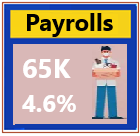
Non Farm Payroll - Employment Situation
Economy added 431,000 jobs in March despite worries over slowing growth. Nonfarm payrolls grew by 431,000 in March, a bit below the 490,000 estimate and well below February’s upwardly revised 750,000. Nonfarm payrolls expanded by 431,000 for the month, while the unemployment rate was 3.6%, the Bureau of Labor Statistics reported Friday. Economists surveyed by Dow Jones had been looking for 490,000 on payrolls and 3.7% for the jobless level. Despite the miss, the first quarter ended with nearly 1.7 million jobs added. Leisure and hospitality led the gains, followed by professional and business services and retail trade. Amid soaring inflation and worries about a looming recession, the U.S. economy added slightly fewer jobs than expected in March as the labor market grew increasingly tighter.
Revisions from prior months also were strong. January’s total rose 23,000 to 504,000, while February was revised up to 750,000 compared to the initial count of 678,000. For the first quarter, job growth totaled 1.685 million, an average of nearly 562,000.
Unemployment Rate - Employment Situation
The US economy added 431,000 jobs in March, bringing the unemployment rate to a new pandemic-era low of 3.6%. The unemployment rate declined to 3.6%, below expectations. U.S. job growth continued at a brisk clip in March, with the unemployment rate falling to a new two-year low of 3.6% and wages re-accelerating, positioning the Federal Reserve to raise interest rates by a hefty 50 basis points in May. The unemployment rate dropped to 3.6%, the lowest since February 2020, from 3.8% in February. An alternative measure of unemployment, which includes discouraged workers and those holding part-time jobs for economic reasons fell to a seasonally adjusted 6.9%, down 0.3 percentage points from the previous month.
The moves in the jobless rates came as the labor force participation rate increased one-tenth of a percentage point to 62.4%, to within 1 point of its pre-pandemic level in February 2020.
With workers still scarce, average hourly earnings increased 0.4% after edging up 0.1% in February. That lifted the annual increase to 5.6% from 5.2% in February. Average hourly earnings, a closely watched inflation metric, increased 0.4% on the month, in line with expectations. On a 12-month basis, pay increased nearly 5.6%, just above the estimate. The average work week, which figures into productivity, edged down by 0.1 hour to 34.6 hours.
PMI Manufacturing Final
March PMI Manufacturing comes higher than prior month, fastest output growth in 7-months. March PMI Manufacturing Index: 58.8 vs consensus of 58.5 from 57.3 in prior month. Overall growth was supported by faster increases in output and new orders, as domestic and foreign client demand ticked higher. Despite backlogs of work rising at a sharper pace amid greater new sales, firms noted that fewer supply bottlenecks allowed production to expand at a faster rate. Contributing to the overall upturn was a sharper expansion in production at the end of Q1. March data indicated a marked increase in new sales at goods producers, and one that was the sharpest for six months. Output expectations regarding the year ahead strengthened in March.
Construction Spending
U.S. construction spending rose less than expected in February as an increase in outlays on private projects was partially offset by a decline in government spending. The Commerce Department said on Friday that construction spending climbed 0.5%. Data for January was revised higher to show construction outlays advancing 1.6% instead of 1.3% as previously reported. Economists polled by Reuters had forecast construction spending rising 1.0%. Construction spending soared 11.2% on a year-on-year basis in February. Construction spending during February 2022 was estimated at a seasonally adjusted annual rate of $1,704.4 billion, 0.5% above the revised January estimate of $1,695.5 billion, according to the U.S. Census Bureau. The February figure is 11.2% above the February 2021 estimate of $1,533.3 billion. During the first two months of this year, construction spending amounted to $237.8 billion, 10.4% above the $215.4 billion for the same period in 2021
ISM Manufacturing
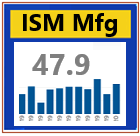
Gold edged down as the headline manufacturing index from the Institute for Supply Management disappointed in March. The precious metal remained focused on rising bond yields. The ISM manufacturing index was at 57.1% last month versus the consensus forecast of 59%. The monthly figure also marked a 1.5 percentage-point increase from February’s reading of 58.6%. “This figure indicates expansion in the overall economy for the 22nd month in a row after a contraction in April and May 2020. This is the lowest reading since September 2020 (55.4 percent),” the report said.The U.S. March 2022 ISM factory index dropped to its lowest level since Sept. 2020. February 2022 construction spending data and March manufacturing data from ISM coming in below expectations.
|