10-Year Treasury Yield
Treasury yields fell on Tuesday as uncertainty about the outlook for the new year lingered and investor attention turned to fresh economic data releases due this week. The yield on the 10-year Treasury note was down by 6.2 basis points to 3.769%. The 2-year Treasury yield slid 1.2 basis points to 4.391%.Treasury yields ticked lower Friday as investors digested a solid jobs report and assessed its implication for the Federal Reserve’s hiking cycle. The yield on the benchmark 10-year Treasury was down by 4 basis points at 3.67%. The 2-year Treasury yield fell 6 basis points to 4.39%. The yield on the 30-year Treasury was little changed at 3.8.
PMI Manufacturing Final
The S&P Global US Manufacturing PMI was unrevised at 46.2 in December of 2022, pointing to the biggest contraction in factory activity since May of 2020, amid weak client demand. Output fell at a solid pace that was the quickest in just over two-and-a-half years and new orders fell at one of the fastest rates ever.
Construction Spending
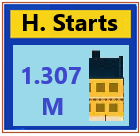
U.S. construction spending unexpectedly rebounded in November, lifted by gains in nonresidential structures, but single-family homebuilding continued to be hammered by higher mortgage rates. The Commerce Department said on Tuesday that construction spending climbed 0.2% in November after falling 0.2% in October. Economists polled by Reuters had forecast construction spending would decrease 0.4%. Construction spending increased 8.5% on a year-on-year basis in November.Spending on private construction projects advanced 0.3% after declining 0.7% in October. Investment in private non-residential structures like gas and oil well drilling jumped 1.7%. But outlays on residential construction fell 0.5%, with spending on single-family housing projects plunging 2.9%. Outlays on multi-family housing projects increased 2.4%, benefiting from strong demand for rental housing
MBA Purchase Applications
Mortgage demand plunges 13.2% to end 2022, as interest rates head higher again. After a brief reprieve in the first half of December, mortgage interest rates shot up again to end the year, weighing on mortgage demand. Mortgage application volume was down 13.2% at the end of last week from two weeks earlier, according to the Mortgage Bankers Association’s seasonally adjusted index. The MBA was closed last week due to the holidays. The average contract interest rate for 30-year fixed-rate mortgages with conforming balances ($647,200 or less), for loans with a 20% down payment, increased to 6.58% from 6.34% two weeks prior. At the end of 2021, the rate was 3.33%. Demand for refinancing, which is most sensitive to weekly interest rate changes, dropped 16.3% from two weeks earlier and was down 87% from the same period in 2021. Mortgage applications to purchase a home dove 12.2% from two weeks earlier and were down 42% year over year. They ended the year at the lowest level since 1996.Mortgage application volume was down 13.2% at the end of last week from two weeks earlier.The average contract interest rate for 30-year fixed-rate mortgages increased to 6.58% from 6.34% two weeks prior. At the end of 2021, the rate was 3.33%.
ISM Manufacturing Index
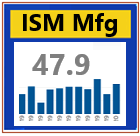
U.S. manufacturing contracted further in December, but weakening demand amid higher borrowing costs pushed a measure of prices paid by factories for inputs to the lowest level in more than 2-1/2 years, signaling that goods disinflation was underway. The Institute for Supply Management (ISM) said on Wednesday that its manufacturing PMI dropped to 48.4 last month from 49.0 in November, contracting for a second straight month. That was the weakest reading since May 2020, when the economy was slammed by the first wave of COVID-19 cases, and pushed the index just below the 48.7 level, which the ISM says is consistent with a recession in the broader economy. But with the labor market still pumping out jobs at a solid clip and sustaining consumer spending, it is unlikely that the economy is in recession. A PMI reading below 50 indicates contraction in manufacturing, which accounts for 11.3% of the U.S. economy. Economists polled by Reuters had forecast the index slipping to 48.5.The December Manufacturing PMI® registered 48.4 percent, 0.6 percentage point lower than the 49 percent recorded in November. Regarding the overall economy, this figure indicates contraction after 30 straight months of expansion. The Manufacturing PMI® figure is the lowest since May 2020, when it registered 43.5 percent. The New Orders Index remained in contraction territory at 45.2 percent, 2 percentage points lower than the 47.2 percent recorded in November. Manufacturing contracted again in December after expanding for 29 straight months. Panelists' companies continue to judiciously manage hiring.
JOLTS
November’s Job Openings and Labor Turnover, or JOLTS, report showed the job market remained strong, bolstering concerns that the Fed could continue raising interest rates as long as there remained a hot market for workers. But the ISM manufacturing index showed the sector was contracting after 30 months of expansion, which investors saw as a positive indicator that previous rate hikes had the intended impact of cooling the economy.
US job openings remained elevated in November, highlighting how a resilient labor market is likely to keep the Federal Reserve tilted toward more restrictive policy in the months ahead. The number of available positions ticked down to 10.46 million from 10.51 million a month earlier, the Labor Department’s Job Openings and Labor Turnover Survey, or JOLTS, showed Wednesday. The figure was higher than all estimates in a Bloomberg survey of economists. The figures point to a still-tight jobs market where employers’ demand for workers far outstrips supply. Hiring, while moderating, remains solid and layoffs low. The persistent imbalance continues to put upward pressure on wages and has been highlighted by Fed Chair Jerome Powell as key to the path of inflation.The elevated number of openings paired with consistently robust payroll advances is likely to reinforce expectations that the Fed will keep rates restrictive for quite some time to quell inflation and ensure price growth is on a sustained downward trend. Investors will parse the minutes of the policy makers December meeting, out later Wednesday, to help shed light on the central bank’s outlook. A labor market this strong means an imminent recession is highly improbable,” Nick Bunker, head of economic research at Indeed Hiring Lab, said in a note. “This year will pose many challenges for the US economy, but the labor market looks set to enter with considerable strength.” Fed Ratio---Job openings increased in professional and business services as well as manufacturing. Meantime, vacancies declined in finance and insurance and the federal government.The ratio of openings to unemployed people remained elevated at 1.7, little changed from October. It was around 1.2 before the pandemic.Fed officials watch this ratio closely and have pointed to the elevated number of job openings as a reason why the central bank may be able to cool the labor market — and therefore inflation — without an ensuing surge in unemployment. That said, many economists expect Fed tightening to push the economy into recession within the next year and for unemployment to rise to some degree.The JOLTS report showed moderation in hiring in some sectors, including industries like accommodation and food services, construction and retail trade. Meantime, layoffs ticked low.
FOMC Minutes for Meeting 15-Dec-2021
Federal Reserve officials are committed to fighting inflation and expect higher interest rates to remain in place until more progress is made, according to minutes released Wednesday from the central bank’s December meeting. At a meeting where policymakers raised their key interest rate another half a percentage point, they expressed the importance of keeping restrictive policy in place while inflation holds unacceptably high.
Meanwhile, the minutes from the Fed’s December meeting showed the central bank remained committed to higher interest rates for “some time.”US stocks retraced earlier gains after policy minutes from the Federal Reserve’s latest meeting showed officials reiterating their resolve to tamp down on inflation. The S&P 500 pared advances and the Nasdaq 100 fell as the meeting minutes showed officials cautioning that an “unwarranted” loosening of financial conditions would complicate their efforts to reach their inflation target.
ADP Employmnet Report
Private payroll growth surged by 235,000 in December, well above estimate, ADP reports Private payrolls in December rose by 235,000 for the month, well ahead of the 153,000 Dow Jones estimate, according to ADP. The big data surprise comes despite the Federal Reserve’s attempts to slow a sizzling jobs market. Service providers added 213,000, led by leisure and hospitality, which added 123,000 positions. Professional and business services grew by 52,000, while education and health services added 42,000. Trade, transportation and utilities saw a job loss of 24,000 on the month, while natural resources and mining declined 14,000 and financial activities dropped by 12,000.
Stocks open lower following stronger than expected jobs data. Stocks dipped at Thursday’s open after better than expected jobs data signaled that the Fed is likely to continue raising rates. ADP says payrolls rose 235,000 in December, much higher than expectations Private payrolls rose by 235,000 in December, well ahead of the 153,000 estimate from Dow Jones and a big jump from November, ADP reported Thursday. The payrolls processing firm said the biggest job gains came from leisure and hospitality, with 123,000, followed by professional and business services with 52,000 and education and health services, which added 42,000. The total was a big gain from November’s 127,000. There were some sectors that saw losses for the month, including trade, transportation and utilities (-24,000), natural resources and mining (-14,000) and financial activities (-12,000). The firm also reported that wages increased 7.3% year over year, boosted by a 10.1% increase in leisure and hospitality.
Stocks fell Thursday after jobs data showed the labor market is still strong amid the Federal Reserve’s interest rate hikes to tame inflation.The Dow Jones Industrial Average fell 149 points, or 0.50%. The S&P 500 and Nasdaq Composite slipped 0.51% and 0.64%, respectively.Stocks opened lower after the ADP private payrolls report showed that employers added 235,000 jobs in December, well above economist estimates. Wages also increased more than anticipated, another sign that the labor market remains hot. Later in the morning, weekly jobless claims came in below expectations and showed a drop in continuing claims.
Jobless Initial Claims
Initial Jobless Claims in the US decreased by 19,000 in the last week of 2022. There were 204,000 initial jobless claims in the week ending December 31, the weekly data published by the US Department of Labor (DOL) showed on Thursday. This print followed the previous week's print of 223,000 and came in better than the market expectation of 225,000.There were 204,000 initial jobless claims in the week ending December 31, the weekly data published by the US Department of Labor (DOL) showed on Thursday. This print followed the previous week's print of 223,000 and came in better than the market expectation of 225,000.
U.S. Trade Balance / International Trade in Goods and Services
The U.S. monthly international trade deficit decreased in November 2022 according to the U.S. Bureau of Economic Analysis and the U.S. Census Bureau. The deficit decreased from $77.8 billion in October (revised) to $61.5 billion in November, as imports decreased more than exports. The goods deficit increased $15.3 billion in November to $84.1 billion. The services surplus increased $1.0 billion in November to $22.5 billion
PMI Composite Final - Services Dec. 2022
The S&P Global US Composite PMI fell to 44.6 in December 2022 from 46.4 in the previous month, signaling the joint-fastest decline in business activity for over two-and-a-half years, a preliminary estimate showed. Excluding the initial pandemic period, the contraction was the joint-sharpest since 2009, as both manufacturers and service providers reported steeper decreases in output. New business declined at a faster pace in December, with new export orders dropping for a seventh month in a row. Meanwhile, employment rose only marginally and backlogs of work declined for the third consecutive month. On the price front, input cost inflation was the slowest since October 2020, while the rate of selling price inflation eased to over two-year low.
Amazon Cutting jobs Amazon.com Inc's (AMZN.O) layoffs will now increase to more than 18,000 roles as part of a workforce reduction it previously disclosed, Chief Executive Andy Jassy said in a public staff note on Wednesday. The layoff decisions, which Amazon will communicate starting Jan. 18, will largely impact the company's e-commerce and human resources organizations, he said. The cuts amount to 6% of Amazon's roughly 300,000-person corporate workforce and represent a swift turn for a retailer that recently doubled its base pay ceiling to compete more aggressively for talent.
Employment Situation
Stocks opened lower after the ADP private payrolls report showed that employers added 235,000 jobs in December, well above economist estimates. Wages also increased more than anticipated, another sign that the labor market remains hot. Later in the morning, weekly jobless claims came in below expectations and showed a drop in continuing claims. U.S. stock futures jumped Friday when the December jobs report showed that employment was only slightly stronger and wage gains were less than expected, showing some signs of progress amid the Federal Reserve’s interest rate hikes to tame inflation. U.S. economy adds more jobs than expected in December The U.S. economy added 223,000 jobs last month, slightly more than a Dow Jones consensus forecast for a 200,000 gain. This is yet another sign that the economy remains strong even as the Federal Reserve tries to tame inflation through higher rates. However, wages grew at a slightly slower-than-expected pace, increasing 0.3% versus an estimate of 0.4%
Employment Situation
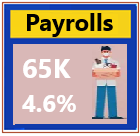
The unemployment rate dropped to 3.5% from 3.6% in November. The government revised the seasonally adjusted data for the household survey, from which the unemployment rate is derived, for the last five years.Average hourly earnings rose 0.3% after 0.4% in the prior month. That lowered the year-on-year increase in wages to 4.6% from 4.8% in November. Government data this week showed there were 10.458 million job openings at the end of November, which translated to 1.74 jobs for every unemployed person.The labor market has remained strong, despite the Fed embarking last March on its fastest interest rate-hiking since the 1980s.
Drop in Working Hours Underscores Slowing Jobs Momentum. US Hiring Solid While Wages Cool, Giving Fed Room to Slow Hikes. Hiring stays solid while wages cool, giving Fed room to slow hikes' Weakest payroll gain in two years signals easing job market. Unemployment rate matches 1960s low with more joining workforce. Stock futures climb; Treasury yields drop
Nonfarm payrolls increased by 223,000 for the month, above the Dow Jones estimate for 200,000, while the unemployment rate fell to 3.5%, 0.2 percentage point below the expectation. The job growth marked a small decrease from the 256,000 gain in November, which was revised down 7,000 from the initial estimate.Wage growth was less than expected in an indication that inflation pressures could be weakening. Average hourly earnings rose 0.3% for the month and increased 4.6% from a year ago. The respective estimates were for growth of 0.4% and 5%.The relative strength in job growth comes despite repeated efforts by the Fed to slow the economy, the labor market in particular. The central bank raised its benchmark interest rate seven times in 2022 for a total of 4.25 percentage points, with more increases likely on the way. Primarily, the Fed is looking to bridge a gap between demand and supply. As of November, there were about 1.7 job openings for every available worker, an imbalance that has held steady despite the Fed’s rate hikes. The strong demand has pushed wages higher, though they mostly haven’t kept up with inflation
Mortgage Rates Mortgage rates inched up again last week, after a slight increase the week before interrupted six straight weeks of falling rates. The 30-year fixed-rate mortgage averaged 6.48% in the week ending January 5, up from 6.42% the week before, according to Freddie Mac. A year ago, the 30-year fixed rate was 3.22%. Mortgage rates rose throughout most of 2022, spurred by the Federal Reserve’s unprecedented campaign of harsh interest rate hikes to tame soaring inflation. But mortgage rates dropped in November and December, following data that showed inflation may have finally reached its peak.
After home financing costs nearly doubled in 2022, some relief is in sight for potential homebuyers in 2023. The interest rate for a 30-year fixed-rate mortgage in the U.S. is expected to drop to 5.25% by the end of this year, according to a forecast by the financial services website Bankrate. That’s 1.49 percentage points lower than the current rate, and nearly two percentage points lower than 2022′s peak rate of 7.12%.A slowing economy could lead to lower mortgage rates The forecast reflects expectations of a slowing economy in 2023 as the Federal Reserve continues to increase its benchmark interest rate to combat high inflation. While the Fed has made progress reducing inflation — from a year-over-year peak of 9.1% in June to 7.1% as of December — it’s still nowhere near the Fed’s target rate of 2%. For that reason, Fed officials expect rate hikes to continue in early 2023, according to Bankrate. While rate hikes can reduce inflation by making it more expensive to borrow money, they also discourage investment. This can shrink the economy, and perhaps trigger a recession in which many people lose their jobs. And since mortgage interest rates are largely influenced by the overall state of the economy, they typically decrease during a recession.
Factory Orders
New orders for U.S.-manufactured goods fell more than expected in November 2022 amid a sharp decline in bookings for aircraft, while higher borrowing costs cooled demand for other goods. The Commerce Department said on Friday that factory orders dropped 1.8% after gaining 0.4% in October. Economists polled by Reuters had forecast orders falling 0.8%. Orders increased 12.2% on a year-on-year basis in November. The Federal Reserve's fastest interest rate-hiking cycle since the 1980s as it battles inflation is slowing demand for goods, which are typically bought on credit. Americans are also shifting spending away from goods to services as the nation moves to a post-pandemic era. The plunge in factory orders was driven by a 6.3% drop in bookings for transportation equipment, which followed a 1.9% increase in October. Transportation equipment orders were weighed down by a 36.4% tumble in orders for civilian aircraft.Orders for defense aircraft fell 8.6%. Motor vehicle orders rose 0.6%. There were moderate gains in orders for machinery, computers and electronic products as well as electrical equipment, appliances and components
ISM Service Index
Economic activity in the services sector contracted in December after 30 consecutive months of growth — with the Services PMI® registering 49.6 percent.In December, the Services PMI® registered 49.6 percent, 6.9 percentage points lower than November's reading of 56.5 percent. The composite index contracted for the first time since May 2020, when it registered 45.2 percent. The Business Activity Index registered 54.7 percent, a substantial — 10 percentage point — decrease compared to the reading of 64.7 percent in November. The New Orders Index contracted in December for the first time since May 2020; the figure of 45.2 percent is 10.8 percentage points lower than the November reading of 56 percent. |