SP 500 Target 2022
Goldman cuts year-end S&P target, sees buying opportunity in some growth stocks. Goldman’s initial year-end target of 5,100 points for the S&P 500 was cut last month, following a rout caused by fears that the Federal Reserve will have to tighten its policy more aggressively than previously anticipated to tame surging inflation. The selloff has since intensified as a wave of sanctions against Russia -- one of the world’s major commodity producers -- over its invasion of Ukraine has exacerbated price pressures. They revised their year-end forecast for the main U.S. equities benchmark to 4,700 index points, from 4,900 previously. The strategists now expect earnings-per-share to grow an annual 5% to $221 in 2022, down from a previous estimate of 8% growth to $226. At this moment is at 4,000 points that would an increase of almost 18% from here.
10-Year Treasury Yield
The yield on the U.S. 10-year Treasury note fell on Monday to start the new trading week as investors looked ahead to fresh economic data and monitored any clues on the path of monetary policy. The yield on the benchmark 10-year Treasury note slipped 3 basis points to 2.9%. The yield on the 30-year Treasury bond was little changed. Yields move inversely to prices and 1 basis point is equal to 0.01%.
Empire State Maufacturing Index
NY Empire State Manufacturing Index slumps to -11.6 in May 2022 vs. expected drop to 15.5. The headline NY Fed Manufacturing Index slumped to -11.60 in May from 24.6 in April, much bigger than the expected drop. The subindices were mixed and the US dollar seemed to weaken a tad. The headline General Business Conditions Index of the NY Fed's Empire State Manufacturing Survey slumped to -11.60 in May from 24.60 in April. That was much larger than the expected drop to 17.00 and marked the largest miss on expectations since April 2020, when the pandemic first struck the US.
Retail Earning Season
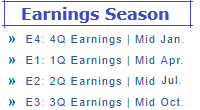
Retail earnings season kicks off this week with several big-box retailers set to report results for the first quarter, including Walmart, Target and Home Depot. Elsewhere, Deere is also on deck, along with a handful of technology companies. Investors will also have their eye on retail sales data this week, which could give them insight into how retailers are managing inflation, which remains near 40-year highs.
Walmart
Walmart shares fall as higher costs, supply chain problems and inventories eat into profits. Walmart on Tuesday reported quarterly earnings that missed Wall Street’s expectations by a wide margin, as the nation’s largest retailer felt pressure from rising fuel costs and higher levels of inventory. Here’s what Walmart reported for its first quarter ended April 30, compared with Refinitiv consensus estimates: Earnings per share: $1.30 adjusted vs. $1.48 expected. Revenue: $141.57 billion reported vs. $138.94 billion expected.
Retail Sales
Retail spending increased 0.9% in April 2022, boosted by demand and inflation. Sales rose 0.9% in April, just below the 1% estimate, according to numbers that are not adjusted for inflation. April’s gains were powered by a 4% gain from miscellaneous retail and a 2.1% jump in online sales. Consumers kept spending in April, with retail sales rising about in line with Wall Street expectations despite an ongoing surge in prices. Monthly sales rose 0.9% overall, just below the Dow Jones estimate for a 1% increase, the Commerce Department reported Tuesday. Excluding autos, sales increased 0.6%, which was better than the 0.4% estimate. The numbers are not adjusted for inflation, so they are indicative both of sustained spending as well as the fastest acceleration in prices the U.S. economy has seen in about 40 years.
Industrial Production
A separate report showed that industrial production rose 1.1% in April 2022, well above the 0.5% estimate. Industrial production rose 1.1% in April 2022, well above the 0.5% Dow Jones estimate, according to Fed data. Capacity utilization, or the level of potential output being realized, increased to 79%, slightly ahead of the 78.6% estimate.
Business Inventories
Business inventories increased 2% in March 2022 after rising by a revised 1.8% in February, data from the U.S. Commerce Department showed Tuesday. Economists polled by The Wall Street Journal expected inventories to advance 1.9%. Inventories rose by 2.3% at both wholesalers and retailers, and by 1.3% at manufacturers.
Housing Market Index
Homebuilder sentiment falls to 2-year low on declining demand and rising costs. Sentiment fell 8 points to 69 in May 2022, according to the National Association of Home Builders/Wells Fargo Housing Market Index. Of the index’s three components, current sales conditions fell 8 points to 78, and sales expectations in the next six months dropped 10 points to 63. Buyer traffic fell 9 points to 52. “Housing leads the business cycle, and housing is slowing,” said NAHB Chairman Jerry Konter, a builder and developer in Savannah, Georgia.
MBA Purchase Applications
Weekly mortgage demand from homebuyers tumbles 12%, as higher interest rates take their toll. The average contract interest rate for 30-year fixed-rate mortgages with conforming loan balances ($647,200 or less) decreased to 5.49% from 5.53%. Mortgage applications to purchase a home fell 12% week to week and were 15% lower compared with the same week one year ago. Applications to refinance a home loan continued their landslide, falling another 10% week to week. Mortgage applications to purchase a home declined 12% week to week and were 15% lower compared with the same week one year ago. That was the first weekly drop in homebuyer demand since the third week in April. Mortgage rates have risen over 2 full percentage points since the start of the year, and home prices are up more than 20% from a year ago. Applications to refinance a home loan continued their landslide, falling another 10% week to week. Refinance demand was 76% lower than the same week one year ago. Two years of record-low interest rates during the Covid pandemic incited a refinance boom which has now gone bust. There is simply a very small pool of borrowers who can now benefit from a refinance.
Target (TGT)
Target shares sink more than 20% after company says high costs, inventory woes hit profits. Target shares dropped sharply on Wednesday, after the company said its quarterly profits got hit by supply chain troubles, higher fuel costs and lower than expected sales of discretionary merchandise. The big-box retailer said it saw a healthy customer, but a shift to experience-based purchases, such as toys for birthday parties and luggage for trips. Target reiterated its revenue forecast, which calls for mid single-digit growth this year and beyond. Here’s what Target reported for the fiscal first quarter ended April 30, compared with Refinitiv consensus estimates: Earnings per share: $2.19 adjusted vs. $3.07 expected. Revenue: $25.17 billion vs. $24.49 billion expected.
Retailers
Walmart, Target, Home Depot and Lowe’s reported quarterly results this week, and they each offered a different perspective on where and how people are spending their money. “While we’ve experienced high levels of inflation in our international markets over the years, U.S. inflation being this high and moving so quickly, both in food and general merchandise, is unusual,” Walmart’s CEO said. Analysts and investors didn’t anticipate that Walmart and Target would take such a massive hit to their profits. Home Depot and Lowe’s, though, have seen more strength among shoppers in recent weeks.
Housing Starts
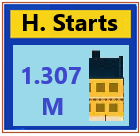
Housing Starts, Building Permits Stall as Mortgage Rates Bite. US new-home home construction slipped in April amid ongoing supply-side challenges and the steepest climb in mortgage rates in decades.Residential starts decreased 0.2% last month to a 1.72 million annualized rate after a downwardly revised 1.73 million pace in the prior month, according to government data released Wednesday. The median estimate in a Bloomberg survey of economists called for a 1.76 million pace. Applications to build, a proxy for future construction, fell 3.2% to an annualized 1.82 million units. Builders are contending with high material prices amid decades-high inflation, along with continued difficulty securing lots and labor. That, combined with concerns that the steep surge in borrowing costs will squeeze would-be buyers out of the market, pushed a measure of homebuilder sentiment this month to the lowest level since June 2020. The average for a 30-year loan rose to 5.3% last week, up from 2.94% a year prior and the highest since 2009, Freddie Mac data show. Still, signs suggest pressures may be softening somewhat on both supply and demand sides of the market amid the easing pandemic and rising rates, permitting firms to work through swollen backlogs.
Building Permits Building permits decline 3.2% in April. Single-family permits drop 4.6%; multi-family fall 1.0. Housing starts slip 0.2%; single-family dives 7.3%. Permits for future U.S. homebuilding tumbled to a five-month low in April, suggesting the housing market was slowing as rising mortgage rates contribute to reduced affordability for entry-level and first-time buyers. But the report from the Commerce Department on Wednesday also showed a record backlog of houses still to be constructed, indicating the moderation in homebuilding would be marginal. Homebuilding was already being constrained by soaring prices as well as shortages of materials. The housing market is the sector of the economy most sensitive to interest rates, with building permits a leading indicator for the sector.
Jobless Claims
U.S. weekly jobless claims rise; continuing claims lowest since 1969. Initial claims for state unemployment benefits increased 21,000 to a seasonally adjusted 218,000 for the week ended May 14, the highest level since January, the Labor Department said on Thursday. Economists polled by Reuters had forecast 200,000 applications for the latest week. Though claims have been largely treading water since hitting more than a 53-year low of 166,000 in March, the labor market is rapidly tightening and generating strong wage gains that are helping to fan overall inflation in the economy. There were a record 11.5 million job openings at the end of March. Claims are down from an all-time high of 6.137 million in early April 2020.
Philadelphia Manufacturing Index
Philadelphia Fed Manufacturing Index falls to 2.6 in May 2022 vs. 16.0 expected. The Philly Fed manufacturing index came in well weaker than expected at 2.6 in May 2022. According to a report from the Federal Reserve Bank of Philadelphia released on Thursday, the headline Manufacturing Activity Index of the Manufacturing Business Outlook Survey slid to 2.6 in May from 17.6 in March. That was well below the expected decline to 16.0 and was the lowest reading since May 2020.
Kohl (KSS)
Kohl’s says final sale bids expected in coming weeks; retailer slashes full-year outlook after earnings miss. Here’s how Kohl’s did in the three-month period ended April 30, compared with what Wall Street was anticipating, according to a survey of analysts by Refinitiv: Earnings per share: 11 cents vs. 70 cents expected. Revenue: $3.72 billion vs. $3.68 billion expected.
Existing Home Sales
Existing home sales fell in April 2022 to the lowest level since the start of the pandemic. Sales of previously owned homes in April fell to the lowest pace since the Covid pandemic started, according to the National Association of Retailers. “We are moving back to pre-pandemic sales activity, but I expect further declines,” said Lawrence Yun, chief economist for the group. Tight supply kept home prices higher, despite rising interest rates. The median price of an existing home sold in April was $391,200, the highest on record and an increase of 14.8% from a year ago.
E Commerce Retail Sales
mmmm
Leading Indicators
The Conference Board Leading Economic Index (LEI)for theU.S. decreased by 0.3 percent in April to 119.2 (2016 = 100), following a 0.1 percent increase in March. The LEI is now up 0.9 percent over the six-month period from October 2021 to April 2022. The US LEI declined in April largely due to weak consumer expectations and a drop in residential building permits. Overall, the US LEI was essentially flat in recent months which is in line with a moderate growth outlook in the near-term. A range of downside risks—including inflation, rising interest rates, supply chain disruptions, and pandemic-related shutdowns, particularly in China—continue to weigh on the outlook. Nevertheless, we project the US economy should resume expanding in Q2 following Q1’s contraction in real GDP. Despite downgrades to previous forecasts, The Conference Board still projects 2.3 percent year-over-year US GDP growth in 2022.
Fixed Mortgage Rates
The average contract interest rate for 30-year fixed-rate mortgages with conforming loan balances ($647,200 or less) decreased to 5.49% from 5.53%, with points increasing to 0.74 from 0.73 (including the origination fee) for loans with a 20% down payment. The average contract interest rate for 30-year fixed-rate mortgages with conforming loan balances ($647,200 or less) decreased to 5.49% from 5.53%, with points increasing to 0.74 from 0.73 (including the origination fee) for loans with a 20% down payment.
|