10-Year Treasury Yield
Monday could see light volume with many Wall Street traders off for Columbus Day. The U.S. stock market is open Monday, but the bond market is closed. The direction of the stock market is likely to be lower because either the economy and corporate profits are going to slow meaningfully or the Fed is going to have to raise rates even higher and keep them higher for longer.
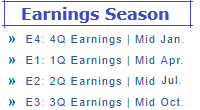
Earnings Market observers generally consider the week ahead as the kickoff to earnings season, with four of the world’s largest banks – JPMorgan, Wells Fargo, Morgan Stanley and Citi– reporting Friday. PepsiCo, Delta and Domino’s are also among companies reporting next week.
MBA Purchase Applications
mmmmm
PPI
mmmm
FOMC
Federal Reserve officials have been surprised at the pace of inflation and indicated at their last meeting that they expect higher interest rates to remain in place until prices come down, according to minutes released Wednesday from the central bank’s September meeting. In discussions leading up to a 0.75 percentage point rate hike, policymakers noted that inflation is especially taking its toll on lower-income Americans. They reiterated rate hikes are likely to continue and higher rates will prevail until the problem is showing signs of resolving.
Jobless Claims
mmmm
CPI
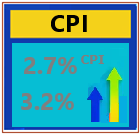
Thursday marked the fifth largest intraday reversal from a low in the history of the S&P 500, and it was the fourth largest for the Nasdaq, according to SentimenTrader. The moves followed the release of the consumer price index, a key U.S. inflation reading that came in hotter than expected for the month of September. Initially, this weighed on markets as investors braced themselves for the Federal Reserve to continue with its aggressive rate-hiking plan. Later, however, they shrugged off those worries. Still, persistent inflation remains a problem for the Fed and for investors’ worries around the central bank’s policy tightening.
Treasury Budget
mmmm
Import and Export Prices
A separate report Thursday showed that import prices fell 1.2% in September, slightly more than the 1.1% estimate. Exports declined 0.8%. U.S. import prices decreased 1.2 percent in September, after declining 1.1 percent the previous month, the U.S. Bureau of Labor Statistics reported today. Lower fuel and nonfuel prices in September contributed to the drop in U.S. import prices. Prices for U.S. exports fell 0.8 percent in September following a 1.7-percent decline in August.
Cosnsumer Sentiment UM
mmmm
Reatil Sales
Consumer spending was flat
Reatil Sales
Consumer spending was flat in September and below expectations as inflation takes toll Retail and food services sales in total were little changed in September against the estimate for a 0.3% gain. Excluding autos, sales rose 0.1%, vs. the estimate for spending to be unchanged.The numbers are not adjusted for inflation, indicating that consumer spending slowed. Consumer spending was flat in September as prices moved sharply higher and the Federal Reserve implemented higher interest rates to slow the economy, according to government figures released Thursday. Retail and food services sales were little changed for the month after rising 0.4% in August, according to the advance estimate from the Commerce Department. That was below the Dow Jones estimate for a 0.3% gain. Excluding autos, sales rose 0.1%, against an estimate for no change. Considering that the retail sales numbers are not adjusted for inflation, the report shows that real spending across the range of sectors the report covers retreated for the month. A Bureau of Labor Statistics report Thursday indicated that consumer prices rose 0.4% including all goods and services, and 0.6% when excluding food and energy. Miscellaneous store retailers saw a decline of 2.5% for the month, while gasoline stations were off 1.4% as energy prices declined.
JP Morgsn
JPMorgan Chase a rival to Morgan Stanley in Wall Street trading and advisory activities, posted results that topped expectations on strong interest income.JPMorgan Chase tops estimates as bank reaps more interest income than expected after jump in rates Here are the numbers: Earnings: $3.12 a share, may not be comparable with the $2.88 estimate, according to Refinitiv. Revenue: $33.49 billion, vs. $32.1 billion estimate. Shares of the New York-based bank rose 1.5% in early trading. JPMorgan Chase on Friday posted results that topped analysts’ estimates as the biggest U.S. bank by assets took advantage of rising rates to generate more interest income.
MS
Morgan Stanley posted results below expectations on sharp declines in investment banking and investment management revenue. Wells Fargo and Citigroup also posted results Friday, followed by Bank of America on Monday and Goldman Sachs on Tuesday.Morgan Stanley on Friday posted third-quarter results that missed analysts’ expectations as investment banking revenue collapsed by 55%. Here are the numbers: Earnings of $1.47 a share, compared with $1.49 estimate of analysts surveyed by Refiniti Revenue of $12.99 billion, compared with the $13.3 billion estimate The New York-based bank said profit of $2.63 billion, or $1.47 a share, fell 29% from a year earlier. Revenue of $12.99 billion dropped 12% from a year earlier, driven by the fall-off in investment banking and declines in investment management revenue.Shares of the bank slumped 4.4% in early trading.
Earinigs
The positive moves come amid a negative outlook for the earnings season. Profit for S&P 500 companies increased a measly 2.4% in the third quarter, according to the latest analyst estimates collected by FactSet. That’s the worst growth since the third quarter of 2020, the heart of the pandemic. When the third quarter began, earnings growth was expected to be 10% for the period, but rising costs and interest rates have eaten away at companies’ bottom lines. Leading up to the start of this reporting season, 65 S&P companies have issued negative
Citigroup
Citigroup reports 25% decline in third-quarter profits but tops revenue expectations The bank reported $18.51 billion in revenue versus the $18.25 billion expected by analysts, according to Refinitiv. This was up 6% year over year.Net income fell 25% year over year. Citigroup shares have slumped 29% this year, leaving it by far the lowest-valued among its U.S. peers.Citigroup said Friday that its third-quarter earnings fell 25% as it bulked up its credit loss provisions and investment banking slumped. However, Citi shares gained more than 1% in early trading as revenue climbed more than analysts expected, helped by rising interest rates. The bank reported $18.51 billion in revenue versus the $18.25 billion expected by analysts, according to Refinitiv. This was up 6% year over year. In the quarter ended Sept. 30, net income fell 25% year over year to $3.48 billion, or $1.63 in earnings per share. The results included a $520 million pretax gain on the sale of its Asia consumer business. Excluding this item, Citi said it earned $1.50 per share. However, it is unclear if the result is comparable to analyst estimates.
Well Fargo
Wells Fargo shares jump 3% as bank tops expectations despite boosting loan loss reserves Wells Fargo third-quarter profits were hurt by a decision to boost loan loss reserves. The bank set aside $784 million for credit losses after reducing its provisions by $1.4 billion a year ago. Wells Fargo said Friday that it is still seeing historically low loan delinquencies, but it made a decision to build up reserves as the economy slows, cutting into its third-quarter profits. Wells Fargo shares were up more than 3%, as its results topped expectations. Here’s how the bank did compared with Refinitiv estimates: Earnings per share: $1.30 adjusted vs. $1.09 expecte Revenue: $19.51 billion vs. $18.78 billion expected In the quarter ended Sept. 30, net income fell more than 30% to $3.53 billion, or 85 cents per share, from $5.12 billion, or $1.17 per share, during the same quarter a year ago.
|