Consumer Credit
Consumer credit is expected to increase $21.0 billion in December versus $39.9 billion in November..December Consumer Credit grew by $18.90B M/M vs. $22.0B consensus and $38.82B in the prior month (revised from $39.99B). Total outstanding consumer credit of $4.43B in December slightly gained from $4.41B in November. Revolving credit, which includes credit card debt, ticked higher to $1.03B in December. Nonrevolving credit, which includes auto and student loans, rose to $3.39B. Previously, (Jan. 7) U.S. consumer credit topped the estimate in November..
US Trade Balance - Deficit
U.S. International Trade in Goods and Services, December 2021. The U.S. Census Bureau and the U.S. Bureau of Economic Analysis announced today that the goods and services deficit was $80.7 billion in December, up $1.4 billion from $79.3 billion in November, revised.
The Commerce Department said on Tuesday that the trade deficit increased 27.0% last year to an all-time high of $859.1 billion. The deficit was at $676.7 billion in 2020. The trade gap represented 3.7% of gross domestic product, up from 3.2% in 2020. The economy grew 5.7% in 2021, the strongest since 1984, after the government provided nearly $6 trillion in pandemic relief, which fueled consumer spending on goods.
The Commerce Department said on Tuesday that the trade deficit increased 27.0% last year to an all-time high of $859.1 billion. The deficit was at $676.7 billion in 2020. “The US trade picture won’t return to normal until the pandemic purchases start to slow and life returns to what it was,”
The trade gap represented 3.7% of gross domestic product, up from 3.2% in 2020. The economy grew 5.7% in 2021, the strongest since 1984, after the government provided nearly $6 trillion in pandemic relief, which fueled consumer spending on goods. The goods deficit shot up 18.3% to a record $1.1 trillion last year. Imports of goods hit an all-time high of $1.8 trillion. They were driven by imports of industrial supplies and materials, which increased to their highest level since 2014. Food imports were the highest on record as were those of capital, consumer and other goods. There were record imports from 70 countries in 2021, led by Mexico, Canada and Germany. Robust import growth overshadowed a sharp rebound in exports. Goods exports surged 23.3% to a record $1.8 trillion. Exports of industrial supplies and materials, foods, consumer goods, other goods and petroleum were the highest on record. The United States logged record exports to 57 countries last year, led by led by Mexico, which increased to $276.5 billion. Shipments to China rose to $151.1 billion, while exports to South Korea increased to $65.8 billion. The final boost to the trade deficit came from a 1.8% increase to $80.7 billion in December 2021. Economists polled by Reuters had forecast a $83.0 billion deficit..
Consumer debt totals $15.6 trillion in 2021, a record-breaking increase
Consumers ended 2021 with record levels of debt, which stood at $15.6 trillion, according to data released Tuesday from the Federal Reserve’s New York district. A large chunk of the debt-load increase came from mortgages, which saw balances rise by $890 billion for the year.The news comes ahead of a period in which the Fed is expected to start jacking up interest rates as it looks to tamp down surging inflation.
Consumers ended 2021 with record levels of debt, leading into a year in which interest rates are expected to rise substantially. Total U.S. consumer debt at the end of the year came to $15.6 trillion, a year-over-year jump of $333 billion during the fourth quarter and just over $1 trillion for the full year, according to data released Tuesday from the Federal Reserve’s New York district. The quarterly rise was the biggest since 2007, and the annual gain was the largest ever in records going back to 2003.
Wholesale Trade Inventories (Pre)
Wholesale trade experienced more than $7.1 trillion in sales in 2021, a greater than 22% increase over 2020 when the industry recorded just over $5.8 trillion in revenues, the U.S. Census Bureau reported Thursday. It was a record year for the industry, also besting the last pre-pandemic year of 2019, which saw roughly $6.1 trillion in wholesale revenues. December 2021 sales of merchant wholesalers — except manufacturers’ sales branches and offices, after seasonal adjustments — were $634.6 billion, up 0.2% from the revised November level and up 21.8% from the revised December 2020 level. Total inventories of merchant wholesalers, after seasonal adjustments and variations, were $790.8 billion at the end of December 2021, up 2.2% from the revised November level. Total inventories were up 18.5% from the revised December 2020 level.
MBA Purchase Applications
Homebuyer demand for mortgages drops 10%, as higher interest rates price some people out.he average contract interest rate for 30-year fixed-rate mortgages with conforming loan balances ($647,200 or less) increased to 3.83% from 3.78% Mortgage applications to purchase a home dropped 10% last week compared with the previous week and were 12% lower year over year. Applications to refinance a home loan fell 7% for the week and were 52% lower than the same week one year ago.
The average contract interest rate for 30-year fixed-rate mortgages with conforming loan balances ($647,200 or less) increased to 3.83% from 3.78% Mortgage applications to purchase a home dropped 10% last week compared with the previous week and were 12% lower year over year.
Applications to refinance a home loan fell 7% for the week and were 52% lower than the same week one year ago.. The average contract interest rate for 30-year fixed-rate mortgages with conforming loan balances ($647,200 or less) increased to 3.83% from 3.78%, with points decreasing to 0.40 from 0.41 (including the origination fee) for loans with a 20% down payment. The rate was 87 basis points lower one year ago. “Mortgage rates followed the U.S. 10-year yield and other sovereign bonds as the Federal Reserve and other key global central banks responded to growing inflationary pressures and signaled that they will start to remove accommodative policies,” said Joel Kan, MBA’s associate vice president of economic and industry forecasting. As a result, applications to refinance a home loan fell 7% for the week and were 52% lower than the same week one year ago. The refinance share of mortgage activity decreased to 56.2% of total applications from 57.3% the previous week. There is a shrinking population of borrowers who can benefit from a refinance now, about half as many as there were one year ago..
OIL
Oil will “certainly” hit $120 a barrel and the global economy will be “radically altered” if Russia invades Ukraine, veteran strategist David Roche has predicted. Moscow has denied that it plans to invade neighboring Ukraine, but has moved around 130,000 soldiers, tanks, missiles, and even fresh blood supplies to the border. The Kremlin is demanding that Ukraine never be permitted to become a member of the NATO military alliance, and has also said it wants the organization to roll back its presence in Eastern Europe.
AMD
AMD gets upgrade after strong earnings, analyst sees 17% upside from here at 128.70.
FOMC
Atlanta Fed President Raphael Bostic said Wednesday he anticipates hiking interest rates three or four times this year.
However, he noted that “every option is on the table” when it comes to the central bank’s battle against inflation.
Markets expect the Fed to hike rates at least five times this year.
10-Year Yield
U.S. Treasury yields climbed on Thursday after key inflation data showed hotter-than-expected price pressures. The yield on the benchmark 10-year Treasury note jumped 5 basis points to 1.98%. The yield on the 2-year Treasury bond, the most sensitive duration to interest rates, surged 10 basis points to 1.45%. Yields move inversely to prices and 1 basis point is equal to 0.01%. The benchmark Treasury yield has spiked a great amount in 2022, rising more than 40 basis points from 1.51% at the end of last year. In February alone, the 10-year rate has gained about 20 basis points from where it ended January around 1.78%.
Consumer Price Index CPI - Inflation
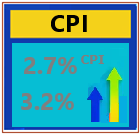
The consumer price index, which measures the costs of dozens of everyday consumer goods, rose 7.5% compared to a year ago, the Labor Department reported Thursday. That compared to Dow Jones estimates of 7.2% for the closely watched inflation gauge. It was the highest reading since February 1982. A key measure of inflation climbed to a near-40-year high last month. The consumer price index rose 7.5% in the 12 months ending January, not adjusted for seasonal swings, the Bureau of Labor Statistics said Thursday. It was the steepest annual price increase since February 1982.
Stripping out food and energy prices, which tend to be more volatile, prices increased by 6% between January 2021 and January 2022, marking the largest increase since August 1982. In January alone, prices rose 0.6%, including seasonal adjustments, the same rate as in December. That served up some bad news for people who hoped the monthly data would indicate a slowdown of the price hikes. Prices increased across the board, including for housing, furniture, used cars and medical costs. Food prices climbed 0.9% in January, compared to just 0.5% in December.
Jobless Claims
initial jobless claims came in at 223,000 for the week ended Feb. 5. The number is lower than a Dow Jones estimate of 230,000...
Initial Jobless Claims: -16K to 223K vs. 230K consensus and 239K prior (revised from 238K).
4-week moving average was 253.25K, a decrease of 2K from the previous week's revised average of 255,250.
The advance seasonally adjusted insured unemployment rate was 1.2% for the week ended Jan. 29, unchanged from the previous week's unrevised rate. The advance number of actual initial claims under state programs, unadjusted, totaled 228,909 in the week ended Feb. 5, a decrease of 28,674 (or 11.1%) from the previous week. The seasonal factors had expected a decrease of 13,497 (or 5.2 percent) from the previous week. There were 868,053 initial claims in the comparable week in 2021. Continuing jobless claims of 1.621M vs. 1.621M prior and 1.615M consensus...
Consumer Sentiment
Consumer sentiment has plummeted this month, falling to its lowest level in decade and dropping significantly in only a matter of days, early numbers from the University of Michigan show. The data from the university’s consumer sentiment survey—Friday’s 61.7 reading for February was a preliminary number—is designed to capture the mood of American shoppers and offer information about their near-term spending plans. February’s number is a 19.7% decrease from a year ago and an 8.2% decline from January’s 67.2. Economists surveyed by FactSet expected February’s number to be 67.5. Decreases over several months have come as consumers become more anxious about rising inflation and a slumping stock market, and show less faith in Washington’s economic policies. The lack of confidence signals the onset of a sustained downturn in spending.
Treasury Budget
Forecasters see a $0.5 billion surplus in January that would compare with a year-ago January deficit of $162.8 billion. The federal budget in January ran a monthly surplus for the first time since September 2019, as the government took in more in tax and other revenue and spent less on Covid-19 pandemic aid programs. The surplus last month reached $119 billion, the Treasury Department reported Thursday. Government receipts for the month rose by 21% from a year earlier to $465 billion, not adjusting for calendar differences. Federal spending, meanwhile, fell in January by 37% to $346 billion. The U.S. government posted a $119 billion budget surplus in January, the first in more than two years, amid strong growth in tax receipts and a sharp drop in pandemic-related outlays, the Treasury Department said on Thursday. The January surplus compared to a January 2021 deficit of $163 billion, a record for the month asdirect payments to individuals from COVID-19 aid legislation enacted in December 2020 were distributed. The surplus last month was the first since the $83 billion reported in September 2019 and the largest since the $160 billion in April 2019. April and September are traditionally months with high tax collection. The surplus for the month also was helped by the recognition of $70 billion in proceeds from a wireless spectrum auction, a U.S. Treasury official said. For the first four months of the 2022 fiscal year that started Oct. 1, the Treasury reported a deficit of $259 billion, a 65% decline from the year-earlier deficit of $736 billion. Year-to-date receipts grew 28% to $1.52 trillion, while outlays for the period fell 8% to $1.78 trillion.
Consumer Debt
Consumer debt totals $15.6 trillion in 2021, a record-breaking increase.
Feb. 08, 2022. Consumers ended 2021 with record levels of debt, leading into a year in which interest rates are expected to rise substantially. Total U.S. consumer debt at the end of the year came to $15.6 trillion, a year-over-year jump of $333 billion during the fourth quarter and just over $1 trillion for the full year, according to data released Tuesday from the Federal Reserve’s New York district. The quarterly rise was the biggest since 2007, and the annual gain was the largest ever in records going back to 2003.
Fed interest moves are directly tied to the prime rate that consumers pay for many forms of debt, including credit cards and adjustable-rate mortgages. A large chunk of the debt-load increase came from mortgages, which saw balances rise by $890 billion for the year and $258 billion in the fourth quarter, to nearly $11 trillion. Mortgage originations for the year totaled more than $4.5 trillion, a new record. Credit card balances increased by $52 billion in the final three months of the year, a new quarterly record that brought total debt in that category to $860 billion.
|