10-Year Treasury Yield
U.S. Treasury yields rose Tuesday as investors continued to weigh rising inflation around the world and the possibility of a slowdown in economic growth. The yield on the benchmark 10-year Treasury note was up 6.1 basis points at 2.81% at 7:14 a.m. ET. The yield on the 30-year Treasury bond rose 3.7 basis points to 3.013%. Yields move inversely to prices and 1 basis point is equal to 0.01%.
Shiller
Home prices surged over 20% in March 2022 as interest rates also rose, according to S&P Case-Shiller. Rising mortgage rates did not slow down rising home prices in March. Nationally, home prices were 20.6% higher than they were in March 2021, according to the S&P CoreLogic Case-Shiller Home Price Index. That is higher than the 20% gain in February. The index is a three-month running average ending in March. The average rate on the 30-year fixed mortgage stood at 3.29% at the start of January and ended March at 4.67%, according to Mortgage News Daily. The Case-Shiller’s 10-city composite rose 19.5% annually in March, up from 18.7% in February. The 20-city composite saw a 21.2% year-over-year gain, up from 20.3% in the previous month. For both national and 20-city composites, March’s reading was the highest year-over-year price change in more than 35 years of data.
FHFA
U.S. House Prices Rise 18.7 Percent over the Last Year; Up 4.6 Percent from the Fourth Quarter. U.S. house prices rose 18.7 percent from the first quarter of 2021 to the first quarter of 2022 according to the Federal Housing Finance Agency House Price Index (FHFA HPI®). House prices were up 4.6 percent compared to the fourth quarter of 2021. FHFA’s seasonally adjusted monthly index for March was up 1.5 percent from February. High appreciation rates continued across housing markets during the first quarter of 2022. Strong demand coupled with tight supply have kept prices climbing. Through the end of March, higher mortgage rates have not yet translated into slower price gains, but new home sales have dropped during the last few months, with a significant falloff in April.
Consumer Confidence
US consumer confidence slips in May amid stubborn inflation.U.S. consumer confidence edged lower in May as Americans’ view of their present and future prospects dimmed in the midst of persistent inflation. The Conference Board said Tuesday that its consumer confidence index dipped to 106.4 in May — still a strong reading — from 108.6 in April. The business research group’s present situation index, which measures consumers’ assessment of current business and labor conditions, also fell in May to 149.6 from 152.9 in April. The expectations index, based on consumers’ six-month outlook for income, business and labor market conditions, also declined in May, to 77.5 from 79 in April. It was above 80 in February and remains a weak spot in the survey.
MBA Purchase Applications
Mortgage demand falls to the lowest level since the end of 2018, even as interest rates ease a bit. Applications for a mortgage to purchase a home fell 1% last week compared with the previous week, according to the Mortgage Bankers Association. Volume was 14% lower than the same week one year ago. Prices continue to rise because there is still so little supply on the market, but different tiers of buyers are seeing different pictures. Applications to refinance a home loan, which are more sensitive to rate moves than purchase applications, fell 5% for the week and were 75% lower than the same week one year ago. Even as rates moved off their highs over the past few weeks, refinance demand hasn’t come back because so many borrowers already went through the process when rates were sitting at record lows last year. Applications for a mortgage to purchase a home fell 1% last week compared with the previous week, according to the Mortgage Bankers Association’s seasonally adjusted index. Volume was 14% lower than the same week one year ago. Despite a slight decline, mortgage rates are significantly higher than they were at the start of this year.
PMI Mfg Final
May final S&P Global manufacturing PMI 57.0 vs 57.5 est vs 57.5 prior.May final S&P Global manufacturing PMI 57.0 vs 57.5 est vs 57.5 prior.
ISM
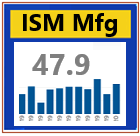
Manufacturing PMI at 56.1%; May 2022 Manufacturing ISM Report On Business. Economic activity in the manufacturing sector grew in May, with the overall economy achieving a 24th consecutive month of growth, say the nation's supply executives in the latest Manufacturing ISM Report On Business. The May Manufacturing PMI® registered 56.1 percent, an increase of 0.7 percentage point from the reading of 55.4 percent in April. This figure indicates expansion in the overall economy for the 24th month in a row after a contraction in April and May 2020. This is the second-lowest Manufacturing PMI® reading since September 2020, when it registered 55.4 percent.
The ISM manufacturing index showed that firms on balance expect to cut back on the pace of hiring. Specifically, the employment component showed a reading of 49.6, the first sub-50 result since November 2020, according to Bespoke Investment Group. Anything below 50 represents a reduction as the survey gauges business expansion against contraction. The headline ISM number was 56.1 for May, which was higher than April’s 55.4.
Construction Spending
U.S. Construction Spending Rises Less Than Expected In April 2022. Construction spending in the U.S. increased by less than expected in the month of April, according to a report released by the Commerce Department on Wednesday. The report showed construction spending edged up by 0.2 percent to an annual rate of $1.745 trillion in April after rising by 0.3 percent to a revised rate of $1.741 trillion in March. Economist had expected construction spending to climb by 0.5 percent compared to the 0.1 percent uptick originally reported for the previous month. The modest increase in construction spending came as spending on private construction rose by 0.5 percent to an annual rate of $1.395 trillion. A 0.9 percent advance in spending on residential construction was partly offset by a 0.2 percent dip in spending on non-residential construction..
JOLS - Job Openings and Labor Turnover Survey
Job openings show sharp decline, but still vastly outnumber available workers. ob openings fell by 455,000 in April, from an upwardly revised 11.855 million the previous month. That helped close the gap between vacancies and available workers, which was 5.46 million. Hirings and quits were little changed for the month. Job openings fell by nearly half a million in April, narrowing the historically large gap between vacant positions and available workers.The openings total declined by 455,000 from the upwardly revised March number to 11.4 million in April, about in line with the FactSet estimate, according to the bureau’s Job Openings and Labor Turnover Survey. That left a gap of 5.46 million between openings and the available workers, still high by historical standards and reflective of a very tight labor market, but below the nearly 5.6 million difference from March. As a share of the labor force, the job openings rate fell 0.3 percentage point to 7%. The JOLTS report showed that 4.4 million workers left their positions in April, little changed from the March reading and reflective of the ongoing “Great Resignation” that has seen unprecedented market movement amid the high demand for labor. Hiring was little changed on the month, though there was a drop-off in the leisure and hospitality sector. The industry saw hiring decline by 77,000, or a half percentage point fall to 7.2%. A year ago, the hire rate was 9%. The numbers came two days ahead of the pivotal nonfarm payrolls report for May. The Dow Jones estimate is for 328,000 more jobs added, following a gain of 428,000 in April, and the unemployment rate to drop to 3.5%.
Beige Book
A majority of the twelve Federal Reserve districts have recently experienced slight or modest economic growth, according to the central bank's Beige Book. The Beige Book, a compilation of anecdotal evidence on economic conditions in each of the twelve Fed districts, said four districts explicitly noted that the pace of growth had slowed since the prior period. The slower growth comes as retail contacts noted some softening as consumers faced higher prices, and residential real estate contacts observed weakness as buyers faced high prices and rising interest rates.
US Economy Slows in Some Areas, Fed’s Beige Book Survey Shows. Economic growth slowed in recent weeks in some parts of the US, the Federal Reserve said. “Four districts explicitly noted that the pace of growth had slowed since the prior period,” the central bank said in its Beige Book report Wednesday.
Jobless Claims
Weekly jobless claims fell to 200,000, a sign that while hiring may be slowing, layoffs are not accelerating. In other economic data Thursday, initial jobless claims for the week ended May 28 totaled 200,000, a decline of 11,000 from the previous week and below the 210,000 estimate, according to the Labor Department. Continuing claims fell to 1.31 million, the lowest total since Dec. 27, 1969, and indicative that while hiring may be slowing, the pace of layoffs looks muted.
ADP
Private payrolls increased by just 128,000 in May, the slowest growth of the recovery, ADP says. Private payrolls increased by just 128,000 in May, the lowest gain of the pandemic-era recovery, according to ADP. Small business took the biggest hit during the month, as companies employing fewer than 50 workers reduced payrolls by 91,000. Leisure and hospitality, the sector most hit most by restrictions and which has been a leader throughout the recovery, saw new hires of just 17,000. ob creation at companies decelerated to the slowest pace of the pandemic-era recovery in May, payroll processing firm ADP reported Thursday. Private sector employment rose by just 128,000 for the month, falling well short of the 299,000 Dow Jones estimate and a decline from the downwardly revised 202,000 in April, initially reported as a gain of 247,000. The big drop-off marked the worst month since the massive layoffs in April 2020, when companies sent home more than 19 million workers as the Covid outbreak triggered a massive economic shutdown.
Productiviy and Cost
Also, first-quarter productivity was revised slightly higher but still reflected a decline of 7.3%, the biggest tumble since 1947. Unit labor costs jumped by 12.6%, the biggest increase since the third quarter of 1982, according to the Bureau of Labor Statistics. Nonfarm business sector labor productivity decreased 7.3 percent in the first quarter of 2022, the U.S. Bureau of Labor Statistics reported today, as output decreased 2.3 percent and hours worked increased 5.4 percent. This is the largest decline in quarterly productivity since the third quarter of 1947, when the measure decreased 11.7 percent. Unit labor costs in the nonfarm business sector increased 12.6 percent in the first quarter of 2022, reflecting a 4.4-percent increase in hourly compensation and a 7.3-percent decrease in productivity. Unit labor costs increased 8.2 percent over the last four quarters.
Factory Orders
New orders for U.S.-manufactured goods increased less than expected in April, but demand for products remains strong, which should help to keep factories humming. The Commerce Department said on Thursday that factory orders rose 0.3% in April after advancing 1.8% in March. Economists polled by Reuters had forecast factory orders would rise 0.7%. Manufacturing, which accounts for 12% of the U.S. economy, is being pinned by still strong demand for goods even as spending shifts back to services. A survey on Wednesday showed. the Institute for Supply Management’s national factory activity index rebounded in May after two straight monthly declines. But China’s zero COVID-19 policy and Russia’s dragging war against Ukraine could slow the improvement in supply chains. In April, there were increases in orders for machinery motor vehicles and primary metals. But orders for electrical equipment, appliances and components fell 0.2%. Orders for computers and electronic products edged up 0.1%.
Fixed Mortgage Rates
This as the average contract interest rate for 30-year fixed-rate mortgages with conforming loan balances ($647,200 or less) decreased to 5.33% from 5.46% with points dropping to 0.51 from 0.60 (including the origination fee) for loans with a 20% down payment. The average contract interest rate for 30-year fixed-rate mortgages with jumbo loan balances (greater than $647,200) decreased to 4.93% from 5.02%. Jumbo loans are mostly held in investor and bank portfolios, as opposed to being sold to Fannie Mae or Freddie Mac. Lenders see them as less risky given the higher credit quality of the borrower to whom they generally go.
Employment Situation
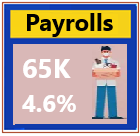
Nonfarm payrolls rose by a better-than-expected 390,000 in May, the Labor Department said Friday, in signs of persistent demand and supply shortfalls in the job market. Employment growth was mostly solid across the board. Construction jobs rose by 36,000 after being flat the previous month. Professional and business services employment rose by 75,000, accelerating from 49,000 in the prior month. Leisure and hospitality saw the biggest jump, gaining 84,000 jobs. That was roughly flat month over month but well off the fast pace seen last year. Leisure and hospitality saw the biggest jump, gaining 84,000 jobs. That was roughly the same as the month before but well off the fast pace seen last year. “We’re adding a large number of jobs, but not quite at the pace we saw in 2021. Which makes sense, because we’re getting closer and closer to recovering all the jobs we lost from the pandemic,” said Nick Bunker, economic research director for North America at Indeed Hiring Lab. One negative of the report came in retail, which shed roughly 61,000 jobs in May.
Unemployment Rate
May unemployment rate holds steady but rises among Black, Hispanic women. The overall job market saw the headline unemployment rate hold at 3.6% as the economy added 390,000 jobs, the Bureau of Labor Statistics said Friday. However, the unemployment rate among Black and Hispanic women over 20 years old increased sharply to 5.9% and 4.7%, respectively, up from 5% and 3.8% in April.
PMI Composite Final
S&P/Global services PMI final 53.4 vs. 53.5 preliminary. S&P/Global services PMI for May final comes in at 53.4 vs. 53.5 flash estimate. The final composite PMI came in at 53.6 vs. flash estimate of 53.8. The data is still positive above the 50.0 level indicative of growth in the economy. The more followed ISM services PMI will be released at the top of the hour. The expectations are for. ISM services 56.4 vs. 57.1 last month.
ISM Service
Services PMI at 55.9%; May 2022 Services ISM Report On Business. Business Activity Index at 54.5%; New Orders Index at 57.6%; Employment Index at 50.2%; Supplier Deliveries Index at 61.3%. Economic activity in the services sector grew in May for the 24th month in a row — with the Services PMI® registering 55.9 percent — say the nation's purchasing and supply executives in the latest Services ISM® Report On Business.
|