10-Year Treasury Yield
U.S. Treasury yields climbed early on Wednesday morning as investors await a key inflation indicator and assess signs of slowing economic growth. At around 8:30 a.m. ET, the yield on the benchmark 10-year Treasury note had increased by roughly 6 basis points to 3.033%, while the yield on the 30-year Treasury bond was up 6 basis points at 3.182%. Yields move inversely to prices, and a basis point is equal to 0.01%. Retail giant Target cut its profit guidance on Tuesday and announced plans to get rid of excess inventory, highlighting the growing risks to economic growth arising from surging inflation.
Geopolitical View OECD slashes global growth prediction on Ukraine war and China’s zero-Covid policy. The European Union in late May moved to impose an oil embargo on Russia, after agreeing the previous month to also stop coal purchases from the country. The bloc has been heavily dependent on Russian fossil fuels and cutting some of these supplies overnight will have a significant economic impact.
Trade Balance - Goods and Services
US Trade Deficit Narrows Most on Record on Muted China Imports. Gap in goods and services narrowed $20.6 billion, or 19.1%. Deficit with China dropped by $8.5 billion, most since 2015. The US trade deficit shrunk in April by the most on record in dollar terms, reflecting a drop in the value of imports amid Covid lockdowns in China while exports climbed. The gap in goods and services trade narrowed $20.6 billion, or 19.1%, to $87.1 billion, Commerce Department data showed Tuesday. The median estimate in a Bloomberg survey of economists called for an $89.5 billion deficit. The figures aren’t adjusted for inflation. US trade deficit shrank most on record in dollar terms in April. Imports dropped in April as factory activity in China fell to the lowest level since February 2020 amid strict lockdowns to curb the spread of Covid-19. While manufacturing in the country has improved somewhat since, the measures are still straining already-tenuous global supply chains, especially when coupled with Russia’s war in Ukraine. The deficit with China decreased in April by $8.5 billion, the most in seven years. Imports dropped $10.1 billion, also the most since 2015.
Consumer Credit
U.S. consumer credit rockets to new record-high in April 2022. Consumer credit rises $38 billion, third straight month of gains above $30 billion. Total consumer credit rose a seasonally adjusted $38.1 billion to a record $4.57 trillion in April, the Federal Reserve said Tuesday. Economists had been expecting a $35 billion gain, according to the Wall Street Journal forecast. That translates into a 10.1% annual rate increase in April, down from a revised 12.7% gain in the prior month. This is the third straight month of gains in consumer borrowing above $30 billion. Revolving credit, like credit cards, rose at a 19.6% rate in April to a record $1.1 trillion. That’s a slower pace than the 29% gain in the prior month. Nonrevolving credit, typically auto and student loans, rose at a 7.1% rate to a record $3.5 trillion That’s down slightly from 7.6% growth rate in the prior month. This category of credit is much less volatile. It only fell briefly at the start of the pandemic before returning to steady growth.
MBA Purchase Applications
Applications for a mortgage to purchase a home fell 7% for the week and were 21% lower than the same week one year ago. Mortgage demand falls to the lowest level in 22 years, amid rising rates and slowing home sales. The average contract interest rate for 30-year fixed-rate mortgages with conforming loan balances ($647,200 or less) increased to 5.40% from 5.33%. Applications for a mortgage to purchase a home fell 7% for the week and were 21% lower than the same week one year ago. Refinance demand dropped 6% for the week and was down 75% year over year. Refinance demand, which is most sensitive to weekly rate moves, fell another 6% for the week and was 75% lower than the same week one year ago. The vast majority of mortgage holders now have rates considerably lower than the current one, and even those who would like to pull cash out of their homes are choosing second mortgages, rather than refinancing their first liens. Total mortgage application volume fell 6.5% last week compared with the previous week, according to the Mortgage Bankers Association’s seasonally adjusted index. Demand hit the lowest level in 22 years. The purchase market has suffered from persistently low housing inventory and the jump in mortgage rates over the past two months. These worsening affordability challenges have been particularly hard on prospective first-time buyers.
Wholesale Trade Pre
U.S. wholesale inventories increase strongly; sales growth slows.U.S. wholesale inventories increased slightly more than initially thought in April, suggesting that inventory investment could provide a lift to economic growth this quarter. The rise in stocks reported by the Commerce Department on Wednesday, however, came as sales growth moderated. Inventories are being closely watched amid rising fears of a recession next year as the Federal Reserve raises interest rates to cool demand in its battle against high inflation. Major U.S. retailers, including Walmart (WMT.N) and Target (TGT.N), said last month that they were carrying too much merchandise. Wholesale inventories advanced 2.2%, instead of 2.1% as reported last month. Data for March was revised higher to show stocks at wholesalers rising 2.7% instead of the previously reported 2.3%. Economists polled by Reuters had expected April inventories would be unrevised.Wholesale inventories increased 24.0% in April on a year-on-year basis. Inventories are a key part of gross domestic product. Wholesale motor vehicle inventories rose 1.3% after accelerating 2.4% in March. Wholesale apparel stocks surged 6.4% after rising 4.0% in March.
Jobless Claims
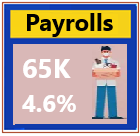
Weekly jobless claims hit 229,000, the highest level since January. Jobless claims for the week ended June 4 totaled 229,000, well ahead of the 210,000 Dow Jones estimate. The four-week moving average for continuing claims, which helps smooth out volatility in the numbers, remained around its lowest level since 1970. First-time filings for the week ended June 4 totaled 229,000, an increase of 27,000 from the upwardly revised level in the prior period and well ahead of the 210,000 Dow Jones estimate. The period covered includes the Memorial Day holiday; seasonal adjustments normally would lead to a higher number. The last time initial claims were that high was Jan. 15. However, continuing claims, which run a week behind the headline number, were unchanged at just over 1.3 million, below the FactSet estimate of 1.35 million. The four-week moving average for continuing claims, which accounts for volatility in the numbers, declined slightly to 1.32 million, the lowest level since Jan. 10, 1970. The rise in claims comes less than a week after the Bureau of Labor Statistics reported that nonfarm payrolls increased by 390,000 in May, considerably better than expected. Companies have continued to hire despite rising worries that the U.S. economy could be headed for a shallow recession as inflation flares and global supply chains remain clogged.
Fixed Mortgage Rates
The average contract interest rate for 30-year fixed-rate mortgages with conforming loan balances ($647,200 or less) increased to 5.40% from 5.33%, with points rising to 0.60 from 0.51 (including the origination fee) for loans with a 20% down payment.
CPI
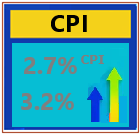
Inflation rose 8.6% in May, highest since 1981. The consumer price index rose 8.6% in May from a year ago, the highest increase since December 1981. Core inflation excluding food and energy rose 6%. Both were higher than expected. Surging food, gas and energy prices all contributed to the gain, with fuel oil up 106.7% over the past year. Shelter costs, which comprise about one-third of the CPI, rose at the fastest 12-month pace in 31 years. The rise in inflation meant workers lost more ground in May, with real wages declining 0.6% from April and 3% on a 12-month basis.The U.S. consumer price index, a closely watched inflation gauge, rose by 8.6% in May on a year-over-year basis, its fastest increase since 1981, the Bureau of Labor Statistics reported Friday. Economists polled by Dow Jones expected a gain of 8.3%. The so-called core CPI, which strips out volatile food and energy prices, rose 6%. That’s also above an estimate of 5.9%. “So much for the idea that inflation has peaked,” Bankrate chief financial analyst Greg McBride said. “Any hopes that the Fed can ease up on the pace of rate hikes after the June and July meetings now seems to be a longshot. Inflation continues to rear its ugly head and hopes for improvement have been dashed again.” Inflation has been surging all year, leading the Fed to raise rates in order to mitigate those pricing pressures.
Consumer Sentiment
Consumer sentiment plunges to record low in June, according to University of Michigan survey. The University of Michigan’s gauge of consumer sentiment fell sharply to a record-low reading of 50.2, down from a May reading of 58.4. Economists polled by the Wall Street Journal had expected an June reading of 59. The level is comparable to the low point reached in the middle of the 1980 recession, the university said. Americans’ expectations for overall inflation over the next year rose to 5.4% in June from 3.3% in May, while expectations for inflation over the next five years jumped to 3.3% from 3% in the prior month. That’s the highest level since 2008, according to Kathy Jones, strategist at Charles Schwab. According to the Michigan report, a gauge of consumers’ views on current conditions tumbled to 55.4 in June from 63.3 in the prior month, while a barometer of expectations fell to 46.8 from 55.2.
Treasury Budget
U.S. Treasury posts smaller-than-expected budget deficit in May. The U.S. government posted a smaller-than-expected $66 billion budget deficit in May, reflecting continued strength in receipts as the economy recovers from the COVID-19 pandemic and as spending related to the health crisis slowed further, the Treasury Department said on Friday. The deficit last month was down by half from the $132 billion shortfall a year earlier and was the smallest budget gap for the month of May since 2016, a Treasury official told reporters. The median forecast among economists polled by Reuters was for a deficit of $120 billion. The May deficit followed a record budget surplus in April of $308 billion. May receipts declined 16% from a year earlier to $389 billion, the Treasury said, largely due to last year’s extension of the deadline for individual income tax filings by a month to mid-May. May outlays fell 24% to $455 billion, reflecting lower spending for COVID-19 relief. For the first eight months of the 2022 fiscal year, the government reported a deficit of $426 billion, down 79% from the year-earlier deficit $2.064 trillion. Year-to-date receipts are up by 29% to $3.375 trillion – a record for the period – while outlays fell 19% to $3.801 trillion. (Reporting by Dan Burns; Editing by Leslie Adler)
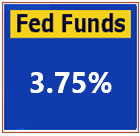
The Federal Reserve is in the early stages of a rate-hiking cycle aimed at bringing down inflation running around 40-year highs. Fed officials are hoping to slow the labor market without causing an uptick in the unemployment rate, which is at 3.6% and near its lowest level since 1969.
|