10-Year Treasury Yield
mmmm
Goldman Sachs
Goldman Sachs crushes analysts’ expectations on strong bond trading results, shares rise 3. Second-quarter profit fell 48% to $2.79 billion, or $7.73 a share, driven by industrywide declines in investment banking revenue. Still, the results were more than a dollar higher than the average analyst estimate reported by Refinitiv. Revenue fell 23% to $11.86 billion, which was a full $1 billion more than analysts had expected, driven by a 55% surge in fixed income revenue. The bank’s fixed income operations generated $3.61 billion in revenue, topping the $2.89 billion StreetAccount estimate, on “significantly higher” trading activity in interest rates, commodities and currencies. Here’s what the company reported compared with what Wall Street was expecting, based on a survey of analysts by Refinitiv: Earnings per share: $7.73 vs. $6.58 expected. Revenue: $11.86 billion vs. $10.86 billion expected.
Bank of America
Bank of America revenue tops expectations as lender benefits from higher interest rates. Bank of America earnings dropped 32% to $6.25 billion, or 73 cents a share, from a year earlier as the firm took a $523 million provision for credit losses. Revenue climbed 5.6% to $22.79 billion, edging out analysts’ expectations, as net interest income surged 22% to $12.4 billion on rising interest rates and loan growth. Shares of the lender rose 2.5% premarket trading. Here’s what the company reported compared with what Wall Street was expecting, based on a survey of analysts by Refinitiv: Earnings per share: 78 cents adjusted vs. 75 cents a share expected. Revenue: $22.79 billion vs. $22.67 billion expected.
Home Builders Confidence
U.S. home builder sentiment plummeted in July to its lowest level since the early months of the coronavirus pandemic, as high inflation and the steepest borrowing costs in more than a decade brought customer traffic to a near standstill. At the same time, a gauge of activity in the services sector activity in the U.S. Northeast turned negative this month for the first time in a year, and firms there do not see an improvement over the next six months. The National Association of Home Builders/Wells Fargo Housing Market Index fell for a seventh straight month to 55, the lowest level since May 2020, from 67 in June, NAHB said in a statement on Monday. Readings above 50 mean more builders view market conditions as favorable than poor. July's reading was below all 31 estimates in a Reuters poll of economists, which had a median expectation for a decline to 65. Moreover, the 12-point drop was the second-largest in the history of the series dating to 1985, exceeded only by the 42-point plunge in April 2020 when most of the country was under a COVID-19 lockdown.The National Association of Home Builders’ monthly confidence index plunged 12 points to 55 in July, the trade group said Monday. The decline was much larger than expected. Economists surveyed by the Wall Street Journal expected the number to be 66. It is the second largest decline in the history of the index. One year ago, the index stood at 80. The July reading of 55 was the lowest since May 2020. Key details: The three gauges that underpin the overall builder-confidence index declined. The gauge that measures current sales conditions fell by 12 points; the component that tracks traffic of prospective buyers fell by 11 points; and the gauge that assesses sales expectations for the next six months fell by 11 points. Builder confidence was gloomy across the country: The Northeast fell by 6 points; Midwest by 4; the South by 8; and the West by 12.
China US Debt
China holdings of U.S. debt fall below $1 trillion for the first time since 2010. China’s portfolio of government debt in May dropped to $980.8 billion, according to Treasury Department data released Monday. It marked the first time since May 2010 that China’s holdings fell below the $1 trillion mark. China’s holdings of U.S. debt have fallen below $1 trillion for the first time in 12 years amid rising interest rates that have made Treasurys potentially less attractive. Continuing a trend that began early in 2021, China’s portfolio of U.S. government debt in May dropped to $980.8 billion, according to Treasury Department data released Monday. That’s a decline of nearly $23 billion from April and down nearly $100 billion, or 9%, from the year-earlier month. It also marked the first time since May 2010 that China’s holdings fell below the $1 trillion mark. Japan is now the leading holder of U.S. debt with $1.2 trillion. The debt decline comes as the U.S. Federal Reserve has been raising rates to stop inflation running at its fastest rate since 1981. When rates rise on bonds, prices drop, meaning a capital loss for investors who sell the bonds ahead of maturity.
Starts nad Permits
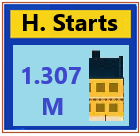
New U.S. home-building activity fell to a nine-month low in June and permits for new construction projects slipped as well, the latest indication of a cooling housing market as surging mortgage rates reduce affordability. Housing starts fell 2% to a seasonally adjusted annual rate of 1.559 million units last month, the lowest level since September 2021, the Commerce Department said on Tuesday. Data for May was revised higher to a rate of 1.591 million units from the previously reported 1.549 million units.Economists polled by Reuters had forecast starts would come in at a rate of 1.580 million units. Permits for future homebuilding fell0.6% to a rate of 1.685 million units. The housing market is very sensitive to interest rates, and, with the Federal Reserve lifting rates aggressively to blunt inflation running at its highest in four decades, the market has softened notably this year. The average contract rate on a 30-year fixed-rate mortgage climbed to nearly 6% in June, up from about 3.3% at the start of the year, which has put home purchases out of reach for a growing number of prospective buyers, particularly first-time purchasers.
Tesla
Tesla reports a second-quarter earnings beat, 50% annual growth in vehicle deliveries. Tesla reported earnings after the bell, and the results sent the stock up about 2% after hours. Earnings per share (EPS): $2.27 (adjusted) vs $1.81 expected, according to Refinitiv.Revenue: $16.93 billion, vs. $17.1 billion expected, according to Refinitiv. Automotive gross margin came in at 27.9%, down from 32.9% last quarter and 28.4% a year ago, impacted by inflation and more competition for battery cells and other components that go into electric vehicles.
Claims
Jobless claims rise again in another sign that labor market is cooling. Initial claims totaled 251,000 for the week ended July 16, up 7,000 from the week before and above the 240,000 Dow Jones estimate. That was the highest weekly level since mid-November. The Philadelphia Fed manufacturing index fell to a reading of -12.3, and produced the lowest employment reading since May 2021. Initial jobless claims hit their highest level since mid-November last week, the latest sign that a historically tight labor market is beginning to slow, according to Labor Department data released Thursday. Claims totaled 251,000 for the week ended July 16, up 7,000 from the week before and above the 240,000 Dow Jones estimate. The gain brought filings for unemployment insurance to their highest weekly level since Nov. 13, 2021 and provided another indicator that a jobs market on fire in 2021 has begun to cool this year. Continuing claims, which run a week behind the headline number, increased to 1.384 million, the highest total since April 23.
MBA Purchase Applications
mmmmm
Philadelpia
The Philadelphia Fed manufacturing index fell to a reading of -12.3, a 9-point slide from a month ago and a considerably worse level than the 1.6 Dow Jones estimate. The number represents the percentage difference between companies reporting expansion in activity against those seeing contraction. In particular, the employment index was 19.4, also a 9-point decline. Though that indicates continued expansion in hiring, it is the lowest reading since May 2021 and also is indicative that hiring is slowing. The average workweek reading was 6.4, falling for the fourth consecutive month and an indication that productivity could be declining.
Title 9
mmmm
Title 10
mmmm.
Title 11
mmmm
Jobless Claims
mmmm
Title 12
mmmm
Title 13
mmmm
Title 14
mmmm
Title 15
mmmm
Title 16
mmmm
Fixed Mortgage Rates
mmmm |