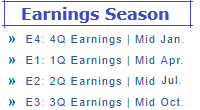
Earnings Season
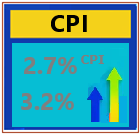
The market’s focus in the coming week turns toward fourth-quarter earnings, which are expected to reveal stronger profit growth for economically sensitive stocks compared to technology players. The earnings period could test a theory that value and cyclicals are set to outperform tech stocks. It will also be a time when investors get a firsthand look at how companies are dealing with inflation, which rose 7% on an annualized basis during the final month of 2021, as measured by the consumer price index. “Earnings are expected to come in at 20% growth year-over-year. The companies will probably beat that ... and will come in at 25% to 30%,” said Jonathan Golub, Credit Suisse chief U.S. equity strategist.
Several major banks reported Friday, and the earnings season gets busier in the week ahead with a range of sectors. Financials, like Goldman Sachs, Travelers and Bank of America, report, as does Netflix and consumer brand giant Procter & Gamble. There are also results coming from transportation companies, including J.B. Hunt Transport Services, United Airlines and Union Pacific....
Equities declined despite a slew of strong corporate earnings results. Bank of America beat Wall Street estimates as it released pandemic-related loan loss reserves. Shares rebounded 0.4%, a day after sliding 3.4%. Other bank stocks, however, were in the red.Morgan Stanley saw its stock rise 1.8% after the bank’s fourth-quarter profit topped estimates. It also experienced a 13% jump in equities trading revenue.Procter & Gamble shares popped nearly 3.4% after the consumer giant reported fiscal second-quarter earnings and revenue that topped Wall Street’s expectations. The company raised its outlook for sales growth. UnitedHealth also rose slightly after beating on the top and bottom lines of its quarterly results.
Earnings season is picking up on Wall Street and so far the majority of companies have surpassed analysts’ expectations. Of the 44 S&P 500 companies that have reported quarterly results, nearly 73% have topped Wall Street’s expectations, according to FactSet.
Goldman Sachs
Goldman Sachs on Tuesday posted fourth-quarter profit below analysts’ expectations as the bank’s operating expenses surged 23% on higher pay for Wall Street workers and increased litigation reserves. Here are the numbers:
Earnings: $10.81 a share vs. $11.76 estimate, according to Refinitiv
Revenue: $12.64 billion vs. $12.08 billion estimate. comments
Netflix
Shares of Netflix tumbled 19% during extended trading on Thursday after the company’s fourth-quarter earnings report showed a slowdown in subscriber growth. Peloton, meantime, plunged 23.9% during regular trading after CNBC reported that the company is temporarily halting production of its fitness products.
Empire State Mfg Index
US: NY Empire State Manufacturing Index slumps to -0.70 in January vs. expected drop to 25.70. The headline General Business Conditions Index of the NY Fed's Empire State Manufacturing Survey slid to -0.70 in January, from December's 31.90 reading. That was much larger than the expected drop to 25.70 and marked the first time the reading had fallen into negative territory since June 2020.
MBA Purchase Applications
Mortgage applications increased 2.3 percent from one week earlier, according to data from the Mortgage Bankers Association's (MBA) Weekly Mortgage Applications Survey for the week ending January 14, 2022. The Market Composite Index, a measure of mortgage loan application volume, increased 2.3 percent on a seasonally adjusted basis from one week earlier. On an unadjusted basis, the Index increased 3 percent compared with the previous week. The Refinance Index decreased 3 percent from the previous week and was 49 percent lower than the same week one year ago. The seasonally adjusted Purchase Index increased 8 percent from one week earlier. The unadjusted Purchase Index increased 14 percent compared with the previous week and was 13 percent lower than the same week one year ago.
Housing Market Indexx - HMI
January NAHB Housing Market Index stands at 83. January NAHB Housing Market Index: 83 vs. 84 consensus and 84 prior. “The solid market for home building continued in November despite ongoing supply-side challenges,” said NAHB Chairman Chuck Fowke, a custom home builder from Tampa, Fla. “Lack of resale inventory combined with strong consumer demand continues to boost single-family home building.”
Treasury International Capital (TIC)
The U.S. Department of the Treasury today released Treasury International Capital (TIC) data for November 2021. The next release, which will report on data for December 2021, is scheduled for February 15, 2022. The sum total in November of all net foreign acquisitions of long-term securities, short-term U.S. securities, and banking flows was a net TIC inflow of $223.9 billion. Of this, net foreign private inflows were $297.1 billion, and net foreign official outflows were $73.2 billion. Foreign residents increased their holdings of long-term U.S. securities in November; net purchases were $103.0 billion. Net purchases by private foreign investors were $127.1 billion, while net sales by foreign official institutions were $24.1 billion. U.S. residents decreased their holdings of long-term foreign securities, with net sales of $34.5 billion. Taking into account transactions in both foreign and U.S. securities, net foreign purchases of long-term securities were $137.4 billion. After including adjustments, such as estimates of unrecorded principal payments to foreigners on U.S. asset-backed securities, overall net foreign purchases of long-term securities are estimated to have been $105.3 billion in November. Foreign residents increased their holdings of U.S. Treasury bills by $16.5 billion. Foreign resident holdings of all dollar-denominated short-term U.S. securities and other custody liabilities increased by $65.3 billion. Banks’ own net dollar-denominated liabilities to foreign residents increased by $53.3 billion.
About TIC Data
The monthly data on holdings of long-term securities, as well as the monthly table on Major Foreign Holders of Treasury Securities, reflect foreign holdings of U.S. securities collected primarily on the basis of custodial data. These data help provide a window into foreign ownership of U.S. securities, but they cannot attribute holdings of U.S. securities with complete accuracy. For example, if a U.S. Treasury security purchased by a foreign resident is held in a custodial account in a third country, the true ownership of the security will not be reflected in the data. The custodial data will also not properly attribute U.S. Treasury securities managed by foreign private portfolio managers who invest on behalf of residents of other countries. In addition, foreign countries may hold dollars and other U.S. assets that are not captured in the TIC data. For these reasons, it is difficult to draw precise conclusions from TIC data about changes in the foreign holdings of U.S. financial assets by individual countries.
TIC
Taking into account transactions in both foreign and U.S. securities, net foreign purchases of long-term securities were $137.4 billion. After including adjustments, such as estimates of unrecorded principal payments to foreigners on U.S. asset-backed securities, overall net foreign purchases of long-term securities are estimated to have been $105.3 billion in November. Foreign residents increased their holdings of U.S. Treasury bills by $16.5 billion. Foreign resident holdings of all dollar-denominated short-term U.S. securities and other custody liabilities increased by $65.3 billion. The monthly data on holdings of long-term securities, as well as the monthly table on Major Foreign Holders of Treasury Securities, reflect foreign holdings of U.S. securities collected primarily on the basis of custodial data. These data help provide a window into foreign ownership of U.S. securities, but they cannot attribute holdings of U.S. securities with complete accuracy. For example, if a U.S. Treasury security purchased by a foreign resident is held in a custodial account in a third country, the true ownership of the security will not be reflected in the data. The custodial data will also not properly attribute U.S. Treasury securities managed by foreign private portfolio managers who invest on behalf of residents of other countries. In addition, foreign countries may hold dollars and other U.S. assets that are not captured in the TIC data. For these reasons, it is difficult to draw precise conclusions from TIC data about changes in the foreign holdings of U.S. financial assets by individual countries.
Housing Starts
U.S. homebuilding increased to a nine-month high in December amid a surge in multi-family housing projects, but soaring prices for materials after the government nearly doubled duties on imported Canadian softwood lumber could hamper activity.
Housing starts rose 1.4% to a seasonally adjusted annual rate of 1.702 million units last month, the highest level since March. The volatile multi-family housing segment accounted for the rise in homebuilding last month, with starts for buildings with five units or more surging 13.7% to a rate of 524,000 units.
Building Permits
Permits for future homebuilding jumped 9.1% to a rate of 1.873 million units in December. Permits for buildings with five units or more soared 19.9% to a rate of 675,000 units. Single-family building permits rose 2.0% to a rate of 1.128 million units. An acute shortage of homes available for sale is supporting homebuilding, but rising mortgage rates, supply constraints together with higher house prices could make home purchasing less affordable
Jobless Initial Claims
Weekly new jobless claims unexpectedly jumped last week by the most since October, with some renewed virus-related disruptions at least temporarily impeding the labor market's recovery. The Labor Department released its latest weekly jobless claims report Thursday at 8:30 a.m. ET. Here were the main metrics from the print, compared to consensus estimates compiled by Bloomberg:Initial jobless claims, week ended Jan. 15: 286,000 vs. 225,000 expected and a revised 231,000 during prior weekContinuing claims, week ended Jan. 8: 1.635 million vs. 1.563 million expected and a revised 1.551 million during prior week.
Philadelphia Fed Manufacturing index
The headline Philly Fed manufacturing index rose to 23.2, above the expected 20.0 in January 2022. According to a report from the Federal Reserve Bank of Philadelphia released on Thursday, the headline Manufacturing Activity Index of the Manufacturing Business Outlook Survey rose to 23.2 in January from 20.0 in December. That was bigger than the expected rise to 20.0.
Existing Home Sales
On the negative side, home builders also were broadly lower following after KeyBanc downgraded the group on concerns over looming interest rate hikes that will drive up borrowing costs. KB Home lost 3.9%, Lennar fell about 4.4% and D.R. Horton fell 3.3%.
U.S. home sales tumbled in December as higher prices amid record low inventory continued to shut out some first-time buyers. Existing home sales dropped 4.6% to a seasonally adjusted annual rate of 6.18 million units last month, the National Association of Realtors said on Thursday. Sales fell across all regions. Economists polled by Reuters had forecast sales would fall to a rate of 6.44 million units.
Leading Indicators
The Conference Board Leading Economic Index® (LEI) for the U.S. increased by 0.8 percent in December 2021 to 120.8 (2016 = 100), following a 0.7 percent increase in November and a 0.7 percent increase in October. The U.S. LEI ended 2021 on a rising trajectory, suggesting the economy will continue to expand well into the spring. For the first quarter, headwinds from the Omicron variant, labor shortages, and inflationary pressures—as well as the Federal Reserve’s expected interest rate hikes—may moderate economic growth. The Conference Board forecasts GDP growth for Q1 2022 to slow to a relatively healthy 2.2 percent (annualized). Still, for all of 2022, we forecast the US economy will expand by a robust 3.5 percent—well above the pre-pandemic trend growth.
10-Year Yield
The yield on the benchmark 10-year Treasury note was trading around 5 basis points higher at 1.825%, coming off highs of over 1.85% seen earlier in the morning. The yield on the 30-year Treasury bond climbed by 3 basis points to 2.146%. Meanwhile, the 2-year rate — which reflect short-term interest rate expectations — topped 1% for the first time in two years, hitting 1.0404%. Yields move inversely to prices and 1 basis point is equal to 0.01%. The move, which comes after a market holiday in the U.S. Monday, indicates that investors are preparing for the possibility of more aggressive tightening by the Federal Reserve....
Elevated bond yields are plaguing the market this year, as investors prepare for the possibility of more aggressive tightening by the Federal Reserve. The U.S. 10-year Treasury yield topped 1.9% earlier on Wednesday, its highest level since December 2019. The 10-year rate started the year around 1.5%.
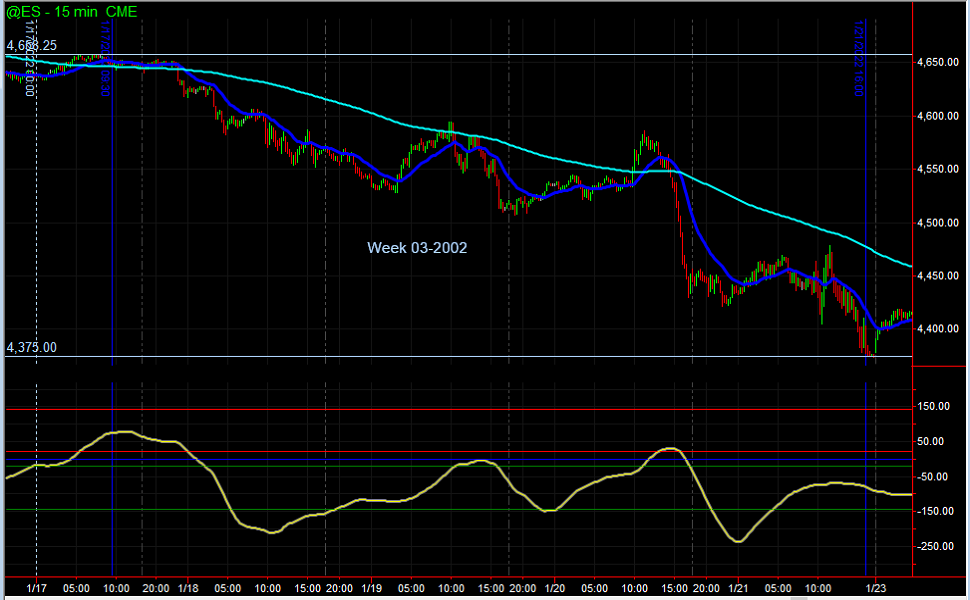
Nasdaq and Netflix
The Nasdaq posted a 7.6% loss for the week, its worst since October 2020, and now sits more than 14% below its November record close. Both the Dow and S&P 500 closed out their third straight week of losses and their worst weeks since 2020. The S&P 500 is off more than 8% from its record close. Netflix’s disappointing quarterly report is the latest setback for technology investors. Shares of the streaming giant tumbled 21.8% on Friday after the company’s fourth-quarter earnings report showed a slowdown in subscriber growth. Its competitors’ shares also declined, with Dow component Disney, which operates the Disney+ streaming service, off 6.9%. Netflix is the first major tech stock to report earnings this season, with Apple and Tesla slated to post earnings next week. Tesla lost 5.3% on Friday. Other tech names like Amazon and Meta Platforms fell 6% and 4.2%, respectively. |