10-Year Treasury Yield
U.S. Treasury yields declined Tuesday ahead of the Federal Reserve’s November meeting and as investors awaited key jobs and manufacturing growth data. The yield on the benchmark 10-year Treasury fell back below the 4% mark and was last trading at around 3.947%, after falling by around 13 basis points. The 2-year Treasury yield declined by around 7 basis points to 4.431%. Yields and prices move in opposite directions and one basis point equals 0.01%.
Uber Uber reports another loss but beats on revenue and the stock is up. Uber reported third-quarter earnings that beat analysts’ estimates for revenue Tuesday. The company suffered a net loss of $1.2 billion for the quarter, $512 million of which was attributed to revaluations of Uber’s equity investments, according to a company release. Uberreported a third-quarter loss Tuesday but beat analysts’ estimates for revenue and showed a surge in bookings. Shares were up about 10% in premarket trading. Here’s how the company did: Loss per share: 61 cents Revenue: $8.34 billion vs. $8.12 billion expected by analysts, according to Refinitiv. Uber reported a net loss of $1.2 billion for the third quarter, $512 million of which was attributed to revaluations of Uber’s equity investments, according to a company release. Revenue was up 72% year-over-year.
JOLTS
Job openings surged in September despite Federal Reserve efforts aimed at loosening up a historically tight labor market that has helped feed the highest inflation readings in four decades. Employment openings for the month totaled 10.72 million, well above the FactSet estimate for 9.85 million, according to data Tuesday from the Bureau of Labor Statistics’ Job Openings and Labor Turnover Survey.The total eclipsed August’s upwardly revised level by nearly half a million. Fed policymakers watch the JOLTS report closely for clues about the labor market. The latest numbers are unlikely to sway central bank officials from approving what likely will be a fourth consecutive 0.75 percentage point interest rate increase this week. September’s data indicates that there are 1.9 job openings for every available worker. The disparity in supply and demand has helped fuel a wage increase in which the employment cost index, another closely watched data point for the Fed, is growing at about a 5% annual pace.The large gap between job openings and available workers was one of the key drivers of inflation in the U.S. August’s job openings figures suggested the gap may be narrowing and investors will be watching closely to see if this trend has continued.
ISM Mfg Index
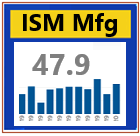
In other economic news Tuesday, the ISM Manufacturing Index posted a 50.2 reading, representing the percent of companies reporting expansion for October. That was slightly better than the Dow Jones estimate for 50.0 but 0.9 percentage points lower than September. One good piece of news from the ISM data: The prices index fell another 5.1 points to a 46.6 reading, indicating a lessening of inflation pressures. Order backlogs also declined, falling 5.6 points to a 45.3 reading, while supplier deliveries fell 5.6 points to 46.8 and employment edged higher to 50. Meanwhile, the ISM manufacturing PMI will show whether factory activity has increased or decreased throughout October. September’s figures suggested the sector was close to contracting and reflected the slowest growth levels since 2020.
FOMC Expectation
The Federal Reserve is expected to raise interest rates by three-quarters of a percentage point Wednesday and then signal that it could reduce the size of its rate hikes starting as soon as December. Markets are primed for the fourth 75-basis point hike in a row, and investors are anticipating the Fed will slow down its pace before winding down the rate-hiking cycle in March. A basis point is equal to 0.01 of a percentage point. “The November meeting isn’t really about November. It’s about December,” Gapen said. He expects the Fed to raise rates to a level of 4.75% to 5% by spring, and that would be its terminal rate — or end point. The 75 basis point hike Wednesday would take the fed funds rate range to 3.75% to 4%, from a range of zero to 0.25% in March.As the Fed has raised interest rates, the economy is beginning to show signs of slowing. The housing market is slumping, as some mortgage rates have nearly doubled. The 30-year fixed rate mortgage was at 7.08% in the week of Oct. 28, up from 3.85% in March, according to Freddie Mac. Markets are widely expecting the fourth consecutive 75 basis point interest rate hike from the Federal Reserve and are hoping to gain some clarity about whether the central bank will slow the pace of rate hikes as the year ends.
FOMC Target Level 7
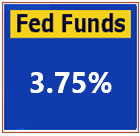
Fed approves 0.75-point hike to take rates to highest since 2008 and hints at change in policy ahead. The Federal Reserve, in a well-telegraphed move, raised its short-term borrowing rate by 0.75 percentage point to a target range of 3.75%-4%, the highest level since January 2008. The central bank's new statement hinted at a potential change in how it will approach monetary policy to bring down inflation. However, stocks fell as Fed Chair Jerome Powell dismissed the idea that the Fed may be pausing soon though he said he expects a discussion at the next meeting or two about slowing the pace of tightening. Still, Powell reiterated that there may come a time to slow the pace of rate increases.
In an effort to bring down soaring prices, the Federal Reserve on Wednesday enacted its sixth interest rate increase of the year, bringing its benchmark short-term borrowing rate to a target range of 3.75%-4%. Fed Chair Jerome Powell said he doesn’t think wage pressures have been a major contributor to inflation, though he added that the current pace is not consistent with the Fed’s 2% inflation goal. In such a high inflation environment, productivity growth could play a critical role in alleviating cost pressures and shielding companies against a rising wage bill. But today’s report indicate businesses still can’t count on productivity gains to mitigate the effects of high inflation on their bottom line.
MBA Purchase Applications
Mortgage application volume barely moved last week, falling 0.5% compared with the previous week, according to the Mortgage Bankers Association’s seasonally adjusted index. Rates, meanwhile, dropped back a little bit last week, but they’re still near a 22-year high. The average contract interest rate for 30-year fixed-rate mortgages with conforming loan balances ($647,200 or less) decreased to 7.06% from 7.16%, with points falling to 0.73 from 0.88 (including the origination fee) for loans with a 20% down payment. That rate was 3.24% the same week one year ago. The slight drop was enough to move the needle a tiny bit on refinance demand. Those applications rose 0.2% for the week but were still 85% lower than the year before. There are now precious few qualified borrowers who don’t already have a rate lower than what is being offered today. Mortgage applications to buy a home fell 1% for the week and were 41% lower year over year. Real estate agents and homebuilders alike say buyer traffic has slowed to a crawl. Agents say today’s buyers see no sense of urgency, and some may be waiting for rates to pull back more significantly.
ADP
Private payrolls rose 239,000 in October, better than expected, while wages increased 7.7%, ADP says. Companies added 239,000 positions in October, ahead of the Dow Jones estimate of 195,000 and up slightly from the previous month, ADP reported Wednesday. Most of the gains came from the leisure and hospitality industry, which added 210,000 positions while wages rose 11.2% for the sector. Wages overall rose 7.7% from a year ago, down just slightly from the September pace. Private payroll growth held strong in October while worker pay rose as well, particularly in the leisure and hospitality industry, according to a report Wednesday from payroll processing firm ADP. Companies added 239,000 positions for the month, ahead of the Dow Jones estimate of 195,000 and better than the downwardly revised 192,000 in September. Wages increased 7.7% on an annual basis, down 0.1 percentage point from the previous month. Job gains were especially strong in the pivotal leisure and hospitality sector, which added 210,000 positions while wage growth accelerated 11.2%. The industry, which includes hotels, restaurants, bars and related businesses, is seen as a bellwether as it took the hardest Covid and is still below pre-pandemic levels. The ADP report comes two days before the more closely watched nonfarm payrolls count from the Bureau of Labor Statistics. That report is expected to show growth of 205,000, from September’s 263,000.
PMI Composite Index
The S&P Global US Composite PMI declined to 47.3 in October 2022, down from 49.5 in the previous month, pointing to the second-fastest pace of contraction in the sector since 2009 with the exception of the initial pandemic period, a preliminary estimate showed. Service providers reported the second-largest output decline in almost two-and-a-half years, as rising prices and higher borrowing costs hit demand, while manufacturing output grew only marginally. Overall new orders fell, with new business from abroad declining at the quickest pace since May 2020 due to a strong dollar and challenging economic conditions in key export markets, while job creation stagnated. On the price front, input cost inflation remained historically elevated, in part due to interest rates, material shortages and greater wage bills; while the rate of output charge inflation eased amid firms' efforts to drive new sales and remain competitive. Finally, business confidence deteriorated
Labor Cost
Unit labor costs increased 3.5% for the July-to-September period, below the 4% Dow Jones estimate. The cost of labor rose less than expected, but low productivity helped keep the pressure on inflation in the third quarter, according to Labor Department data released Thursday. Unit labor costs, a measure of productivity against compensation, increased 3.5% for the July-to-September period, below the 4% Dow Jones estimate and down from 8.9% in the second quarter. However, productivity rose at just a 0.3% annualized rate, below the 0.4% estimate — a reflection of upward price pressures that have kept inflation running around 40-year highs.
Trade Deficit
The September trade deficit widened to $73.3 billion, $1 billion more than expected and up from August’s $65.7 billion. The September trade deficit widened to $73.3 billion. That’s $1 billion more than expected and up from August’s $65.7 billion.An unexpected increase in exports helped fuel a 2.6% gain in gross domestic product for the third quarter. September’s numbers, though, indicate that average exports fell $300 million, though they are up 20.2% year to date. Weekly unemployment insurance claims totaled 217,000 for the week ended Oct. 29, down 1,000 from the previous period. .
Jobless Claims
Labor market data released Thursday showed that the jobs picture hasn’t changed much.Weekly unemployment insurance claims totaled 217,000 for the week ended Oct. 29, lower by 1,000 from the previous period and slightly below the 220,000 estimate. Continuing claims, which run a week behind the headline number, increased 47,000 to 1.485 million, the Labor Department reported.
Employment
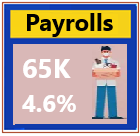
U.S. payrolls surged by 261,000 in October, better than expected as hiring remains strong. Nonfarm payrolls grew by 261,000 in October, better than the estimate for 205,000. The unemployment rate moved higher to 3.7%, while a broader jobless measure also increased, to 6.8%. Big job gainers by industry included health care, professional and technical services, and leisure and hospitality. Average hourly earnings rose 0.4% for the month and were up 4.7% from a year ago.
Factory Orders
U.S. factory orders rise moderately in September. New orders for U.S.-manufactured goods increased moderately in September as a surge in bookings for civilian aircraft was partially offset by declines elsewhere, suggesting a loss of momentum in manufacturing amid rapidly rising borrowing costs. The Commerce Department said on Thursday that factory orders rose 0.3% after gaining 0.2% in August. September’s increase was in line with economists’ expectations. Orders advanced 13.0% on a year-on-year basis in September. Demand for goods is slowing also as spending rotates back to services.
Productivity and Costs
Labor productivity increases in third quarter. The U.S. Bureau of Labor Statistics said Thursday that labor productivity increased 0.3% in the third quarter of 2022. In its preliminary report on productivity and costs for the third quarter, the Bureau of Labor Statistics said output increased 2.8% and hours worked increased 2.4% year-over-year. Labor productivity is calculated by dividing an index on output by the hours worked for all employees and proprietors.
Construction Spending
U.S. construction spending unexpectedly rebounded in September 2022, amid a surge in investment in nonresidential structures that offset a further decline in outlays on single-family homebuilding. The Commerce Department said on Tuesday that construction spending rose 0.2% in September 2022 after declining 0.6% in August. Economists polled by Reuters had forecast construction spending would decrease 0.5%. Construction spending advanced 10.9% on a year-on-year basis in September.
Fixed Mortgage Rates
Mortgage rates started this week slightly higher again, according to Mortgage News Daily, but all ears are now on Wednesday’s meeting of the Federal Reserve. While the Fed is widely expected to raise its funds rate by 0.75 percentage point, investors are focused more on what it will signal for future rate moves. Some believe the Fed is getting ready to end or at least slow its rate hikes. |