10-Year Treasury Yield
mmmm
Shiller Home prices cooled in July at the fastest rate in the history of S&P Case-Shiller Index. The 10-City composite rose 14.9% year over year, down from 17.4% in June. The 20-City composite gained 16.1%, down from 18.7% in the previous month. Tampa, Miami and Dallas saw the highest annual gains among the 20 cities in July, with increases of 31.8%, 31.7% and 24.7%, respectively. U.S. home prices cooled in July at the fastest rate in the history of the S&P CoreLogic Case-Shiller Index, according to a report released Tuesday. Home prices in July were still higher than they were a year ago, but cooled significantly from June gains. Prices nationally rose 15.8% over July 2021, well below the 18.1% increase in the previous month, according to the report. The 10-City composite, which tracks prices in major metropolitan areas such as New York and Boston, climbed 14.9% year over year, down from 17.4% in June. The 20-City composite, which adds regions such as the Seattle metro area and greater Detroit, gained 16.1%, down from 18.7% in the previous month. July’s year-over-year gains were lower compared with June in each of the cities covered by the index.Home prices are dropping because affordability has weakened dramatically due to fast-rising mortgage rates. The average rate on the popular 30-year fixed mortgage started this year around 3%, but by June had briefly surpassed 6%. It remained in the high 5% range throughout July and is now edging toward 7%, making the average monthly payment about 70% higher than it was a year ago.
Consumer Confidence
A second report from the Conference Board on Tuesday showed its consumer confidence index rose to 108.0 this month from 103.6 in August, beating economists' expectations for a reading of 104.5. Households' worries about inflation eased, largely reflecting lower gasoline prices. Consumer confidence rose for a second straight month in September, as moderating gas prices and the hope that inflationary pressures might be easing helped lift the nation’s collective mood. The Conference Board reported on Tuesday that its baseline index rose to 108 from a revised 103.6 in August, the highest it has been since April. The monthly survey found that Americans are feeling less pessimistic in both their assessment of current conditions and their outlook for the future. The Present Situation Index portion of the survey rose from 145.3 to 149.6. The Expectations Index, which is based on the short-term economic outlook, rose from 75.8 to 80.3. The reading comes as welcome news, since the consumer outlook lately has been buffeted by the growing fear of an economic downturn. Last Thursday, the Conference Board said its Leading Economic Index notched its sixth consecutive drop, which the organization’s senior director of economics said is “potentially signaling a recession.” The index provides visibility into a range of economic activity, ranging from jobs to manufacturing to markets.
New Home Sales
New home sales bounced back in August despite high prices and rising mortgage rates that have pushed some buyers away. Sales of newly constructed homes jumped 28.8% in August from July and were down just 0.1% from a year ago, according to a joint report from the US Department of Housing and Urban Development and the US Census Bureau. This comes after two consecutive months of declines. Some 685,000 new homes were sold last month, at a seasonally adjusted annualized rate, up from a revised 532,000 in July. A year ago, 686,000 newly constructed homes were sold. Meanwhile, the median price for a new home fell slightly to $436,800, down from $439,400 the previous month. New home sales had been trending lower as prospective buyers saw their budgets stretched thin by long construction times, mounting costs and rising mortgage rates. The average interest rate for a 30-year, fixed-rate mortgage dipped to just below 5% in August, up from 3.22% in January. “New homes blew through estimates for August, but it’s likely an aberration caused by a dip in mortgage rates earlier in the summer,” said Robert Frick, corporate economist at Navy Federal Credit Union. With the 30-year-fixed mortgage rate now pushing toward 7%, he said, the market should expect September sales to fall back to trend. With the 30-year fixed mortgage rate now at levels last seen during the Great Recession, the rebound in new home sales is likely temporary.
Durable Good Orders
New orders for U.S.-manufactured capital goods increased more than expected in August, suggesting that businesses remained keen to invest in equipment despite higher interest rates, which could keep the economy on a moderate growth path. Some of the largest gain in orders in seven months reported by the Commerce Department on Tuesday, however, reflected higher prices. The data suggested that business spending on equipment probably rebounded in the third quarter, further dispelling fears that the economy was in recession. That was reinforced by a survey showing consumer confidence rising for a second straight month in September, supported by a resilient labor market, which continues to churn out jobs at a brisk clip and generate strong wage gains, as well as falling gasoline prices. More consumers planned to buy big-ticket items like motor vehicles and household appliances over the next six months, which should help to underpin consumer spending. With the 30-year fixed mortgage rate now at levels last seen during the Great Recession, the rebound in new home sales is likely temporary.
Title 5
mmmm
Title 6
mmmm
Title 7
mmmm
MBA Purchase Applications
mmmmm
Title 8
mmmm
Title 9
mmmm
Title 10
mmmm.
Title 11
mmmm
Jobless Claims
Initial filings for unemployment claims fell last week to their lowest level in five months, a sign that the labor market is strengthening even as the Federal Reserve is trying to slow things down. Jobless claims for the week ended Sept. 24 totaled 193,000, a decrease of 16,000 from the previous week’s downwardly revised total and below the 215,000 Dow Jones estimate, according to a Labor Department report Thursday.The drop in claims was the lowest level since April 23 and the first time claims fell below 200,000 since early May.Continuing claims, which run a week behind, fell 29,000 to 1.347 million. The strong labor numbers come amid Fed efforts to cool the economy and bring down inflation, which is running near its highest levels since the early 1980s. Central bank officials specifically have pointed to the tight labor market and its upward pressure on salaries as a target of the policy tightening. Despite the efforts, there was more bad news Thursday for the Fed on the inflation front.
GDP
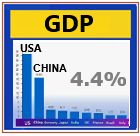
Gross domestic product fell at an unrevised 0.6% annualized rate last quarter, the government said in its third estimate of GDP. The economy contracted at a 1.6% rate in the first quarter. The government also revised GDP data from the fourth quarter of 2016 through the fourth quarter of 2021, which showed the economy's recovery from the COVID-19 pandemic was much stronger than initially thought. The revisions also showed the gap between GDP and the other economic growth measure, gross domestic income (GDI), was far much smaller than initially thought in 2021. The personal consumption expenditures price index, a favorite inflation gauge for the Fed, showed a 7.3% year-over-year price gain in the second quarter, the Commerce Department reported in its final GDP estimate for the period. That was above the 7.1% reading in the prior two Q2 estimates and just off the 7.5% gain in the first quarter.Excluding food and energy, core PCE inflation was 4.7%, 0.3 percentage point higher than the previous two estimates but below the 5.6% jump in Q1. The Fed has raised interest rates five times in 2022 for a total of 3 percentage points, and officials have stressed the importance of continuing to hike until inflation comes down closer to the central bank’s 2% target. Latest GDP reading confirms the US economy shrank for two straight quarters, supporting one definition of a recession. The US economy shrank by 0.6% during the second quarter of the year, according to the latest gross domestic product estimate from the Bureau of Economic Analysis released Thursday. That matches the most recent GDP estimate and shows the economy was in contraction for the entire first half of the year as businesses readjusted to pandemic-era supply chain disruptions.
PCE
The personal consumption expenditures price index, a favorite inflation gauge for the Fed, showed a 7.3% year-over-year price gain in the second quarter, the Commerce Department reported in its final GDP estimate for the period. That was above the 7.1% reading in the prior two Q2 estimates and just off the 7.5% gain in the first quarter. Excluding food and energy, core PCE inflation was 4.7%, 0.3 percentage point higher than the previous two estimates but below the 5.6% jump in Q1. The Fed has raised interest rates five times in 2022 for a total of 3 percentage points, and officials have stressed the importance of continuing to hike until inflation comes down closer to the central bank’s 2% target.
Title 14
mmmm
Title 15
mmmm
Title 16
mmmm
Fixed Mortgage Rates
mmmm |