Boeing (BA)
Boeing won a big order from Qatar Airways on Monday as the airline feuds with rival manufacturer Airbus. Shares of Boeing surged on the orders, up more than 4% in afternoon trading. The order is worth $34 billion at list prices, the aircraft manufacturer said, though airlines usually receive discounts, especially for such large orders..
TESLA
Shares in electric vehicle maker Tesla climbed more than 10% closing at $936.72 on Monday after Credit Suisse upgraded the stock to “outperform” and the broader market rebounded. Tesla had previously declined almost 20% in January amid a sell-off that dragged the Nasdaq down.
Amazon
Amazon shares soar on cloud revenue beat and huge profit gain from Rivian stake. Amazon on Thursday said revenue climbed 9% in the fourth quarter and the company reported a gain of almost $12 billion from its investment in electric vehicle company Rivian. Amazon shares popped as much as 14% in extended trading. Should the stock sustain this rally on Friday, it would be the biggest one-day gain since 2012. Here are the key numbers:
Earnings per share (adjusted): $5.80 vs $3.57 expected, according to a Refinitiv survey of analysts Revenue: $137.4 billion vs $137.6 billion expected, according to a Refinitiv survey of analysts
AWS revenue: $17.8 billion vs $17.37 billion expected, according to StreetAccount
ISM Manufacturing
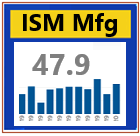
The Institute for Supply Management Purchasing Managers’ Index, or PMI, came in at 57.6 for January 2022, down from 58.8 in December. Economists projected a reading of 57.5. The number is right in line with expectations. A reading of 50 indicates the manufacturing sector is growing, so the figure is a solid one. New orders, an indication of future demand, came in at 57.9, higher than the overall result but down from 62.1 in the previous month.
Construction Spending
U.S. construction spending increased less than expected in December as a solid rise in private projects was partially offset by a sharp decline in outlays on public projects. The Commerce Department said on Tuesday that construction spending rose 0.2% after advancing 0.6% in November. Economists polled by Reuters had forecast construction spending gaining 0.6%. Construction spending increased 9.0% on a year-on-year basis in December. It rose 8.2% in 2021.
Alphabet
Google parent Alphabet reported better-than-expected fourth-quarter earnings and revenue. The shares popped more than 8% in extended trading.The company also announced a 20-for-1 stock split that will go into effect in July.
Here are the key numbers:
Earnings per share (EPS): $30.69 vs $27.34 expected, according to Refinitiv
Revenue: $75.33 billion vs $72.17 billion expected, according to Refinitiv
YouTube advertising revenue: $8.63 billion vs. $8.87 billion expected, according to StreetAccount
Google Cloud revenue: $5.54 billion vs $5.47 billion expected, according to StreetAccount
Traffic acquisition costs (TAC): $13.43 billion vs. $12.84 billion expected.
Alphabet reported revenue growth of 32%, proving again that it was able to withstand the pressures from the pandemic and inflation.
Metaverse
Sales of real estate in the metaverse topped $500 million last year and could double this year, according to investors and analytics firms.
“There are big risks, but potentially big rewards,” said Janine Yorio, CEO of Republic Realm, a metaverse real estate investor and advisory firm.
So far, real estate sales have been concentrated on the “Big Four” — Sandbox, Decentraland, Cryptovoxels and Somnium..
Republic Realm paid a record $4.3 million for land in the largest metaverse real estate platform, Sandbox. The company is developing 100 islands, called Fantasy Islands, with their own villas and a related market of boats and jet skis. Ninety of the islands sold on the first day for $15,000 each and some are now listed for resale for more than $100,000.
America's national debt just hit another sobering milestone.
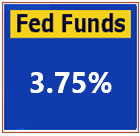
Total public debt outstanding is now above $30 trillion, according to Treasury Department data published Tuesday.Government borrowing accelerated during the Covid-19 pandemic as Washington spent aggressively to cushion the economic blow from the crisis. The national debt has surged by about $7 trillion since the end of 2019. It's impossible to know how much debt is too much, and economists remain divided over how big of a problem this really is. But the latest debt milestone comes at a delicate time as borrowing costs are expected to rise. After many years of rock-bottom interest rates, the Federal Reserve is shifting into inflation-fighting mode. The Fed is planning to launch its first series of rate hikes since 2015. Higher borrowing costs will only make it harder to finance that mountain of debt.
The federal government now owes almost $8 trillion to foreign and international investors, led by Japan and China. Eventually, that will need to be paid back, with interest. "That means American taxpayers will be paying for the retirement of the people in China and Japan, who are our creditors," said Kelly. The $30 trillion national debt figure is somewhat inflated by the fact that a chunk of the money is owed by the government to itself. This is debt held in Social Security and other government trust funds. So-called intragovernmental holdings total more than $6 trillion. Still, the national debt has skyrocketed in recent decades, driven up in part by the 2008 financial crisis and then the pandemic.
Even before Covid, Trump presided over a sharp increase in the national debt, highlighted by the massive tax cuts enacted in late 2017 -- at a time when the US economy was booming and needed no fiscal stimulus. The 2017 Tax Cuts and Jobs Act will add $1 trillion to $2 trillion in federal debt between 2018 and 2025, according to the Tax Policy Center. The center notes that the impact will be even larger if some of the temporary tax cuts are extended.
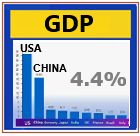
Even though the national debt continues to hit new milestones, the federal government's interest payments as a percentage of GDP are lower today than in the past. And that gives confidence to many economists that this is not an immediate crisis.
In 2021, interest as a percentage of GDP stood at 1.5%, compared with 3% in the early and mid-1990s, according to the St. Louis Federal Reserve Bank..
GM
General Motors (GM) reported record earnings for 2021, despite struggling with a shortage of computer chips and other parts that crimped its ability to build and sell all the cars and trucks it wanted. Quarterly earnings reached nearly $2 billion, excluding special items, topping the consensus forecast of $1.7 billion from analysts surveyed by Refinitiv. That allowed the company to earn $10.4 billion for the year, excluding special items, up from $7.1 billion a year earlier.
AMD
AMD reported fourth-quarter earnings after the bell on Tuesday, beating analyst estimates for earnings and sales, and delivered a very strong sales forecast for 2022. AMD stock rose over 11% in at one point during extended trading. Here’s how the chipmaker did versus per Refinitiv consensus estimates in the quarter ending Dec. 25:
EPS: $0.92, adjusted, versus $0.76 estimated, up 26% year-over-year
Revenue: $4.83 billion, versus $4.53 billion estimated, up 49% year-over-year.
MBA Purchase Applications
Mortgage applications increased 12.0 percent from one week earlier, according to data from the Mortgage Bankers Association's (MBA) Weekly Mortgage Applications Survey for the week ending January 28, 2022. The Market Composite Index, a measure of mortgage loan application volume, increased 12.0 percent on a seasonally adjusted basis from one week earlier. On an unadjusted basis, the Index increased 15 percent compared with the previous week. The Refinance Index increased 18 percent from the previous week and was 50 percent lower than the same week one year ago. The seasonally adjusted Purchase Index increased 4 percent from one week earlier. The unadjusted Purchase Index increased 12 percent compared with the previous week and was 7 percent lower than the same week one year ago.
JOLTS
Job openings were little changed at 10.9 million on the last business day of December 2021. Hires and total separations decreased to 6.3 million and 5.9 million, respectively. The layoffs and discharges level and rate were at series lows of 1.2 million and 0.8 percent, respectively
ADP employment Report
Companies cut jobs in January for the first time in more than a year as the spread of the Covid omicron variant appeared to hit hiring, payroll processing firm ADP reported Wednesday. Private payrolls fell by 301,000 for the month, well below the Dow Jones estimate for growth of 200,000 and a marked plunge from the downwardly revised 776,000 gain in December. It was the first time ADP reported negative job growth since December 2020. The pandemic-sensitive leisure and hospitality industry was responsible for more than half of the decline, as companies reported a drop of 154,000. Trade, transportation and utilities cut 62,000 while the other services category declined by 23,000..
Facebook
Facebook shares tumbled more than 15% in extended trading after the company reported disappointing earnings and gave a weaker-than-expected forecast. Here are the results.
Earnings per share: $3.67 vs $3.84 expected, according to a Refinitiv survey of analysts
Revenue: $33.67 billion vs $33.4 billion expected.
Productivity and Costs
Nonfarm productivity is expected to rise at a 2.7 percent annual rate in the fourth quarter versus a drop of 5.2 percent rate in the third quarter. Unit labor costs, which soared 9.6 percent in the third quarter, are expected to rise at a 1.5 percent rate in the fourth quarter Productivity measures the growth of labor efficiency in producing the economy's goods and services. Unit labor costs reflect the labor costs of producing each unit of output. Both are followed as indicators of future inflationary trends.
PMI Manufacturing Final for Jan. 2022
January 2022 Markit Manufacturing: Production Growth Constrained. The January US Manufacturing Purchasing Managers' Index conducted by Markit came in at 55.5, down 1.2 from the final December figure. IHS Markit final U.S. manufacturing PMI in January is 55.5 vs preliminary 55.
PMI Composite Final - Services Jan. 2022
PMI Composite Index (Final): 51.1 vs. 50.8 consensus and 57.0 prior. US Composite PMI Falls Less than Anticipated. The IHS Markit US Composite PMI was revised slightly higher to 51.1 in January of 2022 from a preliminary of 50.8, but continued to point to the smallest increase in private sector activity since July of 2020, as both manufacturers (55.5 vs 57.7) and service providers (51.2 vs 57.6) registered a considerable slowdown. The expansion in new business also softened to the slowest since December 2020 as the Omicron wave weighed on demand conditions. A decline in manufacturing export orders dampened private sector growth in new business from abroad. Cost pressures eased, as the pace of input price inflation softened to the slowest since March 2021. The rate of output charge inflation, however, was broadly unchanged from December, and marked overall. Despite reports of challenges retaining and finding staff, private sector firms continued to add to their workforce numbers during January. Subsequently, the rate of growth in backlogs of work eased to the slowest since June 2021.
Factory Orders
U.S. factory orders fall in December 2021; shipments rise further. New orders for U.S.-made goods fell slightly more than expected in December, but manufacturing remains supported by businesses replenishing inventories. The Commerce Department said on Thursday that factory orders decreased 0.4% in December. Data for November was revised higher to show orders increasing 1.8% instead of 1.6% as previously reported. Economists polled by Reuters had forecast factory orders slipping 0.2%. Orders increased 16.9% in 2021. Manufacturing, which accounts for 11.9% of the economy, is being underpinned by businesses rebuilding inventories.
Jobless Claims
nitial filings for unemployment claims totaled a bit fewer than expected last week as companies looked to overcome the impact of the omicron spread. Claims for the week ended Jan. 29 were 238,000, a touch lower than the 245,000 Dow Jones estimate, the Labor Department reported Thursday. That was also a decline from the previous week’s upwardly revised 261,000.
ISM Services - Non Manufacturing Index
U.S. Services Growth Cools to Almost One-Year Low on Omicron ISM gauge retreated in January for a second month, to 59.9 Measure of new export orders plunges by most on record Growth in the U.S. services sector pulled back in January to the slowest pace in nearly a year as a surge in Covid-19 cases and lingering supply constraints weighed on business activity. The Institute for Supply Management’s gauge of services activity fell to 59.9, the lowest since February of last year, from 62.3 a month earlier, according to data released Thursday. Readings above 50 signal expansion and the January print was in line with economists’ projections in a Bloomberg survey.
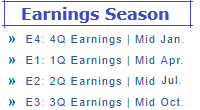
Earnings Season
In earnings news, Ford Motor missed estimates by a wide margin, with profit reported Thursday of 26 cents a share well below the consensus of 45 cents. Shares tumbled 5% in premarket trading. Friday’s moves come the day after a tech rout spurred by a disappointing earnings report from Facebook parent Meta. The company’s weak results sent the mega-cap tech stock lower Thursday and weighed on equity markets...
Thursday Feb 03, Week 05, is the halfway point for fourth-quarter earnings season. The good news is corporate America is flush with cash. The bad news is 2022 estimates don’t look anywhere near as robust as 2021. Estimates for 2022 are not getting raised as much as 2021. Earnings estimates for the first quarter have been declining, and they have risen slightly for the second and third quarter.
Stocks trade off of future earnings and dividend estimates, so Wall Street pays far more attention to guidance than reported earnings. Looking at guidance for 2022, earnings are expected to hit another record in 2022. The bad news: earnings are expected to rise by only 8%, a far more modest rise then 2021′s 47% rise in profits. Rising earnings estimates are one of the biggest determinants of stock prices.
10 Year Treasury
The 10-year Treasury yield jumped above 1.89% after the January jobs report showed a 467,000 gain in payrolls. Economists polled by Dow Jones had expected a minor gain of 150,000 and some economists predicted a large decrease. Economists had cautioned before the report it could be noisy because of an omicron wave hitting while the survey was taking place. The 10-year yield has jumped from 1.51% to end 2021 as the Fed pivoted to more aggressively fight inflation, signaling it would slow down its bond buying and raise rates several times this year. Higher rates have weighed on stocks, especially tech shares with high valuations. The S&P 500 is down 6% this year.
Employment Situation
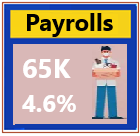
Payrolls rose far more than expected in January despite surging omicron cases that seemingly sent millions of workers to the sidelines, the Labor Department reported Friday. Nonfarm payrolls surged by 467,000 for the month, while the unemployment rate edged higher to 4%, according to the Bureau of Labor Statistics. The Dow Jones estimate was for payroll growth of 150,000 and a 3.9% unemployment rate. December, which initially was reported as a gain of 199,000, went up to 510,000. November surged to 647,000 from the previous reported 249,000. For the two months alone, the initial counts were revised up by 709,000. The revisions came as part of the annual adjustments from the BLS that saw sizeable changes for many of the months in 2021.There was more good jobs news: The labor force participation rate rose to 62.2%, a 0.3 percentage point gain. That took the rate, which is closely watched by Fed officials, to its highest level since March 2020 and within 1.2 percentage points of where it was pre-pandemic. Stock market futures declined on the report while government bond yields rose sharply, with the benchmark 10-year Treasury note rising to 1.9%. Markets have been anticipating an inflation-fighting Fed to hike interest rates at least five times in 2022, so the surprisingly powerful jobs market is likely to do little to dissuade that sentiment.
Oil
Meanwhile, U.S. oil prices topped $90 per barrel for the first time since 2014, heightening inflation concerns
|