10-Year Treasury Yield
U.S. Treasury yields slid on Monday morning, as investors monitored developments in the Russia-Ukraine conflict. The yield on the benchmark 10-year Treasury note slid nearly 12 basis points to 1.866% shortly before 10 a.m. ET. The 30-year Treasury slid more than 8 basis points to 2.211%. Yields move inversely to prices and 1 basis point is equal to 0.01%.
U.S. Treasury yields fell sharply on Tuesday morning, with the 10-year rate dropping to hover above 1.74%, as investors remained focused on Russia’s attack on Ukraine.
Geopolitical Risks
Investors have been piling into safe haven investments like U.S. government bonds since Russia launched an invasion on Ukraine on Thursday morning, which has pushed yields lower. Russia continued to advance into Ukraine over the weekend. Russian military vehicles entered Ukraine’s second-largest city Kharkiv, with reports of fighting taking place and residents being warned to stay in shelters. Russian President Vladimir Putin put his country’s nuclear deterrence forces on high alert on Sunday amid a growing global backlash against Russia’s invasion of Ukraine. Despite the escalation, Ukraine’s Defense Ministry said representatives for Ukraine and Russia have agreed to meet on the Ukraine-Belarus border “with no preconditions.” Western allies have announced more sanctions against Russia. The U.S., European allies and Canada agreed Saturday to remove key Russian banks from the interbank messaging system, SWIFT. Russia’s central bank on Monday more than doubled the country’s key interest rate to 20% as its currency, the ruble, hit a record low against the dollar on the back of new sanctions.
U.S. Trade in Goods
The U.S. trade deficit jumped 7.1% in January to $107.6 billion and hit a new all-time high for the second month in a row, reflecting huge American appetite for imported goods such as autos, wine and oil. The deficit rose from a revised $100.5 billion in December. Last year, the U.S. posted the highest deficit ever. The goods deficit topped $1 trillion for the very first time. U.S. goods imports rose 1.8% in January to $262 billion — also a record. Exports of U.S.-made goods slid 1.8% to $154.8 billion. Part of the unusually sharp increase in the deficit in the past several months likely stems from U.S. ports trying to clear an unprecedented backlog of goods that have piled up in nearby warehouses or on ships waiting to unload.
Also in the report, the government said retail inventories jumped 1.9% and wholesale inventories climbed 0.8%. Higher inventories add to gross domestic product, the official scorecard of the U.S. economy. The increase in inventories is likely to spur Wall Street economists to raise first-quarter GDP forecasts. Big picture: The already high U.S. trade deficit exploded to a record high last year as the American economy rebounded rapidly from the pandemic while other countries lagged behind. The result: A surge in imports and a slower recovery in exports.
Wholesale Inventories Advance
Wholesale Inventories (Advance): +0.8% to $798.2B vs. +1.3 consensus, -2.2% prior. Wholesale and retail inventories grew solidly in January 2022. The first month of 2022 saw wholesale inventories expand by 0.8% and retail stockpiles by 1.9%. Among wholesale categories, durable-goods inventories grew 1% while nondurable goods increased 0.5%. Excluding motor vehicles and parts, retail inventories grew 1.7%. For consecutive months, motor vehicle and parts dealers have posted a strong inventory build, growing 2.4% from December to January.
PMI Manufacturing Final
US Markit Manufacturing PMI for February 2022 (Final) 57.3% vs 57.5% preliminary. The preliminary estimate was 57.5%. Prior month report (January) was 55.5%. The headline figure was below the peaks seen in 2021, but signalled a stronger upturn in the health of the manufacturing sector, with sharper output and new order expansions contributing to overall growth. Although only modest overall, output rose at a faster pace amid signs of easing supply chain disruption and the sharpest expansion in new orders since last October.
PMI Composite Final - Business Acivity
US Composite PMI Remains Strong: Markit. The IHS Markit US Composite PMI was revised slightly lower to 55.9 in February of 2022 from a preliminary of 56, still way better than January's Omicron-induced low of 51.1. Growth regained momentum at manufacturers (57.3) and service providers (56.5). Stronger demand conditions at private sector firms led to the fastest upturn in new business since July 2021. Greater new sales were supported by increased foreign client demand, as new export orders rose solidly. Inflationary pressures remained elevated, despite manufacturers recording a slight slowdown in hikes in supplier costs. The rate of charge inflation quickened to a four-month high amid the sharpest rise in service sector output prices on record. Further expansions in backlogs of work at private sector firms led to a greater impetus to hire new staff. Despite ongoing reports of labor shortages, firms were able to increase workforce numbers at the steepest pace since May 2021.
ISM Manufacturing Index
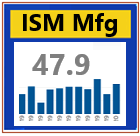
Manufacturing PMI at 58.6%; February 2022 Manufacturing ISM Report On Business. The February Manufacturing PMI registered 58.6 percent, an increase of 1 percentage point from the January reading of 57.6 percent. This figure indicates expansion in the overall economy for the 21st month in a row after a contraction in April and May 2020. The New Orders Index registered 61.7 percent, up 3.8 percentage points compared to the January reading of 57.9 percent. The Production Index registered 58.5 percent, an increase of 0.7 percentage point compared to the January reading of 57.8 percent.
Construction Spending
U.S. construction spending surged in January, boosted by strong outlays on single-family homebuilding and private nonresidential structures. The Commerce Department said on Tuesday that construction spending increased 1.3%. Data for December was revised higher to show construction outlays rising 0.8% instead of 0.2% as previously reported. Economists polled by Reuters had forecast construction spending gaining 0.2%. Construction spending increased 8.2% on a year-on-year basis in January. Spending on private construction projects shot up 1.5% in January. Outlays on residential construction increased 1.3%.
Despite January's jump, homebuilding remains constrained by higher prices for building materials, especially framing lumber. The United States last November nearly doubled the duties on imported Canadian softwood lumber after a review of its anti-dumping and countervailing duty orders
MBA Purchase Applications
nnnnnnnn
ADP Employment Report
ADP National Employment Report: Private Sector Employment Increased by 475,000 Jobs in February. America's companies added 475,000 jobs last month, the ADP employment report said on Wednesday. That was nearly 90,000 more positions than economists had expected and a sharp reversal from January, when ADP initially posted a surprise drop in jobs. Wednesday's data also included a significant revision of that January decline, revising it up to 509,000 jobs added from 301,000 jobs lost reported last month.
Beige Book
U.S. Economy Grew Modestly Amid Omicron Surge, Fed Beige Book Says. The U.S. economy grew at a modest to moderate pace from mid-January through early February as the Omicron variant of Covid-19 disrupted businesses and held back consumer spending, the Federal Reserve said Wednesday. The Fed’s periodic compilation of business anecdotes from around the country, known as the Beige Book, provided the latest evidence that the pandemic dealt a setback to the economic recovery in recent months. Millions of workers called in sick in January 2022. Companies also cited severe winter weather as a disruption.Fed Chairman Jerome Powell on Wednesday called the labor market “extremely tight” and said he expects the first rate hike to come at the central bank’s policymaking meeting later this month.
Jobless Claims
Initial claims for unemployment insurance totaled 215,000, the lowest tally since the beginning of the year and fewer than Wall Street estimates, the Labor Department said Thursday. Economists surveyed by Dow Jones had been looking for first-time filings to come in at 225,000 for the week ended Feb. 26. On jobless claims, last week’s total represented a decline of 18,000 from the previous week and was the lowest since Jan. 1. Continuing claims, which run a week behind the headline number, edged higher to 1.48 million. However, the four-week moving average, which smooths out weekly volatility, moved down to 1.54 million, the lowest level since April 4, 197
Productivity and Cost
A separate report from the Bureau of Labor Statistics showed that nonfarm productivity rose 6.6% in the fourth quarter, slightly less than the estimate for 6.7%. However, unit labor costs rose 0.9%, well ahead of the expected 0.3%. Unit labor costs continued to increase in the last three months of 2021, though at a lower pace than the previous quarter due in large part to the jump in productivity. A 7.5% rise in hourly compensation was largely offset by the 6.6% productivity rise. For the full year, unit labor costs were up 3.6%, down from the 4.3% gain in 2020.
Oil Surges
U.S. oil jumps to 7-year high above $102 a barrel as Russian assault prompts supply shortage fears. Oil prices surged Tuesday, with U.S. crude hitting its highest level since July 2014 as Russia bears down on Ukraine’s capital. Prices first topped the $100 mark last Thursday when Russia invaded Ukraine, prompting fears of supply disruptions from key exporter Russia, in what is already a very tight market. West Texas Intermediate crude futures, the U.S. oil benchmark, jumped more than 6% to $102.19 per barrel.International benchmark Brent crude advanced 6.6% to trade at $104.41 per barrel. The contract rose to $105.79 last week, the highest since 2014.
Factory Orders
U.S. factory orders growth beats expectations in January 2022. New orders for U.S.-made goods increased more than expected in January, pointing to continued strength in manufacturing despite supply challenges. The Commerce Department said on Thursday that factory orders rose 1.4% in January. Data for December was revised sharply higher to show orders gaining 0.7% instead of falling 0.4% as previously reported. Economists polled by Reuters had forecast factory orders would rebound 0.7%. Manufacturing, which accounts for 11.9% of the economy, is being underpinned by businesses rebuilding inventories, though tight supply chains remain a constraint.
ISM Service Index
nn mmmmm
Fixed Mortage Rates
nn mmmmm
Non Farm Payroll - Employment Situation
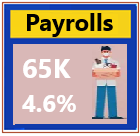
U.S. economy added a greater-than-forecast 678,000 jobs in February. Job growth accelerated in February, posting its biggest monthly gain since July as the employment picture got closer to its pre-pandemic self. Nonfarm payrolls for the month grew by 678,000 and the unemployment rate was 3.8%, the Labor Department’s Bureau of Labor Statistics reported Friday. That compared to estimates of 440,000 for payrolls and 3.9% for the jobless rate. In a sign that inflation could be cooling, wages barely rose for the month, up just 1 cent an hour or 0.03%, compared to estimates for a 0.5% gain. The year-over-year increase was 5.13%, well below the 5.8% Dow Jones estimate as more lower-wage workers were hired and 12-month comparisons helped mute more recent gains.
Unemployment Rate - Employment Situation
The unemployment rate for the industry tumbled to 6.6%, a slide of 1.6 percentage points from January and closer to the 5.7% of February 2020. Wages actually declined slightly, falling two cents an hour to $19.35. The increase in hiring for bars, restaurants, hotels and other similar businesses likely is contributing to the slower pace of pay increases.
|