10-Year Treasury Yield
The 10-year Treasury yield moved lower on Monday as investors looked ahead to the Jackson Hole economic symposium. The yield on the benchmark 10-year Treasury note was down about 2 basis points at 2.968% at 6:14 a.m. ET, while the yield on the 30-year Treasury bond traded lower by 1 basis point to 3.21%. Yields move inversely to prices, and a basis point is equal to 0.01%. The yield on the short-term 2-year Treasury note rose, however, to trade at about 3.29%.
CFNAI
The Chicago Fed National Activity Index rose to 0.27 in July 2022 from a revised reading of minus 0.25 in June 2022, beating the minus 0.19 consensus forecast. The Chicago Fed National Activity Index increased to 0.27 in July of 2022, pointing to a pick up in national economic growth. The reading rebounded from a downwardly revised -0.25 in June. All four broad categories made positive contributions: production-related indicators contributed +0.16, up from -0.19 in June.
PMI Composite Flash
Headline Flash US PMI Composite Output Index registered 45.0 in August, down from 47.7 in July, indicating a second successive monthly decrease in total business activity. The Flash August PMI reading for the Service economy fell to 44.1 down from 47.3 in July and a sharp miss compared to the market expectation for a reading of 49. The Manufacturing reading fared better, coming in at 51.3 down from Jul's 52.2 and the consensus forecast of 51.1, but even so the data points to further slowing in manufacturing economy as "manufacturers and service providers struggled with subdued demand conditions."
New Home Sales
New home sales fall 12.6% in July as rising prices take a toll. New home sales plunged in July as high prices and mortgage rates pushed buyers to think twice about closing the deal. Sales of newly constructed homes fell by 12.6% in July from June and were down 29.6% from a year ago, according to a joint report from the US Department of Housing and Urban Development and the US Census Bureau. It was the second consecutive month of declines. Only 511,000 new homes were sold last month, at a seasonally adjusted annualized rate, down from a revised 585,000 in June. That's the lowest sales number since January 2016. A year ago, 726,000 newly constructed homes were sold. Meanwhile, the median price for a new construction home rose to $439,400, up from $402,400 the previous month.
MBA Purchase Applications
Mortgage applications continued to remain at a 22-year low, held down by significantly reduced refinancing demand and weak home purchase activity. Mortgage applications fell for the third straight week, remaining at their lowest level in 22 years, the Mortgage Bankers Association reported Wednesday in its Weekly Mortgage Applications Survey for the week ending August 19. The Market Composite Index fell by 1.2 percent on a seasonally adjusted basis from one week earlier. On an unadjusted basis, the Index decreased by 3 percent from the previous week. The unadjusted Refinance Index decreased by 3 percent from the previous week and was 83 percent lower than the same week one year ago. The refinance share of mortgage activity decreased to 31.1 percent of total applications from 31.2 percent the previous week. The seasonally adjusted Purchase Index decreased by 1 percent from one week earlier. The unadjusted Purchase Index decreased by 2 percent from the previous week and was 21 percent lower than the same week one year ago. The FHA share of total applications increased to 12.5 percent from 12.0 percent the week prior. The VA share of total applications increased to 11.6 percent from 11.2 percent the week prior. The USDA share of total applications increased to 0.7 percent from 0.6 percent the week prior.
Durable Goods Ordfers
Durable-goods orders flat, but businesses invest more in good sign for U.S. economy. U.S. durable goods orders were unchanged in July, breaking a four-month growth sequence but without appearing to break the underlying growth trend. The Census Bureau said orders excluding volatile and 'lumpy' sectors such as transportation and defense both rose on the month, rising 0.3% after transportation was excluded and 1.2% excluding defense goods. Overall goods shipments rose 0.4%. The pipeline for U.S. factories also continued to look solid, as unfilled orders for durable goods rose 0.7% to $1.127 trillion. That was their 23rd straight monthly rise. The figures may allay some of the fears about a slowing economy generated by this month's regional business surveys from S&P Global and the New York Federal Reserve, whose Empire State Manufacturing Index slumped. The durables numbers are more in line with the Philadelphia Fed's business survey, which showed continued expansion in manufacturing, albeit at a slightly slower pace than earlier this year.
Pending Home Sales
This month’s very modest decline reflects the recent retreat in mortgage rates. Inventories are growing for homes in the upper price ranges, but limited supply at lower price points is hindering transaction activity. Pending home sales slip 1% in July, but Realtors say market may be ‘at or close to the bottom’. Pending home sales, a measure of signed contracts on existing homes, dropped 19.9% in July compared with July 2021. The figure has fallen for eight of the past nine months as rising mortgage rates made housing less affordable.Pending home sales, a measure of signed contracts on existing homes, slipped 1% from June to July, according to the National Association of Realtors. Compared with a year ago, sales were down 19.9%. The figure, a future indicator of closed sales, has fallen for eight of the past nine months as rising mortgage rates made housing less affordable. Higher rates pushed the typical mortgage payment up by 54% from a year ago, according to the NAR. The drop in sales was smaller than previous months and could be a sign of the market settling, even if for a brief period.Mortgage rates have been climbing steadily this year, peaking in June before dropping slightly in July. Rates resumed their rise this week and are now approaching 6% again.
Jobless Claims
Initial filings for unemployment benefits fell last week, the Labor Department said Thursday. Jobless claims came in 243,000 for the week ended Aug. 20, down 2,000 from the prior week. It was also lower than consensus estimates of 255,000, according to StreetAccount.The Labor Department on Thursday showed initial claims for state unemployment benefits fell 2,000 to a seasonally adjusted 243,000 for the week ended Aug. 20. Claims have been bouncing around the 250,000 level since hitting an eight-month high of 261,000 in mid-July.The number of people receiving benefits after an initial week of aid dropped 19,000 to 1.415 million during the week ending Aug. 13. The so-called continuing claims, a proxy for hiring, covered the week during which the government surveyed households for August's unemployment rate. The jobless rate fell to a pre-pandemic low of 3.5% in July from 3.6% in June. There were 10.7 million job openings at the end of June, with 1.8 openings for every unemployed worker.
GDP
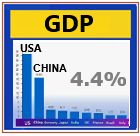
The US economy shrank at a slightly slower rate than estimated during the second quarter, according to updated data released Thursday by the US Bureau of Economic Analysis. The nation's gross domestic product -- the broadest measure of economic activity -- shrank 0.6% at an annualized rate from April through June. The activity was revised upward from the advanced estimate released in July, which showed a 0.9% decline. Despite the upward revision, the latest estimates show an economy that has been contracting for two consecutive quarters, a threshold that's generally considered an unofficial indicator of a recession (the official arbiter is a panel of National Bureau of Economic Research economists, who take an array of economic indicators into consideration). Many economists, however, don't believe the US is in the midst of a recession. They point to the strong labor market and heightened levels of consumer and business spending, production and income. Thursday's report is the second of three estimates for quarterly GDP. The third revision, due in September, will be inclusive of additional economic data. The U.S. economy contracted at a more moderate pace than initially thought in the second quarter as consumer spending blunted some of the drag from a slower pace of inventory accumulation, dispelling fears that a recession was underway. That was underscored by the report from the Commerce Department on Thursday, which also showed the economy growing steadily last quarter when measured from the income side. This fits in with recent solid readings on the labor market, retail sales and industrial production. Gross domestic product shrank at a 0.6% annualized rate last quarter, the government said in its second estimate of GDP. That was an upward revision from the previously estimated 0.9% pace of decline. The economy contracted at a 1.6% rate in the first quarter. Economists polled by Reuters had expected GDP would be revised slightly up to show output falling at a 0.8% rate. While the two straight quarterly decreases in GDP meet the standard definition of a technical recession, broader measures of economic activity suggest a slow pace of expansion rather than a downturn. An alternative measure of growth, gross domestic income, or GDI, increased at a 1.4% rate in the second quarter. GDI, which measures the economy's performance from the income side, increased at a 1.8% pace in the first quarter. The average of GDP and GDI, also referred to as gross domestic output and considered a better measure of economic activity, increased at a 0.4% rate in the April-June period, up from a 0.1% growth pace in the first quarter.
GDP
The first revision for second-quarter GDP painted a slightly less dour picture for the U.S. economy. The Bureau of Economic Analysis said on Thursday that GDP contracted by 0.6% in the second quarter. The advance estimate released last month showed a decline of 0.9%. There was a negative revision elsewhere in the report. The price index for gross domestic purchases grew 8.4% during the quarter. The previous estimate showed a rise of 8.2%. Despite the high inflation and the negative GDP growth, real gross domestic income rose by 1.4% in the second quarter.
Corporate Profitts
National after-tax profits without inventory valuation and capital consumption adjustments, conceptually most similar to S&P 500 profits, increased $284.9 billion, or at a 10.4% pace, accelerating from the 1.0% growth pace in the January-March period. Profits were 11.9% higher from a year ago.
The National Bureau of Economic Research, the official arbiter of recessions in the United States, defines a recession as "a significant decline in economic activity spread across the economy, lasting more than a few months, normally visible in production, employment, real income, and other indicators."
Trade Deficit Goods Advance
U.S. trade deficit in goods sinks 9.7% in July, inventories rise. An early look at U.S. trade patterns in July showed a 9.7% decline in the nation's trade deficit. The trade gap in goods - services are excluded - fell to $89.1 billion from $98.6 billion in the prior month, the government said Friday. The deficit has shrunk after a record increase in the first quarter. Lower deficits add to gross domestic product. The government will release overall trade numbers next week. An advanced look at wholesale inventories, meanwhile, showed a 0.8% increase in July. And an early look at retail inventories reflected a 1.1% gain. Higher inventories add to GDP.
Consumer Spending
U.S. consumer spending barely rose in July as a drop in gasoline prices weighed on receipts at service stations, but monthly inflation slowed down considerably, which could give the Federal Reserve room to scale back its aggressive interest rate hikes. US consumer spending rose at a sluggish pace in July, even while Americans got some relief on prices, indicating the economy is feeling the pinch from the highest inflation in a generation. Purchases of goods and services, adjusted for changes in prices, increased 0.2% after being flat a month earlier, Commerce Department data showed Friday. Spending on both merchandise and services advanced. The median estimate in a Bloomberg survey of economists was for a 0.4% advance. Consumer spending barely rises in July — but mostly because gas is getting cheaper. Falling gas prices have given Americans some relief from high inflation, but rising grocery costs are another matter. The numbers: Consumer spending rose a scant 0.1% in July, held down by tumbling gas prices. Yet overall spending outpaced inflation and signaled the U.S. economy is still growing and unlikely to tip into recession soon. Economists polled by The Wall Street Journal had forecast a 0.5% increase.
Core PCE
Inflation falls in July for first time in more than two years, key gauge shows, due to sinking gas prices. Consumer spending barely rises in July — but mostly because gas is getting cheaper U.S. trade deficit in goods narrowed nearly 10% in July GDP shrank at 0.6% annual pace in second quarter, but it wasn’t all bad news Opinion: Inflation has been very good for corporate profits
Personal Income
Though the report from the Commerce Department on Friday showed a modest gain in personal income last month, wages increased strongly, which could help to underpin consumer spending and keep the economy growing, though moderately.Consumer spending increases 0.1% in July. Drop at service stations accounts for the small rise. Core PCE price index edges up 0.1%; up 4.6 year-on-year. The slowdown in inflation is likely to be welcomed by Fed officials. Fed Chair Jerome Powell is due on Friday to address the annual Jackson Hole global central banking conference in Wyoming and could shed more light on how much further U.S. borrowing costs need to rise. The Fed has hiked its policy rate by 225 basis points since March. Consumer spending, which accounts for more than two-thirds of U.S. economic activity, edged up 0.1% last month. Data for June was revised slightly down to show outlays advancing 1.0% instead of 1.1% as previously reported. Economists polled by Reuters had forecast consumer spending would gain 0.4%. US Incomes, Spending Post Sluggish Gains Even as Inflation Eases. Inflation-adjusted purchases climbed 0.2% after flat in June. PCE price index fell 0.1% in July on drop in energy costs.
Retail Sales Inventories
mmmm
WholeSale Trade
mmmm
Federal Reserve Chairman Jerome Powell Federal Reserve Chairman Jerome Powell delivered a stern commitment Friday to halting inflation, warning that he expects the central bank to continue raising interest rates in a way that will cause “some pain” to the U.S. economy. In his much-anticipated annual policy speech at Jackson Hole, Wyoming, Powell affirmed that the Fed will “use our tools forcefully” to attack inflation that is still running near its highest level in more than 40 years.Powell says FOMC will hike rates until inflation is tamed.Powell warns of ‘some pain’ ahead as the Fed fights to bring down inflation U.S. Treasury yields are higher after Powell speech CNBC ProPowell’s speech delivers tough lesson to markets: ‘Don’t fight the Fed’. Powell warns of ‘some pain’ ahead as the Fed fights to bring down inflation Fed Chairman Jerome Powell on Friday pledged that the central bank will “use our tools forcefully” to attack inflation that is still running near its highest level in more than 40 years. In his annual Jackson Hole, Wyoming, policy speech, Powell added that higher interest rates likely will persist “for some time. The historical record cautions strongly against prematurely loosening policy.” The remarks come amid signs that inflation may have peaked but is not showing any marked signs of decline. Powell said the Fed will not be swayed by a month or two of data.
Cosumer Sentiment
mmmm
Fixed Mortgage Rates
Mortgage rates jumped higher this week as investors tried to make sense of data that gave mixed signals about the health of the US economy. The 30-year fixed-rate mortgage averaged 5.55% in the week ending August 25, up from 5.13% the week before, according to Freddie Mac. That is significantly higher than this time last year when it was 2.87%. After starting the year at 3.22%, mortgage rates rose sharply during the first half of the year, hitting a high of 5.81% in mid-June. But since then, concerns about the economy and the Federal Reserve's mission to combat inflation have made them more volatile. The combination of higher mortgage rates and the slowdown in economic growth is weighing on the housing market, said Sam Khater, Freddie Mac's chief economist. A year ago, a buyer who put 20% down on a median priced $390,000 home and financed the rest with a 30-year, fixed-rate mortgage at an average interest rate of 2.87% had a monthly mortgage payment of $1,294, according to numbers from Freddie Mac. Today, a homeowner buying the same priced house with an average rate of 5.55% would pay $1,781 a month in principal and interest. That's $487 more each month. |