The Chicago Fed National Activity Index (CFNAI)
US Chicago Fed National Activity Index Picks Up. The Chicago Fed National Activity Index increased to 0.53 in July of 2021 from a downwardly revised -0.01 in June, pointing to a pickup in overall business activity. Production-related indicators contributed +0.38, up from -0.09 in June. The contribution of the sales, orders, and inventories category increased to +0.02 from -0.06; the contribution of the employment, unemployment, and hours category rose to +0.30 from +0.14; while the personal consumption and housing category contributed -0.15,down from +0.01 in June. The index’s three-month moving average, CFNAI-MA3, moved up to +0.23 in July from +0.01 in June.
PMI Composite Flash Aug. 2021
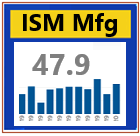
PMI composite flash signals fall in August 2021 amid capacity constraints and delta variant. Mon, Aug. 23, 2021. U.S. PMI Composite Flash: 55.4 vs. 59.5 consensus and 59.7 prior. Manufacturing PMI: 61.2 vs. 63.1 consensus and 63.1 prior. Service PMI: 55.2 vs. 59.7 consensus and 59.8 prior. Private sector expansion slows sharply amid capacity constraints .
New Home Sales
New home sales rose last month as increasing supplies gave buyers more choices. Sales of new single-family homes ticked up 1% in July 2021 to a seasonally adjusted annual rate of 708,000, according to the U.S. Census Bureau and Department of Housing and Urban Development. Still, the rate was 27.2% below the July 2020 estimate of 972,000. Analysts surveyed by Refinitiv were expecting 700,000 new homes sold. The June reading was revised higher by 25,000 to 701,000. New home sales, which account for about 10% of the housing market, had previously fallen for every month in 2021 as buyers had grappled with a shortage of inventory and record-high prices.
Jobless Claims
A separate report from the Labor Department on Thursday showed initial claims for state unemployment benefits rose 4,000 to a seasonally adjusted 353,000 for the week ended Aug. 21. Adjusting the data for seasonal fluctuations is tricky around this time of the year, a task that has been complicated by the pandemic. That could account for the increase in applications last week. Unadjusted claims dropped 11,699 to 297,765 last week.
Existing Home Sales
July 2021 Existing-Home Sales Rise With the Aid of More Supply. NAR released a summary of existing-home sales data showing that housing market activity this July inclined 2.0% from June 2021. July’s existing-home sales reached a 5.99 million seasonally adjusted annual rate. July’s sales of existing homes inclined 1.5% from July 2020.
Corporate Profits
U.S. corporate profits surged to a fresh record high in the second quarter, boosted by robust demand and higher prices, suggesting that an anticipated slowdown in economic growth this quarter because of soaring COVID-19 cases could be temporary. Profits from current production increased by $234.5 billion, or at a 9.2% quarterly rate, to a record $2.8 trillion, after rising at a 5.1% pace in the first quarter. They were driven by a $169.8 billion surge in profits at domestic nonfinancial corporations. There were also gains in domestic financial corporations profits as well as rest-of-the-world profits. Profits were up 69.3% from a year ago, partially exaggerated by low base comparisons in the second quarter of 2020 following mandatory shutdowns of nonessential businesses.
The jump in profits reported by the Commerce Department on Thursday was despite businesses facing increased costs owing to shortages of raw materials and labor. The resurgence in infections driven by the Delta variant of the coronavirus is chipping away demand for services like air travel and cruises, leading economists to cut their third-quarter growth estimates.
Real Gross Domestic Product - GDP
The U.S. economy grew at a 6.6% annual rate last quarter, slightly faster than previously estimated, the government said Thursday in a report that pointed to a sustained consumer-led rebound from the pandemic recession. Second-quarter GDP was revised up to 6.6%, though that was a touch below the 6.7% estimate. In the GDP revision, the second reading for the pace of all goods and services produced came in higher from the initial estimate due to an upward revision in nonresidential fixed investment. Some cuts to the previous estimates for private inventory and residential fixed investment, along with a lower reading on state and local government spending, partially offset the higher number. The U.S. economy grew at a robust 6.6% annual rate last quarter, slightly faster than previously estimated, the government said Thursday in a report that pointed to a sustained consumer-led rebound from the pandemic recession. But worries are growing that the delta variant of the coronavirus is beginning to cause a slowdown.
Wholesale Inventories Advance
Advance Wholesale Inventories. Wholesale inventories for July 2021, adjusted for seasonal variations and trading day differences, but not for price changes, were estimated at an end-of-month level of $722.5 billion, up 0.6 percent (±0.4 percent) from June 2021, and were up 11.5 percent (±1.4 percent) from July 2020. The May 2021 to June 2021 percentage change was revised from up 1.1 percent (±0.2 percent) to up 1.2 percent (±0.2 percent).
Durable Goods Orders
Orders for durable goods, items ranging from toasters to aircraft that are meant to last three years or more, dipped 0.1% in July 2021 after rising 0.8% in June 2021. They were pulled down by a 2.2% decline in orders for transportation equipment, which followed a 1.4% increase in June. U.S. business equipment spending strong even as new orders flat in July. Core capital goods orders flat in July; June revised up. Core capital goods shipments increase 1%. Durable goods orders fall 0.1%. New orders for key U.S.-made capital goods were unexpectedly flat in July amid supply constraints and a shift in demand to services, suggesting that business spending on equipment could slow in the second half after robust growth over the past year. Still, business investment in equipment remains strong, with the report from the Commerce Department on Wednesday showing shipments of these capital goods accelerating last month. Orders are 18% above their pre-pandemic levels. Investment in equipment is expected to help offset cooling consumer spending and keep the economy on a solid growth path this quarter.
Consumer Sentiment UM
U.S. consumer sentiment remained weak in late August amid ongoing concerns over inflation and the coronavirus pandemic. The University of Michigan’s final sentiment index fell to a near-decade low of 70.3 during the month from 81.2 in July, data released Friday showed. The figure was in line with the preliminary reading and just below the median estimate of 70.8 in a Bloomberg survey of economists.
US Trade in Goods - Growth
The U.S. merchandise-trade deficit narrowed to the smallest in three months in July as imports fell from the highest on record. The gap decreased to $86.4 billion in July 2021 from a revised $92.1 billion in June 2021, according to Commerce Department data released Friday. That was smaller than all estimates in a Bloomberg survey of economists. Imports declined 1.4% to $233.9 billion, led by a drop in the value of inward-bound shipments of consumer goods. The only category to increase from the prior month was automotive vehicles. The pause in growth in imports comes as Americans rein in spending on purchases and shift their preference toward services as vaccinations enabled people to engage in activities less accessible earlier in the pandemic. Exports climbed for a fifth straight month, advancing 1.5% to a record $147.6 billion.
Gains were broad-based and were led by categories such as capital goods, autos and consumer goods. Wholesale inventories climbed 0.6%, while retail inventories increased 0.4%. Overall, the value of U.S. exports plus imports fell from June’s record to $381.5 billion. The July trade picture will come into greater focus when the final report, which includes services, is released on Sept. 2.
Personal Income - Consumer
The Fed has viewed inflation pressures this year as largely the result of temporary pressures, though officials in recent days have conceded that the situation may last longer than originally thought.Personal income also surged for the month, jumping 1.1%, well ahead of the 0.3% Dow Jones estimate.
Consumer Spending or Real PCE
Consumer spending, which accounts for more than two-thirds of the U.S. economy, appears to be cooling. Credit card data suggests spending on services like airfares, cruises as well as hotels and motels has been slowing. Consumer spending increased 0.3%, in line with expectations.The core personal consumption expenditures price index was unchanged from June, which was revised up one-tenth of a percentage point, the Commerce Department reported Friday.
Core PCE Price Index Jul. 2021 - Inflation
Key inflation gauge rises 3.6% from a year ago to tie biggest jump since the early 1990s. An inflation measure the Federal Reserve uses to set policy rose 3.6% in July 2021 from a year ago, meeting Wall Street expectations but also tying the highest level in about 30 years.The core personal consumption expenditures price index, which the Fed sees as the broadest measure of inflation, was unchanged from June, which was revised up one-tenth of a percentage point, the Commerce Department reported Friday. That 3.6% reading equaled the Dow Jones estimate and appeared to be the highest level since May 1991. Core inflation rose 0.3%, in line with estimates, while the headline number was up 0.4%.
|