Existing Home Sales
Sales of newly built homes dropped in June to the lowest level since the early days of the coronavirus pandemic in April 2020, according to data released by the U.S. Census Bureau on Monday. Sales of new single family homes fell to an annualized rate of 676,000, 6.6% below May’s rate of 724,000 and 19.4% below the June 2020 level of 839,000. Analysts were expecting new home sales to increase by 3.4% in June. After a year of frenzied buying and price gains in the double digits, newly built homes are now out of reach for much of the demand that remains in the market. The median price of a newly built home in June rose just 6% from June 2020, and while that is a large gain historically, it is nothing compared with the 15%-20% annual gains seen in previous months. Most of the homebuying is on the higher end of the market, and builders cannot afford to put up affordable homes due to skyrocketing construction costs. Softwood lumber, in particular, spiked more than 300% during the pandemic, and while it has fallen back dramatically in the last month, it is still about 75% above its 2019 average. Other lumber products are still significantly more expensive.“We also know there are shortages of appliances, labor and affordable lots,” noted Peter Boockvar, chief investment officer at the Bleakley Advisory Group. “The moderation in home sales is likely a combination of sticker shock and the slowdown in the ability of builders to finish homes because of a variety of delays.”
New Home Sales
U.S. new home sales fall sharply in June 2021. Sales of new U.S. single-family homes tumbled in June and sales in the prior month were weaker than initially estimated. The data suggests the housing market was losing momentum amid soaring prices that are being driven by an acute shortage of properties. New home sales dropped 6.6% to a seasonally adjusted annual rate of 676,000 units last month, the Commerce Department said. Sales of new U.S. single-family homes tumbled in June and sales in the prior month were weaker than initially estimated, suggesting the housing market was losing momentum amid soaring prices that are being driven by an acute shortage of properties. New home sales dropped 6.6% to a seasonally adjusted annual rate of 676,000 units last month, the Commerce Department said on Monday. May’s sales pace was revised down to 724,000 units from the previously reported 769,000 units. Economists polled by Reuters had forecast new home sales, which account for a small share of U.S. home sales, increasing 3% to a rate of 800,000 units in June.
Durable Goods Orders
Durable Goods Orders for June 2021 came out this morning — a classic “good news/bad news” scenario. Though the headline numbers was expected to be +2.0% for the month, it only made it to +0.8%. That’s the bad news. Revisions to May’s headline, however, were significant: +3.2% versus the +2.3% originally reported. New orders for durable goods rose 0.8% in June 2021 (+1.7% including revisions to prior months), falling short of the consensus expected gain of 2.2%. Orders excluding transportation increased 0.3% in June (+0.6% including revisions),, below the consensus expected +0.8%. Orders are up 29.3% from a year ago, while orders excluding transportation are up 19.6%.
Wholesale Inventories Advance
US wholesale inventory is for June 2021 0.8% versus 1.2% estimate. US wholesale and retail inventories for June 2021 wholesale inventory for June rose 0.8%. The expectations was for a rise of 1.2%. Versus a year ago, wholesale inventories were up 10.2%. The prior month increased by 1.3% which was unchanged. wholesale inventories totaled $715 billion. retail inventories were up 0.3% from May 2021 and up 3.7% from a year ago. The prior month remained unchanged at +0.8%. advanced retail inventories totaled $600 billion
US Trade in Goods - Grwoth
The U.S. trade deficit in goods increased in June 2021 as imports continued to rise amid strong economic activity, suggesting trade likely remained a drag on growth in the second quarter. The U.S. economy has rebounded more quickly from the pandemic compared to its global rivals, thanks to massive fiscal stimulus, low interest rates and vaccinations against COVID-19. But bottlenecks in the supply chain have hampered manufacturers' ability to boost production, drawing in more imports. The widening in the advance nominal goods deficit in June is further evidence that net exports will be a drag on second- quarter GDP. The goods trade deficit increased 3.5% to $91.2 billion last month, the Commerce Department said on Wednesday. Imports of goods advanced 1.5% to $236.7 billion. There were increases in imports of food, industrial supplies and capital goods.
TSLA
Tesla reported second-quarter earnings after the bell Monday, and it’s a beat on both the top and bottom lines. Shares rose about 2% after-hours. Here are the results.Earnings: $1.45 vs 98 cents per share adjusted expected, according to Refinitiv Revenue: $11.96 billion vs $11.30 billion expected, according to Refinitiv The company reported $1.14 billion in (GAAP) net income for the quarter, the first time it has surpassed $1 billion. In the year-ago quarter, net income amounted to $104 million.
Amazon
Amazon posts third $100 billion quarter in a row, but still misses expectations. Amazon shares fell more than 7% in extended trading on Thursday after the company reported its first revenue miss in three years and gave weak third-quarter guidance. Here’s how the company did: Earnings: $15.12 vs $12.30 per share, according to analysts surveyed by Refinitiv. Revenue: $113.08 billion vs $115.2 billion, according to analysts surveyed by Refinitiv.
AAPL
Apple demolishes earnings expectations, but stock falls after iPhone chip supply warning. Apple reported strong fiscal third-quarter earnings on Tuesday, demolishing Wall Street expectations. Every one of Apple’s major product lines grew over 12% on an annual basis. iPhone sales increased nearly 50% on an annual basis. Despite the strong quarterly results, Apple shares fell after executives warned that chip supply constraints could impact iPhones and iPads this quarter. Here are the key numbers compared to what Wall Street was expecting, per Refinitiv estimates: EPS: $1.30 vs. $1.01 estimated. Revenue: $81.41 billion vs. $73.30 billion estimated, up 36% year-over-year
GOOG
Alphabet reported Q2 2021 earnings after the bell. The stock rose as much as 4% after hours on the strong numbers, which crushed analyst expectations.Here are the results.
Earnings per share (EPS): $27.26 vs $19.34 per share, according to Refinitiv estimates.
Revenue: $61.88 billion vs $56.16 billion, according to Refinitiv estimates
MSFT
Microsoft posts big earnings beat and gives optimistic revenue forecast.Microsoft shares initially fell before rebounding and rose as much as 1% in extended trading on Tuesday after the software and hardware company issued fiscal fourth-quarter earnings and quarterly revenue guidance that exceeded expectations. Here’s how the company did: Earnings: $2.17 per share, adjusted, vs. $1.92 per share as expected by analysts, according to Refinitiv.Revenue: $46.15 billion, vs. $44.24 billion as expected by analysts, according to Refinitiv.
Microsoft Corp. reported sales and profit that exceeded analysts’ estimates for a 10th straight quarter, though investor optimism was tempered by concern about slowing growth in the software giant’s Azure cloud-computing business. Shares slipped in late trading. Sales in the fourth quarter, which ended June 30, climbed 21% to $46.2 billion, the Redmond, Washington-based company said Tuesday in a statement. That compared with the $44.3 billion average estimate of analysts polled by Bloomberg. Net income rose to $16.5 billion, or $2.17 a share, while analysts had predicted $1.92.
FaceBook
Facebook shares fell as much as 5% in extended trading on Wednesday after the social media company called for revenue growth to slow in the quarters ahead, even as second-quarter results came in ahead of estimates. Here’s how the company did:
Earnings: $3.61 per share, adjusted, vs. $3.03 per share as expected by analysts, according to Refinitiv.
Revenue: $29.08 billion, vs. $27.89 billion as expected by analysts, according to Refinitiv.
S&P Case Shiller Index
Housing price growth set a record for the second consecutive month in May 2021. S&P Corelogic Case-Shiller Index Reports Record High Annual Home Price Gain of 16.6% in May 2021. S&P Dow Jones Indices (S&P DJI) today released the latest results for the S&P CoreLogic Case-Shiller Indices, the leading measure of U.S. home prices. Data released today for May 2021 show that home prices continue to increase across the U.S. The S&P CoreLogic Case-Shiller U.S. National Home Price NSA Index, covering all nine U.S. census divisions, reported a 16.6% annual gain in May, up from 14.8% in the previous month. The S&P CoreLogic Case-Shiller U.S. National Home Price Index® rose 16.6% year-over-year in May (non-seasonally adjusted), up from 14.8% in April.
FHFA - Federal Housing Finance Agency House Price Index
Home prices are up nationwide in May, according to the latest Federal Housing Finance Agency House Price Index (FHFA HPI®). Prices increased by 1.7% since last month and were up 18.0% from May 2020 to May 2021. The previously reported 1.8% price change for April 2021 was unrevised. For the nine census divisions, seasonally adjusted monthly house price changes from April 2021 to May 2021 ranged from:
Jobless Claims
The number of Americans filing first-time claims for unemployment insurance fell slightly last week to 400,000 from the prior week's revised 424,000, the Labor Department reported on Thursday. The four-week moving average was 394,500, an increase of 8.000, from the previous week.
FOMC Meeting 27-28-Jul-2021
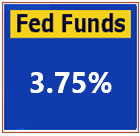
Fed holds rates near zero, says economy has gotten better even with pandemic worries/ Federal Reserve officials on Wednesday updated investors and economists on how they are thinking about inflation and employment in the United States. The central bank decided not to raise interest rates from near zero nor adjust the pace at which it buys government bonds each month. Investors are paying close attention to how Chairman Jerome Powell characterizes the economic outlook given the spread of the delta variant of Covid-19 and its timeline for tapering its monthly bond purchases. Powell said the U.S. economy is still a good deal away from making “substantial further progress” toward the Fed’s dual mandates of stable prices and maximum employment. “I’d say we have some ground to cover on the labor market side,” Powell said Wednesday. “I think we’re some way away from having had substantial further progress toward the maximum employment goal.”
The Federal Reserve on Wednesday held its benchmark interest rate near zero and said the economy continues to progress despite concerns over the pandemic spread. As expected, the Federal Open Market Committee concluded its two-day meeting by keeping interest rates in a target range between zero and 0.25%. Along with that, the committee said in a unanimously approved statement that the economy continues to “strengthen.”
Consumer Sentiment UM
U.S. consumer sentiment fell to a five-month low in July amid lingering concerns about inflation, a survey released on Friday showed. The University of Michigan's Consumer Sentiment Index fell to a final reading of 81.2, the lowest level since February, from June's final level of 85.5. The final reading for July, however, was above the July preliminary reading of 80.8 andabove the median forecast of 80.8 among economists polled by Reuters.
Consumer Confidence
Consumer Confidence up Slightly in July 2021. U.S. consumer confidence was relatively unchanged from June to July, but remains at its highest level since February 2020, just before the coronavirus pandemic hit the U.S. The Conference Board reported Tuesday that its consumer confidence index inched up in July to 129.1, up from last month’s reading of 128.9. Consumer Confidence up Slightly in July U.S. consumer confidence was relatively unchanged from June to July, but remains at its highest level since February 2020, just before the coronavirus pandemic hit the U.S. The Conference Board reported Tuesday that its consumer confidence index inched up in July to 129.1, up from last month’s reading of 128.9.
Pending Home Sales June 2021
Contracts to purchase previously owned U.S. homes declined in June 2021 in step with a spike in home prices after rebounding strongly in the prior month. The National Association of Realtors (NAR) said on Thursday its Pending Home Sales Index, based on contracts signed last month, fell 1.9% to 112.8. Economists polled by Reuters had forecast pending home sales would increase 0.3%. Pending home sales for May were revised to show an increase of 8.3% instead of the 8.0% gain previously reported. Pending home contracts are seen as a forward-looking indicator of the health of the housing market because they become sales one to two months later.
Real Gross Domestic Product - GDP
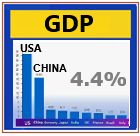
U.S. GDP rose 6.5% last quarter, well below expectations. GDP rose at a 6.5% annualized pace in the second quarter, according to the Commerce Department’s first estimate Thursday. That was well below the Dow Jones estimate of 8.4%. The U.S. economy rose at a disappointing rate in the second quarter, the Commerce Department reported Thursday in a sign that the U.S. has escaped the shackles of the Covid-19 pandemic but still has more work to do. Gross domestic product, a measure of all goods and services produced during the April-to-June period, accelerated 6.5% on an annualized basis. That was slightly better than the 6.3% gain in the first quarter, which was revised down narrowly. The U.S. economy rose at a disappointing rate in the second quarter, the Commerce Department reported Thursday in a sign that the U.S. has escaped the shackles of the Covid-19 pandemic but still has more work to do. Gross domestic product, a measure of all goods and services produced during the April-to-June period, accelerated 6.5% on an annualized basis. That was slightly better than the 6.3% gain in the first quarter, which was revised down narrowly.
Personal Income
Personal income and spending numbers, however, were better than expectations as consumers flush with stimulus cash kept the economic rebound going. Income rose 0.1%, better than the estimate for a 0.2% decline, while spending increased 1% against a 0.7% forecast. Employment inflation also continued to increase. Labor costs rose as well, with compensation rising 2.9% from a year earlier.
Consumer Spending or Real PCE
Consumer spending rose 1%, faster than expected as personal income also increased.
Core PCE Price Index June 2021 - Inflation
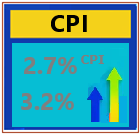
Key inflation indicator up 3.5% year over year in June for fastest gain since 1991. An inflation gauge followed closely by the Federal Reserve increased 3.5% year over year in June 2021, slightly below the 3.6% estimate. An inflation indicator that the Federal Reserve uses as its key guide rose 3.5% in June, a sharp acceleration that was nonetheless right around Wall Street expectations, the Commerce Department reported Friday. The personal consumption expenditures price index, which excludes food and energy, was expected to increase 3.6% at a time when the U.S. economy has seen its highest inflation pressures in more than a decade. That gain was slightly ahead of the 3.4% May increase and represents the biggest move since July 1991.
Fed officials have said they expect the inflation surge to be transitory as it has come largely from industries sensitive to the economic reopening, as well supply chain bottlenecks and other issues likely to fade. The central bank targets 2% as its desired inflation goal, though officials are willing to tolerate higher levels temporarily as the economy tries to get back to full employment. The core PCE index rose 0.4% month over month, which was below the 0.6% Dow Jones estimate, indicating that inflationary pressures may be starting to ebb at least a bit.
|