Producer Price Index (PPI)
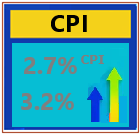
Another key inflation indicator flashed a warning sign in May: Producer prices jumped a record amount last month. The economy is reopening fully and soaring demand, together with supply chain issues and materials shortages, is pushing prices higher. That trend, which has been taking place all year, continued in May. Between May 2020 and May 2021, prices increased 6.6% -- the biggest jump recorded since the Bureau of Labor Statistics started collecting this data in November 2010.
Retail Sales
U.S. retail sales declined in May 2021, after a stimulus-related splurge in the prior two months, suggesting consumers are starting to shift more of their spending to services as the economy reopens. The total value of retail purchases fell 1.3% in May following an upwardly revised 0.9% gain in April, Commerce Department figures showed Tuesday. The median estimate in a Bloomberg survey of economists called for a 0.8% decrease.
Empire State Mfg Index
The regional Fed's "Empire State" index on current business conditions fell seven points to 17.4, lower than a reading of 23.0 forecast among analysts polled by Reuters. A reading above zero signals the New York manufacturing sector is expanding. NY Empire State Manufacturing Index came in lower than expected in June. US Dollar Index clings to daily gains around 90.60. The headline General Business Conditions Index of the NY Fed's Empire State Manufacturing Survey declined to 17.4 in June from 24.3 in May. This reading fell short of the market expectation of 22.
Industrial Production
U.S. Industrial Production Has Broad Gains in May 2021. US industrial production up 0.8% in May, factory output 0.9%. Surging output of cars, trucks and auto parts pulled U.S. factory production up 0.9% in May. urging output of cars, trucks and auto parts pulled U.S. factory production up 0.9% in May. Adding utilities and mines, overall U.S. industrial production climbed 0.8% in May from April, the Federal Reserve reported Tuesday. Manufacturing production advanced 0.9%, reflecting, due in part to a large gain in motor vehicle assemblies; factory output excluding motor vehicles and parts increased 0.5%. The indexes for mining and utilities rose 1.2% and 0.2%, respectively.Capacity utilization for the industrial sector rose 0.6 percentage point in May to 75.2%, a rate that was 4.4 percentage points below its long-run (1972–2020) average.
Philadelphia Fed Manufacturing Index
Factory activity in the U.S. mid-Atlantic region declined for the second consecutive month in June 2021 after hitting its highest pace in nearly half a century earlier this spring, a survey showed on Thursday. The Philadelphia Federal Reserve Bank said its business activity index fell to 30.7 from 31.5 in May. That was just shy of economists' expectations for a reading of 31.0, according to a Reuters poll. Any reading above zero indicates expansion in the region's manufacturing. The survey covers factories in eastern Pennsylvania, southern New Jersey and Delaware.It is seen as one of the first monthly indicators of the health of U.S. manufacturing leading up to the national report by the Institute for Supply Management, next due out July 1.
FOMC Meeting 15-16/June/2021
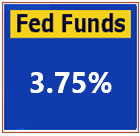
The Federal Open Market Committee (FOMC) ended its June 15-16, 2021 meeting by announcing no change in policy. While recognizing that inflation has risen, they attribute this mainly to "transitory factors" that will abate. However, the consensus of members is that the federal funds rate will be increased in 2023.
Treasury International Capital (TIC)
The U.S. Department of the Treasury today released Treasury International Capital (TIC) data for April 2021. The next release, which will report on data for May 2021, is scheduled for July 16, 2021. The sum total in April of all net foreign acquisitions of long-term securities, short-term U.S. securities, and banking flows was a net TIC inflow of $101.2 billion. Of this, net foreign private inflows were $118.3 billion, and net foreign official outflows were $17.1 billion. Foreign residents increased their holdings of long-term U.S. securities in April; net purchases were $93.2 billion. Net purchases by private foreign investors were $59.9 billion, while net purchases by foreign official institutions were $33.3 billion. U.S. residents decreased their holdings of long-term foreign securities, with net sales of $7.5 billion. Taking into account transactions in both foreign and U.S. securities, net foreign purchases of long-term securities were $100.7 billion. After including adjustments, such as estimates of unrecorded principal payments to foreigners on U.S. asset-backed securities, overall net foreign purchases of long-term securities are estimated to have been $59.3 billion in April. Foreign residents decreased their holdings of U.S. Treasury bills by $60.1 billion. Foreign resident holdings of all dollar-denominated short-term U.S. securities and other custody liabilities decreased by $44.2 billion. Banks’ own net dollar-denominated liabilities to foreign residents increased by $86.1 billion.
Housing Market Index - HMI
Builder sentiment in June fell to its lowest level since August, as construction costs pushed new home prices higher, sidelining buyers and making it harder for some builders to get loans. The National Association of Home Builders/Wells Fargo Housing Market Index dropped 2 points to 81, down from a recent record peak of 90 last November. Anything above 50 is still considered positive. “Higher costs and declining availability for softwood lumber and other building materials pushed down builder sentiment in June,” said NAHB Chairman Chuck Fowke, a homebuilder from Tampa, Florida. “These higher costs have moved some new homes beyond the budget of prospective buyers, which has slowed the strong pace of home building.”
Mortgage Applications
After three straight weeks of declines, mortgage demand came crawling back, thanks to a drop in interest rates. Total application volume rose 4.2% last week from the previous week, according to the Mortgage Bankers Association’s seasonally adjusted index. Refinances led the gains, rising 6% for the week. They were still 22% lower than the same week one year ago because so many borrowers already refinanced last fall, when rates hit record lows. The refinance share of mortgage activity increased to 61.7% of total applications from 60.4% the previous week. The average contract interest rate for 30-year fixed-rate mortgages with conforming loan balances ($548,250 or less) decreased to 3.11% from 3.15%, with points increasing to 0.36 from 0.34 (including the origination fee) for loans with a 20% down payment.
Jobless
Initial jobless claims unexpectedly rose last week despite an ongoing recovery in the U.S. employment market, the Labor Department reported Thursday. First-time filings for unemployment insurance for the week ended June 12 totaled 412,000, compared with the previous week’s 375,000. That was the highest number since May 15. Economists surveyed by Dow Jones had been expecting 360,000 new claims for last week. All of the increase essentially came from two states – Pennsylvania saw a gain of 21,590, while California rose 15,712, according to unadjusted data.
Business Inventories
U.S. business inventories fell in April 2021, with stocks declining at a sharper pace than initially estimated amid shortages of raw materials, which are undercutting production of motor vehicles and other goods. Business inventories decreased 0.2% after increasing 0.2% in March, the Commerce Department said on Tuesday. Inventories are a key component of gross domestic product. Economists polled by Reuters had forecast inventories dipping 0.1%. Inventories dropped 3.6% on a year-on-year basis in April.
Housing Starts
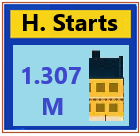
Single-family housing starts were up 4.2% from April and 49.8% from May 2020, at 1,098,000, according to the U.S. Census Bureau and Department of Housing and Urban Development. May housing starts rose 3.6% above the revised April estimate to an annual, seasonally adjusted rate of 1,572,000, the U.S. Census Bureau and Department of Housing and Urban Development reported. The rate was 50.3% above the year-ago pace of 1,046,000. Single-family housing starts were up 4.2% from April and 49.8% from May 2020, at 1,098,000, while multifamily starts were up 4.0% monthly and 52.5% yearly, at 465,000...
Privately-owned housing starts in May were at a seasonally adjusted annual rate of 1,572,000. This is 3.6 percent (±10.3 percent)* above the revised April estimate of 1,517,000 and is 50.3 percent (±15.1 percent) above the May 2020 rate of 1,046,000. Single-family housing starts in May were at a rate of 1,098,000; this is 4.2 percent (±9.2 percent)* above the revised April figure of 1,054,000. The May rate for units in buildings with five units or more was 465,000....
Building Permits
Building permits for privately owned homes fell 3% from the downwardly revised April rate of 1,733,000 to 1,681,000. Year over year, however, building permits were up 34.9%.. Building permits — which serve as a more forward-looking indicator of residential construction — fell 3% to an annualized rate of 1.68 million. That's the lowest level since October.
Privately-owned housing units authorized by building permits in May were at a seasonally adjusted annual rate of 1,681,000. This is 3.0 percent (±1.4 percent) below the revised April rate of 1,733,000, but is 34.9 percent (±2.4 percent) above the May 2020 rate of 1,246,000. Single-family authorizations in May were at a rate of 1,130,000; this is 1.6 percent (±0.9 percent) below the revised April figure of 1,148,000. Authorizations of units in buildings with five units or more were at a rate of 494,000 in May..
U.S. homebuilding rebounded in May, supported by an acute shortage of previously owned homes available for sale, but construction continues to be hampered by very expensive lumber and shortages of other building materials. Housing starts rose 3.6% to a seasonally adjusted annual rate of 1.572 million units last month, the Commerce Department said on Wednesday. Data for April was revised down to a rate of 1.517 million units from the previously reported 1.569 million units. Economists polled by Reuters had forecast starts increasing to a rate of 1.630 million units. Last month’s increase left starts lower than March’s rate of 1.733 million units, which was the highest level since June 2006. Permits for future homebuilding fell 3.0% to a rate of 1.681 million units in May. Demand for bigger and more expensive accommodations amid the COVID-19 pandemic, which has left millions of Americans still working from home, is driving a housing market boom. But supply is tight, with the inventory of previously owned homes near record lows...
U.S. Import and Export Price Indexes
U.S. import prices accelerate in May 2021; export prices surge. U.S. import prices increased more than expected in May 2021 as the cost of petroleum products rose and supply chain bottlenecks boosted prices of other goods, adding to signs that inflation was heating up amid a reopening economy. Import prices rose 1.1% last month after gaining a 0.8% in April, the Labor Department said on Wednesday. The seventh straight monthly gain lifted the year-on-year increase to 11.3%, the largest rise since September 2011. Import prices surged 10.8% on a year-on-year basis in April. Economists polled by Reuters had forecast import prices, which exclude tariffs, rising 0.8%. Part of the acceleration in the year-on-year prices reflected the dropping of last spring's weak readings from the calculation.
Leading Indicators
The Conference Board Leading Economic Index® (LEI) for the U.S. increased by 1.3 percent in May 2021 to 114.5 (2016 = 100), following a 1.3 percent increase in April and a 1.4 percent increase in March. After another large improvement in May, the U.S. LEI now stands above its previous peak reached in January 2020 (112.0), suggesting that strong economic growth will continue in the near term. Strengths among the leading indicators were widespread, with initial claims for unemployment insurance making the largest positive contribution to the index; housing permits made this month’s only negative contribution. The Conference Board now forecasts real GDP growth in Q2 could reach 9 percent (annualized), with year-over-year economic growth reaching 6.6 percent for 2021. |