Housing Starts
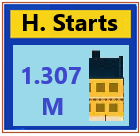
The November reading of 1.68 million starts is the number of housing units builders would begin if development kept this pace for the next 12 months. Within this overall number, single-family starts increased 11.3% to a 1.17 million seasonally adjusted annual rate, and are up 15.2% year-to-date.
Housing starts increased 11.8% to a seasonally adjusted annual rate of 1.679 million units last month, the highest level since March, the Commerce Department said on Thursday. Data for October was revised down to a rate of 1.502 million units from the previously reported 1.520 million units. Economists polled by Reuters had forecast starts rising to a rate of 1.568 million units. Starts for both single-family and multi-family housing projects rose last month.
Building Permits
U.S. homebuilding surged to an eight-month high in November amid an acute shortage of properties on the market, though higher prices for raw materials and labor shortages remain a constraint. Permits for future homebuilding increased 3.6% to a rate of 1.712 million units in November.
Treasury International Capital (TIC)
The U.S. Department of the Treasury today released Treasury International Capital (TIC) data for October 2021. The next release, which will report on data for November 2021, is scheduled for January 18, 2022. The sum total in October of all net foreign acquisitions of long-term securities, short-term U.S. securities, and banking flows was a net TIC inflow of $143.0 billion. Of this, net foreign private inflows were $152.3 billion, and net foreign official outflows were $9.4 billion. Foreign residents decreased their holdings of long-term U.S. securities in October; net sales were $22.1 billion. Net sales by private foreign investors were $46.5 billion, while net purchases by foreign official institutions were $24.4 billion. U.S. residents decreased their holdings of long-term foreign securities, with net sales of $29.2 billion. Taking into account transactions in both foreign and U.S. securities, net foreign purchases of long-term securities were $7.1 billion. After including adjustments, such as estimates of unrecorded principal payments to foreigners on U.S. asset-backed securities, overall net foreign sales of long-term securities are estimated to have been $22.2 billion in October. Foreign residents increased their holdings of U.S. Treasury bills by $33.8 billion. Foreign resident holdings of all dollar-denominated short-term U.S. securities and other custody liabilities increased by $55.3 billion. Banks’ own net dollar-denominated liabilities to foreign residents increased by $109.9 billion.
Housing Market Indexx - HMI
NAHB Housing Market Index: "Home Builder Sentiment Strong at Year’s End". The National Association of Home Builders (NAHB) Housing Market Index (HMI) is a gauge of builder opinion on the relative level of current and future single-family home sales. It is a diffusion index, which means that a reading above 50 indicates a favorable outlook on home sales; below 50 indicates a negative outlook. The latest reading of 84 is up 1 from last month's 83.
Empire State Manufacturing Index
The New York Empire State Manufacturing Index rose to 31.9 in December of 2021 from 30.9 in November, beating forecasts of 25, pointing to strong growth in business activity in the New York State. The U.S. economy recovery continues to make progress with the New York manufacturing sector seeing strong momentum in December, according to the latest report from the New York Federal Reserve.
Wednesday, the regional central bank said its Empire State manufacturing survey's general business conditions index rose to 31.9, up from November’s reading of 30.9. The data was better expected as consensus forecasts were calling for a reading around 24.9.
Import and Export Pricest.
Prices for U.S. imports rose 0.7 percent in November 2021 following a 1.5-percent increase in October, the U.S. Bureau of Labor Statistics reported today. In November, both higher fuel and nonfuel prices contributed to the advance. U.S. export prices rose 1.0 percent in November, after increasing 1.6 percent in October and 0.3 percent in September.
Import price indexes are compiled for the prices of goods that are bought in the United States but produced abroad and export price indexes are compiled for the prices of goods sold abroad but produced domestically. These prices, which exclude tariffs and taxes, measure underlying inflationary trends in internationally traded products.
PMI Composite Flash for Dec. 2021
December PMI Composite Flash print inches marginally lower M/M, comes in above consensus. Thu, Dec. 16, 2021 for December 2021 U.S. PMI Composite Index (Flash): 56.9 vs. 56.5 consensus and 57.2 prior. U.S. private sector businesses indicated a strong upturn in output at 2021 end, despite the rate of expansion easing to the slowest for three. According to IHS Markit's flash PMI survey, the US Manufacturing PMI Index dropped to 57.8 in December from 58.3 in November. That was below expectations for a small rise to 58.5. The Services PMI Index fell to 57.5 in December from 58.0 last month, below expectations for a rise to 58.5. As a result, the Composite PMI Index also fell on the month to 56.9 in December 2021 from 57.2 in November 2021.
Producer Price Index PPI
U.S. producer prices increased more than expected in November as supply constraints persisted, leading to the biggest annual gain since the series was revamped 11 years ago and supporting views that inflation could remain uncomfortably high for some time. The report from the Labor Department on Tuesday, which also showed strong growth in underlying producer inflation, followed on the heels of news last Friday that annual consumer prices surged by the most since 1982 in November. Soaring inflation complicates President Joe Biden economic agenda, including a $1.75 trillion social policy and climate bill stuck in Congress.
Producer prices increase 0.8% in November. Producer prices soar 9.6% year-on-year. Core PPI rises 0.7%; accelerates 6.9% year-on-year. The producer price index for final demand jumped 0.8% last month after advancing 0.6% in October. The broad-based increase in the PPI was led by a 0.7% rise in services, which followed a 0.2% gain in October. The acceleration in services reflected a 2.9% jump in prices for portfolio management.
Industrial Production
Industrial Production Increases 0.5% in November 2021. US industrial production increased 0.5% in November as output at the nation’s factories reached the highest level since January 2019. U.S. industrial production increased 0.5% in November as output at the nation's factories reached the highest level since January 2019. The November gain followed an even larger 1.7% increase in October, a rebound from a 1% decline in September, the Federal Reserve reported Thursday. ndustrial production covers manufacturing, mining and utilities.
The manufacturing output index climbed 0.7% last month to 100.6, the highest level since January 2019, the Federal Reserve said on Thursday. That followed a 1.4% rebound in October. Economists polled by Reuters had forecast factory production rising 0.7%. Output increased 4.6% compared to November 2020. Manufacturing, which accounts for 12% of the U.S. economy, is being supported by strong demand for goods even as spending starts to revert back to services. Inventories at businesses are also extremely lean. But strained supply chains because of the Covid-19 pandemic are a constrain.
Capacity utilization for the manufacturing sector, a measure of how fully firms are using their resources, increased 0.5 percentage point to 77.3% in November, its highest rate since December 2018. Overall capacity use for the industrial sector rose 0.3 percentage point to 76.8% last month. It is 2.8 percentage points below its 1972-2020 average.
Philadelphia Fed Manufacturing index
Philly Fed manufacturing index slides in December 2021 amid elevated inflation. The numbers: The Federal Reserve Bank of Philadelphia said Thursday that is gauge of regional business activity fell to 15.4 in December from 39.0 in the previous month. Any reading above zero indicates improving conditions. Economists expected a 30.0 reading, according to a Wall Street Journal poll.The headline index is based on a single stand-alone question about business conditions unlike the national ISM manufacturing index which is a composite based on components.The gauge of new orders fell 33.7 points to 13.7, while the shipments index fell 16.8 points to 15.3 in December. Unfilled orders retreated 16 points in December to 11.4 from the previous month. The reading of the six-month business outlook declined 9.5 points to 19 from November’s reading of 28.5. The index of the number of employees edged up to 33.9 from 27.2 last month, the regional bank said.The prices-paid index fell to 66.1 from November’s reading of 80, while the prices-received index moved to 50.4 from November’s reading of 62.9. The manufacturing sector remains strong despite the headwind of rising input costs. Prices for wholesale goods are likely rising at their fastest pace in 40 years, though companies have so far been able to pass those higher costs on to consumers, while the Philly Fed index suggests that these pressures could be easing somewhat.
Retail Sales Nov 2021
Modest 0.3% November 2021 Retail Sales Bump, Optimism Still High. Americans slowed their spending from October to November but still continued to shop ahead of the critical holiday season, brushing off rising prices and shortages. Americans slowed their spending from October to November but continued shopping ahead of the critical holiday season, brushing off rising prices and shortages.
Business Inventories Oct 2021
U.S. business inventory accumulation increased strongly in October 2021, suggesting that restocking could again support economic growth this quarter even as motor vehicle inventories remain depressed because of shortages. Business inventories rose 1.2% after gaining 0.8% in September, the Commerce Department said on Wednesday. Inventories are a key component of gross domestic product. Economists polled by Reuters had forecast inventories rising 1.1%. Inventories increased 7.8% on a year-on-year basis in October. Retail inventories edged up 0.1% in October as estimated in an advance report published last month. That followed a 0.1% dip in September. Motor vehicle inventories decreased 1.0% instead of 0.7% as estimated last month.
FOMC Meeting 15/Dec/2021
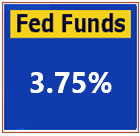
Fed starting to take the Band-Aid off, Fundstrat’s Tom Lee says “I think the band aid is getting pulled off. The market’s been waiting for this. It was selling off on the rumor and it’s time to buy the event,” said Tom Lee of Fundstrat. Powell says asset valuations are ‘somewhat elevated’ Fed Chairman Jerome Powell on Wednesday cited asset valuations as one of four key areas the central bank looks at when assessing financial stability risk. Stocks hit session highs as Powell speaks. Stocks hit their highs of the day Wednesday as Fed Chairman Jerome Powell answered question following the central bank’s latest monetary policy announcement. There’s a risk that inflation may stay persistently high, Powell says. Powell says Covid omicron variant is a risk, but does not impact accelerated taper plans. Powell says ‘disappointing’ return to labor force participation could ‘take longer’. |