10-Year Treasury Yield
U.S. Treasury yields fell on Tuesday as investors assessed the outlook for the economy ahead of fresh data due this week which could provide hints about the Federal Reserve’s next policy moves. At 5:28 a.m. ET, the yield on the 10-year Treasury was down by 7 basis points at 3.443%. The 2-year Treasury was last down by more than 8 basis points at 4.06%. Yields and prices have an inverted relationship and one basis point equals 0.01%.
CFNAI nnnmeasures of capital expenditures and employment also rising
Shiller
nnn
FHFA
nnn
Conficebnce
nnnuarter of last year. Quarter-on-quarter, the economy grew 2.2%.
New Home Sales
nnn
MBA Purchase Applications
nnn
Durable
nnn
Intal Trade in goods
mmmm
retail Inv Adv
mmmm
Whole Inv Advance
mmmm
Jobless Claims
nnnnn
GDP
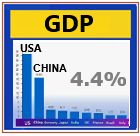
The U.S. economy has been surprisingly resilient in the face of aggressive interest rate hikes and stubborn inflation over the past year, but it started to show signs of wear and tear in the first quarter. Annualized U.S. gross domestic product growth slowed to 1.1%, the Bureau of Economic Analysis (BEA) reported Thursday, well below consensus expectations on Wall Street for 1.9%. At the same time, one of the Federal Reserve’s favorite inflation gauges, the personal consumption expenditures (PCE) index, increased to 4.2%, higher than the expected 3.7%.
Pending Home Sales nnnnn
Personal Income
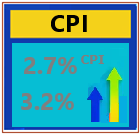
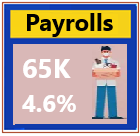
Key inflation gauge for the Fed rose 0.3% in March as expected. Despite a year’s worth of interest rate increases, inflation rose again in March, according to economic data released Friday that the Federal Reserve watches closely. The personal consumption expenditures price index excluding food and energy increased 0.3% for the month, in line with the Dow Jones estimate. On an annual basis, so-called core PCE increased 4.6%, slightly higher than the expectation for 4.5% and down 0.1 percentage point from February. Including the volatile food and energy components, headline PCE also rose just 0.1% for the month, equating to a 4.2% annual increase, down sharply from 5.1% in February. That measure peaked out around 7% in June 2022, the highest level since December 1981. The headline number was softer as energy prices slid 3.7% for the month while food costs declined 0.2%. Goods prices fell 0.2% while services increased 0.2%. In another key inflation measure for the Fed, the employment cost index increased 1.2% for the first quarter, higher than the 1% estimate. The inflationary pressures were reflected in the willingness of consumers to keep spending. Personal income rose 0.3% for the month but consumer spending was flat, as expected.
ECI
nn
Chicago PMI
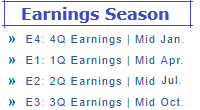
Just over half of S&P 500 companies have reported earnings thus far. Of those companies, 80% have beaten expectations, according to data from FactSet. That beat rate is roughly in line with a three-year average, according to data from The Earnings Scout.
Consumer Sentiment UM
Consumer sentiment matches expectations. The final reading on the University of Michigan’s consumer sentiment index came in at 63.5, matching a FactSet estimate. Consumer sentiment was little changed this month, inching up less than two index points from March,” wrote Surveys of Consumers director Joanne Hsu. “Buying conditions for durables improved 11% primarily on the basis of easing perceptions of unaffordability. Despite the increasingly negative news on business conditions heard by consumers, their short and long-run economic outlook improved modestly from last month.
Amazon
Amazon stock dips as uncertain cloud outlook overshadows revenue beat. What analysts are saying after Amazon’s latest earnings. Wall Street analysts remained bullish on Amazon after the company’s latest earnings, even as management raised concern about the company’s cloud business going forward. Amazon reported better-than-expected revenue on Thursday, but the stock’s initial pop was wiped out after executives raised concerns of ongoing weakness in cloud growth.Here are the key numbers: Earnings: 31 cents per share. Revenue: $127.4 billion vs. $124.5 billion expected, according to analysts surveyed by Refinitiv. Amazon reported first-quarter sales on Thursday that beat analysts’ estimates. The stock initially rallied in extended trading but then reversed course after executives suggested cloud revenue growth would continue to slow in the near term.
|