10-Year Treasury Yield
The 10-year Treasury yield settled at 0.97% on January 4, 2021.
S&P Case-Shiller Index
S&P Case-Shiller Index Shows Annual Home Price Gains Climbed To 9.5% In November 2020.
The S&P CoreLogic Case-Shiller U.S. National Home Price NSA Index, covering all nine U.S. census divisions, reported a 9.5% annual gain in November, up from 8.4% in the previous month. The 10-City Composite annual increase came in at 8.8%, up from 7.6% in the previous month. The 20-City Composite posted a 9.1% year-over-year gain, up from 8.0% in the previous month.
FHFA - Federal Housing Finance Agency House Price Index
FHFA House Price Index: Up 1.0% in November, Another All-Time High. House prices rose nationwide in November, up 1.0 percent from the previous month, according to the latest Federal Housing Finance Agency House Price Index (FHFA HPI®). House prices rose 11.0 percent from November 2019 to November 2020. The previously reported 1.5 percent price change for October 2020 remained unchanged.
Consumer Confidence
The Conference Board Consumer Confidence Index improved moderately in January 2021, after decreasing in December. The Index now stands at 89.3 (1985=100), up from 87.1 in December. However, the Present Situation Index – based on consumers' assessment of current business and labor market conditions – decreased from 87.2 to 84.4. Consumer confidence rebounds on vaccine hopes and improving economy.
The index of consumer confidence rose to 89.3 this month from a revised 87.1 in December, the Conference Board said Tuesday. Last month’s reading was the lowest in five months.
Consumer confidence is still far below pre-pandemic levels, however. The index stood at 132.6 before the viral outbreak last February.
Consumer Sentiment UM
Consumer sentiment slid 2.1% to 79.0 in January 2021, according to final results from the University of Michigan Survey of Consumers. This represents a 20.8% decrease year over year. Consumer sentiment remained largely unchanged in the last half of January from earlier in the month...-
Consumer sentiment slid 2.1% to 79.0 in January 2021, according to final results from the University of Michigan Survey of Consumers. This represents a 20.8% decrease year over year. Consumer sentiment remained largely unchanged in the last half of January from earlier in the month. U.S. consumer sentiment was largely unchanged in the second half of January as the coronavirus pandemic raged on, according to new survey data from the University of Michigan. The data also showed a stark partisan divergence in the economic outlook.
The headline consumer sentiment index slipped to 79.0 from an initial reading of 79.2 in January, compared with a final reading of 80.7 in December. The consensus estimate of economists polled by Econoday was for an index reading of 79.2. The index of consumer expectations fell to 74.0 from 74.6, while the current economic conditions index dropped to 86.7 from 90.0...
The Chicago Fed National Activity Index (CFNAI)
The Chicago Fed National Activity Index in the US jumped to 0.52 in December of 2020 from an upwardly revised 0.31 in November. The reading pointed to the 8th consecutive month of growing activity, led by improvements in production-related indicators (0.44 vs 0.13). On the other hand, the contribution of the sales, orders, and inventories category moved down to 0.05 from 0.09 and employment-related indicators to 0.13 from 0.15 in November while the contribution of the personal consumption and housing category fell further to -0.09 from -0.06.
The index’s three-month moving average, CFNAI-MA3, ticked up to 0.61 in December from 0.59 in November
Employment
Four times as many jobs were lost last year due to the coronavirus pandemic as during the worst part of the global financial crisis in 2009, a U.N. report said Monday.
The International Labor Organization estimated that the restrictions on businesses and public life destroyed 8.8% of all work hours around the world last year. That is equivalent to 255 million full-time jobs — quadruple the impact of the financial crisis over a decade ago.
U.S. Durable-Goods Orders
Growth in demand for long-lasting manufactured goods slowed in December 2020, as the overall economic recovery lost momentum at the end of last year. New orders for durable goods—products designed to last at least three years—increased 0.2% to a seasonally adjusted $245.3 billion in December compared with November, the Commerce Department reported Wednesday. That was the eighth straight month of gains, although the increase was the smallest since last August. U.S. Durable-Goods Orders rose less than forecast in December 2020.Four times as many jobs were lost last year due to the coronavirus pandemic as during the worst part of the global financial crisis in 2009, a U.N. report said Monday.
Wholesale Inventories Advance
Advance Wholesale Inventories. Wholesale inventories for December 2020, adjusted for seasonal variations but not for price changes, were estimated at an end-of-month level of $650.4 billion, up 0.1 percent (±0.4 percent)* from November 2020, and were down 1.8 percent (±0.9 percent) from December 2019. The October 2020 to November 2020 percentage change was unrevised from the preliminary estimate of virtually unchanged (±0.2 percent).
Jobless Claims
Weekly unemployment claims pulled back by 67,000 from the prior week’s elevated levels, dipping below 900,000 for the first time in three weeks. Still, new claims remained historically high compared to pre-pandemic levels.
Meanwhile, weekly jobless claims for the week ended January 23 improved to 847,000, beating estimates for 875,000. However, the previous week’s new claims were revised up to 914,000 from 900,000. Continuing claims, measuring the total number of individuals still receiving state benefits, fell below 5 million for a back-to-back weeks and reached the lowest level since mid-March.
MSFT
Microsoft reports 17% revenue growth as cloud business accelerates.Microsoft stock rose as much as 6% in extended trading on Tuesday after the company reported fiscal second-quarter earnings Azure cloud revenue growth and quarterly revenue guidance that exceeded analysts’ expectations. Here’s how the company did: Earnings: $2.03 per share, adjusted, vs. $1.64 per share as expected by analysts, according to Refinitiv. Revenue: $43.08 billion, vs. $40.18 billion as expected by analysts, according to Refinitiv.
AAPL
Apple reports blowout quarter, booking more than $100 billion in revenue for the first time. Apple delivered its largest quarter by revenue of all time on Wednesday at $111.4 billion in its first-quarter earnings report for fiscal 2021.It’s the first time Apple crossed the symbolic $100 billion mark in a single quarter, and sales were up 21% year over year. Sales for every product category rose by double-digit percentage points. Here’s how Apple did versus consensus Refinitiv estimates: EPS: $1.68 vs. $1.41 estimated. Revenue: $111.44 billion vs. $103.28 billion estimated, up 21% year over year.
Real Gross Domestic Product - GDP
Other less economic data disappointed on Thursday, however. U.S. gross domestic product (GDP) grew for a second straight quarter in the final three months of 2020, albeit with slowing momentum heading into the new year, largely as a result of weakening consumer spending. All told, the U.S. economy contracted at a 3.5% annualized rate in 2020, for the biggest drop since 1946.
A day earlier, the Federal Open Market Committee issued a January monetary policy statement that pointed to moderating growth in the virus-stricken economy. Still, the central bank reiterated its commitment to keeping interest rates low and asset purchases robust as the economy weathers the COVID-19 pandemic.
4Q GDP comes in slightly below expectations, weekly jobless claims improve.
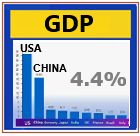
Fourth-quarter gross domestic product, tracking economic activity in the final three months of 2020, expanded at a 4.0% annualized clip, falling short of the 4.2% increase expected, according to Bloomberg data. This followed a record 33.4% annualized increase in the third quarter, which in turn had followed a record plunge in the second quarter. Personal consumption increased at an only 2.5% annualized rate, or well below the 3.1% expected. All told, gross domestic product remained below pre-pandemic levels from the fourth quarter of 2019.
New Home Sales
New home sales jumped less than expected in December 2020, but recovered from November decline.
New home sales increased only 1.6% in December from November, the Commerce Department reported on Thursday, missing consensus economists’ expectations for a 3.5% jump. Still, this marked the first month-over-month rise in new home sales since July, and represented a rebound from November, when new home sales slid 12.6%.
The increase brought new home sales to a seasonally adjusted annual rate of 842,000 in December 2020, moderating compared to the massive 979,000 rate seen in July.
Leading Indicators
The Conference Board Leading Economic Index (LEI) for the U.S. increased 0.3 percent in December 2020 to 109.5 (2016 = 100), following a 0.7 percent increase in November and a 0.9 percent increase in October. The US LEI’s slowing pace of increase in December suggests that US economic growth continues to moderate in the first quarter of 2021. Improvements in the US LEI were very broad-based among the leading indicators, except for rising initial claims for unemployment insurance and a mixed consumer outlook on business and economic conditions. While the resurgence of COVID-19 and weak labor markets remain barriers to growth, The Conference Board expects the economy to expand by at least 2.0 percent (annual rate) in Q1 and then gain momentum throughout the year.
U.S. Trade in Goods for Dec. 2020
US trade deficit in goods narrows 3.5% in December 2020. Jan 28, 2021 — The U.S. trade deficit in goods narrowed 3.5% in December, the Commerce ... Exports rise more strongly than imports in final month of 2020. After spiking higher in the prior month, the U.S. international trade deficit in goods reversed course in December. The gap in goods narrowed to $82.5 billion in the final month of 2020 from $85.5 in November, the Commerce Department said Thursday. The deficit was $80.4 billion in October.
Advanced figures for wholesale trade rose 0.1% while retail inventories jumped 1% in December. What happened: Exports of goods rose 4.6% in December and are down 2.6% for the past year. Imports rose 1.4% in December and are up 4.7% over the past 12 months. Auto imports were strong in December, while exports were led by foods, feeds, and beverages. The U.S. government will release overall trade figures for December next week. The U.S. trade deficit has widened throughout most of the year following the pandemic. The trade sector has recovered from the shock fueled by Americans buying more imported goods while stuck at home. Market reaction: U.S. stock futures were mixed Thursday a day after steep loss.
FOMC Meeting 26-27/March/2021
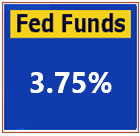
The Federal Reserve kept its benchmark interest rate anchored near zero following the conclusion of its two-day meeting Wednesday.
Along with the commitment to zero rates, the central bank said it will keep buying at least $120 billion of bonds a month.
The post-meeting statement noted that growth has “moderated in recent months.”
In addition to repeating its belief that the path of the economy is dependent on the virus progression, the statement added “progress on vaccinations” to its watchlist.
The decision means that the fed funds rate, which serves as a benchmark for a variety of consumer debt instruments, will remain anchored in a range between 0% and 0.25% and most recently was trading at 0.08%.
The Fed took the rate to zero in the early days of the Covid-19 pandemic and has left it there since. In recent months, officials have made their commitment to low rates even more aggressive, vowing not to start hiking even if inflation gets close to or slightly exceeds the central bank’s 2% target.
AAPL Earnings
Cupertino, California — January 27, 2021 — Apple today announced financial results for its fiscal 2021 first quarter ended December 26, 2020. The Company posted all-time record revenue of $111.4 billion, up 21 percent year over year, and quarterly earnings per diluted share of $1.68, up 35 percent.
Cupertino, California — July 30, 2020 — Apple today announced financial results for its fiscal 2020 third quarter ended June 27, 2020. The Company posted quarterly revenue of $59.7 billion, an increase of 11 percent from the year-ago quarter, and quarterly earnings per diluted share of $2.58, up 18 percent.Jul
Pending Home Sales
Homebuyers signed fewer contracts to buy existing homes in December 2020, as record high prices and record low supply stood in the way of strong demand. The pending home sales index from the National Association of Realtors fell 0.3% month to month, the fourth straight monthly decline. This index is a predictor of future closed sales. Pending sales were, however, 21.4% higher than December 2019, and this was the highest December reading on record.
Personal Income
Americans’ personal income increased by 0.6% in December, driving their savings positions higher. The gains, reported by the Commerce Department on Friday, are creating the conditions for what we believe will be a consumer-led boom in the second half of the year.
Personal Income and Outlays, January 2021. Personal income increased $1,954.7 billion (10.0 percent) in January according to estimates released today by the Bureau of Economic Analysis (tables 3 and 5). Disposable personal income (DPI) increased $1,963.2 billion (11.4 percent) and personal consumption expenditures (PCE) increased $340.9 billion (2.4 percent). Real DPI increased 11.0 percent in January and Real PCE increased 2.0 percent; goods increased 5.1 percent and services increased 0.5 percent (tables 5 and 7). The PCE price index increased 0.3 percent. Excluding food and energy, the PCE price index also increased 0.3 percent .
Consumer Spending or Real PCE
U.S. consumer spending dipped in December even as personal incomes moved upward.
Core PCE Price Index Dec. 2020 - Inflation
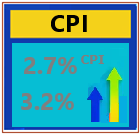
Core personal consumption expenditures, which is the Federal Reserve’s policy variable for inflation, increased to 1.5% on a year-ago basis in December 2020. Yes, the core PCE and other inflation metrics will begin to move higher this spring because of year-ago comparisons distorted by the economic collapse of last spring. But those increases will have more to do with last spring’s collapse in the price of oil, for example, than rising wages or shortages of supply. For this reason, we do not expect a sustained increase in the price level and anticipate that transitory price increases will fade later in 2021. The Fed will look right through that transitory move and not alter its approach to the policy rate, asset purchases and forward guidance. Instead, the Fed will continue to focus on how long it will take the economy to return to full employment. |