10-Year Treasury Yield
The yield on the 10-year Treasury rose as traders downplayed October jobs data showing meager job growth that was hurt by hurricanes and striking workers, and was far below what Wall Street was expecting. The 10-year Treasury yield jumped nearly 10 basis points at 4.382%. The 2-year Treasury yield was higher by 5 basis points at 4.216%. The uptick in yields marks a continuation of their recent rebound from October.
International Trade in Goods
nnnnnnn
Wholesale Trade Adv
nnnnn
S&P Case Shiller Index
Y/Y: The S&P CoreLogic Case-Shiller U.S. National Home Price NSA Index, covering all nine U.S. census divisions, reported a 4.2% annual return for August, down from a 4.8% annual gain in the previous month. The 10-City Composite saw an annual increase of 6.0%, down from a 6.8% annual increase in the previous month. The 20-City Composite posted a year-over-year increase of 5.2%, dropping from a 5.9% increase in the previous month. New York again reported the highest annual gain among the 20 cities with an 8.1% increase in August, followed by Las Vegas and Chicago with annual increases of 7.3% and 7.2%, respectively. Denver posted the smallest year-over-year growth of 0.7%. MONTH-OVER-MONTH: The pre-seasonally adjusted U.S. National Index, 20-City Composite, and 10-City Composite upward trends reversed in August, with a -0.1% drop for the national index, and the 20-City and 10-City Composites saw -0.3% and -0.4% returns for this month, respectively. After seasonal adjustment, the U.S. National Index posted a month-over-month increase of 0.3%, while the 20-City and 10-City Composite reported a monthly rise of 0.4% and 0.3%, respectively.
FHFA House Price
U.S. single-family home prices increased in August amid still tight supply, which together with elevated mortgage rates continue to keep prospective buyers on the sidelines. House prices rose 0.3% on a month-on-month basis after gaining 0.2% in July, the Federal Housing Finance Agency said on Tuesday. They increased 4.2% in the 12 months through August after an upwardly revised 4.7% advance in July. The rise in annual house prices was previously reported to have been 4.5%.
Consumer Confidence
U.S. consumer confidence increased to a nine-month high in October amid improved perceptions of the labor market. The Conference Board said on Tuesday its consumer confidence index rose to 108.7 this month from a upwardly revised 99.2 in September. Economists polled by Reuters had forecast the index climbing to 99.5 from the previously reported 98.7. "Consumer confidence recorded the strongest monthly gain since March 2021, but still did not break free of the narrow range that has prevailed over the past two years," said Dana Peterson, the chief economist at the Conference Board. The share of consumers who viewed jobs as being "plentiful" rose to 35.1% from 31.3% in September. Some 16.8% of consumers said jobs were "hard to get," down from 18.6% last month.
JOLTS
Job openings fall to pre-pandemic levels as US labor market continues to cool down. There were an estimated 7.4 million unfilled jobs on the last day of September, a drop from August’s revised tally of 7.86 million openings, according to new data released Tuesday by the Bureau of Labor Statistics. The largest drop-offs in openings were in industries that have driven much of the job growth in recent years: health care and social assistance, and government, according to the report. Economists were expecting the number of job openings to land at around 7.9 million, declining from the prior month’s initial estimate of 8.04 million, according to FactSet estimates. The decline in job openings reflects a labor market that has slowed back to a pre-pandemic pace after experiencing years of blockbuster growth: The rate of openings as a percentage of total employment mirrors what was seen throughout much of 2018 and 2019, BLS data shows.
Geopolitical Risk
mmmm
MBA Purchase Applications
mmm
Central Bank - Japan
nnnnnn
ADP Employment Rpt
nnnnnn
Gross Domesctic Product (GDP)
nnnnnn
Pending Home Sales
nnnnnn
Oil - Commodity
mmmm
China PMI- Major Economies
China’s factory activity expands for the first time since April, official survey shows. China’s official purchasing managers’ index for October came in at 50.1, in expansionary territory for the first time since April, according to National Bureau of Statistics data released Thursday. The data beat expectations for 49.9, according to a Reuters poll. The statistics bureau’s PMI for non-manufacturing activity rose to 50.2 in October. That was up from 50 in September but below August’s 50.3 print.
Jobless Claims
Initial filings for unemployment benefits totaled 216,000 for the week ended Oct. 26, a decrease of 12,000 from the previous period’s upwardly revised level, according to the Labor Department. The total was also below the 230,000 forecast.
Personal Income
Personal income increased 0.3%, slightly higher than the August number and in line with expectations. Consumer spending rose 0.5%, topping the outlook by 0.1 percentage point. The personal saving rate moved down to 4.6%, its lowest of the year.
Consumer Spending
The personal consumption expenditures price index showed a seasonally adjusted 0.2% increase for the month, with the 12-month inflation rate at 2.1%, both in line with Dow Jones estimates.
Core PCE
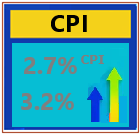
Key inflation rate hits 2.1% in September, as expected, closing in on Fed target. However, the core inflation rate was at 2.7% after the measure increased 0.3% on a monthly basis.The personal consumption expenditures price index showed a seasonally adjusted 0.2% increase for the month, with the 12-month inflation rate at 2.1%, both in line with Dow Jones estimates. The Fed uses the PCE reading as its primary inflation gauge, though policymakers also follow a variety of other indicators. Fed officials target inflation at a 2% annual rate, a level it has not achieved since February 2021. The September headline rate was down 0.2 percentage point from August.
ECI Emloyment Cost Index
The Bureau of Labor Statistics reported that the employment cost index increased 0.8% in the third quarter, 0.1 percentage below forecast. On a 12-month basis, the index, which measures wages, salaries and benefits, increased 3.9%, compared with a 2.4% increase in the consumer price index.
Chicago PMI
The Chicago Business Barometer, also known as the Chicago PMI, sank to 41.6 in October 2024 from 46.6 in September and well below market estimates of 47. The Chicago Purchasing Managers' Index (PMI) determines the economic health of the manufacturing sector in Chicago region. A reading above 50 indicates expansion of the manufacturing sector; a reading below indicates contraction. The Chicago PMI can be of some help in forecasting the ISM manufacturing PMI.
Fed Balance Sheet
nnn
Mortgage Rates
Mortgage rates initially dropped after the Federal Reserve began cutting interest rates last month, but they have risen over the past four weeks as solid economic data forced traders to surrender hopes for another 50-basis-point rate cut next month. The average rate on the popular 30-year fixed-rate mortgage rose to 6.54% last week from 6.44% in the prior week, data from mortgage finance agency Freddie Mac showed.
Non-Farm Payrolls
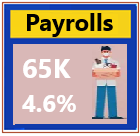
U.S. economy added just 12,000 jobs in October, impacted by hurricanes, Boeing strike. Nonfarm payrolls increased by 12,000 for the month, down sharply from September and below the Dow Jones estimate for 100,000. Nonfarm payrolls increased by 12,000 for the month, down sharply from September and below the Dow Jones estimate for 100,000, the Bureau of Labor Statistics reported Friday. In what had already been expected to be a downbeat report, October posted the smallest gain since December 2020.
Unemployment Rate
The unemployment rate held at 4.1%, in line with expectations.The BLS noted that the Boeing strike likely subtracted 44,000 jobs in the manufacturing sector, while hurricanes also likely held back the total. Revisions lowered previously reported job creation totals by 112,000 for August and September combined. The unemployment rate, however, held at 4.1%, in line with expectations. A broader measure of unemployment that includes discouraged workers and those holding part-time jobs for economic reasons also was unchanged at 7.7%.
PMI Mfg Index
nnnnnn
ISM Mfg Index
nnnnnn
Construction Spending
nnnnnn
Hedging - Gold
mmm
S&P 500 Index - Week Performance
mmm |