US Dollar Index
As of mid-February 2026, the US Dollar Index (DXY) is experiencing a slight rebound above 97, breaking a sharp downtrend that saw it hit multi-year lows in January. Despite recent downward pressure driven by market concerns over administration policies favoring a weaker dollar and long-term depreciation, the greenback has temporarily strengthened against peers like the EUR and GBP, aided by safe-haven demand.
10-Year Treasury Yield
The 10-year Treasury yield was relatively unchanged on Tuesday as investors looked ahead to more delayed data releases during the holiday-shortened trading week. The yield on the 10-year Treasury rose less than 1 basis point to 4.058%, while the 30-year Treasury bond yield fell 1 basis point to 4.689%. The 2-year Treasury note yield was more than 2 basis points higher at 3.439%.
Retail Sales
Report Delayed due to the government shutdown,
Empire State Mfg Index
NY Empire State Manufacturing Index. Business activity increased modestly in New York State in February 2026 according to firms responding to the Empire State Manufacturing Survey. The headline general business conditions index was little changed at 7.1, its fourth positive reading in five months. Consensus was 7.0 and prior 7.7.
Business Inventories
Report Delayed due to the government shutdown,
Housing Market Index
The NAHB/Wells Fargo Housing Market Index eased to 36 in February of 2026 from 37 in the previous month, contrasting slightly with market expectations that it would improve to 38. It was the softest reading in five months, reflecting continued challenges in the US housing market.
Crypto World Bitcoin
long-term crypto investors have been selling to front-run the four-year cycle. The general thesis is that crypto has historically followed four-year cycles, with down years being 2014, 2018, and 2022 previously. So, traders think 2026 is also going to be a down year and are therefore exiting markets after making gains.
MBA Mortgage Applications
The latest news from the Mortgage Bankers Association (MBA) indicates a 2.8% composite increase in mortgage applications from the previous week, with refinance applications leading the charge. The Refinance Index rose by 7% and was 132% higher than the same week one year ago, marking the strongest week for refinancing since mid-January. The Purchase Index, however, fell by 3% from the previous week, reflecting a decrease in homebuying demand. Despite this, VA purchase applications rose by 4%, indicating a positive trend in the market. The overall market activity reflects a shift in demand, with refinance applications increasing across all loan types, while purchase demand is more cautious.
Housing Starts
December 2025 housing starts comes in at 1.4M, more than expected. Housing starts rose 6.2% month-on-month (m/m) in December to 1.40 million (annualized) units, stronger than consensus expectations for 1.31 million units. This followed a 3.9% m/m uptick in November.
Building Permits
U.S. housing permits rose 4.3% in December 2025 to a 1.45 million seasonally adjusted annual rate, exceeding expectations. While overall, permits were down 2.2% from December 2024, the month-over-month increase was driven by a 15.2% surge in multifamily units, even as single-family permits declined 1.7%.
Durable Goods Orders
In December 2025, new orders for US-manufactured durable goods decreased by 1.4% compared to the previous month. This decline was influenced by a significant drop in transportation equipment, particularly in the non-defense aircraft sector. Despite this, orders for capital goods decreased by 3.9%, but there was a slight increase for defense aircraft and parts, and computers and electronic products saw a 3% increase. This data is usually revised via the Factory Orders report released about a week later. Durable goods are defined as hard products having a life expectancy of more than 3 years, such as automobiles, computers, appliances, and airplanes
Industrial Production
U.S. Industrial Production Climbs 0.7% In January, More Than Expected. Partly reflecting a surge in utilities output, the Federal Reserve released a report on Wednesday showing industrial production in the U.S. increased by more than expected in the month of January. The Fed said industrial production grew by 0.7 percent in January after rising by a downwardly revised 0.2 percent in December.Economists had expected industrial production to climb by 0.4 percent, matching the increase originally reported for the previous month.
EIA Crude Oil Report
Oil jumps 4% after Vance says Iran ignored key U.S. demands, military strikes on the table. Oil prices rose more than 4% on Wednesday, after Vice President JD Vance said Iran did not address U.S. red lines in nuclear talks this week and President Donald Trump reserves the right to use military force.
FOMC Minutes
After the January meeting, in which Fed officials held rates steady following three consecutive cuts at the end of 2025, the policy statement read: "In considering the extent and timing of additional adjustments to the target range for the federal funds rate, the Committee will carefully assess incoming data, the evolving outlook, and the balance of risks." Several members indicated that they would have supported a two-sided description of the Fed's future interest rate decisions that would reflect the possibility that raising rates could be appropriate if inflation remains above the central bank's 2% target. Several Federal Reserve officials anticipate further interest rate cuts if inflation were to drop, while others see holding rates for "some time," according to minutes of the central bank's January policy meeting released Wednesday. Minutes of the Federal Reserve's January 27-28 policy meeting published on Wednesday showed the "vast majority of participants judged that labor market conditions had been showing some signs of stabilization." Still, concerns over downside risks to the labor market remained.
TIC - Treasury Intal Capital
The U.S. Department of the Treasury reported a net inflow of $44.9 billion in Treasury International Capital (TIC) for December 2025, according to data released Wednesday.After accounting for adjustments, including estimated foreign portfolio acquisitions of U.S. stocks through stock swaps, the overall net foreign purchases of long-term securities totaled an estimated $28.0 billion in December. The data also showed that foreign residents increased their holdings of U.S. Treasury bills by $9.7 billion. Foreign resident holdings of all dollar-denominated short-term U.S. securities and other custody liabilities rose by $12.1 billion.
Hedging Gold
Gold price will hit $6,200 by June, precious, industrial metals set for further gains as volatility eases – UBS’ Schnider. While commodity prices were volatile at the end of January, precious metals, oil, and industrial metals all posted gains for the month, and as volatility subsides, gold and other key commodities will enjoy supportive fundamentals.
Jobless Initial Claims
The number of Americans filing new applications for unemployment benefits fell more than expected last week, consistent with a stabilizing labor market. Initial claims for state unemployment benefits dropped 23,000 to a seasonally adjusted 206,0000 for the week ended February 14, the Labor Department said on Thursday. Economists polled by Reuters had forecast 225,000 claims for the latest week. Last week's drop marked a signficant decline in claims since they jumped to 232,000 at the end of January.
US Trade Balance
US trade deficit swells in December as imports surge; labor market holding steady. The U.S. trade deficit widened sharply in December amid a surge in imports, and the goods shortfall in 2025 was the highest on record despite President Donald Trump's tariffs on foreign manufactured merchandise.The second straight monthly deterioration in the trade deficit reported by the Commerce Department on Thursday suggested that trade made little or no contribution to gross domestic product in the fourth quarter. But most of the imports were capital goods, which should support business investment and keep expectations for strong economic growth The report was delayed because of last year's government shutdown. Imports increased 3.6% to $357.6 billion in December. Goods imports surged 3.8% to $280.2 billion, boosted by a $7.0 billion increase in industrial supplies and materials, mostly non-monetary gold, copper and crude oil. Capital goods imports increased $5.6 billion, lifted by computer accessories and telecommunications equipment. That rise is likely related to the construction of data centers to support artificial intelligence.intact.
US Trade Balance in Goods
Goods imports increased 4.3% to a record $3.44 trillion in 2025. There were record imports from 46 countries last year, led by Mexico, Taiwan and Vietnam. Some goods from Taiwan and Vietnam have been exempted from tariffs. The rise in imports last year was almost across the board, led by capital goods, mostly computers, computer accessories and telecommunications equipment. Imports of motor vehicles, parts and engines fell. The goods trade deficit widened 18.8% to $99.3 billion in December. Imports of services increased $2.0 billion to $77.4 billion amid gains in transport and travel services. Exports of services increased $0.5 billion to $106.5 billion. The larger-than-expected trade deficit prompted the Atlanta Federal Reserve to cut its fourth-quarter GDP growth estimate to a 3.0% annualized rate from a 3.6% pace earlier.
Philadelphia Fed Mfg Index
The Philly Fed's Manufacturing Business Outlook Survey is a monthly survey of about 250 manufacturers in the Third Federal Reserve District, which covers eastern Pennsylvania, southern New Jersey, and Delaware. Participants of the survey indicate the relative level of general business conditions in the region. Since this is a diffusion index, negative readings indicate contraction, positive ones indicate expansion. While it focuses exclusively on business in this district, this regional survey gives a reliable direction of the broader Chicago Fed's National Activity Index. The latest Philadelphia Fed manufacturing index showed activity expanded in February, with the index rising 3.7 points to 16.3. The latest reading marked the highest reading for the index since last September and was better than the forecast of 7.5.
Retail Inv Adv
The latest "advance" news on U.S. retail inventories for December 2025 indicates that they were flat (unchanged) month-over-month, which was below economists' expectations of a 0.1% gain.
Wholesale Inv Adv
The latest US wholesale inventories advance news indicates that inventories in the US increased by 0.2% in December 2025, matching November's figures and market expectations. This follows a period where inventory investment was a significant factor in the overall economy.
Pemding Home Sales
Pending U.S. Home Sales Fall 6% As Would-Be Buyers Sit Out Slow Winter Market. NAR Pending Home Sales Report Shows 0.8% Decrease in January. Pending home sales in January decreased by 0.8% from the prior month and 0.4% year-over-year, according to the National Association of REALTORS® Pending Home Sales Report. The report provides the real estate ecosystem—including agents and homebuyers and sellers—with data on the level of home sales under contract.
Leading Indicators LEI
The Conference Board Leading Economic Index® (LEI) for the US Continued to Decline in December 2025. (LEI) for the US declined by 0.2% in December 2025 to 97.6 (2016=100), following a 0.3% decline in November and a downwardly revised 0.2% decline in October. Overall, the LEI fell by 1.2% over the second half of 2025, a substantial improvement from its 2.8% contraction over the first half of 2025. The US LEI registered its fifth consecutive monthly decline in December, indicating continued softness in the economy in early 20.
Copper
Copper inventories across major exchanges, including Comex, Shanghai Futures Exchange, and London Metal Exchange, have reached their highest level in 23 years, totaling 1.02 million tons. According to NS3.AI, this increase is attributed to robust demand from sectors such as electric vehicles (EVs), data centers, and AI-related industrial applications. Major Wall Street banks are predicting a significant rise in copper prices, with estimates ranging from $10,000 to nearly $13,000 per tonne.
Fed Balance Sheet
Jerome Powell knows the Fed’s balance sheet got too big—Kevin Warsh has a plan, he just has to sell it without freaking out the markets. . The U.S. has accumulated $38.5 trillion in national debt under both Democratic and Republican administrations—a matter he says is “past time to get back to an adult conversation among elected officials about.” That said, Powell has never stood in the way of government spending: The Fed’s balance sheet, since the Great Financial Crisis of 2008, has ballooned. Currently, it is running at 24.6% of GDP. Historically, it has sat between 10% and 20%.
Earnings MCD
Walmart reports strong holiday growth, but earnings outlook falls short of estimates. Walmart topped fourth-quarter earnings and revenue estimates, but its current fiscal-year earnings outlook fell short of Wall Street’s expectations.Chief Financial Officer John David Rainey told CNBC the company again had strong gains in e-commerce and online pickup and delivery orders, particularly among higher-income consumers.Walmart said Thursday that holiday-quarter sales rose nearly 6% and its quarterly earnings and revenue surpassed Wall Street’s expectations as gains in e-commerce, advertising and its third-party marketplace boosted its business. For the full current fiscal year, Walmart said it expects net sales to increase by 3.5% to 4.5% and adjusted earnings per share to range from $2.75 to $2.85. That earnings outlook fell short of Wall Street’s expectations of $2.96 per share, according to LSEG. Here is what the big-box retailer reported for the fiscal fourth quarter compared with Wall Street’s estimates, according to a survey of analysts by LSEG: Earnings per share: 74 cents adjusted vs. 73 cents expected Revenue: $190.66 billion vs. $190.43 billion expected
Mortgage Rates
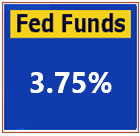
An effort launched by the Trump administration to improve home borrowing costs is not coming to much so far, meeting minutes from the Federal Reserve’s January 27-28 meeting, released on Wednesday, said. The minutes, describing a briefing by the New York Fed official responsible for implementing monetary policy, noted that plans by the administration to buy mortgage bonds had caused “a notable decline in mortgage-backed securities yields relative to those on comparable-maturity Treasury yields.”The biggest driver of lower mortgage rates has been the Fed’s easing in the cost of short-term credit, which saw officials lower their interest rate target by three quarters of a percentage point last year, to between 3.5% and 3.75%. The Fed is currently on hold as it seeks evidence inflation is coming down, amid market expectations of more cuts this year.
GDP
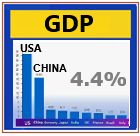
The BEA will publish its delayed advance fourth-quarter GDP estimate on Friday. The economy grew at a 4.4% pace in the July-September quarter.
CorePCE Inflation
Underlying U.S. inflation increased more than expected in December, and signs are pointing to a further acceleration in January, which would strengthen expectations that the Federal Reserve would not cut interest rates before June. The personal consumption expenditures price index, excluding the volatile food and energy components, rose 0.4% after an unrevised 0.2% gain in November, the Commerce Department's Bureau of Economic Analysis said on Friday. Economists polled by Reuters had forecast the so-called core PCE price index climbing 0.3%. In the 12 months through December, core PCE inflation advanced 3.0% after increasing 2.8% in November. January's PCE inflation data will be released on March 13. The reports have been delayed by last year's shutdown of the government.
Personal Income - Consumer
The government also reported that consumer spending, which accounts for more than two-thirds of economic activity, rose 0.4% in December after increasing by the same margin in November. When adjusted for inflation, consumer spending gained 0.1%, setting it on a slow growth trajectory heading into the first quarter.
PMI Mfg Flash
Flash PMI indicates slowest business growth for ten months in February amid weak demand, high prices and bad weather. U.S. business activity expanded in February at the slowest rate in 10 months as orders receded at factories, new business growth slackened for services firms and employment growth stalled across the board, a survey showed on Friday. S&P Global said its flash U.S. Composite PMI Output Index, which tracks the manufacturing and services sectors, slipped this month to 52.3 - the lowest since April - from 53.0 in January. A reading above 50 indicates expansion in the private sector. Both services and manufacturing flash PMIs edged down this month.
Consumer Sentiment UM
Consumer sentiment in February shows high prices weigh on US households, but Supreme Court could offer relief. he final read on consumer sentiment in February showed Americans' feelings about the economy were little changed from January. The University of Michigan's Index of Consumer Sentiment for February came in at 56.6, up 0.4% from January, but below last year's level of 64.7. The small increase was lower than the 57.2 reading expected by economists.
New Home Sales
A consensus of economists polled by The Wall Street Journal expected 738,000 sales in December. Mike Blake/Reuters The rate of new home sales jumped in November, but fell back slightly in December. Here are the main takeaways from the delayed report released by the Census Bureau and the Department of Housing and Urban Development Friday:Sales of new single-family homes rose to 758,000 in November, from 656,000 in October, and slipped to 745,000 in December. U.S. New Home Sales Rise in November But Fall in December, Delayed Data Say. Sales of new single-family homes rose to 758,000 in November, from 656,000 in October, and slipped to 745,000 in December.
S&P 500 Index
S&P 500 Index ended in positive 1.31%.
VIX Volatility Index
VIX Index ended in -12.19% which is positive. VIX above 20 is dangerous.
Geopolitical Risk
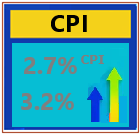
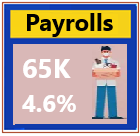
Since the meeting, labor data has been a mixed bag, with indications that private sector job creation is slowing further and that the meager growth is coming almost entirely from the health-care sector. However, the unemployment rate dipped to 4.3% in January and nonfarm payroll growth was stronger than expected. On inflation, the Fed’s key personal consumption expenditures prices metric has been mired around 3%. However, a report last week showed that the consumer price index when excluding food and energy prices was at its lowest in nearly five years. Futures traders are placing the best bet for the next cut to come in June, with another in September or October, according to the CME Group’s FedWatch gauge.
|