Consumer Price Index (CPI) - Inflation
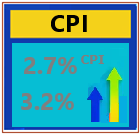
CPI data show U.S. retail prices up 0.3% in January, unchanged at core.
U.S. consumer prices rose moderately in January 2021 and underlying inflation remained benign as the pandemic continues to be a drag on the labor market and services industry.
The Labor Department said on Wednesday its consumer price index increased 0.3% last month after climbing 0.4% in December 2020. In the 12 months through January 2021 the CPI rose 1.4% after a similar gain in December 2020. Economists polled by Reuters had forecast the CPI rising 0.3% and increasing 1.5% year-on-year.
U.S. Budget Deficit
The U.S. budget deficit jumped to $163 billion in January. The numbers: The U.S. budget deficit increased sharply in January to $163 billion as Washington funneled more financial aid to families and unemployed workers to cushion the latest blow from the coronavirus pandemic.
The deficit increased last month from a $33 billion budget gap in the same month of 2020, the Treasury Department said (link) Wednesday.
The budget gap in the first four months of the current fiscal year was 89% higher compared to a year earlier -- $736 billion vs. $347 billion.
The deficit topped $3 trillion in the fiscal year that ended on Sept. 30. It was the largest deficit as a percentage of gross domestic product since 1945.
Historically large budget deficits aren't going away anytime soon. Adding to $900 billion in fresh federal aid approved in the waning days of the Trump administration, President Biden is working on a package of almost $2 trillion in additional stimulus. Democrats appear to have enough votes to pass the measure.
The size of the deficit in 2021 will depend on the amount of aid that gets approved and how much is spent before the fiscal year runs out on Sept. 30.
The enormous gusher of federal spending, especially with the economy well on the way to recovery, is raising concerns some Wall Street investors and economists about sharp increase in inflation later this year or next. But so far there's little sign of it.
Market reaction: The yield on the 10-year Treasury note has been on the rise over worries about inflation and rising prospects for a stronger economic recovery as more Americans get vaccinated.
Jobless claims
Initial state jobless claims fall to 793,000 from upwardly revised 812,0001. First-time claims for unemployment insurance totaled 793,000 last week as declining Covid-19 cases provided little relief for the jobs market.
The total for the week ended Feb. 6 was above the 760,000 forecast from economists surveyed by Dow Jones but a slight decrease from the previous week’s upwardly revised total of 812,000.
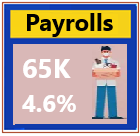
The pandemic era has provided a long struggle for the jobs market to get back to its previous level. Nonfarm payrolls increased by just 49,000 in January, while the unemployment rate fell to 6.3% primarily due to a decline in the labor force.
Continuing claims, which run a week behind the weekly claims number, also declined, falling 145,000 to 4.54 million.
There remain more than 10 million unemployed workers despite more about 12.5 million jobs reclaimed since the depths of the pandemic in March and April 2020.
Oil
OPEC trims forecast for rebound in oil demand this year.
JOLTS
US job openings jumped by 74,000 in December as the labor market unexpectedly nosedived.US job openings gained by 74,000 to 6.6 million in December, according to Tuesday JOLTS data. The reading handily exceeds economists' consensus estimate of 6.4 million openings. The hiring rate dropped to 3.9% from 4.2%, the same level seen just before the pandemic. US job openings gained by 74,000 to 6.6 million in December, according to Tuesday JOLTS data. The reading handily exceeds economists' consensus estimate of 6.4 million openings. The hiring rate dropped to 3.9% from 4.2%, the same level seen just before the pandemic.
Consumer Sentiment UM
U.S. consumer sentiment drops to lowest level in six months. US Consumer Sentiment Unexpectedly Falls to a Six-Month Low. Consumers’ view of the economy slipped in early February 2021 as Americans were more downbeat about future business conditions, according to a University of Michigan survey released Friday. The preliminary estimate of the index of consumer sentiment came in at 76.2 in February 2021, down from 79.0 in January 2021. The decline in sentiment was concentrated in the measure of future expectations and among households with incomes below $75,000, said Richard Curtin, the survey’s chief economist.
Wholesale Trade Preliminary
Wholesale trade improved in December 2020 compared to the same month a year ago and with November, according to the latest report from the U.S. Census Bureau. December 2020 sales of merchant wholesalers, except manufacturers’ sales branches and offices, after adjustment for seasonal variations and trading day differences but not for price changes, were $503.8 billion, up 1.7% from the revised December 2019 level and up 1.2% from the revised November 2020 level. The October 2020 to November 2020 percent change was revised from the preliminary estimate of up 0.2% to up 0.3%. Total inventories of merchant wholesalers, except manufacturers’ sales branches and offices, after adjustment for seasonal variations but not for price changes, were $651.5 billion at the end of December, down 1.6% from the revised December 2019 level and up 0.3% from the revised November level. The November 2020 to December 2020 percent change was revised from the advance estimate of up 0.1% to up 0.3%. The December inventories/sales ratio for merchant wholesalers, except manufacturers’ sales branches and offices, based on seasonally adjusted data, was 1.29. The December 2019 ratio was 1.34.
|