nnnnnnnnnnnn
n
JOLTS
The so-called Great Resignation lost some steam in October 2021, with the total number of workers leaving their jobs either due to dissatisfaction or better opportunities elsewhere declining, the Labor Department reported Wednesday. Job quitters fell by 4.7%, falling to 4.16 million from 4.36 million, the department said in its Job Openings and Labor Turnover Survey. The rate as a share of the workforce fell from 3% to 2.8%.
There were 11 million job openings while hiring remained steady and quitting cooled slightly in October, according to the Labor Department’s latest Job Openings and Labor Turnover report. Despite the small drop in quits, turnover remains historically high as 4.2 million people quit their job in October, down from a record-high 4.4 million people, or 3% of workers, who quit in September. Employers are having trouble filling open job. October’s robust 11 million job openings is just below a recent high of 11.1 million vacancies in July. Openings increased the most in accommodation and food services, nondurable goods manufacturing, and educational services, while they decreased the most in state and local government, excluding education.
The JOLTS report is closely watched at the Federal Reserve and elsewhere for signs of labor market tightness. While the quits rate dropped, the level of job openings accelerated to just below its all-time high. That number totaled 11.03 million, an increase of 4.1% as the rate rose to 6.9% from 6.7%. The number of openings exceeded those looking for jobs by 3.6 million in October. JOLTS data runs a month behind the more closely followed nonfarm payrolls report, which showed a gain of 546,000 for the month.
Productiviy and Cost
Nonfarm business sector labor productivity decreased at an annual rate of 5.2 percent in the third quarter of 2021. That was the largest decline in quarterly productivity since the second quarter of 1960, when productivity decreased 6.1 percent. In the third quarter of 2021, output increased 1.8 percent and hours worked increased 7.4 percent. Unit labor costs in the nonfarm business sector increased at an annual rate of 9.6 percent in the third quarter of 2021, reflecting a 3.9-percent increase in hourly compensation and a 5.2-percent decrease in productivity.
Jobless Claims
Initial claims for unemployment insurance were expected to total 211,000 for the week ended Dec. 4, according to a Dow Jones economist survey. The total coincided with a large seasonal modification, as the unadjusted number was 280,665. But the move lower in claims, which fell from the 227,000 reported the week before, represents more progress for a labor market still struggling with a worker shortage and other pandemic-related fallout. Continuing claims, which run a week behind the headline number, increased 38,000 to just shy of 2 million. However, the four-week moving average for continuing claims, which irons out weekly volatility, dropped to 2.03 million, a decline of 54,250......Weekly jobless claims fall to 184,000, the lowest level in more than 52 years. Weekly jobless claims totaled 184,000 for the week ended Dec. 4, the lowest going back to Sept. 6, 1969. ontinuing claims, which run a week behind the headline number, increased 38,000 to just shy of 2 million...
Wholesale Trade (Pre) - Inventories
U.S. wholesale inventories increased a bit more than initially thought in October 2021, suggesting that the restocking of warehouses could again support economic growth this quarter. The Commerce Department said on Thursday that wholesale inventories accelerated 2.3%, instead of 2.2% as estimated last month. Stocks at wholesalers increased 1.4% in September. Economists polled by Reuters had expected inventories would be unrevised. Wholesale inventories jumped 14.4% in October from a year earlier. Inventories are a key part of gross domestic product. Wholesale inventories, excluding autos, advanced 2.3% in October. This component goes into the calculation of GDP. A moderate pace of inventory drawdown in the third quarter accounted for all of the 2.1% annualized rate of increase in GDP growth last quarter. Inventories were depleted in the first half of the year, and COVID-19 pandemic-related shortages are making it difficult to rebuild stocks.
Consumer Price Index (CPI) - Inflation
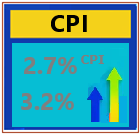
The Consumer Price Index rose 6.8 percent from November 2020 November 2021, the largest 12-month increase since the period ending June 1982. Energy prices rose 33.3 percent over the last year, and food prices increased 6.1 percent. Inflation rose 6.8% from a year ago in November, slightly higher than estimates according to the consumer price index released Friday. Excluding food and energy, the CPI increased 4.9%, in line with expectations. Surging prices for food, energy and shelter accounted for much of the gains. Inflation rose 6.8% over last November. Inflation accelerated at its fastest pace since 1982 in November, the Labor Department said Friday, putting pressure on the economic recovery and raising the stakes for the Federal Reserve.
The consumer price index, which measures the cost of a wide-ranging basket of goods and services, rose 0.8% for the month, good for a 6.8% pace on a year over year basis and the fastest rate since June 1982. Excluding food and energy prices, so-called core CPI was up 0.5% for the month and 4.9% from a year ago, which itself was the sharpest pickup since mid-1991. The Dow Jones estimate was for a 6.7% annual gain for headline CPI and 4.9% for core.
Consumer Sentiment UM
U.S. consumers' moods brightened unexpectedly in early December with an outsized increase in sentiment among lower-income households lifting overall sentiment from the lowest in a decade, a survey showed on Friday. The University of Michigan's closely watched Consumer Sentiment Index rose to 70.4 this month from a final November reading 67.4, which had been the lowest since November 2011. Economists polled by Reuters had been expecting it to slip further, with a median estimate of 67.1.
Consumer Credit
US consumer credit $ 16.9 billion vs. an estimate of $ 24.9 billion. US consumer credit for October 2021. US consumer credit fell in October to $ 16.9 billion from $ 24.9 billion in investment. Last month, consumer credit increased by $ 27.28 billion (previously it was $ 29.91 billion). Revolving credit increased by $ 6.5 billion. Non-revolving credit increased by $ 10.32 billion
Treasury Budget
The U.S. government on Friday posted a $191 billion budget deficit for November, 32% higher than the $145 billion shortfall a year earlier as pandemic-related spending drove record outlays for the month and outstripped a sharp rise in personal income tax receipts on the back of the rebounding economy. The November deficit was $4 billion below the median estimate among economists polled by Reuters of $195 billion. Receipts for the second month of the federal government's fiscal year totaled $281 billion, up 28% and a record for the month of November, the Treasury Department said. Individual tax receipts rose 27% to $244 billion. A Treasury official said the increase stems largely from the improvement in the economy and people continuing to return to work after last year's widespread shutdowns from the COVID-19 pandemic, which triggered a short but sharp recession.
nnnnnnnnnnnnnn
mm |