10-Year Treasury Yield
nnn
Wholesale Trade nnn
MBA Purchase Applications
Applications to refinance a home loan were less reactive, basically flat week to week and 57% lower than the same week a year ago. At today’s interest rates, there are very few borrowers who can benefit from a refinance. For those looking to tap their home equity, they are largely opting for second loans rather than cash-out refinances. Mortgage rates moved higher to start this week, and they could move decidedly in either direction after the government’s monthly report on inflation is released Wednesday.Mortgage applications to purchase a home rose 8% last week, compared with the previous week. They were, however, 31% lower than the same week one year ago, when interest rates were significantly lower. Buyers have been up against not only higher rates and higher home prices, but very limited supply. Today’s housing market is so pricey that homebuyers are highly sensitive to any distinct moves in mortgage rates. And that’s what happened last week. Rates dropped, and buyers dove in. The average contract interest rate for 30-year fixed-rate mortgages with conforming loan balances ($726,200 or less) decreased to 6.30% from 6.40%, with points decreasing to 0.55 from 0.59, including the origination fee, for loans with a 20% down payment, according to the Mortgage Bankers Association. That was a weekly average decline, but a sharper, one-day drop smack in the middle of the week was likely the impetus for demand.
CPI
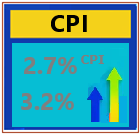
Inflation rises just 0.1% in March and 5% from a year ago as Fed rate hikes take hold. The consumer price index rose 0.1% in March and 5% from a year ago, below estimates. Excluding food and energy, the core CPI accelerated 0.4% and 5.6%, both as expected. Energy costs fell and food prices were flat. Used vehicle prices also declined. A 0.6% increase in shelter costs was the smallest gain since November, but still resulted in prices rising 8.2% on an annual basis. Inflation cooled in March as the Federal Reserve’s interest rate increases showed more impact, the Labor Department reported Wednesday. The consumer price index, a widely followed measure of the costs for goods and services in the U.S. economy, rose 0.1% for the month against a Dow Jones estimate for 0.2%, and 5% from a year ago versus the estimate of 5.1%. Excluding food and energy, the core CPI increased 0.4% and 5.6% on an annual basis, both as expected.
FOMC Minutes
While the release of the Fed’s minutes show a central bank that was uncertain in light of the recent banking turmoil, in light of the incoming data markets now expect above 50% chance for a 25bp rate hike in May and around three 25bp rate cuts after the summer,
Treasury Budaget
nnn
Jobless Claims
nnn.
PPI
The March producer price index, a measure of prices paid by companies, declined 0.5% from the prior month, even as economists polled by Dow Jones expected prices to stay the same. Excluding food and energy, the index shed 0.1% from the prior month, while economists estimated a 0.2% month-to-month increase.. The PPI, which is considered a leading indicator of consumer inflation, bolstered a trend of easing inflation seen in the March consumer price index report released Wednesday. Consumer prices grew 5% on an annual basis, which was the smallest year-over-year increase in nearly two years.
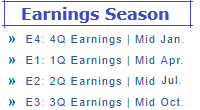
Corporate Earnings Season
Wall Street is coming off a winning day, as investors cheered the latest data showing the pace of inflation was slowing. JPMorgan Chase, Wells Fargo and Citigroup are set to report before the bell, while Goldman Sachs and Bank of America report Tuesday and Morgan Stanley discloses results Wednesday.
Wells Fargo dips in extended trading as investors look to Friday’s bank earnings slipped 1% in extended trading as investors readied for a batch of earnings reports from major banks. The bank is set to report earnings before the bell Friday along with JPMorgan and Citi. JPMorgan was down 0.2% after hours, while Citi was up 0.2%
JP Morgan
JPMorgan Chase posted record first-quarter revenue on Friday that topped analysts’ expectations as net interest income surged almost 50% from a year ago on higher rates. Here’s what the company reported: Adjusted earnings: $4.32 per share vs. $3.41 per share Refinitiv estimat Revenue: $39.34 billion, vs. $36.19 billion. The bank said profit jumped 52% to $12.62 billion, or $4.10 per share, in the first three months of the year. That figure includes $868 million in losses on securities; excluding those losses lifts earnings by 22 cents per share, resulting in adjusted profit of $4.32 per share.
Wells Fargo
Wells Fargo reported growing profits Friday as the bank benefited from higher interest rates, despite building up loan loss reserves. Here’s how the bank did compared with Refinitiv estimates: Earnings per share: $1.23 per share GAAP versus 90 cents a year ago and $1.13 expected Revenue: $20.73 billion versus $20.08 billion expected The bank’s shares were up more than 3% in premarket trading after the earnings report.
Citigroup
Citigroup reported rising net income and better-than-expected revenue for the first quarter, boosting its stock in premarket trading Friday. Here is how Citigroup’s key metrics compared to expectations. $4.6 billion in net income versus $4.3 billion in the same period last year$21.45 billion in revenue versus $19.99 billion expected, according to Refinitiv. Citigroup reported earnings of $2.19 per share for the quarter. It was not clear how comparable that number is to estimates, but it appeared to be a solid beat.
Retail Sales
Retail sales decline more than expecte. Advanced retail sales data signaled that consumer spending slowed in March as shoppers faced mounting recession fears and turmoil in the banking sector. An advanced reading of retail sales showed a decline by 1% in March, greater than the 0.5% fall expected by economists surveyed by Dow Jones. The figure marked the weakest month-over-month reading since November. Retail sales excluding autos fell 0.8% versus the 0.4% expected by analysts Retail sales declined by 1% last month, more than the 0.5% fall expected by economists polled by Dow Jones, as consumers dealt with growing recession fears. Retail sales came in weaker than expected, but a lot of the miss had to do with lower gas prices, which all things being equal is a slight positive for spending
Import and Export Prices nnnnn
Business inventories
nn
Industrial Production nnnnn
Cosnumer Sentiment
nn
|