nnnnnnnnnnnn
n
nnnnnnnnn
n
nnnnnnnnnnnnn
mmm
Empire
mmm
Consumer Sentiment UM
U.S. consumer sentiment unexpectedly collapsed in early November as Americans grew increasingly concerned about rising prices and the inflationary impact on their finances. The University of Michigan's preliminary sentiment index decreased to 66.8 from 71.7 in October, data released Friday showed.
Consumer Price Index (CPI) - Inflation
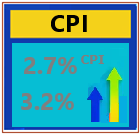
Consumer prices increase 6.2 percent for the year ended October 2021. The Consumer Price Index for All Urban Consumers increased 6.2 percent from October 2020 to October 2021, the largest 12-month increase since the period ending November 1990. U.S. consumer prices jump 6.2% in October, the biggest inflation surge in more than 30 years.
Inflation across a broad swath of products that consumers buy every day was even worse than expected in October, hitting its highest point in more than 30 years, the Labor Department reported Wednesday. The consumer price index, which is a basket of products ranging from gasoline and health care to groceries and rents, rose 6.2% from a year ago, the most since December 1990. That compared with the 5.9% Dow Jones estimate. On a monthly basis, the CPI increased 0.9% against the 0.6% estimate. Stripping out volatile food and energy prices, so-called core CPI was up 0.6% against the estimate of 0.4%. Annual core inflation ran at a 4.6% pace, compared with the 4% expectation and the highest since August 1991
Producer Price Index PPI
Wholesale prices rose 8.6% year over year in October, tied for highest ever. The Labor Department’s producer price index, which measures wholesale prices, rose 0.6% in October, translating into an 8.6% increase year over year.Surging prices for gasoline and autos helped push the increase which was tilted far more to goods than services.The reading is one of two important inflation measures coming this week, with the consumer price index on tap for Wednesday.
Wholesale prices rose 8.6% from a year ago in October, their highest annual pace in records going back nearly 11 years, the Labor Department said Tuesday.
The government’s producer price index, which serves as a gauge of final demand prices from goods producers, rose 0.6% for the month, in line with Dow Jones estimates and an indicator that inflation pressures are continuing to burden the U.S. economy. The monthly pace was faster than the 0.5% increase in September.
JOLTS
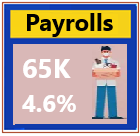
Workers continue to quit at historic levels, with the quits rate hitting an all-time high of 3%. The delta variant is still visible in the September 2021 Job Openings and Labor Turnover Survey (JOLTS) report, though we do know from the October jobs report that the labor market did get on more stable ground. US job openings edged lower to 10.4 million in September 2021, according to Friday JOLTS data. The print landed above the median forecast for 10.3 million openings. Job openings continued to exceed unemployed workers, signaling the labor shortage raged into the fall.
Treasury Budget
The U.S. government on Wednesday posted a $165 billion budget deficit for October, 42% lower than the $284 billion shortfall a year earlier as personal and corporate income tax receipts surged on the back of the rebounding economy. The October deficit was $14 billion below the median estimate among economists polled by Reuters of $179 billion. Receipts for the first month of the federal government's fiscal year totaled $284 billion, up 19% and a record for the month of October. Individual tax receipts rose 18% to $214 billion, and corporate taxes rose 39% to $21 billion. A Treasury official said the increases stem from the improvement in the economy after last year's widespread shutdowns from the COVID-19 pandemic, which triggered a short but sharp recession. Rebounding employment is driving the increased individual taxes, while improved corporate earnings are fueling the rise in business tax receipts.
Wholesale Trade (Pre) - Inventories
U.S. Wholesale Inventories Revised Higher in September 2021. U.S. wholesale inventories increased more than initially thought in September, but automobile stocks declined further amid a global semiconductor shortage, which is undercutting motor vehicle production. The Commerce Department said on Wednesday that wholesale inventories increased 1.4%, instead of 1.1% as estimated last month. Stocks at wholesalers rose 1.3% in August. Wholesale inventories jumped 13.1% in September from a year earlier. |