10-Year Treasury Yield
Treasury yields rise as investors assess inflation outlook. U.S. Treasury yields climbed on Monday as investors considered the outlook for inflation and awaited key economic data. The yield on the benchmark 10-year Treasury note was up by almost 3 basis points to 3.599%. The 2-year Treasury traded around 4.27% after rising by about 1 basis point.
Consumer Credit
US consumers increased their borrowing by $28 billion in November 2022. US consumers’ credit-hungry approach to spending continued in November, with borrowing rising by nearly $28 billion, according to Federal Reserve data released Monday. The monthly increase, which was driven by higher rates of revolving credit, was below the $29.12 billion jump seen in October but extends a historic stretch of reliance on debt during a year with soaring inflation. Economists were expecting a $25 billion monthly increase, according to consensus estimates on Refinitiv. Outstanding consumer credit — which includes mostly credit cards, auto loans and student loans — grew at a seasonally adjusted annual rate of 7.1%, according to the report. Revolving credit, which includes mostly credit cards, grew by 16.9%. nIt’s the largest jump in revolving credit seen in three months and the fifth-largest monthly increase in Fed record-keeping that goes back nearly 55 years.
Wholesale Trade Preliminary
Wholesale inventories increase for November in line with expectations. November data shows wholesale inventories increased as much as expected. he Monthly Wholesale Trade Survey, which estimates sales and inventories within wholesale trade industries, came in at a 1% increase. That’s the same percentage gain as was anticipated in the consensus estimate compiled by Dow Jones.
MBA Purchase Applications
Mortgage applications to purchase a home fell 1% for the week and were 44% lower than the same week one year ago. That was the lowest reading since 2014. Buyers today are not only contending with higher interest rates but falling supply. They are also seeing prices come down and may be waiting to see how low they go. Mortgage refinance demand surges, as homeowners take advantage of lower interest rates. The average contract interest rate for 30-year fixed-rate mortgages with conforming loan balances ($647,200 or less) decreased last week to 6.42% from 6.58%. The drop in rates sparked a 5% increase in applications to refinance a home loan. After rising at the end of the year, mortgage rates dropped sharply last week. That drove demand from current homeowners hoping to save on their monthly payments, but it did little to excite potential homebuyers. As a result, total mortgage application volume rose just 1.2% last week compared with the previous week, according to the Mortgage Bankers Association’s seasonally adjusted index. The average contract interest rate for 30-year fixed-rate mortgages with conforming loan balances ($647,200 or less) decreased last week to 6.42% from 6.58%, with points remaining at 0.73 (including the origination fee) for loans with a 20% down payment. One year ago, that rate was 3.52%. The drop in rates sparked a 5% increase in applications to refinance a home loan. Volume, however, was still 86% lower than the same week one year ago. Even with rates lower than their previous high of over 7% last fall, at the current rate just 270,000 borrowers could benefit from a refinance, according to Black Knight, a mortgage technology and analytics firm. A year ago, with the rate half what it is now, roughly 7 million borrowers could benefit.
Jobless Initial Claims
U.S. weekly initial jobless claims remain low, falling by 1,000 to 205,000. A separate report from the Labor Department on Thursday showed initial claims for state unemployment benefits fell 1,000 to a seasonally adjusted 205,000 for the week ended Jan. 7. Economists had forecast 215,000 claims for the latest week. Part of the surprise drop in claims reflects challenges adjusting the data for seasonal fluctuations at the start of the year. Nevertheless, claims have remained low despite high profile layoffs in the technology industry as well as job cuts in interest rate-sensitive sectors like finance and housing. Economists say companies are for now reluctant to send workers home after difficulties finding labor during the pandemic. They, however, expect claims to rise by the second half of the year as higher borrowing costs choke demand and push the economy into recession. The claims report also showed the number of people receiving benefits after an initial week of aid, a proxy for hiring, dropped 63,000 to 1.634 million in the week ending Dec. 31. The government reported last week the economy created 223,000 jobs in December, more than double the 100,000 that economists say the Fed wants to see to be confident inflation is cooling. A total of 4.5 million jobs were added in 2022.
CPI
Consumer price index for December matches expectations. The consumer price index fell 0.1% in December, matching a Dow Jones estimate. That was the biggest monthly decline since April 2020. The so-called core CPI, which strips out volatile food and energy prices, also met expectations with a 0.3%. gain. On a year-over-year basis, the index rose 6.5%, still well above the Fed’s 2% inflation target.The CPI report came in in line with expectations. Economists expected the consumer price index to dip 0.1% for December but rise 6.5% year-over-year, compared to a 0.1% monthly gain in November and an annual pace of 7.1%, according to Dow Jones.
Inflation closed out 2022 in a modest retreat, with consumer prices posting their biggest monthly decline since early in the pandemic, the Labor Department reported Thursday. The consumer price index, which measures the cost of a broad basket of goods and services, fell 0.1% for the month, in line with the Dow Jones estimate. That equated to the largest month-over-month decrease since April 2020, as much of the country was in lockdown to combat Covid. Even with the decline, headline CPI rose 6.5% from a year ago, highlighting the persistent burden that rising cost of living has placed on U.S. households. However, that was the smallest annual increase since October 2021. Excluding volatile food and energy prices, co-called core CPI rose 0.3%, also meeting expectations. It was up 5.7% from a year ago, once again in line. CPI is the most closely watched inflation gauge as it takes into account moves in everything from a gallon of gas to a dozen eggs and the cost of airline tickets. The Federal Reserve prefers a different gauge that adjusts for changes in consumer behavior. However, the central bank takes in a broad array of information when measuring inflation, with CPI being part of the puzzle. Markets are watching the Fed’s moves closely as officials battle against inflation that at its peak was the highest in 41 years. Supply chain bottlenecks, the war in Ukraine and trillions in fiscal and monetary stimulus helped contribute to surging prices that spanned across most areas of the economy.
Treasury Statement
mmm mmm
Import and Export Prices
U.S. import-price index rises for first time in six months
Cosumer Sentiment mmmm
Fixed Mortgage Rates
The average contract interest rate for 30-year fixed-rate mortgages with conforming loan balances ($647,200 or less) decreased last week to 6.42% from 6.58%, with points remaining at 0.73 (including the origination fee) for loans with a 20% down payment. One year ago, that rate was 3.52%. Mortgage rates declined last week as markets reacted to data showing a weakening economy and slowing wage growth. All loan types in the survey saw a decline in rates.
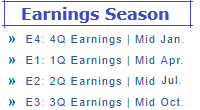
JP Morgan JPMorgan tops estimates for fourth-quarter revenue, but says mild recession is now ‘central case’. JPMorgan Chase on Friday posted fourth-quarter profit and revenue that topped expectations as interest income at the bank surged 48% on higher rates and loan growth. Here’s what the company reported: Earnings of $3.57 per share which exceeds the $3.07 estimate after excluding one-time items, according to Refinitiv. Revenue of $35.57 billion vs. $34.3 billion estimate. The New York-based bank said profit jumped 6% from the year earlier period to $11.01 billion, or $3.57 per share. Revenue rose 17% to $35.57 billion, fueled by the rise in net interest income to $20.3 billion, topping the StreetAccount estimate by $1 billion, as the bank saw average loans rise 6%. JPMorgan Chase posted revenue that beat expectations, but the bank warned it was setting aside more money to cover credit losses because a “mild recession” is its “central case.” The bank posted a $2.3 billion provision for credit losses in the quarter, a 49% increase from the third quarter. The stock fell more than 3%.
Wells fargo Wells Fargo shares fell nearly 4% after the bank reported its quarterly figures. Bank of America moved slightly lower despite reporting better-than-expected earnings for the fourth quarter.Wells Fargo shares drop 4% as profits cut in half. Wells Fargo shares fell more than 4% in premarket trading Friday after the bank reported shrinking profits, weighed down by a recent settlement and the need to build-up reserves amid a deteriorating economy. Wells Fargo’s net income tumbled 50% to $2.86 billion, or 67 cents a share, from $5.75 billion, or $1.38 per share, a year ago. The bank set aside $957 million for credit losses after reducing its provisions by $452 billion a year ago.t inte
Delta Airlines Delta Air Lines reports earnings beat. Delta Air Lines’ fourth-quarter profit and revenue topped expectations on Friday. The air carrier posted adjusted earnings per share of $1.48 for the fourth quarter, compared with analyst estimates of $1.33, according to Refinitiv. Adjusted revenue came in at $12.29 billion, excluding refinery sales, vs. $12.23 billion expected. Still, the shares fell in early morning trading on the company’s first-quarter profit outlook, which was dented by higher labor costs.
Bank of America Bank of America reports earnings beat. Bank of America shares were flat in early trading after the bank said it earned 85 cents a share last quarter, above the 77 cents a share analyst consensus from Refinitiv. Revenue was $24.66 billion versus $24.3 billion expected by analysts polled by Refinitiv. Higher rates helped the results with net interest income jumping 29% to $14.7 billion, according to the bank.The shares were about flat in early trading.
|