Consumer Price Index (CPI) - Inflation
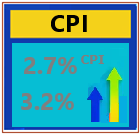
Inflation surged in June at its fastest pace in nearly 13 years amid a burst in used vehicle costs and price increases in food and energy, the Labor Department reported Tuesday. The consumer price index increased 5.4% from a year earlier, the largest jump since August 2008, just before the worst of the financial crisis. Economists surveyed by Dow Jones had been expecting a 5% gain. Stripping out volatile food and energy prices, the core CPI rose 4.5%, the sharpest move for that measure since September 1991 and well above the estimate of 3.8%. On a monthly basis, headline and core prices rose 0.9% against 0.5% estimates.
Retail Sales
U.S. retail sales unexpectedly increased in June 2021 as demand for goods remained strong even as spending is shifting back to services, bolstering expectations that economic growth accelerated in the second quarter. Retail sales rose 0.6% last month. Data for May was revised down to show sales falling 1.7% instead of declining 1.3% as previously reported. Economists polled by Reuters had forecast retail sales dropping 0.4%. Sales surged 18.0% compared to June last year and are now well above their pre-pandemic level. Demand shifted to goods like electronics and motor vehicles during the pandemic as millions of people worked from home, took online classes and avoided public transportation.
Treasury International Capital (TIC)
The U.S. Department of the Treasury today released Treasury International Capital (TIC) data for May 2021. The next release, which will report on data for June 2021, is scheduled for August 16, 2021. The sum total in May of all net foreign acquisitions of long-term securities, short-term U.S. securities, and banking flows was a net TIC inflow of $105.3 billion. Of this, net foreign private inflows were $128.4 billion, and net foreign official outflows were $23.1 billion. Foreign residents decreased their holdings of long-term U.S. securities in May; net sales were $40.3 billion. Net sales by private foreign investors were $41.6 billion, while net purchases by foreign official institutions were $1.3 billion. U.S. residents decreased their holdings of long-term foreign securities, with net sales of $10.1 billion. Taking into account transactions in both foreign and U.S. securities, net foreign sales of long-term securities were $30.2 billion. After including adjustments, such as estimates of unrecorded principal payments to foreigners on U.S. asset-backed securities, overall net foreign sales of long-term securities are estimated to have been $63.6 billion in May. Foreign residents decreased their holdings of U.S. Treasury bills by $18.5 billion. Foreign resident holdings of all dollar-denominated short-term U.S. securities and other custody liabilities increased by $9.7 billion. Banks’ own net dollar-denominated liabilities to foreign residents increased by $159.2 billion.
Mortgage Purchase Applications
mm
Producer Price Index PPI
U.S. producer prices post biggest annual gain in more than 10-1/2 years. Producer prices increase 1.0% in June. Services account for nearly 60% of the surge in PPI. PPI accelerates 7.3% on year-on-year basis. Core PPI gains 0.5%; rises 5.5% year-on-year. The producer price index for final demand increased 1.0% last month after rising 0.8% in May. A 0.8% jump in the cost of services accounted for nearly 60% of the increase in the PPI. Services rose 0.6% in May. Goods prices climbed 1.2% after accelerating 1.5% in the prior month. In the 12 months through June, the PPI surged 7.3%. That was the biggest year-on-year rise since November 2010 and followed a 6.6% advance in May.
Economists polled by Reuters had forecast the PPI would increase 0.6% in June and rise 6.8% on a year-on-year basis.
U.S. producer prices accelerated in June, leading to the largest annual increase in more than 10-1/2 years, suggesting inflation could remain high as robust demand fueled by the economy's recovery from the COVID-19 pandemic strains the supply chain. The report from the Labor Department on Wednesday followed on the heels of news on Tuesday that consumer prices increased by the most in 13 years in June. There are, however, signs that inflation is close to peaking. Underlying producer prices rose at a moderate pace on a monthly basis in June.
Jobless
Initial claims for unemployment insurance fell to a new pandemic-era low last week, the Labor Department reported Thursday. First-time filings for benefits totaled 360,000, in line with Dow Jones estimates and the best number since March 14, 2020. The total represented a substantial decrease from the previous week’s upwardly revised 386,000. Continuing claims, which run a week behind the headline number, also fell sharply, declining by 126,000 to 3.24 million. That also established a new low for a jobs market that still has some distance to go before getting back to its pre-Covid 19 self but has made significant strides.
Beige Book
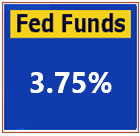
Fed Chair Powell — in testimony to the House Committee on Financial Services — quelled investors’ fears about a rollback of the central bank’s easy policies anytime soon, even in the face of inflation. The producer prices from June showed higher than expected inflation on Thursday. “Fed chair Powell helped calm fears by again suggesting these bad inflation reports were merely transitory,” said Jim Paulsen, chief investment strategist at the Leuthold Group, noting the drop in bond yields following the hot inflation report. “Evidently, bond investors are buying the Fed’s inflation narrative.”.
Powell says the Fed is still a ways off from altering policy, expects inflation to moderate
Inflation climbs higher than expected in June as price index rises 5.4%
Fed officials kept a patient tone in terms of tightening monetary policy, minutes show. Beige Book” release on economic conditions across the country. That report showed “moderate to robust growth” nationally, while the New York region reported an economy growing “at a strong pace” as business contacts were “increasingly optimistic about the near-term outlook.”
Philadelphia Fed Manufacturing Index
Factory activity in the U.S. mid-Atlantic region slowed sharply for the third consecutive month to its lowest growth since December after hitting its highest pace in nearly half a century earlier this spring, a survey showed on Thursday. The Philadelphia Federal Reserve Bank said its business activity index fell to 21.9 Kuly 2021 from 30.7 in June 2021. That was well below economists' expectations for a reading of 28.0, according to a Reuters poll.The Philadelphia region said Thursday that progress was slowing. That area’s manufacturing reading slipped to 21.9 in July 2021 from 30.7 the previous month, though the headline number still indicated expansion. Both reports also indicated some deceleration in the rate of price increases amid otherwise high inflation readings.
Business Inventories May 2021
U.S. business inventories rose 0.5% in May 2021, the government said Friday. Economists polled by The Wall Street Journal had forecast a 0.5%. U.S. business inventories increased solidly in May, but shortages of goods like motor vehicles are making it harder for retailers to restock warehouses to meet booming demand. Business inventories rose 0.5% after edging up 0.1% in April, the Commerce Department said on Friday. Inventories are a key component of gross domestic product. May's increase was in line with economists' expectations. Inventories increased 4.5% on a year-on-year basis in May.
Empire State Manufacturing Index
New York manufacturing rises at record pace
A separate economic report Thursday showed that manufacturing and hiring are booming in the pivotal New York region. The Empire State Manufacturing Survey, conducted by the New York Federal Reserve, rose to a record 43 for July, representing the percentage difference between firms seeing expansion against those contracting. New orders and shipments surged, while the employment index increased 8.3 points to 20.6 as 29.5% of companies indicated they would be adding workers. A forward-looking index on conditions over the next six months also showed a hiring increase, with a reading of 43.9, up 2.2 points from June.
Treasury Budget
The U.S. government posted a June deficit of $174 billion, about a fifth of the June 2020 deficit of $864 billion, as a rebound in the labor market and an earlier tax deadline this year raised revenues, the U.S. Treasury said on Tuesday. Receipts for June jumped 87% to $449 billion, in part a reflection of this year's Internal Revenue Service income tax filing deadline being brought forward to May 17 compared to last year's pandemic-induced delay to July 15. The Treasury also said taxes withheld from wages increased by 33%, on an adjusted basis, to $240 billion during June compared to a year ago, while June corporate taxes rose to $79 billion from $11 billion last year.
Consumer Sentiment UM
U.S. consumer sentiment drops in early July on inflation fears. U.S. consumer sentiment fell sharply and unexpectedly in early July to the lowest level in five months as inflation worries dented confidence in the economic recovery, a survey showed on Friday. The University of Michigan said its preliminary consumer sentiment index fell to 80.8 in the first half of this month - the lowest since February - from a final reading of 85.5 in June. Economists polled by Reuters had forecast the index would rise to 86.5.
U.S. Import and Export Price Indexes
U.S. import prices rise solidly in June 2021. U.S. import prices increased solidly in June as bottlenecks in the global supply chain persisted, the latest indication that inflation could remain elevated for a while amid strong domestic demand fueled by the economy's reopening and fiscal stimulus. Still, prices appeared to have peaked. Import prices rose 1.0% last month after surging a 1.4% in May, the Labor Department said on Thursday. The eighth straight monthly gain left the year-on-year increase at 11.2% compared with 11.6% in May. Economists polled by Reuters had forecast import prices, which exclude tariffs, increasing 1.2%. The report also showed export prices increased 1.2% in June after rising 2.2% in May. Prices for agricultural exports advanced 1.5%. Nonagricultural export prices gained 1.1%..Export prices increased 16.8% year-on-year in June after surging a 17.5% in May.
Industrial Production
Industrial production rose for a fourth consecutive month in June 2021, but the details of the report were a mixed bag. Ongoing supply chain issues were highly visible in today's report, with overall manufacturing activity falling 0.1% in June, the result of a 6.6% decline in auto production. A major contributor to this drop was the ongoing shortage of semiconductors which continues to keep finished cars from rolling off assembly lines. Meanwhile, manufacturing outside the auto sector rose 0.4% in June, and now sits above its pre-pandemic high. n June, manufacturing output edged down 0.1%, as an ongoing shortage of semiconductors contributed to a decrease of 6.6% in the production of motor vehicles and parts. Excluding motor vehicles and parts, factory output increased 0.4%. The output of utilities advanced 2.7%, reflecting heightened demand for air conditioning, as much of the country experienced a heat wave in June. The index for mining increased 1.4%.
Industrial production increased 0.4% in June after moving up 0.7% in May, Capacity utilization for manufacturing declined 0.1 percentage point in June to 75.3%. The operating rate for mining increased 1.1 percentage points to 76.7%, while the operating rate for utilities rose 1.8 percentage points to 74.5%. The rates for all three sectors remained below their long-run averages. US June industrial production +0.4% m/m vs +0.6% exp. Prior was +0.8%, revised to +0.7%. Capacity utilization 75.4% vs 75.6% exp. Manufacturing output -0.1% vs +0.2% exp..
Earning Season
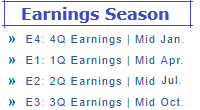
Bank shares, including Wells Fargo and Bank of America, were lower in premarket, despite posting better-than-expected results earlier in the week, as the falling yields pinch their profitability. Shares of Morgan Stanley dipped in early morning trading even after the company’s second-quarter earnings report Thursday morning topped analysts’ expectations with strong equities trading and investment banking results. Morgan Stanley were up 35% this year into the results and the stock may be reacting more to the outlook for yields than its actual results......
JPMorgan Chase & Co. (JPM) reported earnings for Q2 FY 2021 that beat analyst estimates by a significant margin. Earnings per share (EPS) surpassed analyst expectations, rising 174% year over year (YOY). The bank's quarterly revenue also came in above forecasts but was down 8% compared to the year-ago quarter.1 JPMorgan's bond trading revenue just missed expectations, while its equities trading revenue easily beat estimates.23 The bank's shares fell more than 1% in pre-market trading. Over the past year, JPMorgan's shares have provided a total return of 66.4%, well above the S&P 500's total return of 39.0%.4
JPMorgan's total trading revenue for the second quarter was $6.8 billion, down 30% from the year-ago quarter. Bond trading revenue sank as much as 44% YOY, marking the first decline since the first quarter of FY 2019. The bank's equities trading revenue was up 13% YOY, significantly better than the decline analysts were expecting but still a marked deceleration from the past five quarters..
cccc
Cyclical stocks are those closely linked to a recovering economy.
A cyclical stock is one whose underlying business generally follows the economic cycle of expansion and recession. Cyclical businesses perform well during economic expansions but typically experience significantly declining sales and profits during recessions and other challenging economic times.
Cyclical stocks represent companies that make or sell discretionary items and services that are in demand when the economy is doing well. They include restaurants, hotel chains, airlines, furniture, high-end clothing retailers, and automobile manufacturers.
Companies whose stocks are cyclical include car manufacturers, airlines, furniture retailers, clothing stores, hotels, and restaurants. When the economy is doing well, people can afford to buy new cars, upgrade their homes, shop, and travel.
|