Minutes of the Federal Open Market Committee, June 15-16, 2021
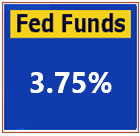
Fed officials kept a patient tone in terms of tightening monetary policy, minutes show. Fed officials at their most recent meeting talked about reducing asset purchases but also expressed the need for patience. Some members noted the faster progress of the economic recovery though the committee overall said conditions have not met the “substantial further progress ” benchmark to start tightening policy. The meeting summary also reiterated the Fed’s view that while inflation has been rising faster than they expect, they see the current trend as transitory.
Federal Reserve officials talked tapering at their most recent meeting, but few seemed in a rush to get the process going, according to minutes released Wednesday. The Federal Open Market Committee’s June 15-16 meeting summary provided only a few new glimpses into talks about when the central bank should begin reducing the pace of its bond purchases. Some members indicated that the economic recovery was proceeding faster than expected and was being accompanied by an outsized rise in inflation, both making the case for taking the Fed’s foot off the policy pedal. However, the prevailing mindset was that there should be no rush and markets must be well prepared for any shifts. Most members agreed, according to the minutes, that the economy had yet to meet the “substantial further progress” benchmark the Fed has set out for any significant shifts in policy..
Jobless Claims
First-time filings for unemployment claims in the U.S. dropped to 310,000 last week, easily the lowest of the Covid era and a significant step toward the pre-pandemic normal, the Labor Department reported Thursday. Claims had been expected to total 335,000 for the week ended Sept. 4, according to economists surveyed by Dow Jones. The total for the week ended Sept. 4 represented a substantial drop from the previous week’s 345,000 and is the lowest since March 14, 2020. Claims may have been still lower except for a substantial bump in Louisiana, which was hammered by Hurricane Ida and still has nearly 250,000 homes and businesses without power.
MBA Purchase Applications
Mortgage applications decreased 1.9 percent from one week earlier, according to data from the Mortgage Bankers Association's (MBA) Weekly Mortgage Applications Survey for the week ending September 3, 2021.
The Market Composite Index, a measure of mortgage loan application volume, decreased 1.9 percent on a seasonally adjusted basis from one week earlier. On an unadjusted basis, the Index decreased 3 percent compared with the previous week. The Refinance Index decreased 3 percent from the previous week and was 4 percent lower than the same week one year ago. The seasonally adjusted Purchase Index decreased 0.2 percent from one week earlier. The unadjusted Purchase Index decreased 3 percent compared with the previous week and was 18 percent lower than the same week one year ago.
Producer Price Index PPI
Strained supply chains keep U.S. producer prices hot. Producer prices increase 0.7% in August. PPI accelerates 8.3% on year-on-year basis. Core PPI gains 0.3%; rises 6.3% year-on-year. U.S. producer prices increased solidly in August, leading to the biggest annual gain in nearly 11 years, suggesting that high inflation is likely to persist for a while as the unrelenting COVID-19 pandemic continues to pressure supply chains. Strong demand and supply constraints were underscored by other data on Friday showing the pace of inventory accumulation at wholesalers slowed in July. It is now taking wholesalers the fewest months in seven years to clear shelves.
Beige Book
Businesses are feeling stronger inflation and paying higher wages, Fed’s ‘Beige Book’ says.U.S. businesses are experiencing escalating inflation that is being aggravated by a shortage of goods and likely will be passed onto consumers in many areas, the Federal Reserve reported Wednesday. In its periodic “Beige Book” look at the nation’s economic picture, the central bank also reported that growth overall had “downshifted slightly to a moderate pace” amid rising public health concerns during the July-through-August period that the report covers. “The deceleration in economic activity was largely attributable to a pullback in dining out, travel, and tourism in most Districts, reflecting safety concerns due to the rise of the Delta variant, and, in a few cases, international travel restrictions,” the report said.
JOLTS
US job openings hit another record high as the labor shortage charged into July 2021. US job openings rose to 10.9 million from 10.2 million in July, according to JOLTS data out Wednesday. The print exceeded the estimate for 10 million openings and marked a fifth straight record high. Job openings continued to exceed available workers despite the creation of 1.1 million payrolls in July.
Job openings in the US rose to a record high for the fifth consecutive month in July as demand for workers still outpaced hiring. Openings climbed to 10.9 million in July from 10.2 million, according to Job Openings and Labor Turnover Survey, or JOLTS, data published Wednesday. Economists surveyed by Bloomberg expected openings to dip to 10 million.
Wholesale Trade (Pre) - Inventories
Wholesale trade improved in July 2021 compared to the same month a year ago and was up from the previous month of June, according to the latest report from the U.S. Census Bureau. July 2021 sales of merchant wholesalers, except manufacturers’ sales branches and offices, after adjustment for seasonal variations and trading day differences but not for price changes, were $601.3 billion, up 23.7% from the revised July 2020 level and up 2% from the revised June level. The May 2021 to June 2021 percent change was revised from the preliminary estimate of up 2% to up 2.3%. Total inventories of merchant wholesalers, except manufacturers’ sales branches and offices, after adjustment for seasonal variations and trading day differences, but not for price changes, were $722.4 billion at the end of July, up 0.6% from the revised June level. Total inventories were up 11.5% from the revised July 2020 level. The June 2021 to July 2021 percent change was unrevised from the advance estimate of up 0.6%. The July inventories/sales ratio for merchant wholesalers, except manufacturers’ sales branches and offices, based on seasonally adjusted data, was 1.20. The July 2020 ratio was 1.33.
Consumer Credit
Signs of 'fickle' consumer as borrowing slows in July 2021. July consumer credit growth rises at much slower pace than past two months..Consumer borrowing slowed in July after strong gain in the prior two months, according to Federal Reserve data released Wednesday. Total consumer credit increased $17 billion. That’s an annual growth rate of 4.7%. Credit rose $37.9 billion in June, the largest gain since early 2006 and rose $34 billion in May.
Economists has been expecting a $26 billion gain in July, according to the Wall Street Journal forecast. “Overall, the consumer remains fickle, driven by changing stimulus and the delta variant,” said T. J. Connelly, head of research at Contingent Macro.The data does not include mortgage loans, which is the largest category of household debt.Revolving credit, like credit cards, rose 6.7% in July after a 22.4% gain in the prior month. Nonrevolving credit, typically auto and student loans, rose 4.1% in July after a 7.2% growth rate in the prior month. Analysts said the drop might be due to weaker auto sales..... |