Pending Home Sales July 2021
Pending Home Sales Decline 1.8% in July 2021. The pending home sales pace declined 1.8% in July 2021 from the prior month and fell 8.5% from a year ago. The U.S. pending home sales index level for the month was 110.7. July's contract signings bring the pending index above the 100-level mark for the 15th consecutive month. The National Association of Realtors (NAR) said on Monday its Pending Home Sales Index, based on contracts signed last month, fell 1.8% after dropping a revised 2.0% in June. Economists polled by Reuters had forecast pending home sales would increase 0.4%..
The 100 level is based on a 2001 benchmark and is consistent with a healthy market and existing-home sales above the 5 million mark. Pending sales represent homes that have a signed contract to purchase on them but have yet to close. They tend to lead existing-home sales data by 1 to 2 months.
FHFA - Federal Housing Finance Agency House Price Index
U.S. house prices rose 17.4 percent from the second quarter of 2020 to the second quarter of 2021 according to the Federal Housing Finance Agency House Price Index (FHFA HPI®). House prices were up 4.9 percent compared to the first quarter of 2021. FHFA’s seasonally adjusted monthly index for June was up 1.6 percent from May. “During the second quarter, house prices peaked in June with an 18.8 percent growth rate compared to a year ago,” said Dr. Lynn Fisher, Deputy Director of FHFA’s Division of Research and Statistics. “For the quarter, annual gains surpassed 20 percent in the Mountain, New England, and Pacific census divisions and in all of the top 20 metro areas.”
ISM Manufacturing Index
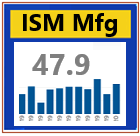
Manufacturing PMI at 59.9%; August 2021 Manufacturing ISM Report On Business. The August Manufacturing PMI® registered 59.9 percent, an increase of 0.4 percentage point from the July reading of 59.5 percent. This figure indicates expansion in the overall economy for the 15th month in a row after contraction in April 2020. The New Orders Index registered 66.7 percent, increasing 1.8 percentage points from the July reading of 64.9 percent. The Production Index registered 60 percent, an increase of 1.6 percentage points compared to the July reading of 58.4 percent. The Prices Index registered 79.4 percent, down 6.3 percentage points compared to the July figure of 85.7 percent; this is its first reading below 80 percent since December 2020 (77.6 percent).
Construction Spending
Construction spending was estimated at $1,568.8 billion on a seasonally adjusted annual basis in July 2021, up 0.3 percent (1.2 percent) from the revised June estimate of $1,563.4 billion. The July estimate is 9.0% (1.5%) higher than the July 2020 estimate of $1,439.6 billion. Construction spending totaled $883.2 billion in the first seven months of this year, up 6.2 percent (1.0 percent) from $831.5 billion in the same period in 2020.Residential construction saw gigantic increases year over year compared to that of Infrastructure which has remained stagnant. Residential construction saw a huge push in residential home construction and multifamily projects for which drove lumber for these projects to record highs in the recent months leading up to the construction spending in July. Construction related to Power is up 29.8% YoY.
Factory Orders
New orders for manufactured goods in July, up fourteen of the last fifteen months, increased $1.9 billion or 0.4% to $508.1 billion, according to the U.S. Census Bureau. This followed a 1.5% June increase. Shipments led the increase 1.6% to $508.5 billion. New orders for manufactured durable goods in July, down following two consecutive monthly increases, decreased $0.3 billion or 0.1% to $257.4 billion, unchanged from the prior published decrease. Shipments of manufactured durable goods in July, up four of the last five months, increased 2.2% or $5.6 billion to $257.8 billion, unchanged from the previously published increase. Inventories of manufactured durable goods in July, up six consecutive months, increased 0.6% or $2.8 billion to $453.7 billion, unchanged from the previous month.
U.S. factory orders rose 0.4% in July, as manufacturers worked to pump out more goods to keep up with high demand. Economists surveyed by the Wall Street Journal had forecast a 0.3% increase.Durable-goods orders slipped 0.1%, the Commerce Department said Thursday. That’s unchanged from the initial estimate. Yet orders for nondurable goods — food, clothing, drugs and the like — jumped 0.9% in the month. Orders for capital goods excluding aircraft and military items rose a revised 0.1% in July. Economists view it as a good proxy for business investment. Previously the government had said these outlays were flat in July. Manufacturers have plenty of customer demand, but broad labor and supply shortages have slowed production. That’s hampering the economic recovery and spurring a big increase in inflation.
ADP Employment Report
U.S. companies created far fewer jobs than expected in August as the Covid resurgence coincided with cutbacks in hiring, according to a report Wednesday from payroll services firm ADP. Private payrolls rose just 374,000 for the month, well below the Dow Jones estimate of 600,000 though above July’s 326,000, which was revised downward slightly from initial 330,000 reading. Most of the new jobs came from leisure and hospitality, which added 201,000 positions in a somewhat hopeful sign that an industry beset by a labor shortage continues to recover.
ISM Service Index - Non Manufacturing Index
The ISM Services Index registered 61.7% in August; 2.4 percentage points lower than the July reading of 64.1%. This reading represents the fifteenth straight month of growth for the services sector, which has expanded for all but two of the last 139 months.The Business Activity Index registered 60.1% in August, a decrease of 6.9 percentage points from the July reading of 67.0%. This represents growth for the fifteenth consecutive month. In August, the Services PMI® registered 61.7 percent, a 2.4-percentage point decrease compared to the July figure of 64.1 percent, the composite index's highest reading since its debut in 2008. This reading indicates the services sector grew for the 15th consecutive month after two months of contraction and 122 months of growth before that. A reading above 50 percent indicates the services sector economy is generally expanding; below 50 percent indicates the services sector is generally contracting.
Jobless Claims
Initial filings for unemployment insurance fell last week to their lowest levels since March 2020 in another sign that the labor market is gradually improving from the Covid-19 era, the Labor Department reported Thursday. First-time jobless claims totaled 340,000 for the week ended Aug. 28, compared with the 345,000 Dow Jones estimate. That is the lowest level for initial claims since March 14, 2020, when first-time claims totaled 256,000, just before the coronavirus pandemic caused a historic rush to unemployment benefits. The level of initial claims for the week ended Aug. 21 was revised up by 1,000, to 354,000. The level of continuing claims, the measure of ongoing benefits, was 2.75 million, a decrease of 160,000 from the previous week’s revised level. The decrease in the number of continuing claims also represents the lowest level for insured unemployment since the Covid era began.
MBA
Mortgage applications decreased 2.4 percent from one week earlier, according to data from the Mortgage Bankers Association's (MBA) Weekly Mortgage Applications Survey for the week ending August 27, 2021.
The Market Composite Index, a measure of mortgage loan application volume, decreased 2.4 percent on a seasonally adjusted basis from one week earlier. On an unadjusted basis, the Index decreased 3 percent compared with the previous week. The Refinance Index decreased 4 percent from the previous week and was 2 percent higher than the same week one year ago. The seasonally adjusted Purchase Index increased 1 percent from one week earlier. The unadjusted Purchase Index decreased 2 percent compared with the previous week and was 16 percent lower than the same week one year ago.
U.S. mortgage applications decline with drop in refinancing -MBA
Employment Situation
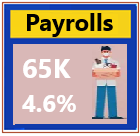
Total nonfarm employment in the United States rose by only 235,000 jobs in August 2021 – a disappointing figure considering monthly job growth had averaged 586,000 jobs per month so far this year – while the unemployment rate declined to 5.2 percent, according to the jobs report released by the U.S. Bureau of Labor Statistics (BLS).
The number of unemployed persons was 8.4 million in August 2021, down considerably from April 2020 but higher than before the Coronavirus (COVID-19) pandemic in February 2020. Notable job gains occurred in professional and business services, transportation and warehousing, private education, manufacturing, and other services. Nonfarm payroll growth in August increased by just 235,000 vs. expectations of 720,000. The unemployment rate fell to 5.2%, in line with estimates. Leisure and hospitality jobs were flat during the month after leading the way for much of the year. Wages rose at a 4.3% year-over-year clip..
U.S. Trade Balance
The U.S. monthly international trade deficit decreased in July 2021 according to the U.S. Bureau of Economic Analysis and the U.S. Census Bureau. The deficit decreased from $73.2 billion in June (revised) to $70.1 billion in July, as exports increased and imports decreased. The previously published June deficit was $75.7 billion. The goods deficit decreased$5.5 billion in July to $87.7 billion. The services surplus decreased $2.4 billion in July to $17.7 billion.
S&P Case-Shiller
Soaring home prices shattered another record in June 2021, S&P Case-Shiller says. Home prices rose 18.6% annually in June 2021, up from a 16.8% increase in May, according to the S&P CoreLogic Case-Shiller national home price index. Prices are now 41% higher than their last peak during the housing boom in 2006. Home prices continue to surge due to strong demand and persistent low supply. Home prices rose 18.6% annually in June, up from the 16.8% increase in May, according to the S&P CoreLogic Case-Shiller national home price index.
That is the largest annual gain in the history of the index dating back to 1987. Prices nationally are now 41% higher than their last peak during the housing boom in 2006. Unlike other median price surveys, which can be skewed by the type of homes selling, this measures repeat sales of similar homes over time..
Before seasonal adjustment, the U.S. National Index posted a 2.2% month-over-month increase in June 2021, while the 10-City and 20-City Composites both posted increases of 1.8% and 2.0%, respectively. After seasonal adjustment, the U.S. National Index posted a month-over-month increase of 1.8%, and the 10-City and 20-City Composites both posted increases of 1.6% and 1.8%, respectively. In June, all 20 cities reported increases before and after seasonal adjustments..
Productiviy and Cost
U.S. worker productivity grew a bit more slowly than initially thought in the second quarter, the Labor Department said on Thursday.
Nonfarm productivity, which measures hourly output per worker, increased at a downwardly revised 2.1% annualized rate last quarter. It was previously reported to have advanced at a 2.3% pace. Economists polled by Reuters had expected productivity would be raised to a 2.4% rate. Productivity grew at a 4.3% rate in the January-March quarter. It surged early in the pandemic before slumping in the final three months of 2020. Economists attributed the jump to the hollowing out of lower-wage industries, like leisure and hospitality, which they said tended to be less productive.
Compared to the second quarter of 2020, productivity increased at a 1.8% rate. Hours worked increased at a 6.0% rate last quarter, revised up from the 5.5% pace estimated last month. Unit labor costs - the price of labor per single unit of output - grew at a 1.3% rate. They were previously reported to have climbed at a 1.0% pace in the second quarter. Unit labor costs fell at a 2.8% rate in the first quarter. They advanced at a 0.2% pace from a year ago, instead of rising at a 0.1% rate as previously reported.
PMI Manufacturing Final for Aug 2021
August final Markit US manufacturing 61.1 PMI vs 61.2 prelimimnary. Final July reading was 63.4. Output index 56.7 vs 59.7 July reading. Prices paid 87.5 vs 86.7 July reading.
PMI Composite Final for Aug 2021
The IHS Markit U.S. Composite PMI Output Index* posted 55.4 in August, down from 59.9, to signal the slowest expansion in private sector output in 2021 to date. The rate of activity growth softened further from May's series high.
Consumer Confidence
Consumer Confidence Slumps in August 2021 to Lowest Level Since February Amid Worries Over Delta Variant. Fears over the delta variant appear to be making consumers skittish, even as jobs are plentiful and wallets full. The Conference Board's consumer confidence index dropped to a reading of 113.8 this month, the lowest since February 2021, from 125.1 in July. Economists polled by Reuters had forecast the index falling to 124.0. The cutoff for the survey was Aug. 25, before the killing of 13 service members in Afghanistan and Hurricane Ida slammed Louisiana. |